Building Blocks
This section contains fundamental products for the synthesis of organic and biological compounds. Building blocks are the essential starting materials used to construct complex molecules through various chemical reactions. They play a critical role in drug discovery, material science, and chemical research. At CymitQuimica, we offer a diverse range of high-quality building blocks to support your innovative research and industrial projects, ensuring you have the essential components for successful synthesis.
Subcategories of "Building Blocks"
- Boronic Acids & Boronic Acid Derivatives(5,756 products)
- Chiral Building Blocks(1,242 products)
- Hydrocarbon Building Blocks(6,095 products)
- Organic Building Blocks(61,038 products)
Found 196817 products of "Building Blocks"
Sort by
Purity (%)
0
100
|
0
|
50
|
90
|
95
|
100
2-Cyano-6-hydroxybenzothiazole
CAS:<p>2-Cyano-6-hydroxybenzothiazole is a molecule that is an intermediate in the synthesis of other compounds. This compound has been shown to have anti-inflammatory properties, with a molecular weight of 164.2 g/mol. It reacts with hydroxyl groups and nucleophilic attack to form new molecules, which can cause light emission. 2-Cyano-6-hydroxybenzothiazole has been shown to be fluorescent and can be used as a marker for hydroxyl group formation in mammalian tissue. 2-Cyano-6-hydroxybenzothiazole can also be found in the human serum and is involved in transcription processes by binding to DNA polymerase or RNA polymerase, forming polymers. The rate at which these polymers are formed depends on the concentration of 2-cyano-6-hydroxybenzothiazole and will vary depending on the light emission from a photomultipl</p>Formula:C8H4N2OSPurity:Min. 95%Color and Shape:Slightly Yellow Yellow PowderMolecular weight:176.2 g/molCyclohexylmethanethiol
CAS:<p>Cyclohexylmethanethiol is a reactive chemical that is a colorless liquid with a strong odor. It is an organic compound belonging to the group of polybasic, hydroxamic acids and has been found to be an antimicrobial agent. Cyclohexylmethanethiol reacts with the hydroxyl groups on the surface of bacteria and damages the cell wall by disrupting the cross-linking of peptidoglycan. This reaction product inhibits bacterial growth by binding to proteins in the cell membrane, which prevents essential molecules from entering or exiting the cell. Cyclohexylmethanethiol also reacts with alkylthio groups on proteins in bacterial cells, which alters their function and leads to protein denaturation.</p>Formula:C7H14SPurity:Min. 95%Molecular weight:130.25 g/mol5-(Bromomethyl)-2-methylpyridine hydrobromide
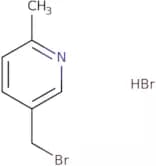
CAS:<p>5-(Bromomethyl)-2-methylpyridine hydrobromide is a brominated reagent that is used as a reaction component in organic synthesis. It has been used to synthesize high quality, versatile building blocks and useful intermediates. 5-(Bromomethyl)-2-methylpyridine hydrobromide is also a fine chemical with CAS No. 718608-10-7.</p>Formula:C7H9Br2NPurity:Min. 95%Molecular weight:266.96 g/mol6-Chloroindole
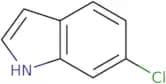
CAS:<p>A 6-chloroindole is an organic compound that contains a six-membered ring with a chlorine atom at one of the carbons. The compound is a synthetic intermediate that has been used to synthesize other molecules. It is also used in chemical reactions to introduce the phosphate group, which can be useful when studying protein–protein interactions. 6-Chloroindole has been shown to have a predictive model for identifying organic anion transporters in rat kidneys and can be used in asymmetric synthesis to produce the desired product.</p>Formula:C8H6ClNPurity:Min. 95%Color and Shape:White PowderMolecular weight:151.59 g/mol6-Chloro-3-aminopyridine-2-carboxamide
CAS:<p>6-Chloro-3-aminopyridine-2-carboxamide is a small molecule that inhibits tumor growth in human prostate cancer cells. It binds to a pharmacophore, which is a three dimensional arrangement of atoms that is responsible for the biological activity of the drug. This compound has been shown to inhibit tumor cell proliferation and induce apoptosis. 6-Chloro-3-aminopyridine-2-carboxamide also inhibits the oncogenic signaling pathways, including the PI3K/Akt and MAPK pathways, leading to antiproliferative activity in cancer cell lines. 6-Chloro-3-aminopyridine-2-carboxamide also inhibits phosphorylation of Akt and Erk1/2, which are downstream targets of PI3K/Akt pathway activation. The compound was found to have no significant effects on noncancerous cells or normal prostate tissue.</p>Formula:C6H6ClN3OPurity:Min. 95%Color and Shape:PowderMolecular weight:171.58 g/mol2-Chloroethyl isocyanate
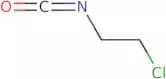
CAS:<p>Inhibitor of DNA repair mechanisms</p>Formula:C3H4ClNOPurity:Min. 98%Color and Shape:Colorless Clear LiquidMolecular weight:105.52 g/mol6-Chloropurine
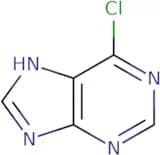
CAS:<p>6-Chloropurine is an isothiouronium salt that is metabolized by the enzyme thiopurine methyltransferase to its active form, 6-methylthioinosine. It has been shown to inhibit the growth of bacterial cells in culture by binding to their adenine nucleotide. 6-Chloropurine inhibits the synthesis of purines and pyrimidines, which are involved in DNA replication and RNA synthesis. 6-Chloropurine has been shown to have cytotoxic effects on certain human carcinoma cell lines and may be used as a chemotherapeutic agent for these types of cancer. The drug has also been shown to have high values with aerobacter aerogenes, which is a bacterium that can cause lung infections.</p>Formula:C5H3ClN4Purity:Min. 99 Area-%Color and Shape:Yellow PowderMolecular weight:154.56 g/mol6-Chloro-2-cyano-3-nitropyridine
CAS:<p>6-Chloro-2-cyano-3-nitropyridine is a modified pyridine derivative that has been shown to be an antagonist of the adenosine receptors. 6-Chloro-2-cyano-3-nitropyridine blocks the binding of adenosine to A1 and A2A receptors, which leads to increased levels of cyclic AMP in cells. This compound can be used as an antiviral agent or as a component in the development of a new generation of drugs for the treatment of malaria. 6-Chloro-2-cyano-3-nitropyridine has also been shown to be active against HIV, inhibiting its replication and preventing viral assembly. The drug’s mechanism of action is not yet fully understood, but it may involve interference with viral replication by binding to sulfinyl groups on proteins required for virus assembly.</p>Formula:C6H2ClN3O2Purity:Min. 95%Color and Shape:PowderMolecular weight:183.55 g/mol2-Chloro-3-nitropyridine
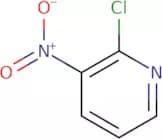
CAS:<p>2-Chloro-3-nitropyridine is a nucleophilic compound that reacts with amines to form substituted amines. It can be synthesized by hydrolysis of chloroacetamide with hydrochloric acid and reacting the resulting ammonium chloride with nitrobenzene. The reactions are nucleophilic substitutions, which means it reacts at an electron rich atom such as the nitrogen in the ammonium chloride. This reaction is exothermic, meaning it releases heat, and the products are 2-chloro-3-nitropyridine and water.<br>2-Chloro-3-nitropyridine has been shown to inhibit α subunit of protein kinase C (PKCα) activity by binding to the PKCα ATP site. It also has been shown to react with proteins containing reactive sulfhydryl groups such as cysteine residues, forming sulfonamides or sulfoxides that may inhibit enzyme activity or</p>Formula:C5H3ClN2O2Purity:Min. 95%Color and Shape:Slightly Yellow PowderMolecular weight:158.54 g/mol5-Chloro-2-mercaptobenzimidazole
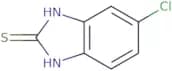
CAS:<p>5-Chloro-2-mercaptobenzimidazole is an inorganic base that is used as a microscopy reagent. It has been shown to have a transfer mechanism that is similar to the hydrogen ion transfer mechanism. 5-Chloro-2-mercaptobenzimidazole has been used in vivo assays and has functional groups that are important for its use in coatings and aluminum oxide. The molecule also contains chlorine atoms, which are important for its use in chlorination reactions. 5-Chloro-2-mercaptobenzimidazole can be used in voltammetry to test samples of organic compounds (e.g., casein) and has been shown to be effective against the Gram positive bacterium Staphylococcus aureus.</p>Formula:C7H5ClN2SPurity:Min. 98.5 Area-%Color and Shape:Off-White PowderMolecular weight:184.65 g/mol4-Chloro-3-nitrobenzonitrile
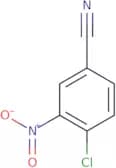
CAS:<p>4-Chloro-3-nitrobenzonitrile is a molecule with potent antibacterial activity. It is synthesized by the reaction of sodium carbonate, hydrogen chloride, and 4-chlorobenzonitrile. 4-Chloro-3-nitrobenzonitrile has shown antimicrobial properties against a wide range of bacteria, including methicillin resistant Staphylococcus aureus (MRSA) and Enterococcus faecium. This compound has been used in the treatment of infections caused by these bacteria. 4-Chloro-3-nitrobenzonitrile also has the ability to inhibit the synthesis of fatty acids and lipids in bacterial cells, which may be responsible for its antimicrobial effects.</p>Formula:C7H3ClN2O2Purity:Min. 95%Color and Shape:PowderMolecular weight:182.56 g/mol5-Chloro-2-methylindole
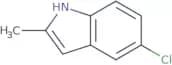
CAS:<p>5-Chloro-2-methylindole is an antimicrobial agent that is used to treat bacterial infections. It binds to the enzyme acetylacetone hydrazide, which prevents it from forming acetoacetate and 5-chloroindole. This leads to a decrease in the formation of serotonin, which may contribute to the alleviation of symptoms in patients with cerebral escherichia coli infection. 5-Chloro-2-methylindole has been shown to have antimicrobial effects against a number of bacteria, including E. coli and Staphylococcus aureus. The drug is injected intraperitoneally as a magnetic resonance imaging contrast agent for myelography, angiography, and other medical imaging procedures.</p>Formula:C9H8ClNPurity:Min. 95%Molecular weight:165.62 g/mol6-Carboxyindole
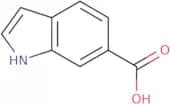
CAS:<p>6-Carboxyindole is an indole that binds to the IL-17A receptor, which leads to the production of pro-inflammatory cytokines. It has been shown to be involved in autoimmune diseases and other inflammatory conditions. 6-Carboxyindole can be used as a probe for studying the biology of IL-17A, by binding to it and inhibiting its effects. The chemical structure of 6-carboxyindole is also useful for diagnostic purposes, as it can bind to antibodies and antigens for detecting infectious diseases or other biological processes. 6-Carboxyindole can be used in the treatment of heart tissue by binding with monoclonal antibodies that are specific for cardiac proteins such as myosin light chain kinase.</p>Formula:C9H7NO2Purity:Min. 95%Molecular weight:161.16 g/mol(E)-5-(-But-1-en-1-yl)benzene-1,3-diol
CAS:<p>(E)-5-(-But-1-en-1-yl)benzene-1,3-diol is a chemical building block that reacts readily with a variety of reagents. It is also a versatile intermediate and has been used as a building block in the synthesis of complex compounds. (E)-5-(-But-1-en-1-yl)benzene-1,3-diol has been shown to be an important component in the synthesis of peptides, amines, and other organic compounds. This compound is also useful for research purposes and as a speciality chemical or fine chemical.</p>Formula:C10H12O2Purity:Min. 95%Color and Shape:PowderMolecular weight:164.2 g/mol2-tert-Butoxybenzoic acid
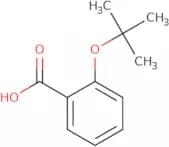
CAS:<p>2-tert-Butoxybenzoic acid is a versatile chemical that can be used as a reagent, a speciality chemical, or as an intermediate in the synthesis of other compounds. It is typically used in organic chemistry for the preparation of esters, amides, and nitriles. 2-tert-Butoxybenzoic acid is also useful as a building block for complex molecules. This compound has been shown to react with alcohols to form esters, with amines to form amides, and with nitro groups to form nitriles.</p>Formula:C11H14O3Purity:Min. 95%Color and Shape:PowderMolecular weight:194.23 g/mol4-Biphenylmethanol
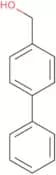
CAS:<p>4-Biphenylmethanol is a low potency naphthalene derivative that has been shown to be carcinogenic in animal studies. It is also an inhibitor of protein synthesis, which may play a role in its carcinogenic potential. 4-Biphenylmethanol has been shown to inhibit the growth of Salmonella typhimurium and Saccharomyces cerevisiae strain when used at concentrations of 50 μg/mL or higher. This compound can react with hydrochloric acid to form hydrogen bonding interactions, which may account for its observed antibacterial activity.</p>Formula:C13H12OPurity:Min. 95%Color and Shape:PowderMolecular weight:184.23 g/mol2-Bromo-5-methoxytoluene
CAS:<p>2-Bromo-5-methoxytoluene is a synthetic organic compound that is used as a chemical intermediate for cellulose derivatives. It is generated by the Friedel-Crafts reaction of bromine with toluene in the presence of aluminum chloride. 2-Bromo-5-methoxytoluene has been shown to react with cellulose derivatives and other hydrogen bond acceptors. This reaction is followed by protonation, which yields a chromophore that changes color from yellow to orange. The mechanism of this reaction can be explained by an acid catalysis mechanism, which begins with protonation of the carbonyl group (C=O) and formyl group (HC=O) groups. This causes the formation of an enolate ion, which reacts with a protonated carbonyl group to yield a formyl cation and an enolate ion. The formyl cation then reacts with another proton</p>Formula:C8H9OBrPurity:Min. 95%Color and Shape:PowderMolecular weight:201.06 g/mol1-Bromo-2-(trifluoromethoxy)ethane
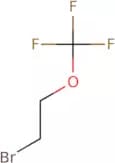
CAS:<p>1-Bromo-2-(trifluoromethoxy)ethane is a chemical compound with the formula CBrFO. It is a colorless liquid that reacts violently with water and alkali metals. 1-Bromo-2-(trifluoromethoxy)ethane has been used as a precursor to 2-chloroethyl peroxide, which can be used in organic synthesis as an oxidant or in solvents to produce chloroprene. The bromine atom in this molecule can be replaced by fluorine or chlorine atoms, forming 1-fluoro-2-(trifluoromethoxy)ethane and 1,1,1-trichloroethylene.</p>Formula:C3H4BrF3OPurity:Min. 95%Color and Shape:PowderMolecular weight:192.96 g/mol2,3-Dimethoxybenzeneethanamine
CAS:Controlled Product<p>2,3-Dimethoxybenzeneethanamine is a drug substance that belongs to the class of amines. It has been shown to have proarrhythmic effects in animal studies, and has also shown hypotensive properties. 2,3-Dimethoxybenzeneethanamine inhibits the binding of phenylephrine to adrenoceptors in rat heart tissue. This compound can be used as a chromatographic standard for dimethoxyphenethylamines and isomers due to its spectrometric properties.</p>Formula:C10H15NO2Purity:Min. 98%Color and Shape:Clear LiquidMolecular weight:181.23 g/mol4-Bromo-3,5-dimethoxybenzoic acid
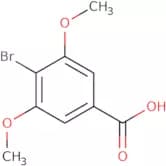
CAS:<p>4-Bromo-3,5-dimethoxybenzoic acid is a synthetic molecule that has been shown to have catalytic properties. It was generated by the reaction of resorcinol and dimethoxybenzoic acid in the presence of copper(II) acetate. This compound has also been shown to be bioinspired by its similarity to natural products such as 3,5-dihydroxybenzoic acid. 4-Bromo-3,5-dimethoxybenzoic acid has been used for the synthesis of bioactive molecules with cyclic structures. These advances are important for sustainable development and may help in the discovery of new natural products.</p>Formula:C9H9BrO4Purity:Min. 95%Color and Shape:PowderMolecular weight:261.07 g/mol