Building Blocks
This section contains fundamental products for the synthesis of organic and biological compounds. Building blocks are the essential starting materials used to construct complex molecules through various chemical reactions. They play a critical role in drug discovery, material science, and chemical research. At CymitQuimica, we offer a diverse range of high-quality building blocks to support your innovative research and industrial projects, ensuring you have the essential components for successful synthesis.
Subcategories of "Building Blocks"
- Boronic Acids & Boronic Acid Derivatives(5,756 products)
- Chiral Building Blocks(1,242 products)
- Hydrocarbon Building Blocks(6,095 products)
- Organic Building Blocks(61,055 products)
Found 199650 products of "Building Blocks"
Sort by
Purity (%)
0
100
|
0
|
50
|
90
|
95
|
100
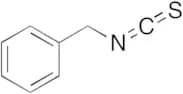
Benzyl Isothiocyanate
CAS:Controlled Product<p>Applications A novel medical application of isothiocyanate ester in treating various leukemia, with low toxicity, which includes benzyl isothiocyanate, phenylethyl isothiocyanate, allyl isothiocyanate, sulforaphane, and erucin. Benzyl isothiocyanate (BITC) inhibits the growth of human pancreatic cancer cells by inducing apoptosis.<br> Not a dangerous good if item is equal to or less than 1g/ml and there is less than 100g/ml in the package<br>References Kubinyi, H., et al.: J. Cancer Res. Clin. Oncol., 116, 529 (1990), Sheridan, R., et al.: J. Med. Chem., 50, 3173 (2007), Sahu, R.P., et al.: Carcinogenesis, 30, 1744 (2009),<br></p>Formula:C8H7NSColor and Shape:NeatMolecular weight:149.21Bis(2-butoxyethyl) 2-Hydroxyethyl Phosphate Triester
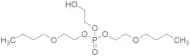
CAS:<p>Applications Bis(2-butoxyethyl) 2-Hydroxyethyl Phosphate Triester is a metabolite of Tris(2-butyloxyethyl)phosphate (T875030), which is an organophosphate, that can be used in the preparation of flame retardant, such as viscose fiber.<br>References Wang, Y., et al.: Fangzhi Xuebao, 33, 16 (2012); Xiaoshan, L. et al.: Aquatic Toxicology, 114, 173 (2012);<br></p>Formula:C14H31O7PColor and Shape:NeatMolecular weight:342.361,4-bis[3,4-dihydro-2(1H)-quinolinon-7-oxy]butane
CAS:Controlled Product<p>Impurity Aripiprazole Diquinoline Butanediol Impurity (USP)<br>Applications An impurity found in the process for the preparation of Aripiprazole (A771000). Aripiprazole Diquinoline Butanediol Impurity (USP).<br>References Burris, K., et al.: J. Pharmacol. Exp. Ther., 302, 381 (2002), Harrison, T., et al.: Drugs, 64, 1715 (2004),<br></p>Formula:C22H24N2O4Color and Shape:Off-WhiteMolecular weight:380.44N,N'-bis(2,6-Diisopropylphenyl)-1,6,7,12-tetraphenoxy-3,4,9,10-perylenetetracarboxylic Diimide
CAS:Controlled Product<p>Applications N,N'-Bis(2,6-diisopropylphenyl)-1,6,7,12-tetraphenoxy-3,4,9,10-perylenetetracarboxylic Diimide has applications in the photosensors and optical detectors.<br>References Wang, Shaojun, et al.: ACS Photonics, 5(6), 2478-2485 (2018);Wang, Hanlin, et al.: Adv. Mat., 29(32), n/a. (2017)<br></p>Formula:C72H58N2O8Color and Shape:NeatMolecular weight:1079.239Bisphenol A-13C2
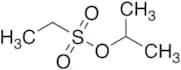
CAS:Controlled Product<p>Applications Labelled Bisphenol A (B519495). A monomer used for policarbonate and epoxy resins; exhibits estrogenic activity.<br> Not a dangerous good if item is equal to or less than 1g/ml and there is less than 100g/ml in the package<br>References Krishnan, A.V., et al.: Endocrinology, 132, 2279 (1993), Steinmetz, R., et al.: Trends Endocrinol. Metab., 9, 124 (1998), Petersen, H., et al.: Eur. Food Res. Technol., 216, 355 (2003),<br></p>Formula:C13C2H16O2Color and Shape:NeatMolecular weight:230.27Propan-2-yl Ethane-1-sulfonate
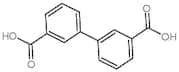
CAS:<p>Applications propan-2-yl ethane-1-sulfonate (cas# 14245-62-6) is a useful research chemical.<br></p>Formula:C5H12O3SColor and Shape:NeatMolecular weight:152.21Biphenyl-3,3'-dicarboxylic acid
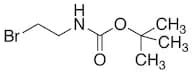
CAS:Controlled Product<p>Applications Biphenyl-3,3'-dicarboxylic acid<br> Not a dangerous good if item is equal to or less than 1g/ml and there is less than 100g/ml in the package<br></p>Formula:C14H10O4Color and Shape:NeatMolecular weight:242.23N-t-Boc-2-bromoethylamine (Technical grade, ~90%)
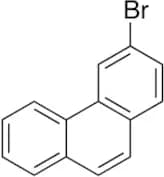
CAS:Controlled Product<p>Applications N-t-Boc-2-bromoethylamine (Technical grade, ~90%) (cas# 39684-80-5) is a compound useful in organic synthesis.<br></p>Formula:C7H14BrNO2Purity:~90%Color and Shape:NeatMolecular weight:224.103-Bromophenanthrene
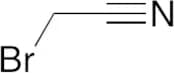
CAS:Controlled Product<p>Applications 3-BROMOPHENANTHRENE (cas# 715-50-4) is a useful research chemical.<br> Not a dangerous good if item is equal to or less than 1g/ml and there is less than 100g/ml in the package<br></p>Formula:C14H9BrColor and Shape:NeatMolecular weight:257.122-Bromoacetonitrile
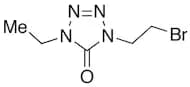
CAS:Controlled Product<p>Applications 2-Bromoacetonitrile is a water disinfectant byproduct. 2-Bromoacetonitrile has been found to show mutagenic activity on Salmonella typhimurium strain TA100.<br> Not a dangerous good if item is equal to or less than 1g/ml and there is less than 100g/ml in the package<br>References Ahmed, A.E., et. al.: Toxicol. Appl. Pharm., 100, 271 (1989); Le Curieux, F., et. al.: Mutat. Res-genet. Tox., 341, 289 (1995)<br></p>Formula:C2H2BrNColor and Shape:AmberMolecular weight:119.951-(2-Bromoethyl)-4-ethyl-1,4-dihydro-5H-tetrazol-5-one
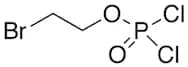
CAS:Controlled Product<p>Applications Intermediate in the preparation of Alfentanil.<br>References Kudzma, L., et al.: J. Med. Chem., 32, 2534 (1989),<br></p>Formula:C5H9BrN4OColor and Shape:NeatMolecular weight:221.06β-Bromoethylphosphoryl Dichloride
CAS:Controlled Product<p>Stability Moisture Sensitive<br>Applications A phosphorylating agent.<br> Not a dangerous good if item is equal to or less than 1g/ml and there is less than 100g/ml in the package<br>References Sartori: Chem. Rev., 48, (1951), Nachmansohn, et al.: Adv. Enzymology, 12, 259 (1951)<br></p>Formula:C2H4BrCl2O2PColor and Shape:ColourlessMolecular weight:241.848-Bromo-1-octene
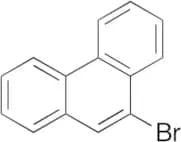
CAS:Controlled Product<p>Applications 8-Bromo-1-octene, is a building block used for the synthesis of more complex pharmaceutical compounds, such as Dithienogermole (DTG) derivatives with varying alkyl chain lengths and pendant functionalities.<br>References Zong, K., et al.: Org. Lett., 15, 1032 (2013);<br></p>Formula:C8H15BrColor and Shape:NeatMolecular weight:191.119-Bromophenanthrene
CAS:Controlled Product<p>Applications 9-Bromophenanthrene is a halogenated polycyclic aromatic hydrocarbon that has been seen to have a room temperature phosphorescence that can be induced by β-cyclodextrin (β-CD) in the presence of cyclohexane; however, trace Fe(III) causes a decrease of the RTP emission.<br>References Chai, H., et. al.: Anal. Lett., 43, 711 (2010)<br></p>Formula:C14H9BrColor and Shape:NeatMolecular weight:257.13tert-Butyl N-[3-(Chlorosulfonyl)propyl]carbamate
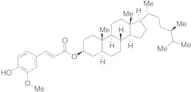
CAS:Controlled Product<p>Applications tert-butyl N-[3-(chlorosulfonyl)propyl]carbamate (cas# 1196153-59-9) is a useful research chemical.<br></p>Formula:C8H16ClNO4SColor and Shape:NeatMolecular weight:257.735trans-Campestanyl Ferulate
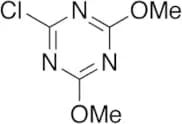
CAS:Controlled Product<p>Applications trans-Campestanyl Ferulate is used for synthesis of trans-feruloyl-β-sitostanol.<br>References Condo, A., et al.: J. Agric. Food Chem., 49, 4961 (2001);<br></p>Formula:C38H58O4Color and Shape:NeatMolecular weight:578.862-Chloro-4,6-dimethoxy-1,3,5-triazine
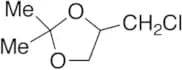
CAS:Controlled Product<p>Applications 2-Chloro-4,6-dimethoxy-1,3,5-triazine (cas# 3140-73-6) is a compound useful in organic synthesis.<br></p>Formula:C5H6ClN3O2Color and Shape:NeatMolecular weight:175.574-Chloromethyl-2,2-dimethyl-1,3-dioxolane
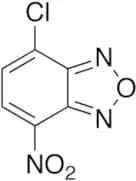
CAS:Controlled Product<p>Applications 4-Chloromethyl-2,2-dimethyl-1,3-dioxolane is used in biosynthetic preparations.<br> Not a dangerous good if item is equal to or less than 1g/ml and there is less than 100g/ml in the package<br>References Spelberg, J.H., Tetrahedron, Asy., 10, 2863 (1999);<br></p>Formula:C6H11ClO2Color and Shape:NeatMolecular weight:150.60334-Chloro-7-nitro-2,1,3-benzoxadiazole
CAS:Controlled Product<p>Applications A fluorescent reagent used to evaluate peptides, pharmaceutical drugs and other bioactive compounds.<br>References Rudat, B. et al.: Eur. J. Med. Chem., 46, 4457 (2011); Michail, K. et al.: Int. J. Pharm. Pharmac. Sci., 3, 180 (2011); Walsh, M. et al.: J. Fluoresc., 21, 105 (2011);<br></p>Formula:C6H2ClN3O3Color and Shape:YellowMolecular weight:199.55

![1,4-bis[3,4-dihydro-2(1H)-quinolinon-7-oxy]butane](/_next/image/?url=https%3A%2Fstatic.cymitquimica.com%2Fproducts%2FTR%2Fthumb-webp%2FB426500.webp&w=3840&q=75)



![tert-Butyl N-[3-(Chlorosulfonyl)propyl]carbamate](/_next/image/?url=https%3A%2Fstatic.cymitquimica.com%2Fproducts%2FTR%2Fthumb-webp%2FB811700.webp&w=3840&q=75)