Building Blocks
This section contains fundamental products for the synthesis of organic and biological compounds. Building blocks are the essential starting materials used to construct complex molecules through various chemical reactions. They play a critical role in drug discovery, material science, and chemical research. At CymitQuimica, we offer a diverse range of high-quality building blocks to support your innovative research and industrial projects, ensuring you have the essential components for successful synthesis.
Subcategories of "Building Blocks"
- Boronic Acids & Boronic Acid Derivatives(5,756 products)
- Chiral Building Blocks(1,242 products)
- Hydrocarbon Building Blocks(6,095 products)
- Organic Building Blocks(61,038 products)
Found 196817 products of "Building Blocks"
Sort by
Purity (%)
0
100
|
0
|
50
|
90
|
95
|
100
(5-Trifluoromethyl-thiophen-3-yl)-methanol
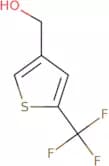
CAS:(5-Trifluoromethyl-thiophen-3-yl)-methanol is a fine chemical that is used as a building block for research chemicals, reagents, and specialty chemicals. It can be used in the synthesis of various complex compounds and is a versatile building block for organic reactions. (5-Trifluoromethyl-thiophen-3-yl)-methanol is an intermediate that can serve as a scaffold for the synthesis of more complex molecules. This compound has CAS No. 1447913-56-5 and has a high quality.Formula:C6H5F3OSPurity:Min. 95%Color and Shape:Clear LiquidMolecular weight:182.16 g/mol(2R)-4-Methyl-2-[2-oxo-2-[(phenylmethoxy)amino]ethyl]pentanoic acid
CAS:<p>Please enquire for more information about (2R)-4-Methyl-2-[2-oxo-2-[(phenylmethoxy)amino]ethyl]pentanoic acid including the price, delivery time and more detailed product information at the technical inquiry form on this page</p>Formula:C15H21NO4Molecular weight:279.33 g/mol2-Naphthalenesulfonic acid
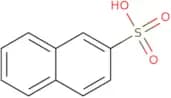
CAS:<p>2-Naphthalenesulfonic acid is an activated sodium salt that is used to treat wastewater. It has been shown to react with malonic acid, a major component of wastewater, by forming a kinetic and thermodynamic acid complex. The reaction solution then reacts with epidermal growth factor to form benzalkonium chloride. 2-Naphthalenesulfonic acid has been shown to be effective in the treatment of wastewater due to its ability to remove organic materials and inhibit the growth of bacteria.</p>Formula:C10H8SO3Purity:Min. 98 Area-%Color and Shape:PowderMolecular weight:208.23 g/mol2-Hydroxyisophthalic acid
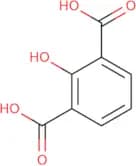
CAS:<p>2-Hydroxyisophthalic acid is a hydroxylated derivative of p-hydroxybenzoic acid. It is used in the manufacture of esters such as 2-ethoxyethanol and 2-ethoxyethyl acetate. It has also been shown to have a number of enzyme activities, including esterases, glycosidases, and lipases. The macrocyclic structure of 2-hydroxyisophthalic acid is responsible for its ability to interact with other molecules through hydrogen bonding and coordination chemistry. The carboxylate group on 2-hydroxyisophthalic acid interacts with the hydroxy group on the fatty acids found in soap, which leads to its use as an emulsifying agent. The carbonyl oxygens on 2-hydroxyisophthalic acid are responsible for its anti-inflammatory properties as they inhibit prostaglandin synthesis when they bind to the cyclooxygenase enzymes that catalyze</p>Formula:C8H6O5Purity:Min. 95 Area-%Color and Shape:PowderMolecular weight:182.13 g/mol2-Naphthylacetic acid
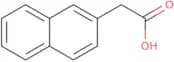
CAS:2-Naphthylacetic acid is a molecule that has been shown to inhibit serine proteases in humans and other mammals. It has been tested as a growth regulator for plants and has shown promising results in the prevention of root formation. 2-Naphthylacetic acid can be used to inhibit the activity of hydrogen bonding, which is required for chromatographic methods. The compound's chemical structure includes a naphthalene ring with two acetic acid groups on either side of it.Formula:C12H10O2Purity:Min. 95%Color and Shape:PowderMolecular weight:186.21 g/mol1-Naphthoic acid
CAS:<p>1-Naphthoic acid is a phenolic antioxidant that is used in the treatment of inflammatory bowel disease. It has been shown to reduce the production of inflammatory cytokines and improve symptoms of bowel disease. 1-Naphthoic acid, as a fluorescence probe, can be used to detect and quantify hydroxycinnamic acids in biological fluids such as serum and urine. 1-Naphthoic acid also inhibits serine protease activity, which is involved in autoimmune diseases such as lupus erythematosus. It also inhibits the activity of hydrolytic enzymes that are associated with metabolic disorders such as diabetes mellitus. In addition, 1-naphthoic acid can act as an agonist at certain receptors including muscarinic receptors and α2A receptors. It has also been shown to increase levels of retinoic acid and inhibit the formation of hydrogen peroxide by bacteria like H. pylori due to its ability</p>Formula:C11H8O2Purity:Min. 95%Color and Shape:Clear LiquidMolecular weight:172.18 g/mol1,2-Naphthoquinone-4-sulfonic acid potassium salt
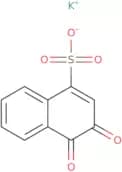
CAS:<p>1,2-Naphthoquinone-4-sulfonic acid potassium salt is a pesticide that has been shown to be active against many types of insects. It is used as an insecticide and acaricide in agriculture, horticulture, and forestry. The compound is stable and does not hydrolyze in water, making it easy to handle. This product is also a natural product that can be synthesized from cyanamide and amines, which are both commercially available. 1,2-Naphthoquinone-4-sulfonic acid potassium salt has been found to be effective at killing insects when injected into their bodies with the use of a syringe or when sprayed on the surface where they live. GC–MS analysis has shown that this compound contains no reactive functional groups or substances that would cause harm to humans or animals. Research has shown this product to be safe for use in food crops and animal feed.</p>Formula:C10H5O5SKPurity:Min. 98 Area-%Color and Shape:Orange PowderMolecular weight:276.31 g/molN-Nitroso-3-azabicyclo[3.3.0]octane
CAS:<p>N-Nitroso-3-azabicyclo[3.3.0]octane is a nitrosating agent that can be used for the determination of gliclazide in pharmaceuticals and other applications. It is synthesized by reacting 3-azabicyclo[3.3.0]octane with sodium nitrite in an alkaline environment, followed by hydrolysis with hydrochloric acid. Nitrosation reactions are usually slow, but N-nitroso-3-azabicyclo[3.3.0]octane has been shown to have a fast reaction kinetics, which makes it useful for the determination of gliclazide in pharmaceuticals and other applications. The product is analyzed using chromatographic techniques such as high performance liquid chromatography (HPLC) or gas chromatography/mass spectrometry (GC/MS). The product was found to be linear over the range of 0–</p>Formula:C7H12N2OPurity:Min. 95%Color and Shape:Colorless PowderMolecular weight:140.18 g/mol1-Amino-2-naphthol-4-sulfonic acid
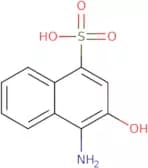
CAS:<p>1-Amino-2-naphthol-4-sulfonic acid is a fluorescent dye that belongs to the class of naphtholsulfonates. It has been shown to react with protonated hydroxyl groups, which are present in the matrix, and form an electrochemical impedance spectrum. The fluorescence of tryptophan can be used as a probe to detect the presence of 1-amino-2-naphthol-4-sulfonic acid in a solution. This reaction mechanism suggests that adsorption is the dominating process for 1-amino-2-naphthol-4-sulfonic acid.</p>Formula:C10H9NO4SColor and Shape:PowderMolecular weight:239.25 g/mol2-Amino-5-iodobenzoic acid
CAS:<p>2-Amino-5-iodobenzoic acid (5-AIBA) is a chemical compound with a molecular weight of 152.14 g/mol. It belongs to the group of anthranilic compounds, and has antiinflammatory activity. 5-AIBA also inhibits cancer cell proliferation in vitro and in vivo by inhibiting the synthesis of DNA, RNA, and proteins. The reaction solution for the palladium-catalyzed coupling of 5-AIBA with 2-(N,N′-dimethylcarbamoyl)phenyl boronic acid was found to be stable at room temperature for 24 hours. The inhibitory activity of 5-AIBA against MCL1 protein was potent, as it inhibited MCL1 protein expression by 90%. Molecular modeling studies showed that 5-AIBA binds to the amide region on the ATP binding site in MCL1 protein (mcf7). Carbonyl groups are present on both sides of the am</p>Formula:C7H6INO2Purity:Min. 98 Area-%Color and Shape:PowderMolecular weight:263.03 g/mol2-Aminoethanethiol
CAS:<p>2-Aminoethanethiol is a bitartrate salt of cysteamine. It inhibits the growth of bacteria by inhibiting the synthesis of the bacterial cell wall, which is required for bacterial replication and division. 2-Aminoethanethiol has been shown to be effective in experimental models of cystinosis and cystamine. 2-Aminoethanethiol has also been used as an antidote to cyanide poisoning.</p>Formula:C2H7NSColor and Shape:White Off-White PowderMolecular weight:77.15 g/mol4-Amino-6-bromoindole
CAS:<p>4-Amino-6-bromoindole is a potent and selective antagonist of the 5-HT6 receptor, which is a subtype of serotonin receptor. It has been shown to bind with high affinity to this receptor in both rat and human brain tissue. 4-Amino-6-bromoindole has been synthesised by medicinal chemistry methods and has been shown to block the effects of scopolamine in animal models. 4-Amino-6-bromoindole has also shown promise as a potential treatment for schizophrenia, depression, anxiety disorders, and other psychiatric disorders.</p>Formula:C8H7BrN2Purity:Min. 90%Molecular weight:211.06 g/mol2-(4-Aminobenzyl)aniline
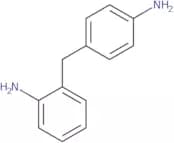
CAS:<p>2-(4-Aminobenzyl)aniline is a plant-based compound that is biodegradable. It can be applied to cancer cells to inhibit their growth and proliferation. 2-(4-Aminobenzyl)aniline has been shown to cause thyroid cancer in rats, which is the most common form of cancer in humans. The carcinogenic effects of this chemical are due to its ability to react with amines, such as aromatic amines, and form nitrosamines. These carcinogens have been shown to be present in wastewater treatment plants. 2-(4-Aminobenzyl)aniline has also been found to inhibit the growth rate of the variegatus plant, which may be useful for controlling its invasive nature.</p>Formula:C13H14N2Purity:Min. 98 Area-%Color and Shape:PowderMolecular weight:198.26 g/mol2-(3,5-Dimethyl-1H-pyrazol-4-yl)aniline
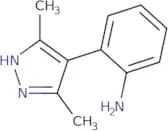
CAS:<p>Versatile small molecule scaffold</p>Formula:C11H13N3Purity:Min. 95%Color and Shape:PowderMolecular weight:187.24 g/molNew Methylene Blue N
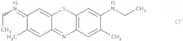
CAS:<p>New Methylene Blue N is a dye that has been shown to have antimicrobial properties. It is used as a stain in histology, as well as in the treatment of bacterial and fungal infections. New Methylene Blue N can also be used as an indicator for acidity, due to its acidic nature. The compound may also act as a substrate for nitrite reductase, which is an enzyme involved in the reduction of nitrite to nitric oxide. Nitric oxide is a potent vasodilator that relaxes vascular smooth muscle and inhibits platelet aggregation. New Methylene Blue N has also been shown to have photochemical properties, which may contribute to its ability to inhibit bacterial growth.</p>Formula:C18H22ClN3SColor and Shape:Brown PowderMolecular weight:347.91 g/mol1,3,5-Triazine
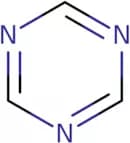
CAS:<p>1,3,5-Triazine is a nitrogen-containing heterocyclic compound that is used as a precursor for the synthesis of other compounds. It has been shown to inhibit the polymerase chain reaction and to bind to the enzyme DNA polymerase. This binding prevents the formation of an enzyme-substrate complex required for DNA replication. 1,3,5-Triazine also inhibits oxidative injury in experimental models and inhibits cellular physiology by decreasing the production of growth factor-β1. 1,3,5-Triazine has been shown to be a natural compound with inhibitory properties against growth factors and cell proliferation. This chemical also exhibits antioxidant effects by scavenging reactive oxygen species or inhibiting lipid peroxidation.END></p>Formula:C3H3N3Purity:Min. 95%Color and Shape:White PowderMolecular weight:81.08 g/mol1,3-Adamantanediamine dihydrochloride
CAS:<p>1,3-Adamantanediamine dihydrochloride is a mimetic that has been shown to inhibit the fibrinolytic activity of nipecotic acid. This compound also inhibits the platelet aggregation induced by the activation of collagen receptors. It has been shown to have an antagonistic effect on NMDA receptors and to induce apoptosis in cancer cells. The structure of 1,3-Adamantanediamine dihydrochloride is similar to that of adamantane, which is a naturally occurring molecule found in plants and animals.</p>Formula:C10H18N2·2HClPurity:Min. 95%Color and Shape:White PowderMolecular weight:239.18 g/mol8-Anilino-1-naphthalenesulfonic acid
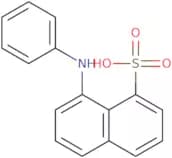
CAS:<p>8-Anilino-1-naphthalenesulfonic acid is a potent and selective inhibitor of the proteasome. It inhibits the activity of the proteasome and leads to neuronal death. 8-Anilino-1-naphthalenesulfonic acid has been shown to have antioxidative properties in a Langmuir adsorption isotherm study. This compound also has fluorescence, which makes it useful as a fluorescent probe for protein identification in human serum. 8-Anilino-1-naphthalenesulfonic acid binds to proteins with hydrophobic regions, such as lipids and phospholipids, due to its hydrophobic effect. It can be used as an analytical method for determining the protein content in water samples.</p>Formula:C16H13NO3SPurity:Min. 95 Area-%Color and Shape:Brown Green PowderMolecular weight:299.35 g/mol1,1'-(Azodicarbonyl)dipiperidine
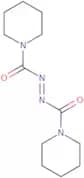
CAS:<p>1,1'-(Azodicarbonyl)dipiperidine is an organic compound that has been shown to be a radiosensitizing agent. It is used in the treatment of ovarian cancer and inhibits cell growth by inducing apoptosis. 1,1'-(Azodicarbonyl)dipiperidine modifies the cellular response to ionizing radiation by sensitizing cells to radiation and increasing the amount of DNA damage caused by radiation. This compound was found to increase the radiosensitivity of cells in vitro; however, it does not induce apoptosis in non-malignant cells. The effects are observed at low doses and are more pronounced when combined with other agents such as 3-aminobenzamide (3AB).</p>Formula:C12H20N4O2Purity:Min. 95%Color and Shape:Yellow PowderMolecular weight:252.31 g/mol1-Nonanol
CAS:<p>1-Nonanol is a colorless liquid with a pleasant odor. It can be synthesized from methyl pentanoate by the asymmetric addition of an inorganic acid to the ester hydrochloride. This process results in a mixture of 1-nonanol and its isomer 2-nonanol, which can be separated using an analytical method such as gas chromatography. 1-Nonanol has been shown to have high transport properties, making it useful for detergent compositions. It has also been shown to exhibit strong hydrogen bonding abilities that may contribute to its adsorption mechanism.</p>Formula:C9H20OPurity:Min. 95%Color and Shape:Colorless Clear LiquidMolecular weight:144.25 g/mol

![(2R)-4-Methyl-2-[2-oxo-2-[(phenylmethoxy)amino]ethyl]pentanoic acid](/_next/image/?url=https%3A%2Fstatic.cymitquimica.com%2Fproducts%2F3D%2Fthumb-webp%2FB-9970.webp&w=3840&q=75)

![N-Nitroso-3-azabicyclo[3.3.0]octane](/_next/image/?url=https%3A%2Fstatic.cymitquimica.com%2Fproducts%2F3D%2Fthumb-webp%2FFN166610.webp&w=3840&q=75)