Building Blocks
This section contains fundamental products for the synthesis of organic and biological compounds. Building blocks are the essential starting materials used to construct complex molecules through various chemical reactions. They play a critical role in drug discovery, material science, and chemical research. At CymitQuimica, we offer a diverse range of high-quality building blocks to support your innovative research and industrial projects, ensuring you have the essential components for successful synthesis.
Subcategories of "Building Blocks"
- Boronic Acids & Boronic Acid Derivatives(5,778 products)
- Chiral Building Blocks(1,242 products)
- Hydrocarbon Building Blocks(6,098 products)
- Organic Building Blocks(61,034 products)
Found 199601 products of "Building Blocks"
Sort by
Purity (%)
0
100
|
0
|
50
|
90
|
95
|
100
3-Methyloxindole
CAS:Controlled Product<p>Applications 3-Methylindole metabolite.<br>References Skordos, K., et al.: Chem. Res. Toxicol., 11, 741 (1998), Lanza, D., et al.: Drug Metab. Disposition, 29, 950 (2001), Hoenicke, K., et al.: J. Agric. Food Chem., 50, 4303 (2002),<br></p>Formula:C9H9NOColor and Shape:BeigeMolecular weight:147.17o-Iodohippuric Acid
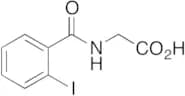
CAS:Controlled Product<p>Applications o-Iodohippuric Acid is used as a probe to measure renal function and clearance.<br>References Galinsky, R. et al.: Mech. Age. Dev., 56, 209 (1990);<br></p>Formula:C9H8INO3Color and Shape:NeatMolecular weight:305.07Monobenzyl Malonate
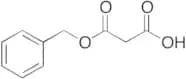
CAS:Controlled Product<p>Applications Monobenzyl Malonate is a useful synthetic intermediate. It was used to synthesize constrained cyclic agonists of the cholecystokinin CCK-B receptor. It was also used to prepare aspartate transcarbamoylase inhibitors.<br>References Blommaert, A., et al.: J. Med. Chem., 40, 647 (1997); Coudray, L., et al.: Bioorg. Med. Chem., 17, 7680 (2009)<br></p>Formula:C10H10O4Color and Shape:NeatMolecular weight:194.18Sodium 2-Nitrophenolate
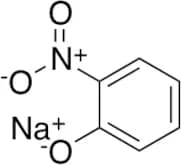
CAS:<p>Applications Sodium 2-nitrophenolate (cas# 824-39-5) is a useful research chemical.<br></p>Formula:C6H4NO3·NaColor and Shape:NeatMolecular weight:161.09Mono-tert-butyl Succinate
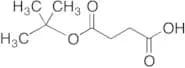
CAS:Controlled Product<p>Applications Mono-tert-butyl Succinate is a reagent used for the synthesis of fluorinated β2- and β3-amino acids, an inhibitor of α-chymotrypsin.<br>References Peddie, V., et al.: Synthesis, 1845-1859 (2010);<br></p>Formula:C8H14O4Color and Shape:White To Off-WhiteMolecular weight:174.194Monobutyl Phosphate
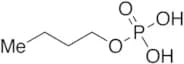
CAS:Controlled Product<p>Applications Mono and dibasic phosphate esters are anionic surfactants which have the main feature of the stability in alkaline conditions over other surfactants. They have a wide range of properties including outstanding wetting, emulsification, lubrication, coupling activity and detergency.<br> Not a dangerous good if item is equal to or less than 1g/ml and there is less than 100g/ml in the package<br>References Ramirez, F., et al.: Tetrahedron, 35, 1581 (1979);<br></p>Formula:C4H11O4PColor and Shape:NeatMolecular weight:154.14-Mercaptobenzoic Acid, Technical Grade
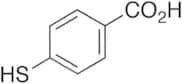
CAS:Controlled Product<p>Stability Store Under Argon; Air Sensitive<br>Applications 4-Mercaptobenzoic Acid, Technical Grade (cas# 1074-36-8) is a compound useful in organic synthesis.<br> Not a dangerous good if item is equal to or less than 1g/ml and there is less than 100g/ml in the package<br></p>Formula:C7H6O2SColor and Shape:NeatMolecular weight:154.194-Morpholineethanesulfonic Acid Hydrate
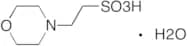
CAS:<p>Applications 4-Morpholineethanesulfonic Acid is used in the synthesis of nanotechnology and nanoparticles, as potential therapy towards Alzheimer’s.<br>References Liu, G. et al.: Methods. Mol. Biol., 610, 123 (2010); Neugart, F. et al.: Nano. Lett., 7, 3588 (2007)<br></p>Formula:C6H13NO4S·H2OColor and Shape:White PowderMolecular weight:213.252Isopentyl Mesylate
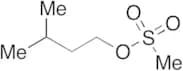
CAS:Controlled Product<p>Stability Moisture Sensitive<br>Applications Isopentyl Mesylate is used as a reagent in the synthesis of phosphonate derivatives as autotaxin (ATX) inhibitors.<br>References Cui, P., et al.: Bioorg. Med. Chem. Lett., 17, 1634 (2007)<br></p>Formula:C6H14O3SColor and Shape:NeatMolecular weight:166.24N,N,N'-Trimethyl-1,3-propanediamine
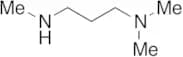
CAS:Controlled Product<p>Stability Hygroscopic<br>Applications N,N,N'-Trimethyl-1,3-propanediamine is a reactant that as a ligand, racemizes aromatic alcohols completely in the prescence of a ruthenium-based racemization catalyst.<br> Not a dangerous good if item is equal to or less than 1g/ml and there is less than 100g/ml in the package<br>References Riermeier, T.H., et. al.: Tetrahedron Lett., 46, 3403 (2005)<br></p>Formula:C6H16N2Color and Shape:NeatMolecular weight:116.2Isopropyl Methanesulfonate
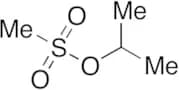
CAS:Controlled ProductFormula:C4H10O3SColor and Shape:ColourlessMolecular weight:138.19N-Isopropyl-N-methylamine
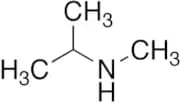
CAS:Controlled Product<p>Stability Volatile<br>Applications N-Isopropyl-N-methylamine (cas# 4747-21-1) is a compound useful in organic synthesis.<br> E0<br></p>Formula:C4H11NColor and Shape:NeatMolecular weight:73.14para-Topolin
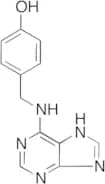
CAS:Controlled Product<p>Applications para-Topolin can be used for biological study for evaluation of antioxidant activity and capacity of some natural N6-substituted adenine derivatives (cytokinins) by fluorimetric and spectrophotometric assays.<br>References Brizzolari, A., et al.: J. Chromatogr. B., 1019, 164-168 (2016)<br></p>Formula:C12H11N5OColor and Shape:NeatMolecular weight:241.25D-α-Tocopherol Quinone
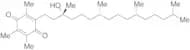
CAS:Controlled Product<p>Stability Light Sensitive<br>Applications D-α-Tocopherol Quinone is an vitamin E derivative that exhibits antioxidant properties. D-α-Tocopherol Quinone has been shown to partially restore the activity of NADH dehydrogenase and used to investigate the electron transport system in rat hepatocyte and human erythrocyte.<br>References Sun, I. L., et al.: Proc. Natl. Acad. Sci. USA 89, 11126 (1992); Hosomi, A., et al.: FEBS Lett. 409, 105 (1997)<br></p>Formula:C29H50O3Color and Shape:NeatMolecular weight:446.712,2,5,5-Tetramethyl-1,3-cyclohexanedione
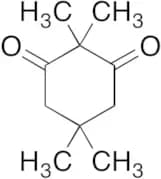
CAS:Controlled ProductFormula:C10H16O2Color and Shape:NeatMolecular weight:168.233Tetraethylenepentamine Pentahydrochloride
CAS:Controlled Product<p>Applications Tetraethylenepentamine Pentahydrochloride, is used as a copper chelator, for the treatment of copper mobilization in copper-overloaded rats, and eventually for the as a therapy for disorders of copper transport, such as Wilson's disease.<br>References Domingo, J., et al.: Bio. trace Element Res., 74, 127 (2000);<br></p>Formula:C8H28Cl5N5Color and Shape:NeatMolecular weight:371.61