Building Blocks
This section contains fundamental products for the synthesis of organic and biological compounds. Building blocks are the essential starting materials used to construct complex molecules through various chemical reactions. They play a critical role in drug discovery, material science, and chemical research. At CymitQuimica, we offer a diverse range of high-quality building blocks to support your innovative research and industrial projects, ensuring you have the essential components for successful synthesis.
Subcategories of "Building Blocks"
- Boronic Acids & Boronic Acid Derivatives(5,756 products)
- Chiral Building Blocks(1,242 products)
- Hydrocarbon Building Blocks(6,095 products)
- Organic Building Blocks(61,055 products)
Found 199650 products of "Building Blocks"
Sort by
Purity (%)
0
100
|
0
|
50
|
90
|
95
|
100
2H-Furo[2,3-c]pyran-2-one
CAS:<p>Applications Forest fires are actually beneficial for ecosystems, provided they don’t happen too often. After a fire, plants germinate and grow incredibly fast. 2H-Furo[2,3-c]pyran-2-one, KAR2, is a compound in smoke responsible for promoting the seed germination of a wide range of plant species. The researchers named the compounds “the karrikins”, for “karrik”, an aboriginal word for smoke.<br>References Sakuma, H., et al.: .Agric Biol. Chem., 45, 443 (1981), Stevens, J., et al.: Plant Soil, 298, 113 (2007), Nelson, D., et al.: Plant Physiol., 149, 863 (2009),<br></p>Formula:C7H4O3Color and Shape:NeatMolecular weight:136.1Furoyl Chloride
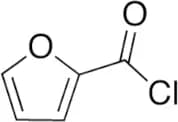
CAS:<p>Applications Furoyl Chloride is used in the preparation of novel dibenzothiepins that show antibiofilm activity.<br> Not a dangerous good if item is equal to or less than 1g/ml and there is less than 100g/ml in the package<br>References Stecoza, C. et al.: Curr. Org. Chem., 17, 113 (2013);<br></p>Formula:C5H3ClO2Color and Shape:NeatMolecular weight:130.531-(2-Furyl)ethanol
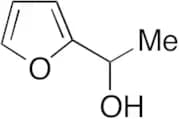
CAS:Controlled Product<p>Applications 1-(2-Furyl)ethanol is an intermediate in the synthesis of 2H-Furo[2,3-c]pyran-2-one derivatives of their germination-promoting activity.<br>References Singh, V., et al.: Synthetic. Commun., 40, 1280 (2010);<br></p>Formula:C6H8O2Color and Shape:Colourless To Light YellowMolecular weight:112.126Gentisic Acid Sodium Hydrate
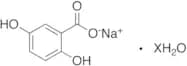
CAS:Controlled Product<p>Applications Analgesic; anti-inflammatory.<br>References Ali, M., et al.: Plant Cell Rep., 25, 613 (2006), Kovacik, J., et al.: Plant Sci., et al.: 172, 393 (2007),<br></p>Formula:C7H5O4·NaColor and Shape:NeatMolecular weight:176.10Geranyl Linalool
CAS:Controlled Product<p>Applications Geranyl Linalool is am aliphatic genaryl derivative. Geranyl Linalool unlike other genaryl derivatives showed poor inhibitory activity against carotenoid synthesis in Synechococcus. Geranyl Linalool was identified as a testosterone-dependent volatile compound in the preputial gland of rat Rattus norvegicus.<br>References Juettner, F. et al.: Zeitsch. Naturforsch. C J. Biosci., 38C, 387 (1983); Ponmanickam, P. et al.: Gen. Comp. Endocrinol., 167, 35 (2010):<br></p>Formula:C20H34OColor and Shape:ColourlessMolecular weight:290.48Glutaconic Acid
CAS:Controlled Product<p>Applications Glutaconic Acid is used in the synthesis of dialkyltin derivatives of dicarboxylic acids which display antitumor properties. Also used in the synthesis of novel tetracyclic compounds as peripheral benzodiazepine receptor ligands with potential use for CNS illness treatments.<br>References Gielen, M. et al.: Hetero. Chem., 3, 449 (1992); Okubo, T. et al.: Bioorg. Med. Chem. Lett., 12, 3569 (2004);<br></p>Formula:C5H6O4Color and Shape:NeatMolecular weight:130.1D-Glutamic Acid
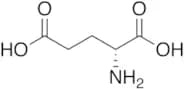
CAS:<p>Applications D-Glutamic Acid is the unnatural (R)-enantiomer of Glutamic Acid, a non-essential amino acid. Its salt form (glutamate) is an important neurotransmitter that plays a key role in long-term potentiation and is important for learning and memory. Glutamic Acid is also a key molecule in cellular metabolism.<br>References McEntee, W. et al.: Psychopharmacology, 111, 391 (1993); Manev, H. et al.: Mol. Pharmacol., 36, 106 (1989);<br></p>Formula:C5H9NO4Color and Shape:NeatMolecular weight:147.13Glycidyl Caprate
CAS:Controlled Product<p>Applications Glycidyl Caprate is an epoxy monomer used as a crosslinking agents for alkyd coatings.<br>References Sorokin, M.F. et al.: Lakokras. Mat. Ikh Prim., 5, 9 (1979);<br></p>Formula:C13H24O3Color and Shape:ColourlessMolecular weight:228.33Glycidol (~90%)
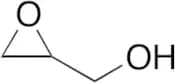
CAS:Controlled Product<p>Applications Stabilizer in manufacturing of vinyl polymers; intermediate in synthesis of glycerol, glycidyl ethers, and amines; additive for oil and synthetic hydraulic fluids; epoxy resin diluent.<br> Not a dangerous good if item is equal to or less than 1g/ml and there is less than 100g/ml in the package<br>References Hiles, R.A., et al.: Food Cosmet. Toxicol., 19, 347 (1981); Thompson, E.D., et al.: Food Chem. Toxicol., 22, 665 (1984);<br></p>Formula:C3H6O2Purity:~90%Color and Shape:ColourlessMolecular weight:74.08Glyoxylic Acid (50% aqueous solution)
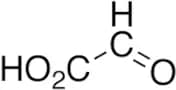
CAS:<p>Applications Glyoxylic Acid is used as a reagent in the synthesis of N-{[6-chloro-4-(2,6-dimethoxyphenyl)quinazolin-2-yl]carbonyl}-L-leucine, a novel nonpeptide chemotype selective for neurotensin receptor 2. Also used as a reagent in the synthesis of elemonic acid derivatives as Pin1 inhibitors.<br>References Thomas, J.B., et al.: Bioorg. Med. Chem. Lett., 25, 292 (2015); Li, X., et al.: Bioorg. Med. Chem. Lett., 24, 5612 (2014)<br></p>Formula:C2H2O3Color and Shape:Colourless LiquidMolecular weight:74.04Glyoxylic Acid Monohydrate
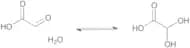
CAS:Controlled Product<p>Applications Occurs in unripe fruit and in young green leaves; has also been found in very young sugar beets.<br>References Lelieveld, J., et al.: Nature, 452, 737 (2008), da Silva, G., et al.: Environ. Sci. Technol., 44, 250 (2010),<br></p>Formula:C2H4O4Color and Shape:NeatMolecular weight:92.05Guanidinoacetic Acid
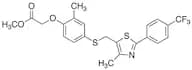
CAS:<p>Applications Guanidinoacetic Acid is an important marker for renal failure, in kidney transplantation, and for the renal metabolic activity.<br>References Zugno, A., et al.: Neurochem. Res., 33, 1804 (2008), Debray, F., et al.: Neurol., 71, 44 (2008), da Silva, R., et al.: Am. J. Physiol., 296, E256 (2009),<br></p>Formula:C3H7N3O2Color and Shape:WhiteMolecular weight:117.11GW 501516 Methyl Ester
CAS:<p>Applications Precursor to GW 501516.<br>References Pereira, R., et al.: Bioorg. Med. Chem. Lett., 16, 49 (2006),<br></p>Formula:C22H20F3NO3S2Color and Shape:NeatMolecular weight:467.522-(3-hydroxyphenyl)propanoic acid
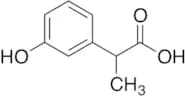
CAS:Controlled ProductFormula:C9H10O3Color and Shape:NeatMolecular weight:166.1745-[(3-hydroxyphenyl)methyl]oxolan-2-one
CAS:<p>Stability Hygroscopic<br>Applications 5-[(3-hydroxyphenyl)methyl]oxolan-2-one (cas# 21618-91-7) is a useful research chemical.<br></p>Formula:C11H12O3Color and Shape:NeatMolecular weight:192.215-(3-hydroxyphenyl)pentanoic Acid
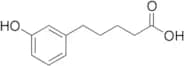
CAS:<p>Applications 5-(3-hydroxyphenyl)pentanoic acid (cas# 31129-95-0) is a useful research chemical.<br></p>Formula:C11H14O3Color and Shape:NeatMolecular weight:194.23Harmine
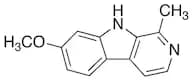
CAS:<p>Applications Harmine is a natural β-carboline alkaloid and a CNS stimulant (1,2). Harmine has been shown to be a potent and selective inhibitor of dual specificity tyrosine phosphorylation regulated kinase 1A (DYRK1A) (3). DYRK1A is a potential therapeutic target for treating diabetes, Down Syndrome, and HIV (4).<br>References (1) DiStefano, S., et al.: J. Pharmacol. Exp. Ther., 174, 456 (1970)(2) Dos Santos, R. G. and Hallak, J. E. J Psychoactive Drugs. 5,1 (2016) (3) Atteya, R., et al.: Mech Ageing Dev. 6, S0047 (2016)(4) Bol, S. M., et al.: PLoS One. 6, e17190 (2011)<br></p>Formula:C13H12N2OColor and Shape:White To BrownMolecular weight:212.253-(Hydroxymethyl)Benzamide (~85%)
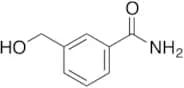
CAS:Controlled Product<p>Applications 3-(Hydroxymethyl)Benzamide (cas# 126926-34-9) is a useful research chemical.<br></p>Formula:C8H9NO2Purity:~85%Color and Shape:NeatMolecular weight:151.163-Hydroxy Ketoprofen
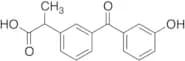
CAS:Controlled Product<p>Applications 3-Hydroxy Ketoprofen is related to rac Ketoprofen (K200800) a Anti-inflammatory drug. 3-Hydroxy Ketoprofen is used to study the metabolism of ketoprofen<br>References Liversidge, G.G., Anal. Profiles Drug Subs., 10, 443 (1981), Jamali, F., et al.: Clin. Pharmacokinet., 19, 197 (1990), Huq, F., et al.: Pure Appl. Chem., 2, 229-234 (2007)<br></p>Formula:C16H14O4Color and Shape:Off-White To Light BeigeMolecular weight:270.28
![2H-Furo[2,3-c]pyran-2-one](/_next/image/?url=https%3A%2Fstatic.cymitquimica.com%2Fproducts%2FTR%2Fthumb-webp%2FF864800.webp&w=3840&q=75)





![5-[(3-hydroxyphenyl)methyl]oxolan-2-one](/_next/image/?url=https%3A%2Fstatic.cymitquimica.com%2Fproducts%2FTR%2Fthumb-webp%2FH100690.webp&w=3840&q=75)