Building Blocks
This section contains fundamental products for the synthesis of organic and biological compounds. Building blocks are the essential starting materials used to construct complex molecules through various chemical reactions. They play a critical role in drug discovery, material science, and chemical research. At CymitQuimica, we offer a diverse range of high-quality building blocks to support your innovative research and industrial projects, ensuring you have the essential components for successful synthesis.
Subcategories of "Building Blocks"
- Boronic Acids & Boronic Acid Derivatives(5,756 products)
- Chiral Building Blocks(1,242 products)
- Hydrocarbon Building Blocks(6,095 products)
- Organic Building Blocks(61,055 products)
Found 199650 products of "Building Blocks"
Sort by
Purity (%)
0
100
|
0
|
50
|
90
|
95
|
100
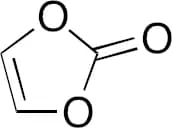
Vinylene Carbonate (Contains Up to 2% BHT)
CAS:Controlled Product<p>Applications Vinylene Carbonate is the smallest unsaturated cyclic carbonic acid ester. It is used as an additive for electrolyte solutions for Lithium-ion and Sodium-ion batteries.<br> Not a dangerous good if item is equal to or less than 1g/ml and there is less than 100g/ml in the package<br>References Aurbach, D., et al.: Electrochim. Acta, 47, 1423 (2002); Hu, Y., et al.: Angew. Chem. Int. Ed., 47, 1645 (2008); Komaba, S., et al.: Adv. Funct. Mater., 21, 3859 (2011);<br></p>Formula:C3H2O3Color and Shape:NeatMolecular weight:86.05(R)-Pantoic Acid Sodium Salt
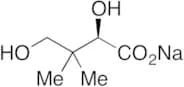
CAS:Controlled Product<p>Applications (R)-Pantoic Acid Sodium Salt, is the derivative of Pantothenic (P190300) and γ-Aminobutyric Acids (A602920), which has shown to have some effect like depressing motor and aggressive behavior, hyperactivity, and body temperature.<br>References Dorofeev, B. F., et al.: Deposited Doc., 14 (1979);<br></p>Formula:C6H11NaO4Color and Shape:NeatMolecular weight:170.14Benzylideneacetone
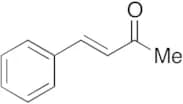
CAS:Controlled ProductFormula:C10H10OColor and Shape:Yellowish CrystallineMolecular weight:146.192-(3-Methoxyphenoxy)propanoic acid
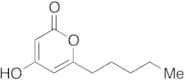
CAS:Controlled Product<p>Applications 2-(3-Methoxyphenoxy)propanoic acid<br></p>Formula:C10H12O4Color and Shape:NeatMolecular weight:196.24-Hydroxy-6-pentyl-2H-pyran-2-one
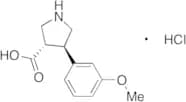
CAS:Controlled ProductFormula:C10H14O3Color and Shape:NeatMolecular weight:182.22(3S,4R)-4-(3-Methoxyphenyl)-3-pyrrolidinecarboxylic Acid Hydrochloride
CAS:Controlled Product<p>Applications (3S,4R)-4-(3-Methoxyphenyl)-3-pyrrolidinecarboxylic Acid is a useful synthetic intermediate.<br></p>Formula:C12H16ClNO3Color and Shape:NeatMolecular weight:257.715H-Pyrido[3,2-b]azepine-6,9-(7H,8H)-dione
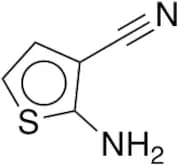
CAS:Controlled ProductFormula:C9H8N2O2Color and Shape:Beige To BrownMolecular weight:176.172-Aminothiophene-3-carbonitrile
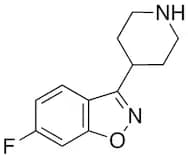
CAS:Controlled ProductFormula:C5H5N2SColor and Shape:White To YellowMolecular weight:125.176-Fluoro-3-(4-piperidinyl)-1,2-benzisoxazole
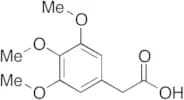
CAS:Controlled Product<p>Applications An Intermediate in the synthesis of risperidone and iloperidone.<br></p>Formula:C12H13FN2OColor and Shape:NeatMolecular weight:220.243,4,5-Trimethoxyphenylacetic Acid
CAS:Controlled Product<p>Applications 3,4,5-Trimethoxyphenylacetic Acid is a reagent in the preparation of 3-phenylcoumarins as antidepressant agents.<br>References Sashidhara, K.V., et al.: Bioorg. Med. Chem. Lett., 24, 4876 (2014);<br></p>Formula:C11H14O5Color and Shape:NeatMolecular weight:226.237-Methyl-7H-purin-6-amine
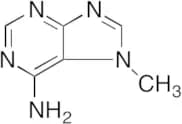
CAS:Controlled Product<p>Applications 7-Methyl-7H-purin-6-amine is a biomarker of DNA damage from exposure to methylating agents. Also, it is a partial agonist for the G protein-coupled receptor in rats.<br>References Harroun, S. G., et al.: Spectrochim. Acta Mol. Biomol. Spectrosc., 176, 1-7 (2017); Gorzalka, S., et al.: Mol. Pharmacol., 67, 955-964 (2005)<br></p>Formula:C6H7N5Color and Shape:Off White SolidMolecular weight:149.1534-Acetylpyridine
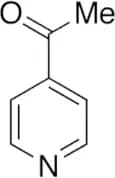
CAS:Controlled Product<p>Applications 4-Acetylpyridine is a acetylated pyridine used in the preparation of nitrogen containing bicyclic heterocycles and other organic compounds. 4-Acetylpyridine is also present in mainstream cigarette smoke.<br>References Kulshreshtha, N.P. et al.: J. Chrom. A, 985, 303 (2003); Scian, M. et al.: Inhal. Toxicol., 21, 1040 (2009);<br></p>Formula:C7H7NOColor and Shape:Yellow To BrownMolecular weight:121.141-(3-Acetyl-2-hydroxy-5-methyl-phenyl)ethanone
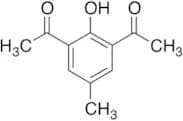
CAS:Controlled Product<p>Applications 1-(3-ACETYL-2-HYDROXY-5-METHYL-PHENYL)-ETHANONE (cas# 55108-28-6) is a useful research chemical.<br></p>Formula:C11H12O3Color and Shape:NeatMolecular weight:192.211Ethyl Isobutyrate
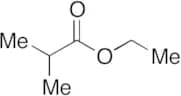
CAS:Controlled Product<p>Applications Ethyl Isobutyrate is an ester found in fruity aromas in wines and used in varies fragrances.<br> Not a dangerous good if item is equal to or less than 1g/ml and there is less than 100g/ml in the package<br>References Gammacurta, M., et al.: J. Agr. Food. Chem., 62, 5378 (2014); Dourtoglou, V., et al.: Food Chem., 159, 181 (2014);<br></p>Formula:C6H12O2Color and Shape:NeatMolecular weight:116.16Calcium a-Hydroxy-γ-Methylmercaptobutyrate
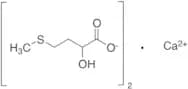
CAS:Controlled Product<p>Applications Calcium α-Hydroxy-γ-Methylmercaptobutyrate is useful in ion pairing inside Mammals and is therefore useful when it comes to nitrogen retention allowing for animal to grow quickly.<br>References Opapeju, F., et al.: Animal., 6, 1750-1756 (2012)<br></p>Formula:C5H9O3S·CaColor and Shape:NeatMolecular weight:338.454N-Methylsuccinimide
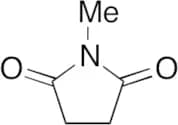
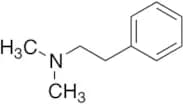
CAS:<p>Applications N-Methylsuccinimide is used as a model compound to investigate the mechanism of enolization step by density-functional theory (DFT) calculations. N-Methylsuccinimide is a metabolite of N-methyl-2-pyrrolidone (NMP) and its presence in plasma and urine can be used as a biomarker of exposure to NMP<br>References Takahashi, O., et al.: Chem. Biodivers., 7, 1349 (2010)<br></p>Formula:C5H7NO2Color and Shape:Off-WhiteMolecular weight:113.11N,N-Dimethyl-2-phenylethanamine
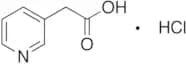
CAS:Controlled ProductFormula:C10H15NColor and Shape:ColourlessMolecular weight:149.233-Pyridylacetic Acid Hydrochloride
CAS:Controlled Product<p>Applications 3-Pyridylacetic Acid is a metabolite of Nicotine (N412420). 3-Pyridylacetic Acid is an antilipemic.<br>References Baer, T.A., et al.: J. Med. Chem., 16, 85 (1973); Kyerematen, G. A., et al.: Drug Metab. Dispos., 16, 125 (1988);<br></p>Formula:C7H7NO2·ClHColor and Shape:White To Off-WhiteMolecular weight:173.60


![5H-Pyrido[3,2-b]azepine-6,9-(7H,8H)-dione](/_next/image/?url=https%3A%2Fstatic.cymitquimica.com%2Fproducts%2FTR%2Fthumb-webp%2FP991710.webp&w=3840&q=75)