Building Blocks
This section contains fundamental products for the synthesis of organic and biological compounds. Building blocks are the essential starting materials used to construct complex molecules through various chemical reactions. They play a critical role in drug discovery, material science, and chemical research. At CymitQuimica, we offer a diverse range of high-quality building blocks to support your innovative research and industrial projects, ensuring you have the essential components for successful synthesis.
Subcategories of "Building Blocks"
- Boronic Acids & Boronic Acid Derivatives(5,756 products)
- Chiral Building Blocks(1,242 products)
- Hydrocarbon Building Blocks(6,095 products)
- Organic Building Blocks(61,055 products)
Found 199650 products of "Building Blocks"
Sort by
Purity (%)
0
100
|
0
|
50
|
90
|
95
|
100
Cyclopropanecarboxylic Acid
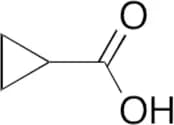
CAS:<p>Applications Cyclopropanecarboxylic Acid is used as a reagent in the synthesis of substituted 4-(thiophen-2-ylmethyl)-2H-phthalazin-1-ones as potent PARP-1 inhibitors. Also used as a reagent in the synthesis of 2-alkyloxazoles as potent and selective PI4KIIIβ inhibitors demonstrating inhibition of HCV replication.<br> Not a dangerous good if item is equal to or less than 1g/ml and there is less than 100g/ml in the package<br>References Wang, L., et al.: Bioorg. Med. Chem. Lett., 24, 3739 (2014); Keaney, E.P., et al.: Bioorg. Med. Chem. Lett., 24, 3714 (2014)<br></p>Formula:C4H6O2Color and Shape:NeatMolecular weight:86.091,4-Cyclohexanedimethanol
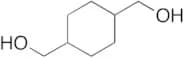
CAS:Controlled Product<p>Applications 1,4-Cyclohexanedimethanol is extensively used as cross-linking reagent in polymer industry. It has been used in the synthesis of polyketal copolymers. It was used as diol comonomer during the synthesis of polyester-carbonates based on 1,3-propylene-co-1,4-cyclohexanedimethylene succinate.<br>References Yang, S., et al.: Bioconjugate Chem., 19, 1164 (2008); Liu, Y., et al.: J. Polym. Sci. A Polym. Chem., 39, 2508 (2011); Hungria, A., et al.: Angewandte Chemie, 45, 4782 (2006)<br></p>Formula:C24H30O3SiColor and Shape:NeatMolecular weight:394.5791-Chloro-2-methylpropene
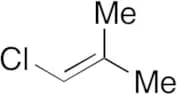
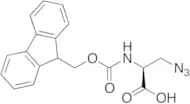
CAS:Controlled Product<p>Stability Volatile<br>Applications 1-Chloro-2-methylpropene is a reagent in the synthesis of pyrrolyl and indolyl diketo acids and esters as nucleotide-competitive non-nucleoside inhibitors of terminal deoxynucleotidyl transferase.<br> Not a dangerous good if item is equal to or less than 1g/ml and there is less than 100g/ml in the package<br>References Costi, R., et al.: J. Med. Chem., 56, 7431 (2013);<br></p>Formula:C4H7ClColor and Shape:NeatMolecular weight:90.55Fmoc-L-azidoalanine
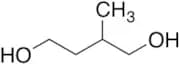
CAS:Controlled ProductFormula:C18H16N4O4Color and Shape:White To Off-WhiteMolecular weight:352.342-Methyl-1,4-butanediol
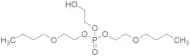
CAS:Controlled Product<p>Stability Unstable in Aqueous Solution<br>Applications 2-METHYL-1,4-BUTANEDIOL (cas# 2938-98-9) is a useful research chemical.<br></p>Formula:C5H12O2Color and Shape:NeatMolecular weight:104.15Bis(2-butoxyethyl) 2-Hydroxyethyl Phosphate Triester
CAS:<p>Applications Bis(2-butoxyethyl) 2-Hydroxyethyl Phosphate Triester is a metabolite of Tris(2-butyloxyethyl)phosphate (T875030), which is an organophosphate, that can be used in the preparation of flame retardant, such as viscose fiber.<br>References Wang, Y., et al.: Fangzhi Xuebao, 33, 16 (2012); Xiaoshan, L. et al.: Aquatic Toxicology, 114, 173 (2012);<br></p>Formula:C14H31O7PColor and Shape:NeatMolecular weight:342.36(-)-O-Desmethyl-N,N-bisdesmethyl Tramadol
CAS:<p>Applications A optically active metabolite of Tramadol.<br>References Lintz, V.W., et al.: Arzneim.-Forsch./Drug Res., 31, II, 11, 1932 (1981)<br></p>Formula:C13H19NO2Color and Shape:NeatMolecular weight:221.31,4-bis[3,4-dihydro-2(1H)-quinolinon-7-oxy]butane
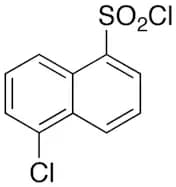
CAS:Controlled Product<p>Impurity Aripiprazole Diquinoline Butanediol Impurity (USP)<br>Applications An impurity found in the process for the preparation of Aripiprazole (A771000). Aripiprazole Diquinoline Butanediol Impurity (USP).<br>References Burris, K., et al.: J. Pharmacol. Exp. Ther., 302, 381 (2002), Harrison, T., et al.: Drugs, 64, 1715 (2004),<br></p>Formula:C22H24N2O4Color and Shape:Off-WhiteMolecular weight:380.445-Chloronaphthalene-1-sulfonyl Chloride
CAS:Controlled Product<p>Applications 5-Chloronaphthalene-1-sulfonyl Chloride (cas# 6291-07-2) is a compound useful in organic synthesis.<br></p>Formula:C10H6Cl2O2SColor and Shape:NeatMolecular weight:261.12N,N'-bis(2,6-Diisopropylphenyl)-1,6,7,12-tetraphenoxy-3,4,9,10-perylenetetracarboxylic Diimide
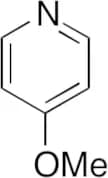
CAS:Controlled Product<p>Applications N,N'-Bis(2,6-diisopropylphenyl)-1,6,7,12-tetraphenoxy-3,4,9,10-perylenetetracarboxylic Diimide has applications in the photosensors and optical detectors.<br>References Wang, Shaojun, et al.: ACS Photonics, 5(6), 2478-2485 (2018);Wang, Hanlin, et al.: Adv. Mat., 29(32), n/a. (2017)<br></p>Formula:C72H58N2O8Color and Shape:NeatMolecular weight:1079.2394-Methoxypyridine
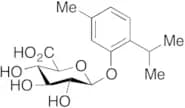
CAS:Controlled Product<p>Applications 4-Methoxypyridine, is used as a building block for the synthesis of some biologically active compounds. It is used for the preparation of a new series of benzoylated N-ylides as protein farnesyltransferase inhibitors.<br>References Abuhaie, C. et al.: Bioorg. Med. Chem. Lett., 23, 5887 (2013);<br></p>Formula:C6H7NOColor and Shape:NeatMolecular weight:109.13Thymol O-(β)-D-Glucuronide
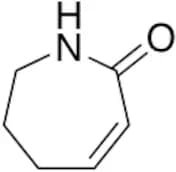
CAS:<p>Applications Thymol O-β-D-Glucuronide is a glucuronide derivative of Thymol (T413000); an antimicrobial compound which can increase the efficacy of antibiotics involving drug resistant bacteria. It inhibits growth and lactate production as well as reduces cellular glucose uptake within the bacteria.<br>References Palaniappan, K. et al.: Int. J. Food Microbiol., 140, 164 (2010); Evans, J. et al.: Curr. Microbiol., 41, 336 (2000)<br></p>Formula:C16H22O7Color and Shape:NeatMolecular weight:326.342,5,6,7-tetrahydro-1H-azepin-2-one
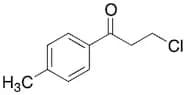
CAS:Controlled Product<p>Applications 2,5,6,7-tetrahydro-1H-azepin-2-one (cas# 2228-79-7) is a useful research chemical.<br></p>Formula:C6H9NOColor and Shape:NeatMolecular weight:111.143-Chloro-1-(4-methylphenyl)propan-1-one
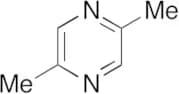
CAS:Controlled Product<p>Applications 3-chloro-1-(4-methylphenyl)propan-1-one is a reagent used in the synthesis of Mannich base-type derivatives which can be used in the treatment of chagas disease.<br>References Martin-Escolano, R. et al.: J. Med. Chem., 61, 5843 (2018);<br></p>Formula:C10H11ClOColor and Shape:White To Off-WhiteMolecular weight:182.6472,5-Dimethylpyrazine
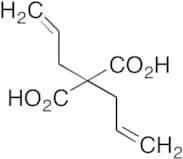
CAS:<p>Applications 2,5-Dimethylpyrazine is used as a reagent in the synthesis of bone-targeted proteasome inhibitors for multiple myeloma (MM). 2,5-Dimethylpyrazine is also used in the preparation of 3-Methyl-2,5-bis-(2-hydroxyethyl)pyrazine (M295340); a degredation product of Clavulanic Acid (C563750) which is a β-lactamase inhibitor, typically added to amoxicillin to increase its effectiveness.<br>References Agyin, J.K., et al.: Bioorg. Med. Chem. Lett., 23, 6455 (2013); Reading, C. and Cole, M.: Antimicrob. Ag. Chemother., 11, 852 (1977); Ball, A.P., et al.: Lancet, 1, 620 (1980); Brogden, R.N., et al. Drugs, 22, 337 (1981); Haginaka, J. et al.: Chem. Pharm. Bull., 33, 218 (1985)<br></p>Formula:C6H8N2Color and Shape:NeatMolecular weight:108.14Diallylmalonic Acid
CAS:Controlled Product<p>Applications Diallylmalonic Acid is an intermediate in the synthesis of metabolites of Valproic Acid (V094750) as anticonvulsant agents. It can also be used for the synthesis of Velbanamine.<br>References Zielinski, G. K., et al.: Org. Biomolec. Chem., 13, 2684 (2015):<br></p>Formula:C9H12O4Color and Shape:NeatMolecular weight:184.192-Chloro-N,N-dimethylethylamine Hydrochloride
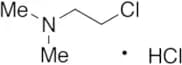
CAS:Controlled Product<p>Stability Hygroscopic<br>Applications 2-Chloro-N,N-dimethylethylamine is a widely used as an intermediate and starting reagent for organic synthesis.<br> Not a dangerous good if item is equal to or less than 1g/ml and there is less than 100g/ml in the package<br>References Spulak, M., et al.: Tetrahedron., 69, 1705 (2013); Vaid, R.K., et al.: Synthesis., 44, 2231 (2012);<br></p>Formula:C4H11Cl2NColor and Shape:BeigeMolecular weight:144.043,3,5-Trimethylcyclohexanone
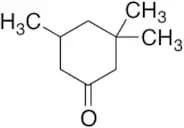
CAS:Controlled ProductFormula:C9H16OColor and Shape:NeatMolecular weight:140.22



![1,4-bis[3,4-dihydro-2(1H)-quinolinon-7-oxy]butane](/_next/image/?url=https%3A%2Fstatic.cymitquimica.com%2Fproducts%2FTR%2Fthumb-webp%2FB426500.webp&w=3840&q=75)