Building Blocks
This section contains fundamental products for the synthesis of organic and biological compounds. Building blocks are the essential starting materials used to construct complex molecules through various chemical reactions. They play a critical role in drug discovery, material science, and chemical research. At CymitQuimica, we offer a diverse range of high-quality building blocks to support your innovative research and industrial projects, ensuring you have the essential components for successful synthesis.
Subcategories of "Building Blocks"
- Boronic Acids & Boronic Acid Derivatives(5,756 products)
- Chiral Building Blocks(1,242 products)
- Hydrocarbon Building Blocks(6,095 products)
- Organic Building Blocks(61,038 products)
Found 196817 products of "Building Blocks"
Sort by
Purity (%)
0
100
|
0
|
50
|
90
|
95
|
100
3,5-Dibromo-2-anisic acid
CAS:<p>3,5-Dibromo-2-anisic acid is a short chain dodecyl amine with the chemical formula CH2Br2C6H4N. It is an active compound that has been shown to have nematicidal activity and also shows high activity against saprophytes. 3,5-Dibromo-2-anisic acid is synthesized by reacting chlorine with salicylaldehyde in the presence of a base. The compound is used in the synthesis of various other organic compounds such as amides and amines.</p>Formula:C8H6Br2O3Purity:Min. 95%Color and Shape:PowderMolecular weight:309.94 g/mol1-(Phenylamino)cyclopropane-1-carboxylic acid
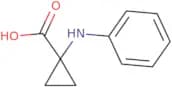
CAS:<p>1-(Phenylamino)cyclopropane-1-carboxylic acid is a high quality chemical that is a useful intermediate and building block in the synthesis of fine chemicals. It has been used as a reagent and complex compound. The CAS number for this chemical is 210576-54-8. This chemical can be used as a speciality chemical. It has also been shown to be versatile in the laboratory setting, being used as a reaction component for both synthetic and natural product syntheses.</p>Formula:C10H11NO2Purity:Min. 95%Color and Shape:PowderMolecular weight:177.2 g/mol3,4,5-Trihydroxytoluene
CAS:<p>Substrate for peroxidase</p>Formula:C7H8O3Purity:Min. 95%Color and Shape:PowderMolecular weight:140.14 g/mol2,4,6-Trimethoxybenzoic acid
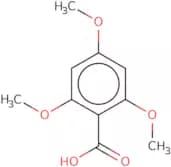
CAS:<p>2,4,6-Trimethoxybenzoic acid (TMB) is a monomer that belongs to the class of organic compounds known as phenols. It can undergo dehydrogenation reactions with nitroethane in the presence of trifluoroacetic acid and catalytic amounts of hydrogen gas. TMB has been shown to interact with an allyl group in other molecules. The reaction system was studied under different flow rates and was found to be best described by an isotherm equation.</p>Formula:C10H12O5Purity:Min. 95%Color and Shape:PowderMolecular weight:212.2 g/molBis(trifluoromethane)sulfonimide lithium salt
CAS:<p>Please enquire for more information about Bis(trifluoromethane)sulfonimide lithium salt including the price, delivery time and more detailed product information at the technical inquiry form on this page</p>Formula:C2F6LiNO4S2Molecular weight:287.09 g/molRef: 3D-Q-101273
1kgTo inquire5kgTo inquire250gTo inquire500gTo inquire2500gTo inquire-Unit-kgkgTo inquire3,4,5-Tribromoacetophenone
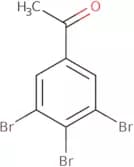
CAS:<p>3,4,5-Tribromoacetophenone is a high quality and versatile chemical with many special applications. It is an important intermediate for the production of various chemicals, such as plastics and pharmaceuticals. This compound can be used as a starting material for the synthesis of more complex compounds by reacting with other chemicals. 3,4,5-Tribromoacetophenone also has a number of useful properties that make it ideal for research purposes.</p>Formula:C8H5Br3OPurity:Min. 95%Color and Shape:PowderMolecular weight:356.84 g/mol3,5-Dihydroxybenzoic acid methyl ester
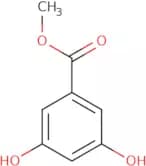
CAS:<p>3,5-Dihydroxybenzoic acid methyl ester is a potent tyrosinase inhibitor that has been shown to be effective in inhibiting the production of melanin. 3,5-Dihydroxybenzoic acid methyl ester is an active ingredient in skin lightening products and has been shown to be more potent than kojic acid, arbutin and ascorbic acid. The reaction mechanism of 3,5-Dihydroxybenzoic acid methyl ester is stepwise with hydroxybenzoic acid (HBA) being the first substrate. HBA reacts with iron oxides to form a ferric hydroxide intermediate that undergoes gelation reactions with chloride ions. This results in a molecule containing three ether linkages, which are responsible for its inhibitory activity on the enzyme tyrosinase.</p>Formula:C8H8O4Purity:Min. 95%Color and Shape:PowderMolecular weight:168.15 g/mol3,4,5,6,7,8-Hexahydro-2,9-benzodioxacyclododecin-1,10-dione
CAS:<p>3,4,5,6,7,8-Hexahydro-2,9-benzodioxacyclododecin-1,10-dione is a research chemical that is an important intermediate for the synthesis of many useful compounds. It can be used as a building block for the synthesis of more complex and valuable compounds in the pharmaceutical industry. 3,4,5,6,7,8-Hexahydro-2,9-benzodioxacyclododecin-1,10-dione is also an important reagent for organic chemistry reactions. It has been shown to behave as a good scaffold for the synthesis of other molecules with high purity. This compound has been shown to be useful in many different reactions such as condensations and cyclizations.</p>Formula:C14H16O4Purity:Min. 95%Color and Shape:PowderMolecular weight:248.27 g/mol3,4,5-Trimethoxyacetophenone
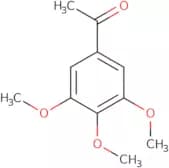
CAS:<p>3,4,5-Trimethoxyacetophenone is a natural product that has been shown to be an antimycotic. It has significant cytotoxicity against A549 cells and also inhibits the growth of cancer cells in culture. 3,4,5-Trimethoxyacetophenone has a low bioavailability due to its chemical properties and inhibitory effects on CYP3A4. This compound is metabolized by the liver into metabolites with inhibitory properties. 3,4,5-Trimethoxyacetophenone also binds to methoxy groups on proteins.</p>Formula:C11H14O4Purity:Min. 99 Area-%Color and Shape:White PowderMolecular weight:210.23 g/mol3-Bromo-4-iodobenzaldehyde
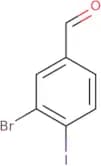
CAS:<p>Versatile small molecule scaffold</p>Formula:C7H4BrIOPurity:Min. 95%Color and Shape:PowderMolecular weight:310.91 g/mol3,4,5-Tribromobenzoic acid
CAS:<p>3,4,5-Tribromobenzoic acid is a metabolite of 3-indoleacetic acid. It is excreted in the urine and has a phaseolus-like physiological activity. This compound has been found to reduce the number of internodes in plants and increase the number of subjacent nodes. In addition, it has been shown to inhibit abscission (the separation of plant parts) by inhibiting the release of auxin from the upper node. The structural properties of 3,4,5-tribromobenzoic acid are similar to those of benzoic acid and it can be found naturally in some plants. Diversity in this chemical has been found among different species: for example, 2,3,5-triiodobenzoic acid is only present in citrus fruits such as oranges and lemons.</p>Formula:C7H3Br3O2Purity:Min. 95%Color and Shape:PowderMolecular weight:358.81 g/mol2,4,6-Trichlorobenzonitrile
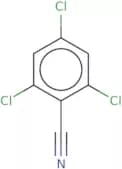
CAS:<p>2,4,6-Trichlorobenzonitrile is a chlorine-containing chemical that has been used as a pesticide. It is a highly toxic substance and can be fatal if ingested. 2,4,6-Trichlorobenzonitrile is converted to chloride in soil and water by microbial action. This chemical can be activated by light or temperature changes and is used in the production of pesticides that are phytotoxic. It also has been shown to have thermodynamic properties that allow it to act as an environmental pollutant. 2,4,6-Trichlorobenzonitrile can react with sulfoxides to form chloromethylation products such as 2,3,5-trichloroethanol. These reactions are catalyzed by metal ions such as Fe(II) and Mn(II).</p>Formula:C7H2Cl3NPurity:Min. 95%Color and Shape:PowderMolecular weight:206.46 g/mol2,4,6-Trihydroxybenzophenone
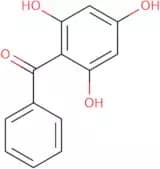
CAS:<p>2,4,6-Trihydroxybenzophenone is a phenolic compound that has been shown to have significant inhibitory activities against the growth of bacteria in vitro. It can be used as a preservative for oils and fats. This product also inhibits the benzoate degradation pathway in E. coli and inhibits the synthesis of phenylpropanoids by inhibiting the activity of phenylalanine ammonia-lyase (PAL). 2,4,6-Trihydroxybenzophenone also has an inhibitory effect on cell proliferation and induces apoptosis in human leukemia cells. 2,4,6-Trihydroxybenzophenone belongs to the group of compounds called hypericins (hyperforin) that are produced by Hypericum perforatum plants. The biosynthesis of this molecule is thought to involve two consecutive hydroxylations at positions 4 and 6 on the aromatic ring.</p>Formula:C13H10O4Purity:Min. 95%Color and Shape:Off-White PowderMolecular weight:230.22 g/mol2,4,6-Trimethoxybenzonitrile
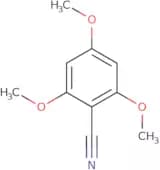
CAS:<p>2,4,6-Trimethoxybenzonitrile is a ligand that forms coordination complexes with metal ions. It can be used to make N-oxide compounds and reaction products with aryl chlorides. The 2,4,6-trimethoxybenzonitrile ligand has been shown to form cross-coupling complexes with benzotriazolyl. This compound is soluble in organic solvents and has a vapor pressure of 0.0025 mm Hg at 25°C. The molecular weight of this compound is 196.2 g/mol and its melting point is 190°C. 2,4,6-Trimethoxybenzonitrile has a symmetric molecule in the gas phase and an asymmetric molecule in solution due to the interactions of hydrogen bonding and van der Waals forces.</p>Formula:C10H11NO3Purity:Min. 95%Color and Shape:PowderMolecular weight:193.2 g/mol2,4,6-Trimethylbenzoic acid
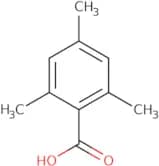
CAS:<p>2,4,6-Trimethylbenzoic acid is a molecule that belongs to the class of carboxylates. It has been shown to exhibit anticarcinogenic properties in patients with cervical cancer. 2,4,6-Trimethylbenzoic acid inhibits the growth of cervical cancer cells by blocking the activation of ferrocenecarboxylic acid (FCCA). This compound also blocks the activity of hydrogen bond and nitrogen atoms that are essential for cell division and development. 2,4,6-Trimethylbenzoic acid is used as an intermediate in the production of ferrocene derivatives. It can be used for acylation reactions with aromatic or aliphatic amines under acidic conditions.</p>Formula:C10H12O2Purity:Min. 95%Color and Shape:PowderMolecular weight:164.2 g/mol2-Hydroxy-6-(methoxymethoxy)benzaldehyde
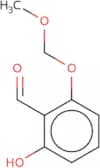
CAS:<p>2-Hydroxy-6-(methoxymethoxy)benzaldehyde is a chemical intermediate that can be used in the synthesis of a wide range of compounds. It is an aromatic compound which has two hydroxyl groups on the benzene ring. This product is a versatile building block, and is useful in the synthesis of complex compounds with high purity. 2-Hydroxy-6-(methoxymethoxy)benzaldehyde can be obtained as a white solid with a melting point of 57°C.</p>Formula:C9H10O4Purity:Min. 95%Color and Shape:Clear LiquidMolecular weight:182.17 g/mol2,3,4-Trimethoxy-6-methylbenzaldehyde
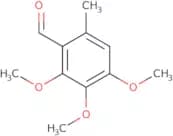
CAS:<p>2,3,4-Trimethoxy-6-methylbenzaldehyde is a synthetic coumarin with antibacterial activity. It is synthesized by the condensation of 3-hydroxyacetophenone and benzaldehyde. 2,3,4-Trimethoxy-6-methylbenzaldehyde has been shown to have antibacterial activity against both Gram-positive and Gram-negative bacteria. This molecule has also been shown to inhibit the growth of Gram negative bacteria in the presence of hydrogen peroxide. The crystal structure of this molecule was determined by XRD analysis and shows that it contains a dihedral angle of about 155°.</p>Formula:C11H14O4Purity:Min. 95%Molecular weight:210.23 g/mol4-Methoxypyridazin-3-amine
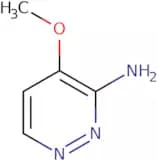
CAS:<p>4-Methoxypyridazin-3-amine is a high quality chemical that can be used as a reagent, complex compound, useful intermediate, fine chemical, or speciality chemical. It is a versatile building block that can be used in reactions to make other chemicals such as pharmaceuticals and dyes. The 4-methoxypyridazin-3-amine molecule has shown promising results in research on the development of new drugs with potential anti-cancer properties.</p>Formula:C5H7N3OPurity:Min. 95%Color and Shape:PowderMolecular weight:125.13 g/mol3-Butenoic acid, 2,5-dioxo-1-pyrrolidinyl ester
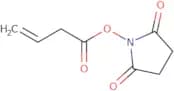
CAS:<p>3-Butenoic acid, 2,5-dioxo-1-pyrrolidinyl ester is a fine chemical that can be used as a scaffold for the synthesis of complex compounds. This chemical is also useful as an intermediate in the synthesis of chemicals and research chemicals. It has CAS number 388091-45-0 and a molecular weight of 220.3 g/mol. 3-Butenoic acid, 2,5-dioxo-1-pyrrolidinyl ester is soluble in organic solvents such as acetone or chloroform and is not toxic to humans at low doses.</p>Formula:C8H9NO4Purity:Min. 95%Color and Shape:PowderMolecular weight:183.16 g/mol2,3,4-Trimethoxybenzoic acid
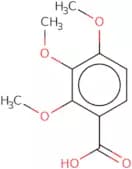
CAS:<p>2,3,4-Trimethoxybenzoic acid is a molecule that has been shown to stimulate epidermal growth. It is a methylating agent that can be used to produce 2-hydroxybenzoic acid from protocatechuic acid. The hydroxy group on the 2,3,4-trimethoxybenzoic acid binds to the chloride ion in the protocatechuic acid and removes it from the molecule. This reaction mechanism is supported by x-ray crystal structures of protocatechuic acid and 2,3,4-trimethoxybenzoic acid.</p>Formula:C10H12O5Purity:Min. 95%Color and Shape:PowderMolecular weight:212.2 g/mol