Building Blocks
This section contains fundamental products for the synthesis of organic and biological compounds. Building blocks are the essential starting materials used to construct complex molecules through various chemical reactions. They play a critical role in drug discovery, material science, and chemical research. At CymitQuimica, we offer a diverse range of high-quality building blocks to support your innovative research and industrial projects, ensuring you have the essential components for successful synthesis.
Subcategories of "Building Blocks"
- Boronic Acids & Boronic Acid Derivatives(5,778 products)
- Chiral Building Blocks(1,242 products)
- Hydrocarbon Building Blocks(6,098 products)
- Organic Building Blocks(61,098 products)
Found 199594 products of "Building Blocks"
Sort by
Purity (%)
0
100
|
0
|
50
|
90
|
95
|
100
Sodium 2-Hydroxyethanesulfonate
CAS:Controlled Product<p>Applications Sodium 2-hydroxyethanesulfonate (cas# 1562-00-1) is a useful research chemical.<br></p>Formula:C2H5NaO4SColor and Shape:NeatMolecular weight:148.11Homovanillic Acid
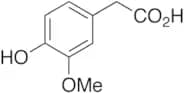
CAS:Controlled ProductFormula:C9H10O4Color and Shape:White To GreyMolecular weight:182.17N-(2,6-Diisopropylphenylcarbamoylmethyl)iminodiacetic Acid
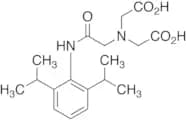
CAS:Controlled Product<p>Applications N-(2,6-Diisopropylphenylcarbamoylmethyl)iminodiacetic Acid (cas# 65717-97-7) is a compound useful in organic synthesis.<br></p>Formula:C18H26N2O5Color and Shape:NeatMolecular weight:350.41Pyridine Hydrochloride
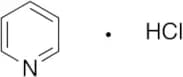
CAS:<p>Applications Pyridine Hydrochloride is the hydrochloride salt of pyridine, a basic six-membered heterocyclic ring. Pyridine is a base structure present in many biologically active compounds like the vitamins niacin and pyridoxal. Pyridine is used in dehalogenation reactions and can be used as a base in condensation reactions.<br>References Egyed, J. et al.: Bull. Soc. Chim. Fra., 11, 3014 (1973); Li, Y. et al.: Wuli HUa. Xueb., 14, 1048 (1998);<br></p>Formula:C5H5N·HClColor and Shape:NeatMolecular weight:79.10 + (36.46)Diisopropyl Phosphorochloridate
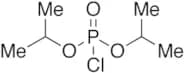
CAS:<p>Stability Moisture sensitive<br>Applications Diisopropyl Phosphorochloridate is a phosphorylating agent.<br> Not a dangerous good if item is equal to or less than 1g/ml and there is less than 100g/ml in the package<br>References Sartori: Chem. Rev., 48, (1951), Nachmansohn, et al.: Adv. Enzymology, 12, 259 (1951)<br></p>Formula:C6H14ClO3PColor and Shape:ColourlessMolecular weight:200.602-Hydroxybenzyl Alcohol
CAS:Controlled Product<p>Applications 2-Hydroxybenzyl Alcohol is a phenolic component of a part of a salix bark extract which maintains a minor anti-depressant effect. Phenolic analog with potential for anti-melanomic effect<br>References Ulrich-M. et al.: Phytomed., 19, 930 (2012); Vad, N. et al.: Chem-Biol. Int., 183, 462 (2010);<br></p>Formula:C7H8O2Color and Shape:NeatMolecular weight:124.14(+)-Dihydrocarvone (Mixture of (2S)/(2R) isomers)
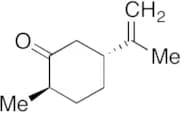
CAS:Formula:C10H16OColor and Shape:NeatMolecular weight:152.232,6-Diisopropylaniline
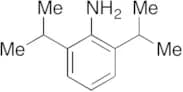
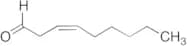
CAS:Controlled ProductFormula:C12H19NColor and Shape:NeatMolecular weight:177.29trans-2-Nonenal
CAS:Controlled Product<p>Applications trans-2-Nonenal is an unsaturated aldehyde that is a product of fatty acid peroxidation (and also has a grassy, cucumber smell). trans-2-Nonenal is naturally found in mushrooms, coffee and is also a constituent of carrot root. It also exhibits insecticidal effects.<br>References Chamberlain, D., et al.: J. Chem. Ecol., 17, 615 (1991); Guerin, P. & Ryan, M.: Experentia, 36, 1387 (1980); Parliment, T., et al.: J. Agr. Food Chem., 21, 485 (1973); Wood, W., et al.: Mycologia, No vol. given, 561 (1994)<br></p>Formula:C9H16OColor and Shape:NeatMolecular weight:140.223n-Octacosane-d58
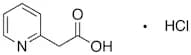
CAS:Controlled Product<p>Applications n-Octacosane-d58 (CAS# 16416-33-4) is a useful isotopically labeled research compound.<br></p>Formula:C28D58Color and Shape:NeatMolecular weight:453.132’-Pyridylacetic Acid Hydrochloride
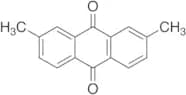
CAS:<p>Stability Hygroscopic<br>Applications Used in nucleophilic substitution.<br>References Genicot, C., et al.: Bioorg. Med. Chem. Lett., 13, 437 (2003),<br></p>Formula:C7H7NO2·ClHColor and Shape:NeatMolecular weight:173.602,7-Dimethylanthraquinone
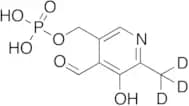
CAS:Controlled Product<p>Applications 2,7-Dimethylanthraquinone (cas# 3286-01-9) is a compound useful in organic synthesis.<br>References Kuo, D., et al.: J. Pharm. Pharmacol., 52, 839 (2000), Zagotto, G., et al.: Bioorg. Med. Chem., 16, 354 (2008),<br></p>Formula:C16H12O2Color and Shape:NeatMolecular weight:236.27Pyridoxal 5'-Phosphate-d3 (>85%)
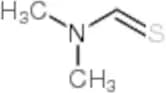
CAS:Controlled Product<p>Stability Hygroscopic<br>Applications 3-Hydroxy-2-(methyl-d3)-5-[(phosphonooxy)methyl]-4-pyridinecarboxaldehyde is the labelled version of pyridoxal 5'-phosphate(P991715); a vitamin (enzyme co-factor).<br>References Lichstein, et al.: J. Biol. Chem., 161, 311 (1945), McPhalen, C., et al.: J. Mol. Biol., 225, 495 (1992), Fenn, T., et al.: Biochemistry, 44, 5317 (2005),<br></p>Formula:C8H7D3NO6PPurity:>85%Color and Shape:NeatMolecular weight:250.16N,N-Dimethylthioformamide
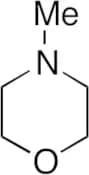
CAS:<p>Applications N,N-Dimethylthioformamide<br></p>Formula:C3H7NSColor and Shape:NeatMolecular weight:89.1594-Methylmorpholine
CAS:<p>Applications 4-Methylmorpholine is used in the synthesis of novel and selective TYK2 inhibitors, used in the treatment of inflammatory diseases. Also used in the preparation of cathespin K inhibitors which are highly selective.<br> Not a dangerous good if item is equal to or less than 1g/ml and there is less than 100g/ml in the package<br>References Liang, J. et al.: Eur. J. Med. Chem., 67, 175 (2013); Yuan, X. et al.: Org. Biomol. Chem., 11, 5847 (2013);<br></p>Formula:C5H11NOColor and Shape:NeatMolecular weight:101.152H-Furo[2,3-c]pyran-2-one
CAS:<p>Applications Forest fires are actually beneficial for ecosystems, provided they don’t happen too often. After a fire, plants germinate and grow incredibly fast. 2H-Furo[2,3-c]pyran-2-one, KAR2, is a compound in smoke responsible for promoting the seed germination of a wide range of plant species. The researchers named the compounds “the karrikins”, for “karrik”, an aboriginal word for smoke.<br>References Sakuma, H., et al.: .Agric Biol. Chem., 45, 443 (1981), Stevens, J., et al.: Plant Soil, 298, 113 (2007), Nelson, D., et al.: Plant Physiol., 149, 863 (2009),<br></p>Formula:C7H4O3Color and Shape:NeatMolecular weight:136.15H-Pyrido[3,2-b]azepine-6,9-(7H,8H)-dione
CAS:Controlled ProductFormula:C9H8N2O2Color and Shape:Beige To BrownMolecular weight:176.17





![2H-Furo[2,3-c]pyran-2-one](/_next/image/?url=https%3A%2Fstatic.cymitquimica.com%2Fproducts%2FTR%2Fthumb-webp%2FF864800.webp&w=3840&q=75)
![5H-Pyrido[3,2-b]azepine-6,9-(7H,8H)-dione](/_next/image/?url=https%3A%2Fstatic.cymitquimica.com%2Fproducts%2FTR%2Fthumb-webp%2FP991710.webp&w=3840&q=75)