Building Blocks
This section contains fundamental products for the synthesis of organic and biological compounds. Building blocks are the essential starting materials used to construct complex molecules through various chemical reactions. They play a critical role in drug discovery, material science, and chemical research. At CymitQuimica, we offer a diverse range of high-quality building blocks to support your innovative research and industrial projects, ensuring you have the essential components for successful synthesis.
Subcategories of "Building Blocks"
- Boronic Acids & Boronic Acid Derivatives(5,756 products)
- Chiral Building Blocks(1,242 products)
- Hydrocarbon Building Blocks(6,095 products)
- Organic Building Blocks(61,038 products)
Found 196817 products of "Building Blocks"
Sort by
Purity (%)
0
100
|
0
|
50
|
90
|
95
|
100
1,2,4-Triazole
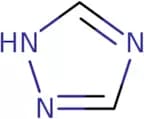
CAS:<p>1,2,4-Triazole is a heterocyclic compound that is used as an intermediate in the synthesis of many other organic compounds. It can be obtained by reacting trifluoroacetic acid with nitrobenzene in the presence of ammonia. This reaction yields a protonated 1,2,4-triazole and ammonium chloride as byproducts. The thermodynamic data for this compound has been determined using an electrochemical impedance spectroscopy method and it was found that the protonation state of 1,2,4-triazole depends on pH. <br>1,2,4-Triazole has been shown to cause genotoxic effects in carcinoma cell lines. It is also capable of inhibiting the growth of bacteria by binding to nitrogen atoms present on their surface. This leads to a decrease in bacterial activity and may be useful for biological treatment purposes. Nitro groups are able to react with 1,2,4</p>Formula:C2H3N3Purity:Min. 95%Color and Shape:PowderMolecular weight:69.07 g/mol1,8-Diazaspiro[4.5]decan-2-one dihydrochloride
CAS:<p>Versatile small molecule scaffold</p>Formula:C8H14N2O•(HCl)2Purity:Min. 95%Color and Shape:PowderMolecular weight:227.13 g/molN6-Trifluoroacetyl-L-lysine N-carboxyanhydride
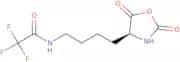
CAS:<p>Trifluoroacetyl-L-lysine N-carboxyanhydride is an N6-trifluoroacetylated lysine derivative that is used in the synthesis of peptides. It is a racemic mixture of L and D forms, which is hydrolyzed to form L-glutamic acid, NH4Cl, and CO2. Trifluoroacetyl-L-lyside N-carboxyanhydride has been shown to be useful in the formation of bonds between amino acids, such as lysine and dipeptides. The compound is also used for the protection of lysine against oxidation during peptide synthesis.</p>Formula:C9H11F3N2O4Purity:Min. 95%Color and Shape:White PowderMolecular weight:268.19 g/mol3-Acetylbenzonitrile
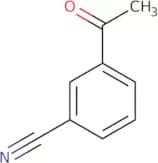
CAS:<p>3-Acetylbenzonitrile is an isomeric, asymmetric synthesis that has been synthesised in the presence of copper complex and salicylic acid. The reaction was carried out with a gaseous phase, where the chalcone was formed. The experimental techniques used were cross-coupling reactions and molecular modeling techniques. 3-Acetylbenzonitrile has been synthesised by a rationalized enthalpic approach that includes alcohol dehydrogenases and molecular modeling techniques.</p>Formula:C9H7NOPurity:Min. 95%Color and Shape:PowderMolecular weight:145.16 g/mol4-Hydroxy-3-iodobenzoic acid
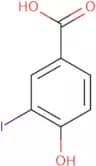
CAS:<p>4-Hydroxy-3-iodobenzoic acid is a synthetic retinoid that is used in the synthesis of various other pharmaceutical compounds. It is also an inhibitor of bacterial growth, which may be due to its ability to bind to receptors on the bacterial cell surface. The antibiotic activity of 4-hydroxy-3-iodobenzoic acid has been demonstrated using an in vitro assay with Escherichia coli and Streptococcus pyogenes. 4-Hydroxy-3-iodobenzoic acid has also been shown to have antiestrogen properties when it competes with estradiol for receptor binding sites. This compound binds to the estrogen receptor and blocks its activity, inhibiting estrogen production by the ovaries or from other sources. Structural analysis of 4-hydroxy-3-iodobenzoic acid revealed that this compound has two functional groups: one group that interacts with nitrogen and another that binds to hydrogen or oxygen. These</p>Formula:C7H5IO3Purity:Min. 95%Color and Shape:PowderMolecular weight:264.02 g/molN-Acetyl-L-glutamine
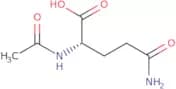
CAS:<p>N-Acetylglutamine is an amino acid that is not synthesized by the human body and must be obtained through diet. It is a precursor to glutamate, which is an important neurotransmitter in the brain. N-Acetyl-L-glutamine has been shown to have neuroprotective effects against various metabolic disorders including diabetes, bowel disease, and microdialysis probes. The effect of N-acetyl-L-glutamine on neuronal death can be observed using a reaction solution containing sodium citrate and glucose injection. N-acetylglutamine has been shown to increase the activity of enzymes such as citrate synthase in this reaction solution.</p>Formula:C7H12N2O4Purity:Min. 95%Color and Shape:White PowderMolecular weight:188.18 g/molCaffeic acid
CAS:<p>Caffeic acid is naturally produced by the metabolism of plants and fungi. Caffeic acid has an antioxidant activity that can be higher than tocopherol in oil-in-water emulsions. Caffeic acid has proven antimicrobial activity against Staphylococcus aureus. In mice, caffeic acid inhibits the enzyme 5-lipoxygenase thus inhibititing the biosynthesis of the inflammatory mediators leukotrienes.</p>Formula:C9H8O4Purity:Min. 98.0 Area-%Molecular weight:180.16 g/mol2-{1-[(tert-Butoxy)carbonyl]piperidin-4-yl}-2-methylpropanoic acid
CAS:<p>2-{1-[(tert-Butoxy)carbonyl]piperidin-4-yl}-2-methylpropanoic acid is a reagent that can be used as a building block for the synthesis of complex compounds. This compound is also useful for the preparation of fine chemicals, research chemicals, and speciality chemicals. 2-{1-[(tert-Butoxy)carbonyl]piperidin-4-yl}-2-methylpropanoic acid is a versatile intermediate that has been employed in many reactions. It is also an excellent reaction component for use in organic chemistry.</p>Formula:C14H25NO4Purity:Min. 95%Color and Shape:PowderMolecular weight:271.4 g/molN-Acetyl-L-alanine 4-nitroanilide
CAS:<p>N-Acetyl-L-alanine 4-nitroanilide is a drug that belongs to the class of drugs called anticholinergics. It is used to treat various symptoms, such as asthma and other respiratory disorders, chronic obstructive pulmonary disease, emphysema, bronchitis, and other lung diseases. N-Acetyl-L-alanine 4-nitroanilide has been shown to have clinical relevance in the treatment of autoimmune diseases such as rheumatoid arthritis and systemic lupus erythematosus. The drug can also be used to treat clinical studies involving intubation. Drug interactions are possible with cardiac medications and antihistamines. It should not be taken by people who have a body mass index over 30 or those who have a history of cardiac problems or heart disease. The drug also interacts with heparin and nitrates, which can lead to an increased risk of irregular heartbeat or chest pain.</p>Formula:C11H13N3O4Purity:Min. 95%Color and Shape:Off-White PowderMolecular weight:251.24 g/mol2-Amino-4,6-dimethoxybenzoic acid
CAS:<p>2-Amino-4,6-dimethoxybenzoic acid is an organic chemical compound that can be used as a building block for the synthesis of other compounds. 2-Amino-4,6-dimethoxybenzoic acid has a number of uses including being a reagent in organic and inorganic reactions, such as the synthesis of dyes, pharmaceuticals, and pesticides. It is also used as a building block for complex compounds that are difficult to make. This chemical has been classified by the Chemical Abstract Services (CAS) registry with CAS number 21577-57-1.</p>Formula:C9H11NO4Purity:Min. 95%Color and Shape:Yellow SolidMolecular weight:197.19 g/mol3-(Trifluoromethyl)pyridine-2-sulfonamide
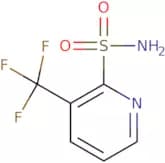
CAS:<p>3-(Trifluoromethyl)pyridine-2-sulfonamide is a fine chemical used in the synthesis of complex compounds, research chemicals, and reagents. It is also a useful building block for the synthesis of valuable chemical products such as pharmaceuticals, agrochemicals, and high-tech materials. 3-(Trifluoromethyl)pyridine-2-sulfonamide has been classified by the US Chemical Abstract Service (CAS) Number 104040-76-8. This product is available in bulk quantities that are both high quality and pure.</p>Formula:C6H5F3N2O2SPurity:Min. 95%Color and Shape:White To Yellow SolidMolecular weight:226.18 g/mol5-Nitrosalicylaldehyde
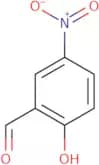
CAS:<p>5-Nitrosalicylaldehyde is a powerful inhibitor of bacterial growth. It has been shown to inhibit the growth of gram-positive bacteria such as Staphylococcus aureus and Streptococcus pyogenes, but not gram-negative bacteria such as Escherichia coli. 5-Nitrosalicylaldehyde is an antimicrobial agent that has been shown to bind to the active site of some enzymes, including bacterial DNA gyrase and human liver microsomes. The binding prevents the enzyme from functioning and leads to cell death. 5-Nitrosalicylaldehyde coordinates with sodium ions in the active site, forming strong hydrogen bonding interactions. This interaction stabilizes the transition state for the reaction and prevents it from happening, thereby inhibiting its function.</p>Formula:C7H5NO4Purity:Min. 95%Color and Shape:Yellow PowderMolecular weight:167.12 g/mol1-(5-Propylpyridin-2-yl)ethan-1-one
CAS:<p>Versatile small molecule scaffold</p>Formula:C10H13NOPurity:Min. 95%Color and Shape:Clear LiquidMolecular weight:163.2 g/mol1-Amino-3-butyne
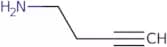
CAS:<p>Bifunctional linker</p>Formula:C4H7NPurity:Min. 84%Color and Shape:Clear LiquidMolecular weight:69.11 g/mol2-Amino-6-chlorobenzoic acid
CAS:<p>2-Amino-6-chlorobenzoic acid is a fine chemical that is used as a reagent or speciality chemical.</p>Formula:C7H6ClNO2Molecular weight:171.58 g/molN-(4-Aminobutyl)-1,4-butanediamine trihydrochloride
CAS:<p>N-(4-Aminobutyl)-1,4-butanediamine trihydrochloride (N(4)ABDAT) is a fine chemical and versatile building block. It can be used as an intermediate in the synthesis of pharmaceuticals and other organic chemicals. N(4)ABDAT is also a useful reagent for research purposes. The compound has a CAS number of 189340-78-1. It was originally synthesized by reacting 4-aminobutyric acid with 1,4-butanediamine, which yielded N(4)ABDAT as the major product. The chemical properties of N(4)ABDAT have been studied extensively including its reaction with potassium hydroxide, hydrochloric acid and sodium hydroxide to form different compounds.</p>Formula:C8H24Cl3N3Purity:Min. 95%Color and Shape:White PowderMolecular weight:268.65 g/mol2,4,6-Trimethoxyaniline
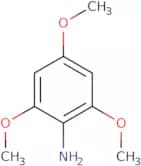
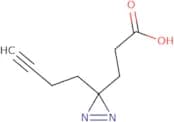
CAS:<p>2,4,6-Trimethoxyaniline is a tetrazole compound that has been shown to inhibit glycosidases. The inhibition of these enzymes prevents the hydrolysis of glycosidic bonds in carbohydrates and other biomolecules. 2,4,6-Trimethoxyaniline is used as an antibacterial agent against methicillin-resistant Staphylococcus aureus (MRSA) and other bacteria. It also inhibits the growth of Mycobacterium tuberculosis and Mycobacterium avium complex due to its ability to inhibit protein synthesis by inhibiting RNA synthesis. 2,4,6-Trimethoxyaniline can be synthesized by demethylation of anisidine with tribromide or chloroform.</p>Formula:C9H13NO3Purity:Min. 97 Area-%Color and Shape:Yellow PowderMolecular weight:183.2 g/mol3-(3-(But-3-yn-1-yl)-3H-diazirin-3-yl)propanoic acid
CAS:<p>3-(3-(But-3-yn-1-yl)-3H-diazirin-3-yl)propanoic acid (BDPA) is a reagent that is used as a starting material or intermediate for the synthesis of pharmaceuticals and other chemical compounds. This compound has been shown to be an excellent scaffold for the synthesis of complex structures, such as peptides and natural products. BDPA is also a versatile building block for organic syntheses, which can be used in reactions with other chemicals to form new compounds. Research chemicals such as BDPA are not approved by the FDA, so they should only be handled and used by professionals.</p>Formula:C8H10N2O2Purity:Min. 95%Color and Shape:PowderMolecular weight:166.18 g/mol2-Hydroxybenzophenone
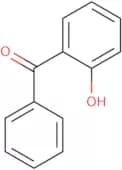
CAS:<p>2-Hydroxybenzophenone is a phenolic compound that has been used as an intermediate in the production of other organic compounds. It is also used to study the reaction mechanism of 2-hydroxylation reactions and protonation reactions. Protonation of 2-hydroxybenzophenone with calcium stearate yields calcium 2,2'-dihydroxybenzoate, which is then hydrolyzed to release hydrogen gas. The hydroxyl group on the benzene ring coordinates with the phosphate group on phosphite to form a hydrogen bond. This process can be catalyzed by sodium carbonate. The uv absorption spectra show two maxima at 254 and 280 nm due to the presence of both hydroxyl groups and carbonyl groups.</p>Formula:C13H10O2Purity:Min. 98 Area-%Color and Shape:PowderMolecular weight:198.22 g/mol5-Amino-2-nitrobenzoic acid
CAS:<p>5-Amino-2-nitrobenzoic acid is an organic compound that belongs to the class of versatile building block. It is a white solid that has been used as a research chemical, reagent, and specialty chemical for the synthesis of complex compounds and pharmaceuticals. 5-Amino-2-nitrobenzoic acid is also known as 2-amino-5-chlorobenzoic acid (ACBA). It is soluble in water, but insoluble in ethanol. The CAS number for this chemical is 13280-60-9.</p>Formula:C7H6N2O4Molecular weight:182.14 g/molRef: 3D-A-6802
1kgTo inquire100gTo inquire250gTo inquire500gTo inquire2500gTo inquire-Unit-ggTo inquire

![1,8-Diazaspiro[4.5]decan-2-one dihydrochloride](/_next/image/?url=https%3A%2Fstatic.cymitquimica.com%2Fproducts%2F3D%2Fthumb-webp%2FGDD38984.webp&w=3840&q=75)

![2-{1-[(tert-Butoxy)carbonyl]piperidin-4-yl}-2-methylpropanoic acid](/_next/image/?url=https%3A%2Fstatic.cymitquimica.com%2Fproducts%2F3D%2Fthumb-webp%2FQJB15685.webp&w=3840&q=75)