Building Blocks
This section contains fundamental products for the synthesis of organic and biological compounds. Building blocks are the essential starting materials used to construct complex molecules through various chemical reactions. They play a critical role in drug discovery, material science, and chemical research. At CymitQuimica, we offer a diverse range of high-quality building blocks to support your innovative research and industrial projects, ensuring you have the essential components for successful synthesis.
Subcategories of "Building Blocks"
- Boronic Acids & Boronic Acid Derivatives(5,756 products)
- Chiral Building Blocks(1,242 products)
- Hydrocarbon Building Blocks(6,095 products)
- Organic Building Blocks(61,038 products)
Found 196817 products of "Building Blocks"
Sort by
Purity (%)
0
100
|
0
|
50
|
90
|
95
|
100
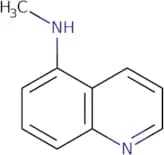
N-Methylquinolin-5-amine
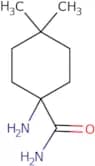
CAS:<p>Versatile small molecule scaffold</p>Formula:C10H10N2Purity:Min. 95%Color and Shape:PowderMolecular weight:158.2 g/mol1-Amino-4,4-dimethylcyclohexane-1-carboxamide
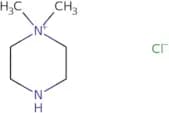
CAS:<p>Versatile small molecule scaffold</p>Formula:C9H18N2OPurity:Min. 95%Color and Shape:PowderMolecular weight:170.25 g/mol1,1-Dimethylpiperazin-1-ium chloride
CAS:<p>1,1-Dimethylpiperazin-1-ium chloride is a fine chemical that is used as a building block in the synthesis of complex compounds. It has been shown to be useful as a reaction component in the synthesis of speciality chemicals and intermediate products for research purposes. 1,1-Dimethylpiperazin-1-ium chloride is also an important reagent for the preparation of high quality chemical compounds.</p>Formula:C6H15ClN2Purity:Min. 95%Color and Shape:PowderMolecular weight:150.65 g/mol[2-(Cyclopropylmethoxy)ethyl](methyl)amine
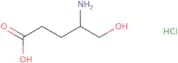
CAS:<p>Versatile small molecule scaffold</p>Formula:C7H15NOPurity:Min. 80%Color and Shape:Clear LiquidMolecular weight:129.2 g/mol(4S)-4-Amino-5-hydroxypentanoic acid hydrochloride
CAS:<p>Versatile small molecule scaffold</p>Formula:C5H11NO3•HClPurity:Min. 95%Color and Shape:PowderMolecular weight:169.61 g/mol2-Azaspiro[3.3]heptane-1-carboxylic acid hydrochloride
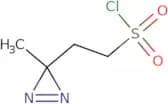
CAS:<p>2-Azaspiro[3.3]heptane-1-carboxylic acid hydrochloride is a versatile building block that can be used in the synthesis of a wide variety of chemical compounds. It is a high quality, useful intermediate that has been shown to be an effective scaffold for synthesis of various complex compounds.</p>Formula:C7H11NO2•HClPurity:Min. 95%Molecular weight:177.63 g/mol2-(3-Methyl-3H-diazirin-3-yl)ethane-1-sulfonyl chloride
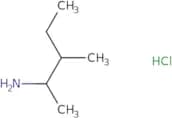
CAS:<p>Versatile small molecule scaffold</p>Formula:C4H7ClN2O2SPurity:Min. 95%Molecular weight:182.63 g/mol3-Methylpentan-2-amine hydrochloride
CAS:<p>Versatile small molecule scaffold</p>Formula:C6H15N•HClPurity:Min. 95%Color and Shape:PowderMolecular weight:137.65 g/mol4-{5H,6H,7H,8H-Pyrido[4,3-c]pyridazin-3-yl}-1,4-oxazepane
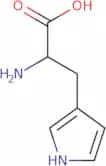
CAS:<p>Versatile small molecule scaffold</p>Formula:C12H18N4OPurity:Min. 95%Color and Shape:PowderMolecular weight:234.3 g/mol2-Amino-3-(1H-pyrrol-3-yl)propanoic acid
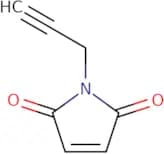
CAS:<p>Versatile small molecule scaffold</p>Formula:C7H10N2O2Purity:Min. 95%Color and Shape:PowderMolecular weight:154.17 g/mol1-(Prop-2-yn-1-yl)-2,5-dihydro-1H-pyrrole-2,5-dione
CAS:<p>1,2-Dihydropyrrolo[3,4-b]pyrrole-2,5-dione is a fine chemical that is used as a research chemical and in the synthesis of complex organic compounds. It is also an intermediate for the production of other chemicals. This compound can be used as a building block for the synthesis of many other chemicals with pharmaceutical and industrial applications. 1,2-Dihydropyrrolo[3,4-b]pyrrole-2,5-dione has been shown to be a useful reagent that can react with various functional groups to form new compounds and has found use in many industries.</p>Formula:C7H5NO2Purity:Min. 95%Color and Shape:PowderMolecular weight:135.12 g/mol6-Hydroxy-2-oxo-1,2-dihydropyridine-3-carboxylic acid
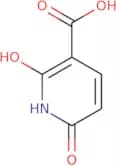
CAS:<p>6-Hydroxy-2-oxo-1,2-dihydropyridine-3-carboxylic acid is a hydroxylate that is found in animals and plants. It is also a flavinoid, meaning it has an aromatic ring with two carbon atoms and a nitrogen atom. 6-Hydroxy-2-oxo-1,2-dihydropyridine 3 carboxylic acid is found in the subunits of flavoproteins, which are enzymes that produce molecular oxygen from hydrogen peroxide. 6HODCA has been shown to be an acceptor for electrons in lipid oxidation reactions and can be used as a precursor for the synthesis of lipids. Hydroxylases also produce 6HODCA by adding water to pyridines.</p>Formula:C6H5NO4Purity:Min. 95%Molecular weight:155.11 g/mol2,6-Di(tert-butyl)-4-hydroxy-4-methyl-2,5-cyclohexadien-1-one
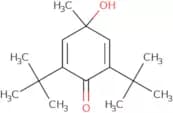
CAS:<p>2,6-Di(tert-butyl)-4-hydroxy-4-methyl-2,5-cyclohexadien-1-one (BHT) is a reactive methide that can be produced by the nucleophilic attack of an electrophile on a molecule containing a methylene group. BHT is used in analytical chemistry as an antioxidant and free radical scavenger. BHT has been shown to protect rat liver microsomes from damage induced by oxidative stress and to inhibit the development of lung cancer in rats chronically treated with cigarette smoke. This product also has been used in modelling studies to study the effect of alveolar type II cells on airway hyperresponsiveness.</p>Formula:C15H24O2Purity:Min. 95%Color and Shape:PowderMolecular weight:236.35 g/mol8-(tert-Butoxycarbonyl)-1-oxa-8-azaspiro[4.5]decane-2-carboxylic acid
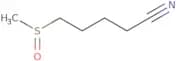
CAS:<p>8-(tert-Butoxycarbonyl)-1-oxa-8-azaspiro[4.5]decane-2-carboxylic acid is a useful scaffold for the preparation of new compounds. This compound is an intermediate in the synthesis of other compounds, and can be used as a building block in the synthesis of complex compounds. It has been used as a reagent for organic reactions and has shown high quality. 8-(tert-Butoxycarbonyl)-1-oxa-8-azaspiro[4.5]decane-2-carboxylic acid is also known by CAS No. 1160246-88-7 and has a variety of speciality uses, such as research chemicals or fine chemicals.</p>Formula:C14H23NO5Purity:Min. 95%Molecular weight:285.34 g/mol5-Methanesulfinylpentanenitrile
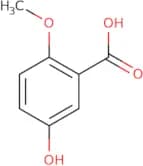
CAS:<p>5-Methanesulfinylpentanenitrile is a compound that is found in plants such as broccoli, cabbage, and cauliflower. It has been shown to have anticarcinogenic properties in cell culture studies. The activity of sulforaphane can be increased by the presence of glucosinolates. Sulforaphane inhibits the synthesis of fatty acids and is metabolized by detoxification enzymes. Amides are formed from sulforaphane, which can be detected using preparative high performance liquid chromatography (prep-HPLC). The water solubility of sulforaphane can be increased by heating it to a temperature above its boiling point so that it becomes supercritical (above its critical temperature). This allows for the preparation of dry weight samples for analysis.</p>Formula:C6H11NOSPurity:Min. 95%Molecular weight:145.23 g/mol5-Hydroxy-2-methoxybenzoic acid
CAS:<p>Apigenin is a flavonoid found in plants of the genus Labiatae, such as chamomile and feverfew. It is a potent anti-inflammatory agent that may be due to its ability to inhibit cyclooxygenase (COX) enzymes and subsequent production of proinflammatory prostaglandins, leukotrienes, and thromboxanes. Apigenin has also been shown to inhibit cancer cell growth by binding to DNA and inhibiting transcription. Apigenin is chemically stable at room temperature and has been used in techniques such as liquid chromatography-mass spectrometry (LC-MS).</p>Formula:C8H8O4Purity:Min. 95%Color and Shape:PowderMolecular weight:168.14 g/mol3-azido-4,5-dihydro-1H-benzo[b]azepin-2(3H)-one
CAS:<p>Versatile small molecule scaffold</p>Formula:C10H10N4OPurity:Min. 95%Color and Shape:PowderMolecular weight:202.21 g/mol2-[4-(Aminomethyl)phenyl]ethan-1-ol
CAS:<p>Versatile small molecule scaffold</p>Formula:C9H13NOPurity:Min. 95%Molecular weight:151.21 g/mol2-(4-Bromo-1H-imidazol-1-yl)acetic acid
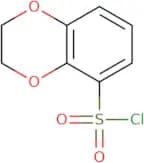
CAS:<p>2-(4-Bromo-1H-imidazol-1-yl)acetic acid is a fine chemical that can be used as a versatile building block, a reaction component and as a speciality chemical. It is an intermediate in the synthesis of other compounds, such as 2-(4-bromophenylimino)-N-(2-chlorophenyl)acetamide. It has been shown to be useful in the synthesis of complex compounds with high quality, such as 2-[4-(2,6-Dichlorobenzoyloxy)phenylimino]-N-(2,4-dimethoxyphenyl)acetamide.</p>Formula:C5H5BrN2O2Purity:Min. 95%Color and Shape:PowderMolecular weight:205.01 g/mol2,3-Dihydro-1,4-benzodioxine-5-sulfonyl chloride
CAS:<p>Versatile small molecule scaffold</p>Formula:C8H7ClO4SPurity:Min. 95%Color and Shape:PowderMolecular weight:234.65 g/mol

amine](/_next/image/?url=https%3A%2Fstatic.cymitquimica.com%2Fproducts%2F3D%2Fthumb-webp%2FIKB52698.webp&w=3840&q=75)
![2-Azaspiro[3.3]heptane-1-carboxylic acid hydrochloride](/_next/image/?url=https%3A%2Fstatic.cymitquimica.com%2Fproducts%2F3D%2Fthumb-webp%2FJBD30513.webp&w=3840&q=75)
![4-{5H,6H,7H,8H-Pyrido[4,3-c]pyridazin-3-yl}-1,4-oxazepane](/_next/image/?url=https%3A%2Fstatic.cymitquimica.com%2Fproducts%2F3D%2Fthumb-webp%2FJHD95611.webp&w=3840&q=75)
![8-(tert-Butoxycarbonyl)-1-oxa-8-azaspiro[4.5]decane-2-carboxylic acid](/_next/image/?url=https%3A%2Fstatic.cymitquimica.com%2Fproducts%2F3D%2Fthumb-webp%2FKWB24688.webp&w=3840&q=75)
![3-azido-4,5-dihydro-1H-benzo[b]azepin-2(3H)-one](/_next/image/?url=https%3A%2Fstatic.cymitquimica.com%2Fproducts%2F3D%2Fthumb-webp%2FLDA49924.webp&w=3840&q=75)
![2-[4-(Aminomethyl)phenyl]ethan-1-ol](/_next/image/?url=https%3A%2Fstatic.cymitquimica.com%2Fproducts%2F3D%2Fthumb-webp%2FLFA08118.webp&w=3840&q=75)