Building Blocks
This section contains fundamental products for the synthesis of organic and biological compounds. Building blocks are the essential starting materials used to construct complex molecules through various chemical reactions. They play a critical role in drug discovery, material science, and chemical research. At CymitQuimica, we offer a diverse range of high-quality building blocks to support your innovative research and industrial projects, ensuring you have the essential components for successful synthesis.
Subcategories of "Building Blocks"
- Boronic Acids & Boronic Acid Derivatives(5,756 products)
- Chiral Building Blocks(1,242 products)
- Hydrocarbon Building Blocks(6,095 products)
- Organic Building Blocks(61,038 products)
Found 196817 products of "Building Blocks"
Sort by
Purity (%)
0
100
|
0
|
50
|
90
|
95
|
100
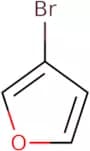
3-Bromofuran
CAS:<p>3-Bromofuran is a synthetic chemical that can be used to treat cancer, specifically as an anti-cancer agent. 3-Bromofuran has been shown to inhibit the growth of tumour cells in culture. It also selectively inhibits antigen expression and induces apoptosis in tumour cells. 3-Bromofuran is synthesized by a Sharpless asymmetric dihydroxylation of hippuric acid and efficiently undergoes cross coupling reactions with electron deficient polyatomic molecules such as organoaluminium compounds. The major metabolite of 3-bromofuran is 3,4-dihydroxybenzoic acid (3,4-DHBA), which has been found to have antiviral and antibacterial properties.</p>Formula:C4H3BrOPurity:Min. 95%Color and Shape:Clear LiquidMolecular weight:146.97 g/molTrimethyl orthovalerate
CAS:<p>Used for synthesis of dihydropyran-4-ones</p>Formula:C8H18O3Purity:Min. 97 Area-%Color and Shape:Colorless Clear LiquidMolecular weight:162.23 g/mol2-Benzofurancarboxylic acid
CAS:<p>2-Benzofurancarboxylic acid is a potent antimicrobial agent that inhibits the growth of bacteria by binding to amines, carthamus tinctorius, coumarin derivatives, and reaction mechanism. It has been shown to be effective against several types of cancer cells and autoimmune diseases. 2-Benzofurancarboxylic acid binds reversibly to the active site of an enzyme with high affinity for amines, carthamus tinctorius, coumarin derivatives, and reaction mechanism. This binding prevents the enzyme from performing its normal function.<br>2-Benzofurancarboxylic acid has also been shown to inhibit bacterial growth in a microgravity environment and was found to be more effective than its analogs in a molecular docking analysis.</p>Formula:C9H6O3Purity:Min. 98 Area-%Color and Shape:PowderMolecular weight:162.14 g/molL-5-Methyltetrahydrofolate calcium
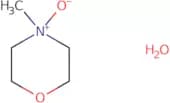
CAS:<p>L-5-Methyltetrahydrofolate calcium is also known as calcium levomefolate; N-[4-[[(2-amino-1,4,5,6,7,8-hexahydro-5-methyl-4-oxo-6-pteridinyl)methyl]amino]benzoyl]-L-glutamic acid, calcium salt; and L-5-MTHF. L-5-Methyltetrahydrofolate calcium is the calcium salt of L-5-methyltetrahydrofolic acid, and a member of the folate group of vitamins (Vitamin B9). It is the coenzymated and most active form of folic acid, which performs many vital cellular functions, including DNA reproduction, cysteine cycle and homocysteine regulation. L-5-Methyltetrahydrofolate calcium is used as in dietary supplements and has been proposed for treatment of cardiovascular disease.</p>Formula:C20H23CaN7O6Purity:Min. 95 Area-%Color and Shape:White PowderMolecular weight:497.52 g/mol4-Methylmorpholine N-oxide monohydrate
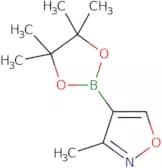
CAS:<p>Intermediate for organic syntheses</p>Formula:C5H13NO3Color and Shape:PowderMolecular weight:135.16 g/mol3-Methyl-4-(4,4,5,5-tetramethyl-1,3,2-dioxaborolan-2-yl)isoxazole
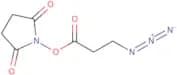
CAS:<p>3-Methyl-4-(4,4,5,5-tetramethyl-1,3,2-dioxaborolan-2-yl)isoxazole is a fine chemical that belongs to the class of boron compounds. It can be used as a reagent or in the synthesis of other compounds. 3-Methyl-4-(4,4,5,5-tetramethyl-1,3,2-dioxaborolan-2-yl)isoxazole is an intermediate for the production of pharmaceuticals and agrochemicals. It can also be used as a building block in organic synthesis and a scaffold for the preparation of complex molecules.</p>Formula:C10H16BNO3Purity:Min. 95%Color and Shape:PowderMolecular weight:209.05 g/mol3-Azidopropanoate-N-hydroxysuccinimide ester
CAS:<p>3-Azidopropanoate-N-hydroxysuccinimide ester is a fluorescent probe that can be activated by the addition of an azide donor. The fluorescence of 3-azidopropanoate-N-hydroxysuccinimide ester is dependent on the presence of serum albumin and can be used as a model system for studying albumin uptake and metabolism. This probe has been shown to have good uptake in lung cancer cells, which may be due to its ability to bind with the receptor on the cell surface. 3-Azidopropanoate-N-hydroxysuccinimide ester binds to proteolytic enzymes such as plasmin, cathepsins, and elastase, which are found in high concentrations in lung cancer cells.</p>Formula:C7H8N4O4Purity:Min. 95%Color and Shape:PowderMolecular weight:212.16 g/mol(R)-1,1'-Bi-2-Naphthol
CAS:<p>(R)-1,1'-Bi-2-Naphthol is an organic compound that is made from the hydrogenation of 2-naphthol. The sodium salts of this compound are chiral and can be used to synthesize racemic mixtures with a high degree of optical purity. The x-ray crystal structures of (R)-1,1'-Bi-2-Naphthol have been studied in detail and show that this molecule exhibits intermolecular hydrogen bonding interactions. It also has a steric interaction with the amine group which prevents rotation about the C3—C4 bond. Other interesting features include intramolecular hydrogen bonding interactions between the hydroxyl group and the alkanoic acid. This molecule also has a hydrophobic region consisting of three methyl groups that are connected to fatty acids.</p>Formula:C20H14O2Purity:Min. 98.5 Area-%Color and Shape:White Off-White PowderMolecular weight:286.32 g/mol7-Methylindole technical grade
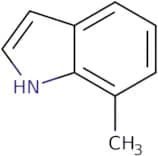
CAS:7-Methylidole is a heterocyclic chemical compound that is used as a precursor in the synthesis of many pharmaceuticals. It has been shown to have an inhibitory effect on the growth of cancer cells in tissue cultures and can be used as a marker for cancer cells. 7-Methylidole is also a virulence factor, which can be seen through assays on bacterial strains. This compound has been proven to be reactive with Polygonum cuspidatum. The reaction produces indirubin, which is a red pigment that is found in some species of Polygonum and other plants.Formula:C9H9NPurity:Min. 95%Color and Shape:PowderMolecular weight:131.17 g/mol2-Bromo-4-iodopyridine
CAS:<p>2-Bromo-4-iodopyridine is a coordination compound that inhibits bacterial enzyme catechol-O-methyltransferase (COMT). It is also an inhibitor of methicillin-resistant Staphylococcus aureus (MRSA) and other bacteria. 2-Bromo-4-iodopyridine binds to the active site of COMT, which is located in the bacterial cell wall, and prevents methylamine from binding to the enzyme. This prevents methylation of the catechol ring, which is required for bacterial growth. 2-Bromo-4-iodopyridine has been shown to have antimicrobial activity against Escherichia coli, Enterococcus faecalis, Bacillus subtilis, and Candida albicans.</p>Formula:C5H3BrINPurity:Min. 95%Color and Shape:PowderMolecular weight:283.88 g/mol1,4-Bis-(diphenylphosphino)butane
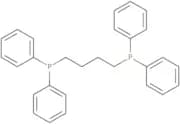
CAS:<p>1,4-Bis-(diphenylphosphino)butane is a coordination compound that contains a bicyclic heterocycle. The compounds are made up of phosphorus and nitrogen atoms which are arranged in a tetrahedral geometry. It has photochemical properties and can be used to inhibit the growth of myeloid leukemia cells. The complexes bind to amines and form stable complexes with hydroxyl groups, so they are also able to cross mitochondrial membranes. This compound has been shown to bind to copper ions in x-ray crystal structures. 1,4-Bis-(diphenylphosphino)butane binds more strongly to ethylene diamine than it does to aryl halides such as chloroethane or phenylethane. Activation energies for the binding of 1,4-bis-(diphenylphosphino)butane with ethylene diamine have been found by measuring the free energy change for its formation from</p>Formula:C28H28P2Purity:Min. 95%Color and Shape:White PowderMolecular weight:426.47 g/mol1-Bromoadamantane - 90%min
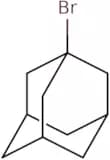
CAS:<p>1-Bromoadamantane is a quinoline derivative that binds to the inflammatory bowel disease molecule. It is used as a pharmaceutical preparation for the treatment of inflammatory bowel disease. 1-Bromoadamantane is synthesized by the palladium-catalyzed coupling reaction of 2,6-dimethoxybenzene and trifluoromethanesulfonic acid. The synthesis method involves the use of hydrochloric acid and hydroxyl group. 1-Bromoadamantane has been shown to have binding constants with ileal and colonic tissue in rats with experimental colitis.</p>Formula:C10H15BrPurity:Min. 90%Color and Shape:PowderMolecular weight:215.13 g/mol1,1-Dimethyl-3-oxo-1,3-dihydro-2-benzofuran-4-carboxylic acid
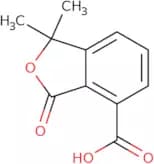
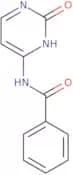
CAS:<p>Versatile small molecule scaffold</p>Formula:C11H10O4Purity:Min. 95%Color and Shape:PowderMolecular weight:206.19 g/molN4-Benzoylcytosine
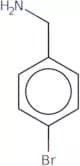
CAS:<p>Building block in the synthesis of nucleoside antiviral agents</p>Formula:C11H9N3O2Purity:Min. 95%Color and Shape:White PowderMolecular weight:215.21 g/mol4-Bromobenzylamine
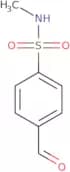
CAS:<p>4-Bromobenzylamine is a chemical compound that has been used to study the process optimization of sephadex g-100. It is also used as a chemotherapeutic treatment for cancer. 4-Bromobenzylamine binds to intracellular targets, such as nitrogen atoms and cell lysis, with physiological levels found in fetal bovine serum. The nitrogen atom is an essential structural component of 4-bromobenzylamine that is necessary for its biological activity and may be involved in binding to DNA polymerase. This drug has been shown to inhibit the growth of metastatic colorectal cancer cells by inhibiting cellular proliferation. Structural analysis has revealed that 4-bromobenzylamine interacts with the polymerase chain reaction (PCR) enzyme and inhibits the ability of DNA polymerases to add nucleotides to the growing strand of DNA.</p>Formula:C7H8BrNPurity:Min. 95%Color and Shape:PowderMolecular weight:186.05 g/mol4-Formyl-N-methylbenzenesulfonamide
CAS:<p>4-Formyl-N-methylbenzenesulfonamide is a fine chemical that is used as a versatile building block in the synthesis of complex compounds, research chemicals, and reagents. It is highly useful as a reagent or speciality chemical in laboratory experiments involving many different reactions. 4-Formyl-N-methylbenzenesulfonamide has been shown to be an excellent intermediate for the synthesis of high quality products. This product can also be used as a scaffold in complex organic syntheses.</p>Formula:C8H9NO3SPurity:Min. 95%Color and Shape:PowderMolecular weight:199.23 g/mol2-Methyl-3-morpholin-4-yl-propionic acid hydrochloride
CAS:<p>2-Methyl-3-morpholin-4-yl-propionic acid hydrochloride is a reagent that can be used in the synthesis of various compounds. It is also a building block for the preparation of complex compounds and fine chemicals. The CAS number for this chemical is 1052522-32-3.</p>Formula:C8H16ClNO3Purity:Min. 95%Color and Shape:PowderMolecular weight:209.67 g/mol4-Bromo-1-butene
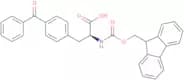
CAS:<p>4-Bromo-1-butene is a colorless liquid with a boiling point of 102°C. It is soluble in ethanol, acetone, and chloroform. 4-Bromo-1-butene undergoes an acid-catalyzed phase transition to the solid form at temperatures below its melting point. 4-Bromobutene can be synthesized by reacting ethyl bromide with 1-butene in the presence of a catalyst such as copper or silver oxide. The kinetic energy of the reaction is determined by measuring the rate of evolution of hydrogen bromide gas from the reaction mixture. The β-unsaturated ketone reacts with dimethyl fumarate in the presence of sodium hydroxide to produce 4-bromobutene and 2,2'-difluoroethanol. This product has been shown to have IR spectra similar to those for other products containing a hydroxyl group such as phenol and</p>Formula:C4H7BrPurity:Min. 95%Color and Shape:Colorless Clear LiquidMolecular weight:135 g/molFmoc-4-benzoyl-L-phenylalanine
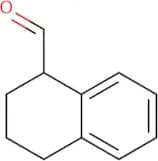
CAS:<p>Fmoc-4-benzoyl-L-phenylalanine is a benzoic acid derivative that binds to the 5-HT1A receptor and the intestinal polypeptide receptor. It may also act as a vasoactive intestinal peptide (VIP) agonist. The pharmacophore of Fmoc-4-benzoyl-L-phenylalanine is similar to other antiarrhythmic drugs, such as quinidine and procainamide, with substituents at positions 2, 3, 4, 6, 7, and 8. Fmoc-4-benzoyl-L-phenylalanine has been shown to inhibit nitric oxide production in amines and ethane. This drug has been shown to have therapeutic potential in the treatment of cardiovascular diseases by visualizing cellular changes in heart tissue.</p>Formula:C31H25NO5Purity:Min. 95%Color and Shape:Off-White PowderMolecular weight:491.53 g/mol1,2,3,4-Tetrahydronaphthalene-1-carbaldehyde
CAS:<p>1,2,3,4-Tetrahydronaphthalene-1-carbaldehyde is an organic compound that contains a nitrogen atom. It is used to treat autoimmune diseases and eye disorders. The compound has been shown to inhibit the production of glutamate in the retina of rats with experimental autoimmune encephalomyelitis (EAE), which may be due to its ability to suppress the activation of microglia cells and the release of proinflammatory cytokines. Tetrahydronaphthalene-1-carbaldehyde also inhibits cancer cell growth by binding to estrogen receptors and regulating gene expression. This drug also has anti-inflammatory effects by inhibiting cyclooxygenase 2 and lipoxygenase, as well as being a control agent for chronic kidney disease.</p>Formula:C11H12OPurity:Min. 95%Color and Shape:Clear LiquidMolecular weight:160.22 g/mol