Building Blocks
This section contains fundamental products for the synthesis of organic and biological compounds. Building blocks are the essential starting materials used to construct complex molecules through various chemical reactions. They play a critical role in drug discovery, material science, and chemical research. At CymitQuimica, we offer a diverse range of high-quality building blocks to support your innovative research and industrial projects, ensuring you have the essential components for successful synthesis.
Subcategories of "Building Blocks"
- Boronic Acids & Boronic Acid Derivatives(5,778 products)
- Chiral Building Blocks(1,242 products)
- Hydrocarbon Building Blocks(6,098 products)
- Organic Building Blocks(61,069 products)
Found 197521 products of "Building Blocks"
Sort by
Purity (%)
0
100
|
0
|
50
|
90
|
95
|
100
2-Amino-5-bromopyrazine-3-carboxylic acid
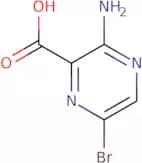
CAS:2-Amino-5-bromopyrazine-3-carboxylic acid is an organic compound that belongs to the group of boronic acids. It has a molecular weight of 138.14 and a melting point of 198°C. The compound has been characterized by x-ray crystallography, revealing its molecular structure. 2-Amino-5-bromopyrazine-3-carboxylic acid is soluble in water and can be isolated from the reaction mixture using conventional methods such as recrystallization. The compound reacts with alkyl halides through cross coupling reactions to form pyridyl compounds. This reagent is used for Suzuki, Miyaura, and other cross coupling reactions with high yield.Formula:C5H4BrN3O2Purity:Min. 95%Color and Shape:Brown PowderMolecular weight:218.01 g/molFurosine hydrochloride
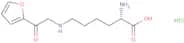
CAS:<p>Furosine hydrochloride is a white crystalline chemical with a molecular formula of C6H7N3O4S. It is soluble in water and has a melting point of about 140 degrees Celsius. Furosine hydrochloride is a useful building block for the synthesis of polymers, pharmaceuticals, organic semiconductors and other organic compounds. Furosine hydrochloride is used as an intermediate to produce fine chemicals such as polyurethanes, polyamides and amino acids. It can also be used as a reaction component in the synthesis of complex compounds such as 2-amino-5-nitrothiophene or 2,2'-dithiobis(benzothiazole). Furosine hydrochloride can be used as a scaffold for the production of various drugs such as antihypertensives or antidepressants.</p>Formula:C12H18N2O4·xHClPurity:Min. 98 Area-%Color and Shape:PowderMolecular weight:254.28 g/molFmoc-D-7-Aza-Trp-OH
CAS:<p>Please enquire for more information about Fmoc-D-7-Aza-Trp-OH including the price, delivery time and more detailed product information at the technical inquiry form on this page</p>Formula:C25H21N3O4Purity:Min. 95%Molecular weight:427.45 g/molFmoc-Lys(5-TAMRA)-OH
CAS:Please enquire for more information about Fmoc-Lys(5-TAMRA)-OH including the price, delivery time and more detailed product information at the technical inquiry form on this pageFormula:C46H44N4O8Purity:Min. 95%Molecular weight:780.9 g/molN6-Trifluoroacetyl-L-lysine N-carboxyanhydride
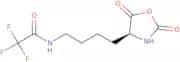
CAS:<p>Trifluoroacetyl-L-lysine N-carboxyanhydride is an N6-trifluoroacetylated lysine derivative that is used in the synthesis of peptides. It is a racemic mixture of L and D forms, which is hydrolyzed to form L-glutamic acid, NH4Cl, and CO2. Trifluoroacetyl-L-lyside N-carboxyanhydride has been shown to be useful in the formation of bonds between amino acids, such as lysine and dipeptides. The compound is also used for the protection of lysine against oxidation during peptide synthesis.</p>Formula:C9H11F3N2O4Purity:Min. 95%Color and Shape:White PowderMolecular weight:268.19 g/mol3,4-Dibenzyloxybenzaldehyde
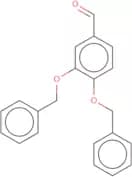
CAS:<p>3,4-Dibenzyloxybenzaldehyde is a chemical compound with the formula ClCH=C(O)CHO. This compound is an intermediate in the synthesis of the cancer drug daunorubicin. 3,4-Dibenzyloxybenzaldehyde has been shown to induce apoptosis in human ovary cells and has been detected in urine samples from patients undergoing chemotherapy for ovarian cancer. 3,4-Dibenzyloxybenzaldehyde also inhibits the production of flavonoids and has been shown to inhibit rat striatal membranes and rat atria.</p>Formula:C21H18O3Purity:Min. 95%Color and Shape:PowderMolecular weight:318.37 g/mol5-Fluoro-dUMP sodium
CAS:<p>Please enquire for more information about 5-Fluoro-dUMP sodium including the price, delivery time and more detailed product information at the technical inquiry form on this page</p>Formula:C9H12FN2O8P•NaxPurity:Min. 95%2-Chloro-4-nitroimidazole
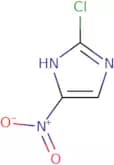
CAS:<p>Radiosensitiser in hypoxic tumours</p>Formula:C3H2ClN3O2Purity:Min. 95%Color and Shape:PowderMolecular weight:147.52 g/molN-(1-Cyano-1-methylethyl)-2-methylpropanamide
CAS:<p>N-(1-Cyano-1-methylethyl)-2-methylpropanamide is a chemical that is used in pharmaceutical dosage. It is a prodrug of aminopropiophenone, which has been shown to be useful for the treatment of depression. This chemical is readily soluble in water and hydrochloric acid, but insoluble in trifluoroacetic acid or hydrophilic interaction chromatography. N-(1-Cyano-1-methylethyl)-2-methylpropanamide has been shown to bind to chloride ions, amines, and dodecyl groups.</p>Formula:C8H14N2OPurity:Min. 95%Color and Shape:PowderMolecular weight:154.21 g/mol1-Boc-4-bromomethylpiperidine
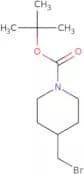
CAS:1-Boc-4-bromomethylpiperidine is a versatile building block for the synthesis of complex compounds with diverse biological activity. It is an excellent reagent for the synthesis of 1,2,3-triazoles, which are useful scaffolds in the synthesis of high quality pharmaceuticals. This compound can be used as a reaction component and as a useful intermediate in various chemical reactions.Formula:C11H20BrNO2Purity:Min. 97 Area-%Color and Shape:PowderMolecular weight:278.19 g/mol2,5-Furandicarboxylic diethyl ester
CAS:2,5-Furandicarboxylic acid diethyl ester is a synthetic monomer that can be used in the production of polyesters. It is synthesized from primary alcohols by an acid-catalyzed reaction, followed by dehydration with phosphotungstic acid or heating to produce furanic and furfural. 2,5-Furandicarboxylic acid diethyl ester is a sustainable compound because it does not contain any toxic chemicals and it only contains one carbon atom that can be recycled into biomass. It has been shown to have control experiments and sequences that are similar to diglycerol.Formula:C10H12O5Purity:Min. 95%Color and Shape:PowderMolecular weight:212.2 g/mol2-(Dimethylphosphoryl)-2-hydroxyacetic acid
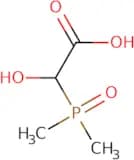
CAS:<p>2-(Dimethylphosphoryl)-2-hydroxyacetic acid (DMPPA) is a herbicide that inhibits acetaldehyde dehydrogenase, an enzyme in the biochemical pathway of acetaldehyde biosynthesis. DMPPA does not have any effect on glutamate and l-threonine metabolism or on the formation of diketones. The target enzyme is activated by the addition of glyphosate to the leaves. DMPPA is used for diagnosis of velvetleaf (Abutilon theophrasti), which is a weed found in corn fields in North America. The chemical can be applied as a foliar spray or as a soil application, with many different formulations available. The chemical has been shown to be effective against graminaceous weeds such as barnyardgrass (Echinochloa crusgalli) and crabgrass (Digitaria spp.).</p>Formula:C4H9O4PPurity:Min. 95%Molecular weight:152.09 g/mol4-Fluoroindole
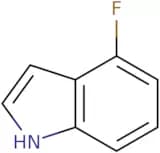
CAS:4-Fluoroindole is a compound that belongs to the class of 5-methoxyindoles, which are used as drugs in plant physiology. The analog of 4-fluoroindole is important for cell culture and transcriptomic analysis. It has been shown to reduce the growth of cryptococcus neoformans by inhibiting its ability to produce acid. 4-Fluoroindole also inhibits the growth of other opportunistic fungi, such as Aspergillus niger. This drug is addictive and can be toxic if it enters the environment. 4-Fluoroindole also inhibits the growth of plants when applied as a pesticide.Formula:C8H6FNColor and Shape:PowderMolecular weight:135.14 g/mol5-Fluoroindole-3-acetic acid
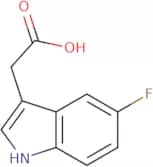
CAS:<p>5-Fluoroindole-3-acetic acid is a fluorine-containing drug that inhibits the transport of indoleacetic acid (IAA), an auxin, in the peo-iaa system. It has been shown to inhibit cancer cell growth and induce apoptosis in a variety of tumour cells. 5-Fluoroindole-3-acetic acid can be used as a chemotherapeutic agent for cancers such as bladder, breast, and prostate cancers. This drug also activates enzymatic reactions by introducing fluorine atoms into reaction sites.</p>Formula:C10H8FNO2Color and Shape:PowderMolecular weight:193.17 g/mol6-Fluoroindole-3-carboxaldehyde
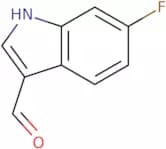
CAS:<p>6-Fluoroindole-3-carboxaldehyde (6FLA) is a synthetic compound that inhibits biosynthesis of the phytoalexins salicylic acid and lignin in plants. It also inhibits the β-glucuronidase enzyme, which hydrolyzes the glucuronide conjugates of phenolic compounds and xenobiotics. 6FLA has been shown to cause mild liver damage in rats, but its effects on humans are unknown. 6FLA may be used as a detectable substance for assays.</p>Formula:C9H6FNOPurity:Min. 95%Molecular weight:163.15 g/mol2'-Chloroacetophenone
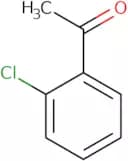
CAS:<p>2'-Chloroacetophenone is an organic compound that has been used as a hydrogen donor in the synthesis of natural products. It is produced by the reaction of acetone with chlorine gas, and it can be isolated by distillation. 2'-Chloroacetophenone reacts with hexane to form 2-chlorohexane, which can be further reacted with methanol to form methoxybenzene. The optimum concentration for this reaction is 10% (w/v) at 25°C. This chemical also has reductase activities and may enhance the activity of other reductases. 2'-Chloroacetophenone is a colorless liquid that boils at 172°C and decomposes above 300°C. It has a molecular weight of 119.16 g/mol and a density of 1.037 g/cm3 at 20°C and 0.101 g/cm3 at 25°C. It also has an intram</p>Formula:C8H7ClOPurity:Min. 96 Area-%Color and Shape:Colorless Clear LiquidMolecular weight:154.59 g/mol2,5-Furandicarboxylic acid dimethyl ester
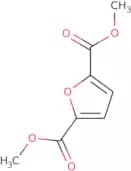
CAS:<p>2,5-Furandicarboxylic acid dimethyl ester is a structural analog of diacids. It has been synthesized by the reaction of 5-hydroxymethylfurfural with ethyl esters and phosphotungstic acid. The isolated yield was determined by gravimetric analysis. The structure of 2,5-furandicarboxylic acid dimethyl ester is shown in the following figure:</p>Formula:C8H8O5Purity:Min. 98 Area-%Color and Shape:White Off-White PowderMolecular weight:184.15 g/molCis-2-Benzyltetrahydropyrrolo[3,4-C]Pyrrole-1,3(2H,3Ah)-Dione
CAS:<p>Cis-2-Benzyltetrahydropyrrolo[3,4-C]Pyrrole-1,3(2H,3Ah)-Dione is a compound that is used as a chemical intermediate in the research and development of new medicines. It has been shown to be an effective building block for the synthesis of complex compounds with interesting biological activity.</p>Formula:C13H14N2O2Purity:Min. 95%Color and Shape:PowderMolecular weight:230.26 g/molBenzofuran-4-carbaldehyde
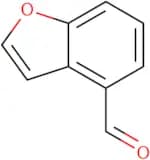
CAS:<p>Benzofuran-4-carbaldehyde is a reactive, low molecular weight compound. It is an oxidative and thermally labile compound that can be used for the preparation of other compounds. Benzofuran-4-carbaldehyde is a colorless liquid with a boiling point of 124°C and a melting point of -27°C. It has a molecular weight of 92.07 g/mol and has a density of 0.91 g/mL at 20°C, which means it will have an octanol:water partition coefficient of 1.2. The molecule has two chiral centers, meaning there are four possible stereoisomers that can be made from it. This compound is primarily broken down into furan, formic acid, and methanol by oxidation mechanisms or by thermal decomposition pathways such as pyrolysis or condensation reactions to produce additional compounds.br>br>Benzofuran-4-carbaldehyde can be oxidized to produce reactive oxygen species</p>Formula:C9H6O2Purity:Min. 95%Molecular weight:146.14 g/mol7-Fluoro-1H-indole
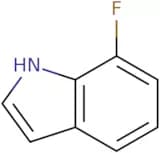
CAS:7-Fluoro-1H-indole is a molecule that belongs to the class of antimicrobial agents. It has been shown to be effective against human pathogens such as P. aeruginosa and S. aureus, and has also shown hemolytic activity against erythrocytes. 7-Fluoro-1H-indole inhibits bacterial growth by binding to siderophores, which are molecules produced by bacteria in response to iron starvation, thereby blocking their uptake of iron from the environment. It has also been shown to have protease activity against Gram negative bacteria. This compound can be synthesized using an in vivo model, where it was shown that 7-fluoro-1H-indole was able to bind to the cytoplasmic membrane and inhibit protein synthesis in Gram negative bacteria cells.Formula:C8H6FNPurity:Min. 95%Color and Shape:PowderMolecular weight:135.14 g/mol






![Cis-2-Benzyltetrahydropyrrolo[3,4-C]Pyrrole-1,3(2H,3Ah)-Dione](/_next/image/?url=https%3A%2Fstatic.cymitquimica.com%2Fproducts%2F3D%2Fthumb-webp%2FPHA34840.webp&w=3840&q=75)