Building Blocks
This section contains fundamental products for the synthesis of organic and biological compounds. Building blocks are the essential starting materials used to construct complex molecules through various chemical reactions. They play a critical role in drug discovery, material science, and chemical research. At CymitQuimica, we offer a diverse range of high-quality building blocks to support your innovative research and industrial projects, ensuring you have the essential components for successful synthesis.
Subcategories of "Building Blocks"
- Boronic Acids & Boronic Acid Derivatives(5,778 products)
- Chiral Building Blocks(1,242 products)
- Hydrocarbon Building Blocks(6,098 products)
- Organic Building Blocks(61,063 products)
Found 197855 products of "Building Blocks"
Sort by
Purity (%)
0
100
|
0
|
50
|
90
|
95
|
100
Agaric acid
CAS:<p>Agaric acid is a high-quality, versatile chemical that is used as an intermediate in many organic and biochemistry reactions. It is also used as a reagent for the isolation of metals such as silver and gold. As a complex compound, it has many uses, including being a useful building block in the synthesis of various drugs. Agaric acid can be used to produce other chemicals such as speciality chemicals or research chemicals</p>Formula:C22H40O7Molecular weight:416.56 g/molRef: 3D-A-3920
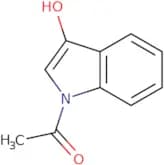
1gTo inquire5gTo inquire250mgTo inquire500mgTo inquire2500mgTo inquire-Unit-ggTo inquireN-Acetyl-3-hydroxyindole
CAS:<p>N-Acetyl-3-hydroxyindole is a chemical compound that can be used as a building block for other organic compounds. It is an intermediate in the synthesis of 3-amino-2,4,6-trichloropyrimidine, which is used in the synthesis of some pharmaceuticals and pesticides. N-Acetyl-3-hydroxyindole has been shown to react with thiourea to yield 2-(3,4-dihydroxyphenyl)acetic acid. It also reacts with hydroxylamine to produce 2-(aminooxymethyl)pyrrolidinone. N-Acetyl-3-hydroxyindole has been shown to have antioxidant properties, which may be due to its ability to reduce lipid peroxidation and scavenge reactive oxygen species.</p>Formula:C10H9NO2Purity:Min. 98.0 Area-%Molecular weight:175.19 g/mol2-[(Dimethylcarbamothioyl)sulfanyl]acetonitrile
CAS:Versatile small molecule scaffoldFormula:C5H8N2S2Purity:Min. 95%Color and Shape:PowderMolecular weight:160.30 g/mol5-Azetidin-3-yl-3-methyl-[1,2,4]oxadiazole hydrochloride
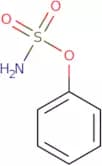
CAS:<p>5-Azetidin-3-yl-3-methyl-[1,2,4]oxadiazole hydrochloride is a solid that is used as a reagent in the preparation of other chemicals. This chemical has been shown to be useful in the synthesis of complex compounds, such as pharmaceuticals and pesticides.</p>Formula:C6H9N3O•HClPurity:Min. 95%Color and Shape:PowderMolecular weight:175.62 g/molPhenyl sulfamate
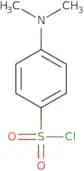
CAS:Phenyl sulfamate is a monosodium salt that has been shown to inhibit the growth of cancer cells in vitro. It has been used as an antimicrobial agent to treat chronic arthritis and atherosclerotic lesions. Phenyl sulfamate inhibits the activity of enzymes that are involved in the synthesis of proteins, such as collagenase, elastase, and proteases. The irreversible inhibition by phenyl sulfamate is due to its ability to react with sulfamoyl chloride (SOC). This reaction leads to the formation of a covalent bond between the enzyme and phenyl sulfamate, which cannot be reversed by any known chemical or enzymatic process.Formula:C6H7NO3SPurity:Min. 95%Color and Shape:PowderMolecular weight:173.19 g/mol4-(Dimethylamino)benzene-1-sulfonyl chloride
CAS:Versatile small molecule scaffoldFormula:C8H10ClNO2SPurity:Min. 95%Color and Shape:PowderMolecular weight:219.69 g/molCaffeic acid
CAS:<p>Caffeic acid is naturally produced by the metabolism of plants and fungi. Caffeic acid has an antioxidant activity that can be higher than tocopherol in oil-in-water emulsions. Caffeic acid has proven antimicrobial activity against Staphylococcus aureus. In mice, caffeic acid inhibits the enzyme 5-lipoxygenase thus inhibititing the biosynthesis of the inflammatory mediators leukotrienes.</p>Formula:C9H8O4Purity:Min. 98.0 Area-%Molecular weight:180.16 g/mol2-Hydroxy-3,4-dihydro-2H-1,4-benzoxazin-3-one
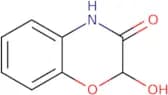
CAS:<p>2-Hydroxy-3,4-dihydro-2H-1,4-benzoxazin-3-one is a versatile compound with various applications. It is commonly used in the production of coatings and as a fatty acid leaching agent. Additionally, it is utilized in the synthesis of research chemicals such as imatinib and sildenafil citrate.</p>Formula:C8H7NO3Purity:Min. 95%Molecular weight:165.15 g/mol3-Methyl-4-(trifluoromethyl)benzaldehyde
CAS:3-Methyl-4-(trifluoromethyl)benzaldehyde is a high quality research chemical. It is a versatile building block that can be used in the synthesis of complex compounds, such as pharmaceuticals and pesticides. 3-Methyl-4-(trifluoromethyl)benzaldehyde can be used as a reagent to synthesize other chemicals and as a reaction component to produce new organic compounds. 3-Methyl-4-(trifluoromethyl)benzaldehyde has CAS No. 951232-01-2.Formula:C9H7F3OPurity:Min. 95%Color and Shape:PowderMolecular weight:188.15 g/mol3-Methoxythiophene-2-boronic acid pinacol ester
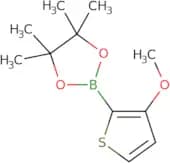
CAS:3-Methoxythiophene-2-boronic acid pinacol ester is a ligand that can be used in the synthesis of organic molecules. It undergoes nucleophilic substitution reactions and has been shown to be an excellent substrate for Suzuki coupling reactions. This reactant can also be used as a backbone in the synthesis of optical materials, such as semiconductors. 3-Methoxythiophene-2-boronic acid pinacol ester is capable of forming a variety of substitutions and transfers with benzothiadiazole derivatives, which have been shown to have an acceptor effect on organic molecules.Formula:C11H17BO3SPurity:Min. 95%Color and Shape:PowderMolecular weight:240.13 g/mol5-methyl-octahydro-1H-pyrrolo[3,4-c]pyridine Dihydrochloride
CAS:<p>Versatile small molecule scaffold</p>Formula:C8H16N2·2HClPurity:Min. 95%Color and Shape:PowderMolecular weight:213.14 g/mol4-(1,3-Thiazol-4-yl)phenol
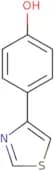
CAS:<p>4-(1,3-Thiazol-4-yl)phenol is a diagnostic marker for bladder cancer. It is expressed in bladder cells and its levels are higher in urine samples of patients with bladder cancer than in controls. 4-(1,3-Thiazol-4-yl)phenol can be used as a biomarker for diagnosis of bladder cancer and to monitor the treatment response. The concentration of this compound can also be used to assess the risk of recurrence or progression to invasive disease. The function of 4-(1,3-thiazol-4-yl)phenol in the body is not known, but it may act as a growth factor or stabilizer for cells. This molecule has been shown to have therapeutic effects on epithelial cancers such as colorectal and pancreatic cancers.</p>Formula:C9H7NOSPurity:Min. 95%Color and Shape:PowderMolecular weight:177.22 g/molMethyl 2,2-Dimethoxypropionate
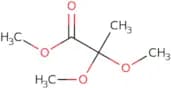
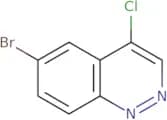
CAS:<p>Methyl 2,2-dimethoxypropionate is an oxidation catalyst that is used to convert terminal alkynes into alcohols. It is also a model system for the study of the biosynthesis of a number of natural products and drugs. In addition, methyl 2,2-dimethoxypropionate has been shown to have anticancer properties, although it has not been studied in humans. It has also been shown to have anti-inflammatory effects in animals and may be a potential treatment for hepatitis and depression in humans. Methyl 2,2-dimethoxypropionate can be synthesized by reacting citric acid with methanol or ethanol in the presence of hydroxyl ions.</p>Formula:C6H12O4Purity:Min. 95%Color and Shape:Clear LiquidMolecular weight:148.16 g/mol6-Bromo-4-chlorocinnoline
CAS:<p>6-Bromo-4-chlorocinnoline is a versatile building block that can be used as a reaction component, reagent, or speciality chemical. It can be converted into other useful compounds with the help of various reactions. 6-Bromo-4-chlorocinnoline is a fine chemical that is a useful scaffold for the synthesis of complex compounds. This compound has been shown to react with amines to form ureas and with nitriles to form azides.</p>Formula:C8H4BrClN2Purity:Min. 95%Color and Shape:PowderMolecular weight:243.5 g/mol3-[3-(Methylcarbamoyl)phenyl]propanoic acid
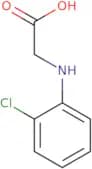
CAS:<p>Versatile small molecule scaffold</p>Formula:C11H13NO3Purity:Min. 95%Color and Shape:PowderMolecular weight:207.23 g/molN-(2-Chlorophenyl)glycine
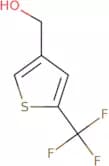
CAS:<p>N-(2-Chlorophenyl)glycine is an optical isomer of glycine that was synthesized by the photocyclization of 2-chlorobenzaldehyde using KI as a catalyst. It has been shown to be an active inhibitor of platelet aggregation and activation, with a potency comparable to clopidogrel. N-(2-Chlorophenyl)glycine may be used in pharmaceuticals for the prevention of thrombosis and stroke, particularly in patients who are at high risk for these complications. The synthesis of this compound requires the use of an organic solvent and chiral reagents.</p>Formula:C8H8ClNO2Purity:Min. 95%Color and Shape:PowderMolecular weight:185.61 g/mol(5-Trifluoromethyl-thiophen-3-yl)-methanol
CAS:(5-Trifluoromethyl-thiophen-3-yl)-methanol is a fine chemical that is used as a building block for research chemicals, reagents, and specialty chemicals. It can be used in the synthesis of various complex compounds and is a versatile building block for organic reactions. (5-Trifluoromethyl-thiophen-3-yl)-methanol is an intermediate that can serve as a scaffold for the synthesis of more complex molecules. This compound has CAS No. 1447913-56-5 and has a high quality.Formula:C6H5F3OSPurity:Min. 95%Color and Shape:Clear LiquidMolecular weight:182.16 g/mol2-(1-Methyl-4-oxo-1,4-dihydro-5H-pyrazolo[3,4-d]pyrimidin-5-yl)acetohydrazide
CAS:Controlled Product2-(1-Methyl-4-oxo-1,4-dihydro-5H-pyrazolo[3,4-d]pyrimidin-5-yl)acetohydrazide is a fine chemical that is a versatile building block in the synthesis of complex compounds. It is also a useful intermediate for the synthesis of pharmaceuticals and agrochemicals. CAS No. 938018-24-7Formula:C8H10N6O2Purity:Min. 95%Molecular weight:222.2 g/mol2-Amino-4-oxopentanoic acid hydrochloride
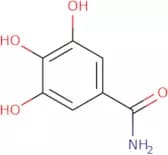
CAS:<p>Versatile small molecule scaffold</p>Formula:C5H9NO3•HClPurity:Min. 95%Color and Shape:PowderMolecular weight:167.59 g/mol3,4,5-Trihydroxybenzamide
CAS:<p>3,4,5-Trihydroxybenzamide (THB) is an active agent that inhibits the synthesis of prostaglandin J2. It has been shown to inhibit the uptake of fatty acids in rat liver cells by blocking fatty acid binding proteins. THB has also been shown to inhibit the chemical structures of nitro and epidermal growth factor. 3,4,5-Trihydroxybenzamide can be used as a cancer treatment by inhibiting the growth and spread of cancer cells. This drug is also believed to have a protective effect on the skin by reducing inflammation and increasing cell proliferation.<br>THB is currently being researched for its ability to suppress histone proteins and growth factors such as HGF or EGF in human HL60 cells.</p>Formula:C7H7NO4Purity:Min. 98 Area-%Color and Shape:Off-White PowderMolecular weight:169.13 g/mol


![2-[(Dimethylcarbamothioyl)sulfanyl]acetonitrile](/_next/image/?url=https%3A%2Fstatic.cymitquimica.com%2Fproducts%2F3D%2Fthumb-webp%2FLCA54035.webp&w=3840&q=75)
![5-Azetidin-3-yl-3-methyl-[1,2,4]oxadiazole hydrochloride](/_next/image/?url=https%3A%2Fstatic.cymitquimica.com%2Fproducts%2F3D%2Fthumb-webp%2FKXB30398.webp&w=3840&q=75)


![5-methyl-octahydro-1H-pyrrolo[3,4-c]pyridine Dihydrochloride](/_next/image/?url=https%3A%2Fstatic.cymitquimica.com%2Fproducts%2F3D%2Fthumb-webp%2FDXC59804.webp&w=3840&q=75)
![3-[3-(Methylcarbamoyl)phenyl]propanoic acid](/_next/image/?url=https%3A%2Fstatic.cymitquimica.com%2Fproducts%2F3D%2Fthumb-webp%2FJZB49430.webp&w=3840&q=75)
![2-(1-Methyl-4-oxo-1,4-dihydro-5H-pyrazolo[3,4-d]pyrimidin-5-yl)acetohydrazide](/_next/image/?url=https%3A%2Fstatic.cymitquimica.com%2Fproducts%2F3D%2Fthumb-webp%2FNMB01824.webp&w=3840&q=75)