Building Blocks
This section contains fundamental products for the synthesis of organic and biological compounds. Building blocks are the essential starting materials used to construct complex molecules through various chemical reactions. They play a critical role in drug discovery, material science, and chemical research. At CymitQuimica, we offer a diverse range of high-quality building blocks to support your innovative research and industrial projects, ensuring you have the essential components for successful synthesis.
Subcategories of "Building Blocks"
- Boronic Acids & Boronic Acid Derivatives(5,778 products)
- Chiral Building Blocks(1,242 products)
- Hydrocarbon Building Blocks(6,098 products)
- Organic Building Blocks(61,059 products)
Found 199580 products of "Building Blocks"
Sort by
Purity (%)
0
100
|
0
|
50
|
90
|
95
|
100
N,N-Dimethylhexadecylamine
CAS:Controlled Product<p>Applications N,N-Dimethylhexadecylamine is used in the synthesis of 3-(N,N-Dimethylpalmitylammonio)propanesulfonate (D461825), a zwitterionic surfactant used in the preparation of a highly efficient adsorbent for herbicides, DHAPS-Mt.<br> Not a dangerous good if item is equal to or less than 1g/ml and there is less than 100g/ml in the package<br>References Gu, Z., et. al.: Ind. Eng. Chem. Res., 54, 4947 (2015)<br></p>Formula:C18H39NColor and Shape:NeatMolecular weight:269.5110,10-Dimethylanthrone
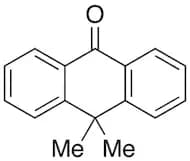
CAS:Controlled Product<p>Applications Derivative of Anthrone<br>References Davis, M.A., et al.: J. Med. Chem., 7, 88 (1964),<br></p>Formula:C16H14OColor and Shape:NeatMolecular weight:222.285,6-Dimethylbenzotriazole Hydrate
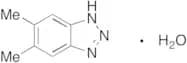
CAS:<p>Applications 5,6-Dimethylbenzotriazole Hydrate is a UV stabalizer typically seen in industrial and household chemicals.<br>References Lai, H. et al.: Env. Toxicol. Chem., 33, 761 (2014);<br></p>Formula:C8H9N3·H2OColor and Shape:Light Beige SolidMolecular weight:165.192,7-Dimethylanthraquinone
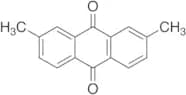
CAS:Controlled Product<p>Applications 2,7-Dimethylanthraquinone (cas# 3286-01-9) is a compound useful in organic synthesis.<br>References Kuo, D., et al.: J. Pharm. Pharmacol., 52, 839 (2000), Zagotto, G., et al.: Bioorg. Med. Chem., 16, 354 (2008),<br></p>Formula:C16H12O2Color and Shape:NeatMolecular weight:236.27N,N-Dimethylthioformamide
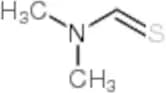
CAS:<p>Applications N,N-Dimethylthioformamide<br></p>Formula:C3H7NSColor and Shape:NeatMolecular weight:89.1593,4-Dimethylbenzaldehyde
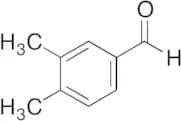
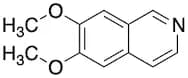
CAS:Controlled Product<p>Applications 3,4-Dimethylbenzaldehyde is used in the study of Penicillium expansum for growth and the effects to nonvolatile and volatile compounds.<br>References Wang, Y. et al.: Food Chem. 228, 211-18 (2017)<br></p>Formula:C9H10OColor and Shape:NeatMolecular weight:134.186,7-Dimethoxyisoquinoline
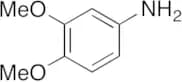
CAS:Controlled Product<p>Applications 6,7-Dimethoxyisoquinoline is used as an organocatalyst in the chemoselective O-tert-butoxycarbonylation of phenols.<br>References Saito, Yukako, et al.: Tetrahedron Let., 51(52), 6915-6917 (2010)<br></p>Formula:C11H11NO2Color and Shape:NeatMolecular weight:189.213,4-Dimethoxyaniline
CAS:<p>Applications 3,4-Dimethoxyaniline is used as a reagent in the synthesis of 2-aminothiazoles as sphingosine kinase inhibitors. It is also used in the synthesis of pyridine-3-carboxamide-6-yl-ureas which exhibit antimicrobial activity.<br>References Yule, I.A., et al.: Eur. J. Med. Chem., 86, 31 (2014); Vogt, D., et al.: Bioorg. Med. Chem., 22, 5354 (2014)<br></p>Formula:C8H11NO2Color and Shape:NeatMolecular weight:153.185-(Dimethylaminomethyl)-2-furfuryl Alcohol Hydrochloride
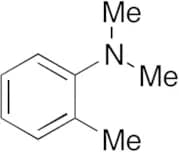
CAS:Controlled Product<p>Impurity Ranitidine EP Impurity F<br>Stability Hygroscopic<br>Applications 5-(Dimethylaminomethyl)-2-furfuryl Alcohol Hydrochloride (Ranitidine EP Impurity F) is an intermediate in the synthesis of Ranitidine hydrochloride (R120000).<br>References Salameh, A., et al.: J. Food Sci., 71, 10 (2006), Guerrieri, P., et al.: Pharm. Res., 24, 147 (2007),<br></p>Formula:C8H13NO2·ClHColor and Shape:BrownMolecular weight:191.66N,N-Dimethyl-o-toluidine
CAS:<p>Applications N,N-Dimethyl-o-toluidine is a building block that has been used as an epoxy catalyst for curing Epon 828. (CAS 25068-38-6).<br> Not a dangerous good if item is equal to or less than 1g/ml and there is less than 100g/ml in the package<br>References Robins, J., Young, C.: Polym. Preprints, 27, 165 (1986)<br></p>Formula:C9H13NColor and Shape:NeatMolecular weight:135.212-Dimethylaminoethanol
CAS:Controlled Product<p>Stability Hygroscopic<br>Applications Dimethylaminoethanol is used as a curing agent for polyurethanes and epoxy resins. It is also used in mass quantities for water treatment, and to some extent in the coatings industry. It is used in the synthesis of dyestuffs, textile auxiliaries, pharmaceuticals, emulsifiers, and corrosion inhibitors. It is also an additive to paint removers, boiler water and amino resins.<br> Not a dangerous good if item is equal to or less than 1g/ml and there is less than 100g/ml in the package<br>References Littel, R., et al.: J. Chem. Eng. Data, 35, 276 (1990); Sanders, M., et al.: J. Phys. Chem. A, 113, 10143 (2009); Zahniser, N., et al.: J. Pharmacol. Exp. Ther., 200, 545 (1977);<br></p>Formula:C4H11NOColor and Shape:ColourlessMolecular weight:89.14α,α-Bis[4-(dimethylamino)phenyl]-4-(methylamino)-benzenemethanol (>75%)
CAS:<p>Stability Light Sensitive, Unstable in Solution<br>Applications α,α-Bis[4-(dimethylamino)phenyl]-4-(methylamino)-benzenemethanol is a product from degradation of methyl green.<br>References Chen, C., et al.: Environ. Sci. Technol., 41, 4389 (2007)<br></p>Formula:C24H29N3OPurity:>75%Color and Shape:NeatMolecular weight:375.511,3-Dimethylbutylamine Hydrochloride
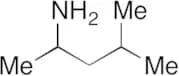
CAS:Controlled ProductFormula:C6H16ClNColor and Shape:NeatMolecular weight:137.65Butylboronic Acid
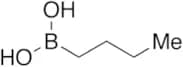
CAS:Controlled Product<p>Applications Butylboronic Acid is a boronic acid derivative that can be used as a transport carriers in membrane-based sugar separations. Butylboronic Acid is used as an analytical reagent in the determination of serum glucose.<br>References Smith, B.D. et al.: ACS Symp. Ser., 642, 194 (1996); Prendergast, J.L. et al.: Anal. Bional. Chem., 397, 1779 (2010);<br></p>Formula:C4H11BO2Color and Shape:NeatMolecular weight:101.94Dimethyl N-Cyanodithioiminocarbonate
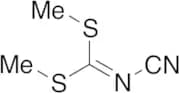
CAS:Controlled Product<p>Applications Dimethyl N-Cyanodithioiminocarbonate is a useful synthetic intermediate. It is used in the synthesis of 4-methylthiopyrazolo[1,5-a]-1,3,5-triazines, methylsulfanyl derivatives of azoloazines, and methylsulfanylpyrimidines.<br> Not a dangerous good if item is equal to or less than 1g/ml and there is less than 100g/ml in the package<br>References Elgemeie, G., et al.: Synth. Commun., 31, 3453 (2001); Alqaradawi, S., et al.: Synth. Commun., 34, 805 (2004); Elgemeie, G., et al.: Synth. Commun., 36, 743 (2006)<br></p>Formula:C4H6N2S2Color and Shape:NeatMolecular weight:146.23N,N-Dimethyldecylamine
CAS:Controlled Product<p>Applications N,N-Dimethyldecylamine is a useful synthetic intermediate. It can be used to prepare emodin (E523000) quaternary ammonium salt derivatives as potential anticancer agents It is also a reactant used to synthesize Benzyldecyldimethylammonium chloride (B234550), a biocide.<br>References Wang, W., et al.: Eur. J. Med. Chem., 56, 320 (2012); Qiu, B., et al.: Zhongguo Yaowu Huaxue Zazhi, 20, 353 (2010); Shao, J., et al.: Eur. J. Med. Chem., 56, 308 (2012); Lee, M., et al.: Appl. Micro. Biotech., 87, 1109 (2010)<br></p>Formula:C12H27NColor and Shape:NeatMolecular weight:185.35N,N’-Dimethylethanediamine
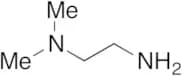
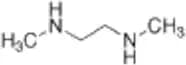
CAS:Controlled Product<p>Applications Has a DNA binding effect.<br> Not a dangerous good if item is equal to or less than 1g/ml and there is less than 100g/ml in the package<br>References Mikata, Y., et al.: Chem. Pharm. Bull., 48, 477 (2000),<br></p>Formula:C4H12N2Color and Shape:NeatMolecular weight:88.15




![α,α-Bis[4-(dimethylamino)phenyl]-4-(methylamino)-benzenemethanol (>75%)](/_next/image/?url=https%3A%2Fstatic.cymitquimica.com%2Fproducts%2FTR%2Fthumb-webp%2FD471285.webp&w=3840&q=75)