


Building Blocks
This section contains fundamental products for the synthesis of organic and biological compounds. Building blocks are the essential starting materials used to construct complex molecules through various chemical reactions. They play a critical role in drug discovery, material science, and chemical research. At CymitQuimica, we offer a diverse range of high-quality building blocks to support your innovative research and industrial projects, ensuring you have the essential components for successful synthesis.
Subcategories of "Building Blocks"
- Boronic Acids & Boronic Acid Derivatives(5,778 products)
- Chiral Building Blocks(1,242 products)
- Hydrocarbon Building Blocks(6,098 products)
- Organic Building Blocks(61,034 products)
Found 199601 products of "Building Blocks"
Sort by
Purity (%)
0
100
|
0
|
50
|
90
|
95
|
100
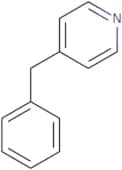
4-Benzylpyridine
CAS:<p>4-Benzylpyridine is an organic compound with a molecular formula of C8H6N2. It has two chlorine atoms, two nitrogen atoms, and a methyl group. The chemical structure of 4-benzylpyridine is heterocyclic and it has a molecular weight of 150.4 g/mol. 4-Benzylpyridine is soluble in organic solvents, but insoluble in water. The reactivity of this compound can be explained by the presence of the C=C double bond and one or more electron withdrawing groups (-NH2, -Cl). 4-Benzylpyridine is used as an inhibitor for many reactions such as hydrogen bonding or carboxylate reactions. The x-ray crystal structures show that the molecule's shape resembles that of 1,3-benzodioxole-5-carboxylic acid (BDC) but with a benzene ring instead on a 1,3 benzo group</p>Formula:C12H11NPurity:Min. 98 Area-%Color and Shape:Colorless Clear LiquidMolecular weight:169.22 g/molAMP
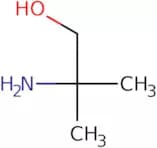
CAS:<p>AMP, also known as 2-Amino-2-methyl-1-propanol, is a buffering agent with an optimal pH range of 9.0-10.5 and a pKa of 9.7. It is used in biochemical assays, enzyme activity tests, and cosmetic formulations.</p>Formula:C4H11NOPurity:Min. 95%Color and Shape:Colorless Clear LiquidMolecular weight:89.14 g/molACES
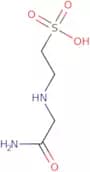
CAS:<p>ACES, also known as N-(2-Acetamido)-2-aminoethanesulfonic acid, is an acetamido buffer that is used in culture media and protein extractions. It also forms metal complexes and has an optimal pH range of 6.1-7.5 and a pKa of 6.78.</p>Formula:C4H10N2O4SPurity:Min. 95%Color and Shape:White PowderMolecular weight:182.2 g/molN-Tosyl-L-alanine 3-indoxyl ester
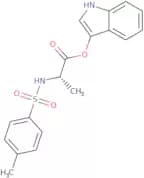
CAS:<p>N-Tosyl-L-alanine 3-indoxyl ester is applied specifically to urine samples. In the presence of leukocyte esterase, N-Tosyl-L-alanine-3-indoxyl ester will be hydrolysed to afford indoxyl. The sample is later exposed to diazonium salts that form azo dyes with the indoxyl. If sufficent indoxyl is formed, it indicates elevated numbers of white blood cells in the urine sample and this indicates that the host has contracted a urinary tract infection.</p>Formula:C18H18N2O4SPurity:Min. 98.0 Area-%Molecular weight:358.42 g/mol3,5-Dimethyl-4-nitrobenzoic acid
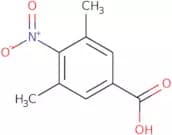
CAS:<p>3,5-Dimethyl-4-nitrobenzoic acid is a synthetic compound that has been used in the synthesis of other organic compounds. It is not currently used as a drug, but it has been shown to inhibit the growth of bacteria in vitro. The mechanism of action for this compound is unclear. 3,5-Dimethyl-4-nitrobenzoic acid has been shown to be active against the bacterium Typhimurium and may inhibit bacterial growth by being metabolised into nitrite or nitrate ions. This chemical can also be converted into a reactive intermediate that reacts with oxygen to form superoxide anion radicals, which are known to have antibacterial effects.</p>Formula:C9H9NO4Purity:Min. 95%Color and Shape:PowderMolecular weight:195.17 g/molN-a-Benzoyl-L-arginine
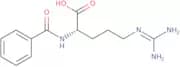
CAS:<p>N-a-Benzoyl-L-arginine is a fluorescent substrate for soybean trypsin. It is hydrolyzed by the enzyme to release an amide and p-nitrophenyl phosphate. The amide is then hydrolyzed by esterase to produce caproic acid, which can be detected at an excitation wavelength of 340 nm and emission wavelength of 495 nm. N-a-Benzoyl-L-arginine has been shown to have proteolytic activity in cell culture, with a pH optimum of 6.8 and temperature optimum of 37 degrees Celsius. This product has been shown to be effective in women as well as in men.</p>Formula:C13H18N4O3Purity:Min. 95%Color and Shape:White PowderMolecular weight:278.31 g/mol1-Naphthalenesulfonic acid
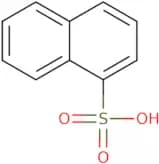
CAS:<p>1-Naphthalenesulfonic acid (1NS) is a sulfonated organic compound. It is an inhibitor of human serum albumin, with a high affinity for the hydroxyl group on the protein's surface. 1NS has been shown to have anti-cancer activity against malignant brain tumors in mice, and also inhibits HIV replication by inhibiting the function of the enzyme reverse transcriptase. 1NS has been shown to inhibit toll-like receptor 4 (TLR4), which may be related to its immunomodulatory effects.</p>Formula:C10H8O3SPurity:Min. 50.0 Area-%Color and Shape:White Beige Slightly Brown PowderMolecular weight:208.23 g/mol2,3-Dimethoxytoluene
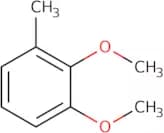
CAS:<p>2,3-Dimethoxytoluene is a chemical used in food chemistry and analytical methods. It is the product of the reaction between 2-methoxybenzaldehyde and formaldehyde. 2,3-Dimethoxytoluene is used as an intermediate for the synthesis of papaverine, a drug that has analgesic properties. This chemical also reacts with an acid to produce dimethoxytoluene, a chemical that contains two methoxy groups on opposite sides of the benzene ring.</p>Formula:C9H12O2Purity:Min. 95%Color and Shape:PowderMolecular weight:152.19 g/mol3,3',5,5'-Tetramethylbenzidine, free base
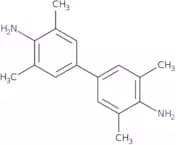
CAS:<p>TMB is an excellent colorimetric substrate for detection of horseradish peroxidase labelled probes and is used with peroxidase and peroxidase coupled systems, particularly in ELISA techniques. It produces a soluble end product, which is blue in color and can be read spectrophotometrically. TMB has also been used in the quantitative determination of hemoglobin and in cytochemical staining for peroxidase. TMB is a hepatitis B antigen.</p>Formula:C16H20N2Purity:Min. 99.0 Area-%Molecular weight:240.35 g/molPropiolic acid
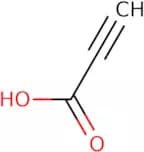
CAS:<p>Propiolic acid is a glucuronide conjugate that has been shown to inhibit the JAK1 protein. It is an organic compound with a hydroxyl group at the C-3 position and a trifluoroacetate ester at the C-4 position. Propiolic acid has been shown to be effective in treating autoimmune diseases in CD-1 mice. It is also used as an environmental agent for wastewater treatment, which can remove nitrogen from water by converting it into nitrate. The intramolecular hydrogen bond between carbonyl oxygen and hydroxyl oxygen has been shown to be responsible for its high solubility properties. This property is utilized in detergent compositions, where propiolic acid is added to break down fatty acids into their constituent parts of glycerol and fatty acids.</p>Formula:C3H2O2Purity:Min. 95%Color and Shape:Colorless Clear LiquidMolecular weight:70.05 g/mol5H,6H,7H-Cyclopenta[b]pyridin-2-amine
CAS:<p>5H,6H,7H-Cyclopenta[b]pyridin-2-amine is a fine chemical that can be used as a building block in organic synthesis. It is also useful as a reagent and speciality chemical. 5H,6H,7H-Cyclopenta[b]pyridin-2-amine has been shown to be an effective intermediate for the production of complex compounds with versatile scaffolds. This compound is also a useful reactant in organic reactions. 5H,6H,7H-Cyclopenta[b]pyridin-2-amine has a molecular weight of 200.28 g/mol and CAS number 146331-19-3.</p>Formula:C8H10N2Purity:Min. 95%Color and Shape:PowderMolecular weight:134.18 g/mol3,5-Dichloro-4-hydroxybenzaldehyde
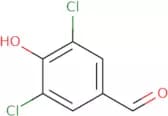
CAS:<p>3,5-Dichloro-4-hydroxybenzaldehyde is a triiodomethane derivative that reacts with chlorine to form a chlorinated aldehyde. It is used as an intermediate in the production of 4-hydroxybenzoic acid from phenylacetic acid and 4,4'-dichlorodiphenyl sulfone. 3,5-Dichloro-4-hydroxybenzaldehyde can be decarboxylated at elevated temperatures to produce formic acid. This compound has been used in wastewater treatment as it can remove chlorine byproducts and other pollutants such as nitrates, nitrites, and iron ions. The reaction kinetics of 3,5-dichloro-4-hydroxybenzaldehyde have been studied using hydroxymethyl groups and formyl groups to determine the rate of demethylation. The rates were found to be dependent on temperature.</p>Formula:C7H4Cl2O2Purity:Min. 95%Color and Shape:White PowderMolecular weight:191.01 g/mol2-Bromobenzaldehyde
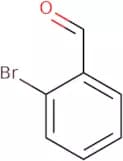
CAS:<p>2-Bromobenzaldehyde is an important aryl aldehyde that can be synthesized through the copper-catalyzed coupling of 2-bromobenzyl bromide and phenylacetone. The synthesis of 2-bromobenzaldehyde has been used to study the effects of physiological activities on the coordination geometry. It is also used as a fluorescent probe for amines and esters, which are commonly found in bioinorganic chemistry. The compound is characterized by intermolecular hydrogen bonding and hydrogen bonding between the hydroxy group and chloride, which are associated with its acidity.<br>2-Bromobenzaldehyde has been shown to have antiinflammatory properties, which may be due to its ability to inhibit prostaglandin synthesis.</p>Formula:C7H5BrOPurity:Min. 95%Color and Shape:Off-White PowderMolecular weight:185.02 g/mol4-Bromo-2-fluoroaniline
CAS:<p>4-Bromo-2-fluoroaniline is a sulfonated compound that can be synthesized from 2,4,6-trimethylbenzenamine and malonic acid. It is an acidic chemical that reacts with hydroxide solution to form a molecule with a chlorinated aromatic ring. 4-Bromo-2-fluoroaniline has been used in clinical studies as an oral anti-cancer agent in the treatment of malignant melanoma and breast cancer. This drug inhibits epidermal growth factor receptor (EGFR), which may lead to decreased cell proliferation, apoptosis, and tumor formation.</p>Formula:C6H5BrFNPurity:Min. 99%Color and Shape:PowderMolecular weight:190.01 g/mol2-tert-Butylcyclobutan-1-one
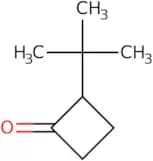
CAS:<p>2-tert-Butylcyclobutan-1-one is a research chemical that is used to study the regioselectivity and carbonyl reactivity of nucleophilic substitution reactions. This compound is synthesized by the reaction of benzannulation with cyclobutanone and stabilizes reactive carbonyl groups, which can be used for mechanistic studies. The mechanism of this reaction has been studied and it has been found that the stabilization of the carbonyl group is due to an intramolecular hydrogen bond between the carbonyl oxygen and the hydroxyl group on C2. 2-tert-Butylcyclobutan-1-one can be used as a biomolecular building block in synthetic organic chemistry.</p>Formula:C8H14OPurity:Min. 95%Color and Shape:Clear LiquidMolecular weight:126.2 g/mol2,6-Dimethoxy-4-methylbenzaldehyde
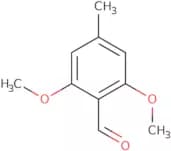
CAS:<p>2,6-Dimethoxy-4-methylbenzaldehyde (DMMB) is a useful chemical that is used as a building block in the synthesis of complex compounds. It has been shown to be an effective chemical intermediate and can be used in the synthesis of various products, such as pharmaceuticals and pesticides. DMMB can also be used to produce high quality research chemicals.</p>Formula:C10H12O3Purity:Min. 95%Color and Shape:PowderMolecular weight:180.2 g/mol3,4-Dimethoxy-5-hydroxycinnamic acid
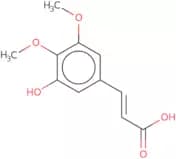
CAS:<p>3,4-Dimethoxy-5-hydroxycinnamic acid is a monoterpenoid indole alkaloid that belongs to the class of biochemical compounds. It is a promiscuous compound and can be found in many plants, such as coffee beans, black pepper, cinnamon, and thyme. 3,4-Dimethoxy-5-hydroxycinnamic acid has been shown to have antimicrobial properties against bacteria and fungi. The metabolomics study showed that this compound may also have anti-inflammatory effects. 3,4-Dimethoxy-5-hydroxycinnamic acid was shown to enhance the transcription of ferulic acid in E. coli cells. This compound was also shown to decrease the levels of transcripts for genes involved in lipid metabolism and fatty acid biosynthesis in human liver cells.</p>Formula:C11H12O5Purity:Min. 98 Area-%Color and Shape:PowderMolecular weight:224.21 g/mol1,3-Benzenedialdehyde
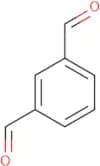
CAS:<p>1,3-Benzenedialdehyde (1,3-BD) is a compound that is formed from the oxidation of benzene by copper chloride in a model system. It can be used as a substrate film to study covalent linkages. The electrochemical impedance spectroscopy (EIS) technique has been used to determine the stability of 1,3-BD in reaction solution. The EIS results show that 1,3-BD is stable and its complexes are relatively stable. This compound also reacts with malonic acid to form 1,2-benzenediol and 2-methylmalonic acid. The molecular structure of 1,3-BD has been determined using X-ray crystallography and it was found that nitrogen atoms are present on the molecule. Chemical reactions have not been observed with 1,3-BD when subjected to heat or light.</p>Formula:C8H6O2Purity:Min. 95%Color and Shape:PowderMolecular weight:134.13 g/mol2,3-Dihydroxy-4-methoxybenzaldehyde
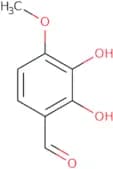
CAS:<p>2,3-Dihydroxy-4-methoxybenzaldehyde is the oxidized form of 2,3-dihydroxybenzaldehyde. It has been used in biological studies to investigate the biosynthetic pathways of reductoisomerase and analytical methods for detecting hydrogen bonds in samples. This chemical can also be found in urine samples as a metabolite of adenine nucleotide and polypeptides. The chemical has been shown to have health benefits, such as being a recombinant that helps cell culture.</p>Formula:C8H8O4Purity:Min. 95%Color and Shape:PowderMolecular weight:168.15 g/molBis[rhodium(±,±,±',±'-tetramethyl-1,3-benzenedipropionic Acid)]
CAS:<p>Bis[rhodium(±,±,±',±'-tetramethyl-1,3-benzenedipropionic Acid)] is a reagent that can be used in catalytic organic synthesis. Bis[rhodium(±,±,±',±'-tetramethyl-1,3-benzenedipropionic Acid)] is a stable compound that does not react with most organic solvents. It also has high solubility in many organic solvents. This reagent is toxicological and should be handled with care.</p>Formula:C32H40O8Rh2Purity:Min. 95%Color and Shape:PowderMolecular weight:758.48 g/mol

![5H,6H,7H-Cyclopenta[b]pyridin-2-amine](/_next/image/?url=https%3A%2Fstatic.cymitquimica.com%2Fproducts%2F3D%2Fthumb-webp%2FWFA33119.webp&w=3840&q=75)

![Bis[rhodium(±,±,±',±'-tetramethyl-1,3-benzenedipropionic Acid)]](/_next/image/?url=https%3A%2Fstatic.cymitquimica.com%2Fproducts%2F3D%2Fthumb-webp%2FUHB05089.webp&w=3840&q=75)