Building Blocks
This section contains fundamental products for the synthesis of organic and biological compounds. Building blocks are the essential starting materials used to construct complex molecules through various chemical reactions. They play a critical role in drug discovery, material science, and chemical research. At CymitQuimica, we offer a diverse range of high-quality building blocks to support your innovative research and industrial projects, ensuring you have the essential components for successful synthesis.
Subcategories of "Building Blocks"
- Boronic Acids & Boronic Acid Derivatives(5,778 products)
- Chiral Building Blocks(1,242 products)
- Hydrocarbon Building Blocks(6,098 products)
- Organic Building Blocks(61,098 products)
Found 199594 products of "Building Blocks"
Sort by
Purity (%)
0
100
|
0
|
50
|
90
|
95
|
100
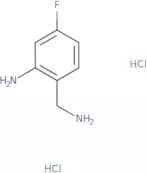
2-Amino-4-fluorobenzylamine dihydrochloride
CAS:2-Amino-4-fluorobenzylamine dihydrochloride is a research chemical that is used as a reactant in organic synthesis. 2-Amino-4-fluorobenzylamine dihydrochloride is an intermediate for the preparation of other chemicals and can also be used as a building block for more complex compounds. This chemical has been shown to have good quality and can be used in many different types of research. 2-Amino-4-fluorobenzylamine dihydrochloride has CAS number 606139-20-2.Formula:C7H9FN2·2HClPurity:Min. 95 Area-%Color and Shape:PowderMolecular weight:213.08 g/mol(Acetyloxy)(furan-2-yl)methyl acetate
CAS:<p>Acetyloxy(furan-2-yl)methyl acetate is a hydrazone molecule that is used in pharmaceutical preparations. It is synthesized by the condensation of crotonylidene and acetyloxyacetic acid. This compound has shown promising anticancer activity with an activation energy of 8.3 kcal/mol for the formation of the reactive species. Acetyloxy(furan-2-yl)methyl acetate has also been shown to be effective against methicillin resistant Staphylococcus aureus, although it does not have any activity against Gram positive bacteria such as Mycobacterium tuberculosis or Mycobacterium avium complex.</p>Formula:C9H10O5Purity:Min. 95%Color and Shape:PowderMolecular weight:198.17 g/mol4-Aminocinnamic acid hydrochloride
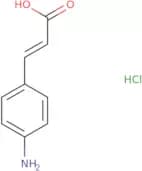
CAS:<p>4-Aminocinnamic acid hydrochloride (4ACA) is a synthetic compound that inhibits the bacterial membrane by binding to the polypeptide chain of the protein. It is a water-soluble polymer that is capable of enhancing the water solubility of other compounds and has been shown to inhibit the growth of typhimurium. 4ACA binds to chalcone, anilines, and styrene, which are all substrates for bacterial enzymes. The interaction between 4ACA and these substrates alters their chemical properties and provides resistance to bacteria.</p>Formula:C9H9NO2·HClPurity:Min. 95%Color and Shape:Off-White PowderMolecular weight:199.63 g/mol5-Amino-2-methoxy-benzoic acid methyl ester
CAS:<p>5-Amino-2-methoxy-benzoic acid methyl ester is a synthetic compound that has been shown to have potential as an antibacterial. It has been found to inhibit the growth of bacteria by binding to DNA and preventing transcription. The selectivity for bacterial cells is due to its ability to penetrate the cell membrane, which does not occur in mammalian cells. 5-Amino-2-methoxy-benzoic acid methyl ester is synthesized from 2-(4′-aminophenyl)acetic acid and methoxymethyl chloride in two steps, with a yield of 60%.</p>Formula:C9H11NO3Purity:Min. 95%Color and Shape:Red PowderMolecular weight:181.19 g/mol3-Amino-2-hydroxybenzoic acid
CAS:<p>3-Amino-2-hydroxybenzoic acid (AAHB) is a nonsteroidal anti-inflammatory drug that belongs to the group of pharmaceutical preparations. It inhibits the enzyme dehydroascorbate reductase, which is involved in the production of hydrogen peroxide and other reactive oxygen species by phagocytes. Hydrogen peroxide and other reactive oxygen species can cause DNA damage and lead to cancer development. AAHB may also have antimicrobial effects, as it has been shown to inhibit bacterial growth and cell adhesion. AAHB interacts with fatty acids in a similar manner as aspirin does, but with a lower potency. It has been shown to inhibit prostaglandin synthesis by inhibiting lipoxygenase activity. The binding of AAHB at these sites prevents the formation of arachidonic acid from linoleic acid and blocks the conversion of arachidonic acid into prostaglandin H2 (PGH2).</p>Formula:C7H7NO3Purity:Min. 98 Area-%Color and Shape:Off-White PowderMolecular weight:153.14 g/mol2-Amino-3-methylbenzoic acid
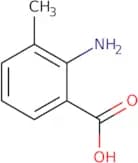
CAS:<p>2-Amino-3-methylbenzoic acid is an organic compound with the formula H2CCH(NH2)(COOH). It is a white solid that is soluble in water. The molecule has a planar geometry, and the copper ion is coordinated by four oxygen atoms and three nitrogen atoms. This coordination geometry can be seen in the crystal structure of the molecule. 2-Amino-3-methylbenzoic acid has been shown to have antifungal activity against Aspergillus niger. It also inhibits 5-nitrosalicyclic acid and sodium carbonate, which are involved in the synthesis of nicotinamide adenine dinucleotide phosphate (NADPH) and ATP respectively. 2-Amino-3-methylbenzoic acid has also been shown to inhibit ryanodine receptor channels, which are important for calcium release from endoplasmic reticulum.</p>Formula:C8H9NO2Purity:Min. 95%Color and Shape:PowderMolecular weight:151.16 g/mol(S)-3-Amino-3-phenylpropionic acid
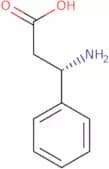
CAS:<p>3-Amino-3-phenylpropionic acid is a β-amino acid that is used in the industrial production of acrylate esters. The acylation reaction of the carboxylic acid group with an alcohol, usually naphthalene or phenol, yields an ester hydrochloride. This is then hydrolyzed to the corresponding amide, which can be further reacted to produce a variety of other compounds. 3-Amino-3-phenylpropionic acid has pharmacokinetic properties that are similar to those of glycine and alanine, but it does not undergo transamination. It also has a very high chloride content and is often used as a reagent for the synthesis of organic chloride salts.</p>Formula:C9H11NO2Purity:Min. 95%Color and Shape:White PowderMolecular weight:165.19 g/mol4-Amino-1-butanol
CAS:<p>4-Amino-1-butanol is a natural compound that is not toxic to humans. It is amide with a hydrophilic interaction chromatography property, and has been shown to have hemolytic activity against human erythrocytes. 4-Amino-1-butanol has been shown to be an inhibitor of the HIV virus, with minimal toxicity. It has also been shown to inhibit the replication of the wild type virus in cells in vitro and in vivo, which is due to its ability to bind with the enzyme ethylene diamine. The inhibition of this enzyme leads to a reduction in biological activity of amines.</p>Formula:C4H11NOPurity:Min. 95%Color and Shape:Slightly Yellow Clear LiquidMolecular weight:89.14 g/mol2-(4-Aminobenzyl)aniline
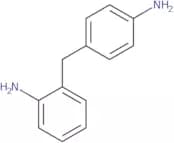
CAS:2-(4-Aminobenzyl)aniline is a plant-based compound that is biodegradable. It can be applied to cancer cells to inhibit their growth and proliferation. 2-(4-Aminobenzyl)aniline has been shown to cause thyroid cancer in rats, which is the most common form of cancer in humans. The carcinogenic effects of this chemical are due to its ability to react with amines, such as aromatic amines, and form nitrosamines. These carcinogens have been shown to be present in wastewater treatment plants. 2-(4-Aminobenzyl)aniline has also been found to inhibit the growth rate of the variegatus plant, which may be useful for controlling its invasive nature.Formula:C13H14N2Purity:Min. 98 Area-%Color and Shape:PowderMolecular weight:198.26 g/mol1,3-Adamantanediamine dihydrochloride
CAS:<p>1,3-Adamantanediamine dihydrochloride is a mimetic that has been shown to inhibit the fibrinolytic activity of nipecotic acid. This compound also inhibits the platelet aggregation induced by the activation of collagen receptors. It has been shown to have an antagonistic effect on NMDA receptors and to induce apoptosis in cancer cells. The structure of 1,3-Adamantanediamine dihydrochloride is similar to that of adamantane, which is a naturally occurring molecule found in plants and animals.</p>Formula:C10H18N2·2HClPurity:Min. 95%Color and Shape:White PowderMolecular weight:239.18 g/mol8-Anilino-1-naphthalenesulfonic acid
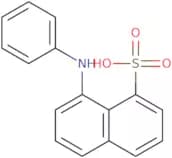
CAS:<p>8-Anilino-1-naphthalenesulfonic acid is a potent and selective inhibitor of the proteasome. It inhibits the activity of the proteasome and leads to neuronal death. 8-Anilino-1-naphthalenesulfonic acid has been shown to have antioxidative properties in a Langmuir adsorption isotherm study. This compound also has fluorescence, which makes it useful as a fluorescent probe for protein identification in human serum. 8-Anilino-1-naphthalenesulfonic acid binds to proteins with hydrophobic regions, such as lipids and phospholipids, due to its hydrophobic effect. It can be used as an analytical method for determining the protein content in water samples.</p>Formula:C16H13NO3SPurity:Min. 95 Area-%Color and Shape:Brown Green PowderMolecular weight:299.35 g/mol1,4-Di-tert-butyl 2-methylpiperazine-1,4-dicarboxylate
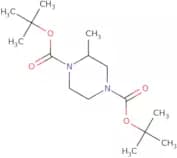
CAS:Versatile small molecule scaffoldFormula:C15H28N2O4Purity:Min. 95%Color and Shape:PowderMolecular weight:300.39 g/mol1,1'-(Azodicarbonyl)dipiperidine
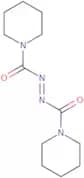
CAS:<p>1,1'-(Azodicarbonyl)dipiperidine is an organic compound that has been shown to be a radiosensitizing agent. It is used in the treatment of ovarian cancer and inhibits cell growth by inducing apoptosis. 1,1'-(Azodicarbonyl)dipiperidine modifies the cellular response to ionizing radiation by sensitizing cells to radiation and increasing the amount of DNA damage caused by radiation. This compound was found to increase the radiosensitivity of cells in vitro; however, it does not induce apoptosis in non-malignant cells. The effects are observed at low doses and are more pronounced when combined with other agents such as 3-aminobenzamide (3AB).</p>Formula:C12H20N4O2Purity:Min. 95%Color and Shape:Yellow PowderMolecular weight:252.31 g/mol6-FAM azide
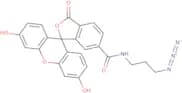
CAS:<p>6-Fluorescein Azide or 6-FAM azide finds application in biomolecules labelling. 6-FAM azide reacts with a terminal alkyne or cyclooctene derivative with a fast click reaction, forming a stable adduct.</p>Formula:C24H18N4O6Purity:Min. 95%Color and Shape:PowderMolecular weight:458.43 g/mol3-Amino-5-nitrobenzoic acid
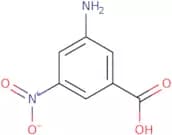
CAS:<p>3-Amino-5-nitrobenzoic acid is a cyclic analog of diazepam. It has been shown to be an acceptor in the reduction of picric acid and nitro groups. 3-Amino-5-nitrobenzoic acid is a molecule which interacts with dopamine to produce pharmaceutical preparations.</p>Formula:C7H6N2O4Purity:Min. 95%Color and Shape:PowderMolecular weight:182.13 g/molThianaphthene
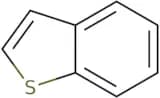
CAS:Used in raloxifene synthesis and preparation of 2-thianapthenylphenyllithiumFormula:C8H6SPurity:Min. 94 Area-%Color and Shape:Brown White Yellow PowderMolecular weight:134.2 g/mol7-Hydroxy-4-methyl-3-coumarinylacetic acid
CAS:<p>7-Hydroxy-4-methyl-3-coumarinylacetic acid (7HMCA) is an analog of 7-amino-4-methylcoumarin. It is a fluorescent material that can be used as a dye in analytical chemistry. The fluorescence of 7HMCA depends on the pH and temperature, as well as the presence of reactive oxygen species such as gadolinium or carbostyril. 7HMCA binds to the molecule's amino group, which has been shown to contribute to its stability and reactivity.</p>Formula:C12H10O5Purity:Min. 95%Color and Shape:PowderMolecular weight:234.20 g/mol5-Hydroxyindole-3-acetic acid
CAS:<p>5-Hydroxyindole-3-acetic acid is a versatile building block that is useful as a reagent, speciality chemical, and reaction component. It has been used in the synthesis of complex compounds with various applications. The compound can be distilled to produce high-purity 5-hydroxyindole-3-acetic acid for research purposes.</p>Formula:C10H9NO3Purity:Min. 98.0 Area-%Molecular weight:191.19 g/mol3-Hydroxyindole
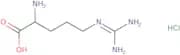
CAS:<p>3-Hydroxyindole is a fine chemical that can be used as a versatile building block, useful intermediate, and research chemical. It is a complex compound that can be used to make compounds with a wide variety of properties. 3-Indole has been used in the synthesis of high quality reagents and as a reaction component. 3-Indole is soluble in water and other solvents such as ethanol and acetone. Its CAS number is 480-93-3.</p>Formula:C8H7NOMolecular weight:133.15 g/molDL-Arginine hydrochloride
CAS:<p>L-Arginine is a conditionally essential amino acid that is used in the biosynthesis of proteins. It has been shown to inhibit the activity of specific enzymes, such as casein kinase II and phospholipase A2, which are involved in cellular processes. L-Arginine has been found to be beneficial for patients with type 2 diabetes mellitus who have poor glucose homeostasis and renal dysfunction. L-Arginine also enhances uptake of cationic surfactants by cells. L-Arginine HCl is an inorganic acid that may be used for pharmacokinetic studies in humans or animals.</p>Formula:C6H14N4O2•(HCl)xPurity:Min. 95%Color and Shape:PowderMolecular weight:174.2 g/mol