Building Blocks
This section contains fundamental products for the synthesis of organic and biological compounds. Building blocks are the essential starting materials used to construct complex molecules through various chemical reactions. They play a critical role in drug discovery, material science, and chemical research. At CymitQuimica, we offer a diverse range of high-quality building blocks to support your innovative research and industrial projects, ensuring you have the essential components for successful synthesis.
Subcategories of "Building Blocks"
- Boronic Acids & Boronic Acid Derivatives(5,778 products)
- Chiral Building Blocks(1,242 products)
- Hydrocarbon Building Blocks(6,098 products)
- Organic Building Blocks(61,098 products)
Found 199594 products of "Building Blocks"
Sort by
Purity (%)
0
100
|
0
|
50
|
90
|
95
|
100
8-Aminoquinoline
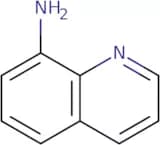
CAS:<p>8-Aminoquinoline is a fluorescent probe that is used to detect the presence of nitrite ions in biological samples. It is used in electron paramagnetic resonance (EPR) experiments and can be used as a chemical inhibitor of cytochrome P450 enzymes. 8-Aminoquinoline has been shown to have minimal toxicity in animal models. It has been shown to inhibit the growth of Leishmania, an organism that causes leishmaniasis, by arresting protein synthesis at the ribosome level. The drug interactions of 8-aminoquinoline have not been well studied, but it may be necessary for patients to avoid other drugs that are metabolized by cytochrome P450 enzymes when taking this agent.</p>Formula:C9H8N2Purity:Min. 95%Color and Shape:Slightly Yellow PowderMolecular weight:144.17 g/molα-Sulfophenylacetic acid
CAS:<p>Alpha-Sulfophenylacetic acid is a high quality reagent that is useful as an intermediate in the synthesis of complex compounds. It is also a fine chemical that can be used as a building block for the synthesis of speciality chemicals and research chemicals. Alpha-sulfophenylacetic acid is a versatile building block for reactions involving organic synthesis, and can be used as a reaction component to produce dyes, pharmaceuticals, pesticides, and herbicides.</p>Formula:C8H8O5SPurity:Min. 95.0 Area-%Molecular weight:216.21 g/molRef: 3D-S-9630
1kgTo inquire5kgTo inquire10kgTo inquire25kgTo inquire2500gTo inquire-Unit-kgkgTo inquire1-Methyl-2-[(1-methyl-1H-imidazol-2-yl)disulfanyl]-1H-imidazole
CAS:<p>1,2-Dimethyl-1H-imidazolium chloride (1MDIC) is a useful building block for the synthesis of complex compounds. It is used as a reagent in organic synthesis and has been shown to be an effective catalyst for the Diels-Alder reaction. 1,2-Dimethyl-1H-imidazolium chloride is an excellent research chemical that can be used as a reaction component in organic synthesis and provide a versatile scaffold for the synthesis of diverse structures.</p>Formula:C8H10N4S2Purity:Min. 95%Color and Shape:PowderMolecular weight:226.3 g/molBis[rhodium(±,±,±',±'-tetramethyl-1,3-benzenedipropionic Acid)]
CAS:<p>Bis[rhodium(±,±,±',±'-tetramethyl-1,3-benzenedipropionic Acid)] is a reagent that can be used in catalytic organic synthesis. Bis[rhodium(±,±,±',±'-tetramethyl-1,3-benzenedipropionic Acid)] is a stable compound that does not react with most organic solvents. It also has high solubility in many organic solvents. This reagent is toxicological and should be handled with care.</p>Formula:C32H40O8Rh2Purity:Min. 95%Color and Shape:PowderMolecular weight:758.48 g/molD-Tryptophan
CAS:<p>D-Tryptophan is a versatile building block that has many applications in the field of fine chemicals, research chemicals, and speciality chemicals. D-Tryptophan is a useful building block for complex compounds and can be used as a reagent or reaction component. It is also a useful scaffold in organic synthesis.</p>Formula:C11H12N2O2Purity:Min. 98.0 Area-%Molecular weight:204.23 g/molL-Tryptophan
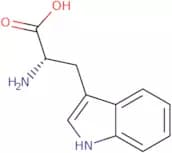
CAS:<p>L-tryptophan is a non-essential amino acid that is used as a building block in the synthesis of proteins. It has been used in research and as a starting material for the production of other chemicals. L-tryptophan has also been shown to have antidepressant effects, although it is not approved by the FDA for this use. L-tryptophan can be found in protein-rich foods such as meat, eggs, and soybeans.</p>Formula:C11H12N2O2Purity:Min. 98.0 Area-%Molecular weight:204.23 g/molRef: 3D-T-8320
1kgTo inquire100gTo inquire250gTo inquire500gTo inquire2500gTo inquire-Unit-kgkgTo inquire1-[(2-Azidoethoxy)sulfonyl]-4-methylbenzene
CAS:<p>1-[(2-Azidoethoxy)sulfonyl]-4-methylbenzene is a molecule that inhibits matrix metalloproteinase, a proteolytic enzyme that degrades extracellular matrix proteins. It has been shown to inhibit the growth of cancer cells in vitro and in vivo, which may be due to its ability to inhibit the production of epidermal growth factor (EGF).</p>Formula:C9H11N3O3SPurity:Min. 95%Color and Shape:Clear LiquidMolecular weight:241.27 g/molL-(2S,3aS,7aS)-Octahydroindole-2-carboxylic acid
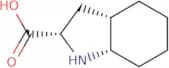
CAS:<p>L-Octahydroindole-2-carboxylic acid is a basic structure that is used in the industrial preparation of a number of chemical compounds. It is also used for the synthesis of L-(2S,3aS,7aS)-octahydroindole-2-carboxylic acid (LOTSC) and its ester hydrochloride salt. The kinetic energy of this molecule has been studied by measuring it's rate of reaction with cyclohexane ring. The inhibition study was done on lung cells to study the effects of LOTSC on growth factors and showed that this molecule inhibited the release of bradykinin B2, which is a peptide secreted by lungs. The pharmacokinetic properties have been studied in rats and shows that it has higher bioavailability than other molecules in this class.</p>Formula:C9H15NO2Purity:Min. 95%Color and Shape:PowderMolecular weight:169.22 g/mol6-Oxo DL-norleucine, formate salt
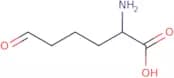
CAS:<p>6-Oxo DL-norleucine, formate salt is an anti-inflammatory agent that has been shown to reduce the symptoms of inflammatory bowel disease. It is a prodrug that is converted in vivo to 6-oxo DL-norleucine, its active form. This drug inhibits the activity of enzymes involved in metabolic pathways including ester hydrolysis and dinucleotide phosphate metabolism. 6-Oxo DL-norleucine has also been shown to inhibit the production of inflammatory mediators such as prostaglandin E2 (PGE2), leukotriene B4 (LTB4), and reactive oxygen species (ROS) in human serum. The mechanism by which this drug exerts its effects is not yet fully understood but may be due to inhibition of p. pastoris, a fungus that can cause opportunistic fungal infections.</p>Formula:C7H13NO5Purity:Min. 95%Color and Shape:PowderMolecular weight:191.18 g/mol2-Oxa-7-azaspiro[3.5]nonane hemioxalate
CAS:<p>2-Oxa-7-azaspiro[3.5]nonane hemioxalate is a fine chemical that is used as a building block in research and development of complex compounds, such as pharmaceuticals, agrochemicals, and polymers. It has been shown to be useful in the synthesis of heterocycles, such as pyrrolidines, piperazines, indoles, and benzoxazoles. 2-Oxa-7-azaspiro[3.5]nonane hemioxalate can serve as a versatile building block for the preparation of various scaffolds with different functionalities. 2-Oxa-7-azaspiro[3.5]nonane hemioxalate is a reagent that can be used for the preparation of other compounds and intermediates as well.</p>Formula:C7H13NOC2H2O4Purity:Min. 95%Color and Shape:Off-White Clear LiquidMolecular weight:172.2 g/mol1,3-Adamantanediacetic acid
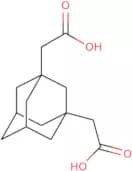
CAS:<p>1,3-Adamantanediacetic acid is a linker molecule that is used in analytical chemistry. It is a bifunctional reagent that reacts with trifluoroacetic acid and triflic acid to form a chelate ring. This reaction product can be analyzed using analytical methods such as gas chromatography or nuclear magnetic resonance spectroscopy. 1,3-Adamantanediacetic acid has been shown to react with amides and hydrogen bonding interactions to form supramolecular structures. The introduction of this compound into the synthesis of peptides has allowed for the elucidation of the structural analysis of these molecules.</p>Formula:C14H20O4Purity:Min. 98 Area-%Color and Shape:PowderMolecular weight:252.31 g/mol4-Ethoxy-3-methoxybenzaldehyde
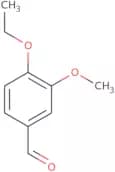
CAS:<p>4-Ethoxy-3-methoxybenzaldehyde is an organic compound that can be found in plants, such as in the leaves of the nutmeg plant. It is a cleavage product of 4-hydroxycoumarin. 4-Ethoxy-3-methoxybenzaldehyde is a dicarboxylic acid by substructure and it has been shown to be an intermediate in the synthesis of ethylene acetal and hydrogen peroxide. It is also postulated to react with chloride to form 4-chloroacetophenone and chloride ions, which are then reacted with hydrogen peroxide to form hydrochloric acid. The acute toxicity of this compound has not been determined but it may cause toxic effects on extracellular cells, such as radical species. The toxicities of 4-ethoxy-3-methoxybenzaldehyde have been observed in biphenyl which causes skin irritation, liver toxicity, kidney damage, and respiratory irritation</p>Formula:C10H12O3Purity:Min. 95%Color and Shape:PowderMolecular weight:180.2 g/mol5-Amino-pentanamide Hydrochloride
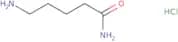
CAS:<p>5-Amino-pentanamide hydrochloride is a chemical substance with CAS number 97965-80-5. It is a reaction component, reagent, and useful scaffold for the synthesis of various complex compounds. This chemical has been used in the synthesis of many speciality chemicals and fine chemicals for research purposes. 5-Amino-pentanamide hydrochloride is also a versatile building block that can be used as an intermediate or building block for the synthesis of other compounds.</p>Formula:C5H13ClN2OPurity:Min. 95%Color and Shape:PowderMolecular weight:152.62 g/mol2-Amino-5-fluoropyridine
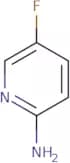
CAS:<p>2-Amino-5-fluoropyridine is a precursor to the amino acid L-glutamic acid. It is used in organic synthesis as an acetylating agent and can be synthesized from ethyl bromoacetate and anhydrous sodium acetate. 2-Amino-5-fluoropyridine has shown efficacy in treating cancer, including leukemia cells. This compound also has allosteric modulator activity, which may be due to its ability to form hydrogen bonds with other molecules. The synthesis of 2-amino-5-fluoropyridine requires a chloride ion source that is not chlorinated, such as magnesium chloride or potassium chloride. The optimal reaction temperature is between 60°C and 80°C.</p>Formula:C5H5FN2Purity:Min. 95%Color and Shape:White PowderMolecular weight:112.11 g/mol4-Methoxypyridazin-3-amine
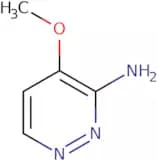
CAS:4-Methoxypyridazin-3-amine is a high quality chemical that can be used as a reagent, complex compound, useful intermediate, fine chemical, or speciality chemical. It is a versatile building block that can be used in reactions to make other chemicals such as pharmaceuticals and dyes. The 4-methoxypyridazin-3-amine molecule has shown promising results in research on the development of new drugs with potential anti-cancer properties.Formula:C5H7N3OPurity:Min. 95%Color and Shape:PowderMolecular weight:125.13 g/mol2-Chloro-N-cyclopropyl-N-(2-methylpropyl)acetamide
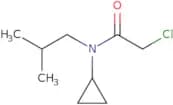
CAS:<p>Versatile small molecule scaffold</p>Formula:C9H16ClNOPurity:(%) Min. 85%Color and Shape:Clear LiquidMolecular weight:189.68 g/mol2-Chloro-4-trifluoromethylbenzoic acid
CAS:<p>2-Chloro-4-trifluoromethylbenzoic acid is a chemical compound with the formula CHClFO. It can be obtained by deprotonation of 2,4,6-trichlorobenzoic acid with butyllithium and subsequent reaction with chlorotrifluoromethane. The product has two regioisomers, one in which the chlorine atom is attached to the para position on the benzene ring and the other in which it is attached to the ortho position. Substituents such as alkyl groups or lithium reagents can affect both reactivity and selectivity. The halogen substituent can also be replaced by other functional groups to make derivatives of this compound.</p>Formula:C8H4ClF3O2Purity:Min. 95%Color and Shape:PowderMolecular weight:224.56 g/moltert-Butyl 2-(furan-2-yl)-1H-indole-1-carboxylate
CAS:<p>Please enquire for more information about tert-Butyl 2-(furan-2-yl)-1H-indole-1-carboxylate including the price, delivery time and more detailed product information at the technical inquiry form on this page</p>Formula:C17H17NO3Purity:Min. 95%Color and Shape:Clear LiquidMolecular weight:283.32 g/molN-(2-Bromophenyl)-2,2,2-trifluoroacetamide
CAS:<p>N-(2-Bromophenyl)-2,2,2-trifluoroacetamide is a functional chemical that has been experimentally validated by computationally optimized geometries and reaction mechanisms. It is a catalytic molecule that can be used in the conversion of alkenes to epoxides or dienes. The catalytic mechanism involves a transition state with two orbitals interacting with each other in an anti-bonding manner. This functional chemical has not yet been found in nature.</p>Formula:C8H5BrF3NOPurity:Min. 95%Color and Shape:PowderMolecular weight:268.03 g/mol2,3-Dichloro-5,6-dicyano-1,4-benzoquinone
CAS:<p>Please enquire for more information about 2,3-Dichloro-5,6-dicyano-1,4-benzoquinone including the price, delivery time and more detailed product information at the technical inquiry form on this page</p>Formula:C8Cl2N2O2Molecular weight:227.01 g/mol


![1-Methyl-2-[(1-methyl-1H-imidazol-2-yl)disulfanyl]-1H-imidazole](/_next/image/?url=https%3A%2Fstatic.cymitquimica.com%2Fproducts%2F3D%2Fthumb-webp%2FLCA74729.webp&w=3840&q=75)
![Bis[rhodium(±,±,±',±'-tetramethyl-1,3-benzenedipropionic Acid)]](/_next/image/?url=https%3A%2Fstatic.cymitquimica.com%2Fproducts%2F3D%2Fthumb-webp%2FUHB05089.webp&w=3840&q=75)

![1-[(2-Azidoethoxy)sulfonyl]-4-methylbenzene](/_next/image/?url=https%3A%2Fstatic.cymitquimica.com%2Fproducts%2F3D%2Fthumb-webp%2FNEA73822.webp&w=3840&q=75)
![2-Oxa-7-azaspiro[3.5]nonane hemioxalate](/_next/image/?url=https%3A%2Fstatic.cymitquimica.com%2Fproducts%2F3D%2Fthumb-webp%2FFO29380.webp&w=3840&q=75)