Building Blocks
This section contains fundamental products for the synthesis of organic and biological compounds. Building blocks are the essential starting materials used to construct complex molecules through various chemical reactions. They play a critical role in drug discovery, material science, and chemical research. At CymitQuimica, we offer a diverse range of high-quality building blocks to support your innovative research and industrial projects, ensuring you have the essential components for successful synthesis.
Subcategories of "Building Blocks"
- Boronic Acids & Boronic Acid Derivatives(5,778 products)
- Chiral Building Blocks(1,242 products)
- Hydrocarbon Building Blocks(6,098 products)
- Organic Building Blocks(61,034 products)
Found 199601 products of "Building Blocks"
Sort by
Purity (%)
0
100
|
0
|
50
|
90
|
95
|
100
2,6-Difluoroaniline
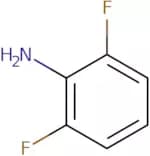
CAS:<p>2,6-Difluoroaniline is a chemical compound that can be used as an industrial solvent in the production of cyclohexane. 2,6-Difluoroaniline has been used to produce amides and for clinical chemistry. It is also a reagent for the conversion of alcohols to amides. This chemical was shown to react with water vapor at an optimal temperature of approximately 60°C and pressure of approximately 100 kPa. 2,6-Difluoroaniline is industrially produced by the fluorination of fluoroethane using sodium carbonate or trifluoromethanesulfonic acid. The molecule has been explored for its apoptosis pathway inhibiting effects in covid-19 pandemic influenza virus</p>Formula:C6H5F2NPurity:90%Color and Shape:Clear LiquidMolecular weight:129.11 g/molBis(4-hydroxy)benzophenone
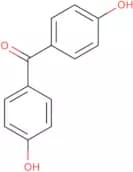
CAS:<p>Bis(4-hydroxyphenyl)benzene is a cross-linking agent that is used as a photoinitiator in the production of polymers and coatings. It is also used in wastewater treatment to remove organic matter, phenols, and other pollutants. This chemical has been shown to have physiological effects on hamster V79 cells and may cause cancer. The toxicity of Bis(4-hydroxyphenyl)benzene can be reduced by the addition of hydroxylamine or hydrogen fluoride. Hydroxyl groups can be quantified using diphenyl ether or p-hydroxybenzoic acid. Bis(4-hydroxyphenyl)benzene also reacts with serine protease and has been shown to inhibit the growth of V79 cells in urine samples.</p>Formula:C13H10O3Purity:Min. 95%Color and Shape:White Off-White PowderMolecular weight:214.22 g/mol1-Hexyl-4-methylbenzene
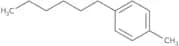
CAS:<p>1-Hexyl-4-methylbenzene is a hydrocarbon with the chemical formula C8H18. It has an octane rating of 100 and a boiling point of 156°C. This compound is used in the preparation of pharmaceuticals, dyes, and cleaning agents. It has been shown to react with palladium catalysts to form homopolymers in the presence of oxygen or water. These polymers are used for optical purposes due to their emission properties. They also have high photophysical properties that make them suitable for use in lasers and photonic devices. The intramolecular interactions between the benzene rings give this compound its conformational stability.</p>Formula:C13H20Purity:Min. 95%Color and Shape:Clear LiquidMolecular weight:176.3 g/mol5-Bromo-3-methylisoxazole
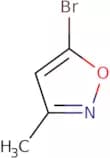
CAS:<p>5-Bromo-3-methylisoxazole is a brominated heterocycle with a pyridine ring. It is used in research as a reagent, speciality chemical, and intermediate for the preparation of complex compounds. 5-Bromo-3-methylisoxazole is also useful as a building block for the synthesis of more complex molecules. The compound is also used as an intermediate for organic synthesis, reaction component, and scaffold.</p>Formula:C4H4BrNOPurity:Min. 90%Color and Shape:Clear LiquidMolecular weight:161.98 g/mol2,4-Dihydroxyphenylacetic acid
CAS:<p>2,4-Dihydroxyphenylacetic acid (2,4-DPA) is a norepinephrine (NE) precursor that acts as an anxiolytic drug. It is also a dopamine (DA) precursor and has been shown to inhibit the production of inflammatory cytokines by suppressing the production of tumor necrosis factor-α (TNF-α) in cell culture. 2,4-DPA has been shown to have antiinflammatory activity in animal models and in human cells. This drug enhances the effects of hydrochloric acid on amino acid analysis and may be used as an alternative to hydrochloric acid for preparative high performance liquid chromatography. 2,4-DPA is also capable of irreversible inhibition of bacterial dna gyrase and dna topoisomerase I enzymes. 2,4-DPA has been shown to inhibit the growth of infectious bacteria such as Mycobacterium tuberculosis and Mycobacterium</p>Formula:C8H8O4Purity:Min. 95%Color and Shape:PowderMolecular weight:168.15 g/molBis(p-sulfonatophenyl)phenylphosphine dihydrate dipotassium
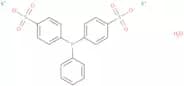
CAS:<p>A common water soluble substitute for triphenylphosphine in palladium coupling reactions</p>Formula:C18H15O6PS2•K2•(H2O)2Purity:Min. 95%Color and Shape:PowderMolecular weight:536.64 g/mol4-Bromo-3-nitroacetophenone - 90%
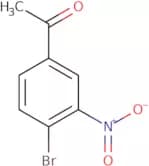
CAS:<p>4-Bromo-3-nitroacetophenone is a chemical compound with the molecular formula C6H4BrNO2. It is an organic nitroaromatic compound that is used in organic synthesis as a building block for pharmaceuticals. 4-Bromo-3-nitroacetophenone has been shown to be effective in relieving pain and it has been used as an analgesic. The compound was synthesized by the Suzuki reaction, which involves the use of palladium as a catalyst, and thermogravimetric analysis showed that it hydrolyzes in water. 4-Bromo-3-nitroacetophenone also reacts with europium ion to produce phosphor, which can be observed using absorption spectroscopy. This chemical has also been shown to have an emission spectrum. The reaction product of 4-bromo-3-nitroacetophenone and ligands can be measured using various fields or cross coupling reactions.</p>Formula:C8H6BrNO3Purity:Min. 95%Color and Shape:PowderMolecular weight:244.04 g/mol7-Bromoindole
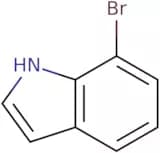
CAS:7-Bromoindole is a synthetic compound that has been used as an analog for indole. It has been shown to have some biological activity in vivo, but it is not known if this activity is due to the drug itself or its breakdown products. 7-Bromoindole can be decarboxylated under acid conditions and saponified with sodium hydroxide. The isolated yield of this reaction is about 2 grams per mole of reactant. 7-Bromoindole shows hemolytic activity against human pathogens such as Staphylococcus aureus and Escherichia coli, but not against Bacillus subtilis or Pseudomonas aeruginosa.Formula:C8H6BrNColor and Shape:PowderMolecular weight:196.04 g/mol2-Bromophenylacetic acid
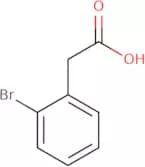
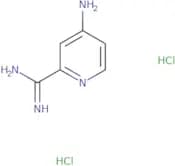
CAS:<p>2-Bromophenylacetic acid is a potent inhibitor of the human enzyme COX-2. It has been shown to have anticancer activity, which may be due to its ability to inhibit cellular proliferation and induce apoptosis in cancer cells. This compound has been tested in a variety of experimental models, including chromatographic assays and striatal membrane preparations, with promising results. 2-Bromophenylacetic acid also has potent inhibitory activity on the human enzyme COX-2 and can be used as a dietary supplement for anticancer therapy.<br>COX-2 inhibitors are usually administered as ethyl esters or solutes in order to prevent degradation by esterases or glucuronidases. The 2-bromophenyl group is electron donating and this may increase the reactivity of the carbon adjacent to it and lead to an acylation reaction with nucleophilic groups such as thiols or amines.</p>Formula:C8H7BrO2Purity:Min. 95%Color and Shape:White PowderMolecular weight:215.04 g/mol4-Aminopyridine-2-carboximidamide dihydrochloride
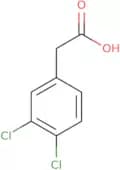
CAS:<p>Versatile small molecule scaffold</p>Formula:C6H10Cl2N4Purity:Min. 95%Color and Shape:PowderMolecular weight:209.07 g/mol3,4-Dichlorophenylacetic acid
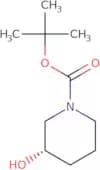
CAS:<p>3,4-Dichlorophenylacetic acid is a chemical compound that can be found in plants and animals. 3,4-Dichlorophenylacetic acid has been shown to inhibit the activity of receptors that are involved in the regulation of blood pressure. It also binds to lysine residues on proteins, which may be part of its inhibitory effect. 3,4-Dichlorophenylacetic acid is a selective ligand for the alpha2A adrenergic receptor. This chemical has a molecular weight of 122.09 g/mol and a chlorine atom in its structure.</p>Formula:C8H6Cl2O2Purity:Min. 95%Color and Shape:PowderMolecular weight:205.04 g/mol(S)-1-Boc-3-hydroxypiperidine
CAS:<p>Intermediate in the synthesis of ibrutinib</p>Formula:C10H19NO3Purity:Min. 97 Area-%Color and Shape:White PowderMolecular weight:201.26 g/mol3,6-Dichloro-2-hydroxy benzoic acid
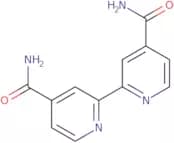
CAS:<p>3,6-Dichloro-2-hydroxy benzoic acid is a reactive compound that is used as an intermediate in the synthesis of organic compounds. It reacts with the chlorine atom to form a diazonium salt. The diazonium salt then undergoes demethylation, which allows it to be converted into various products such as 3,5-dichloro-2-hydroxybenzoic acid or 2,4-dichloro-3,5-dimethoxybenzoic acid. 3,6-Dichloro-2-hydroxy benzoic acid is a strong base and can react with any acidic compounds present in the reaction vessel. This product has been shown to be effective for wastewater treatment by converting organic compounds into less harmful compounds.</p>Formula:C7H4Cl2O3Purity:Min. 95%Color and Shape:PowderMolecular weight:207.01 g/mol2,2'-Bipyridine-4,4'-dicarboxamide
CAS:<p>2,2'-Bipyridine-4,4'-dicarboxamide is a catalyst that can be used in a variety of reactions. It has been used as an additive to increase yields and to accelerate catalytic reactions. The compound also has the ability to oxidize picolinic acid and form formic acid. This product can be used in glycerol synthesis or hydrogen peroxide production. 2,2'-Bipyridine-4,4'-dicarboxamide is a ligand that binds to picolinic acid and peroxide ions, forming an ion pair with the peroxide ion. This complex increases the efficiency of hydrogen peroxide evolution from water by up to 100%.</p>Formula:C12H10N4O2Purity:Min. 95%Color and Shape:PowderMolecular weight:242.23 g/mol3,4-Dimethoxycinnamic acid
CAS:<p>3,4-Dimethoxycinnamic acid is a bioactive phenolic compound that has antioxidant and anti-inflammatory properties. It is also known to reduce oxidative injury in the human serum. 3,4-Dimethoxycinnamic acid is found in chlorogenic acids, which are bioactive phenolic compounds found in plants. These phenolic compounds have been shown to be effective against autoimmune diseases and carcinoma cell lines. 3,4-Dimethoxycinnamic acid has also been shown to inhibit the growth of cancer cells by interfering with their ability to synthesize DNA and RNA. This compound binds to DNA gyrase, inhibiting its activity and preventing it from unwinding the double helix during replication. The crystal structures of 3,4-dimethoxycinnamic acid have been determined using x-ray crystallography and subcritical water extraction.</p>Formula:C11H12O4Purity:Min. 95%Color and Shape:PowderMolecular weight:208.21 g/mol2,4-Dimethylbenzoic acid
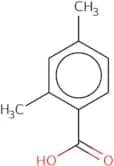
CAS:<p>2,4-Dimethylbenzoic acid is a white solid with the chemical formula CH3C6H2O2. It is an organic acid that can be used as a building block in organic synthesis. The functional groups of 2,4-dimethylbenzoic acid are methyl and carboxyl. The most efficient method for the synthesis of 2,4-dimethylbenzoic acid is by reacting hydrochloric acid with dimethylaniline. This reaction can be carried out in one pot without isolation of intermediates. The structural analysis of 2,4-dimethylbenzoic acid was done using fluorescence lifetimes and hydrochloric acid. The reaction mechanism for the formation of 2,4-dimethylbenzoic acid from dimethylaniline is through a nucleophilic substitution reaction with chloride ion. Sample preparation for 2,4-dimethylbenzoic acid includes dissolution in water and filtration through a 0.45</p>Formula:C9H10O2Purity:Min. 95%Color and Shape:White PowderMolecular weight:150.17 g/mol3',5'-Dihydroxyacetophenone
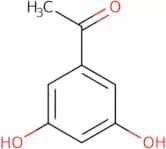
CAS:<p>3',5'-Dihydroxyacetophenone (3,5-DHAP) is a potent antioxidant that has been shown to inhibit the formation of reactive oxygen species. It is also an effective inhibitor of proteins with carbonyl groups such as pterostilbene, bambuterol and other drugs. 3,5-DHAP can be synthesized from carbohydrates by two routes, one of which involves a novel asymmetric synthesis. 3,5-DHAP has been used as a fluorescence probe for the detection of chloride ions in analytical methods.</p>Formula:C8H8O3Purity:Min 98%Color and Shape:White PowderMolecular weight:152.15 g/mol2,4-Dimethoxybenzylamine hydrochloride
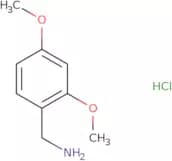
CAS:<p>2,4-Dimethoxybenzylamine hydrochloride is a substrate for glutathione reductase and a competitive inhibitor of dithioerythritol. The reaction mechanism is the same as that of triflic acid, which is generated by the reaction between triflic acid and glutathione. The inhibitory effect of 2,4-dimethoxybenzylamine hydrochloride on glutathione reductase has been studied computationally using molecular docking simulations. It was found that 2,4-dimethoxybenzylamine hydrochloride binds to the active site of glutathione reductase with an affinity comparable to that of triflic acid. This computational study also revealed that 2,4-dimethoxybenzylamine hydrochloride can be converted into triflic acid in vivo.</p>Formula:C9H13NO2HClPurity:Min. 95%Color and Shape:PowderMolecular weight:203.67 g/mol4-Benzyloxybenzoic acid
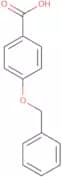
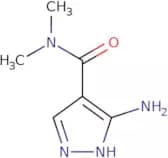
CAS:<p>4-Benzyloxybenzoic acid is a carboxylic acid that is structurally related to adenosine. It has been shown to bind to the group P2 adenosine receptor, which may be involved in the regulation of locomotor activity and photophysical properties. This compound also inhibits fatty acid biosynthesis and has inhibitory effects on nerve injury, amide formation, and benzoate degradation. It has been reported that 4-Benzyloxybenzoic acid binds to metal ions such as cobalt and manganese, which may be important for its antimycobacterial activity.</p>Formula:C14H12O3Purity:Min. 95%Color and Shape:PowderMolecular weight:228.24 g/mol5-Amino-N,N-dimethyl-1H-pyrazole-4-carboxamide
CAS:<p>Versatile small molecule scaffold</p>Formula:C6H10N4OPurity:Min. 95%Color and Shape:PowderMolecular weight:154.17 g/mol