Building Blocks
This section contains fundamental products for the synthesis of organic and biological compounds. Building blocks are the essential starting materials used to construct complex molecules through various chemical reactions. They play a critical role in drug discovery, material science, and chemical research. At CymitQuimica, we offer a diverse range of high-quality building blocks to support your innovative research and industrial projects, ensuring you have the essential components for successful synthesis.
Subcategories of "Building Blocks"
- Boronic Acids & Boronic Acid Derivatives(5,778 products)
- Chiral Building Blocks(1,242 products)
- Hydrocarbon Building Blocks(6,098 products)
- Organic Building Blocks(61,098 products)
Found 199594 products of "Building Blocks"
Sort by
Purity (%)
0
100
|
0
|
50
|
90
|
95
|
100
4,6-Difluoroindole
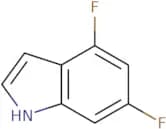
CAS:<p>4,6-Difluoroindole is a functional group that has been optimized for use as a pharmaceutical drug. It has been shown to be an efficient inhibitor of renal organic anion transporters and monophosphate-activated protein, which are involved in the absorption of drugs from the blood into the cells. 4,6-Difluoroindole also inhibits bacterial growth by binding to ribosomal RNA and interfering with protein synthesis. This drug exhibits antibacterial activity against Gram-positive bacteria such as Mycobacterium tuberculosis and Mycobacterium avium complex. This drug is able to cross the blood-brain barrier and thus may be used to treat tuberculosis infections in the brain.</p>Formula:C8H5F2NPurity:Min 90%Molecular weight:153.13 g/mol5,6-Difluoroindole
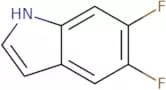
CAS:<p>5,6-Difluoroindole is a chemical compound that has been studied in biological and chemical research. It is an analog of the neurotransmitter serotonin, which binds to the 5-HT2C receptor and activates phospholipase C (PLC) to produce inositol triphosphate (IP3). This compound may be useful for the treatment of neurodegenerative diseases such as Alzheimer's disease. 5,6-Difluoroindole has been shown to block the activity of acetylcholinesterase (AChE), which is an enzyme that breaks down acetylcholine. This leads to an increase in acetylcholine levels and a decrease in AChE activity. The reaction mechanism for this process is not known.</p>Formula:C8H5NF2Color and Shape:PowderMolecular weight:153.13 g/mol1,3-Diacetylindole
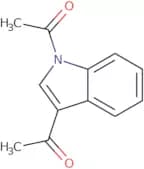
CAS:<p>1,3-Diacetylindole is an alkene that belongs to the class of organic compounds. It can be prepared by Friedel-Crafts acylation of cyclopentenone with formaldehyde and hydrogen chloride gas. The molecule has a molecular electrostatic potential of -0.8 eV and a molecular weight of 126.1 g/mol. 1,3-Diacetylindole has been shown to react with Grignard reagent in an electrochemical study. Additionally, it has been used as a starting material for the synthesis of other molecules such as 2-methylquinoline and 1,2-dihydroquinoline. The vibrational and spectral data for 1,3-diacetylindole have been obtained using both experimental and computational methods. These data are useful for understanding the structure and reactivity of this compound at the molecular level.br>br> br>br></p>Formula:C12H11NO2Purity:Min. 95%Molecular weight:201.22 g/mol3,5-Dimethoxybenzaldehyde
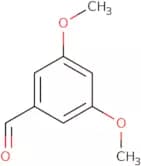
CAS:<p>3,5-Dimethoxybenzaldehyde is a fungicide that can kill fungal cells by inhibiting the synthesis of ergosterol, an important component of the fungal cell membrane. It has been shown to be effective against Cryptococcus neoformans and other fungi. 3,5-Dimethoxybenzaldehyde inhibits mitochondrial superoxide production and the growth of fungi in a model system. The optimum concentration for inhibition was determined in a kinetic and thermodynamic study. This compound has also been shown to have anti-inflammatory properties, which may be due to its ability to inhibit prostaglandin synthesis.</p>Formula:C9H10O3Purity:Min. 98%Color and Shape:PowderMolecular weight:166.17 g/molZ-1,4-diaminobutane·HCl
CAS:<p>Z-1,4-diaminobutane·HCl is a fine chemical that is a useful building block in research and manufacture of pharmaceuticals. It is also used as a reagent and speciality chemical in the production of other chemicals, such as dyes, rubber products, and pesticides. This compound has been shown to be an effective intermediate for the synthesis of complex organic compounds with versatile structures. Z-1,4-diaminobutane·HCl can be used as a scaffold for the construction of various types of molecules.</p>Formula:C12H18N2O2·HClPurity:Min. 95%Color and Shape:White PowderMolecular weight:258.74 g/mol3,5-Dihydroxy-4-acetyltoluene
CAS:<p>3,5-Dihydroxy-4-acetyltoluene is a versatile building block that is used in the production of various pharmaceutical and agrochemical intermediates. It can be used as a reagent for organic synthesis and as a speciality chemical. 3,5-Dihydroxy-4-acetyltoluene has been shown to have high quality and utility. This compound can also be used as a reaction component or scaffold.</p>Formula:C9H10O3Purity:Min. 95%Color and Shape:PowderMolecular weight:166.17 g/mol2,2'-Dithiobis(pyridine-N-oxide)
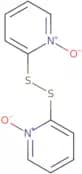
CAS:<p>2,2'-Dithiobis(pyridine-N-oxide) is a chemical compound that has been shown to have anti-inflammatory effects in vitro. It inhibits the production of inflammatory cytokines such as TNF-α and IL-1β in vitro, which are associated with many inflammatory skin diseases. This agent also has an apoptotic effect on cells, leading to cell death by triggering caspase activation. 2,2'-Dithiobis(pyridine-N-oxide) has also been shown to be effective against cancer cells in vitro. This agent may cause cancer by increasing the expression of proapoptotic proteins and decreasing the expression of anti-apoptotic proteins.</p>Formula:C10H8N2O2S2Purity:Min. 98 Area-%Color and Shape:White PowderMolecular weight:252.31 g/molDisodium 2-naphthol-3,6-disulfonate
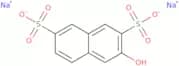
CAS:<p>Disodium 2-naphthol-3,6-disulfonate is a cationic surfactant that reacts with chloride ions to form a gel. It can be used as an inhibitor of corrosion and foaming in the oil industry. Disodium 2-naphthol-3,6-disulfonate has also been shown to have a linear response with fluorescence techniques when it interacts with metal ions. The kinetic data for this reaction is dependent on the concentration of chloride ions, which are generated by hydrochloric acid upon addition of water.</p>Formula:C10H6Na2O7S2Purity:Min. 97 Area-%Color and Shape:PowderMolecular weight:348.26 g/mol3',4'-Dimethylacetophenone
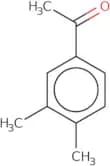
CAS:<p>3',4'-Dimethylacetophenone is a natural product that belongs to the class of salicylates. It is a yellow oily liquid with an odor reminiscent of ocimene, which has been shown to be an attractant for the cotton bollworm (Hirsutum). 3',4'-Dimethylacetophenone is also used in cyclization reactions, such as the conversion of a benzene ring into a cyclohexane ring. This compound can be found in many plants and flowers, including hirsutum, caryophyllene, gossypium, medicago, and chalcone. The molecule can be synthesized in several ways through combinations of different reactants.</p>Formula:C10H12OPurity:Min. 95%Color and Shape:PowderMolecular weight:148.2 g/mol2,5-Dimethoxybenzoic acid
CAS:<p>2,5-Dimethoxybenzoic acid (2,5-DMA) is a plant metabolite that belongs to the group of cinnamic acid derivatives. It can be found in plants and has been shown to have systemic effects. 2,5-DMA is involved in the cycloacylation of protocatechuic acid. This reaction is catalyzed by an enzyme called cyclooxygenase and requires molecular oxygen as a cofactor. 2,5-DMA also forms hydrogen bonds with methoxy groups and other molecules. The monoclonal antibodies against 2,5-DMA have been used for radiation therapy and are effective against cancer cells. Model studies show that 2,5-DMA can be converted into more potent metabolites by the action of cytochrome P450 enzymes or glutathione S-transferases.</p>Formula:C9H10O4Purity:Min. 95%Color and Shape:PowderMolecular weight:182.17 g/mol2,6-Difluoroaniline
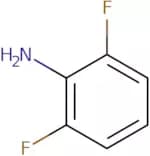
CAS:<p>2,6-Difluoroaniline is a chemical compound that can be used as an industrial solvent in the production of cyclohexane. 2,6-Difluoroaniline has been used to produce amides and for clinical chemistry. It is also a reagent for the conversion of alcohols to amides. This chemical was shown to react with water vapor at an optimal temperature of approximately 60°C and pressure of approximately 100 kPa. 2,6-Difluoroaniline is industrially produced by the fluorination of fluoroethane using sodium carbonate or trifluoromethanesulfonic acid. The molecule has been explored for its apoptosis pathway inhibiting effects in covid-19 pandemic influenza virus</p>Formula:C6H5F2NPurity:90%Color and Shape:Clear LiquidMolecular weight:129.11 g/mol3,4-Dichlorophenylacetic acid
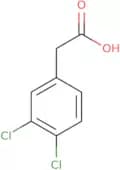
CAS:<p>3,4-Dichlorophenylacetic acid is a chemical compound that can be found in plants and animals. 3,4-Dichlorophenylacetic acid has been shown to inhibit the activity of receptors that are involved in the regulation of blood pressure. It also binds to lysine residues on proteins, which may be part of its inhibitory effect. 3,4-Dichlorophenylacetic acid is a selective ligand for the alpha2A adrenergic receptor. This chemical has a molecular weight of 122.09 g/mol and a chlorine atom in its structure.</p>Formula:C8H6Cl2O2Purity:Min. 95%Color and Shape:PowderMolecular weight:205.04 g/mol3,6-Dichloro-2-hydroxy benzoic acid
CAS:<p>3,6-Dichloro-2-hydroxy benzoic acid is a reactive compound that is used as an intermediate in the synthesis of organic compounds. It reacts with the chlorine atom to form a diazonium salt. The diazonium salt then undergoes demethylation, which allows it to be converted into various products such as 3,5-dichloro-2-hydroxybenzoic acid or 2,4-dichloro-3,5-dimethoxybenzoic acid. 3,6-Dichloro-2-hydroxy benzoic acid is a strong base and can react with any acidic compounds present in the reaction vessel. This product has been shown to be effective for wastewater treatment by converting organic compounds into less harmful compounds.</p>Formula:C7H4Cl2O3Purity:Min. 95%Color and Shape:PowderMolecular weight:207.01 g/mol3,4-Dimethoxycinnamic acid
CAS:<p>3,4-Dimethoxycinnamic acid is a bioactive phenolic compound that has antioxidant and anti-inflammatory properties. It is also known to reduce oxidative injury in the human serum. 3,4-Dimethoxycinnamic acid is found in chlorogenic acids, which are bioactive phenolic compounds found in plants. These phenolic compounds have been shown to be effective against autoimmune diseases and carcinoma cell lines. 3,4-Dimethoxycinnamic acid has also been shown to inhibit the growth of cancer cells by interfering with their ability to synthesize DNA and RNA. This compound binds to DNA gyrase, inhibiting its activity and preventing it from unwinding the double helix during replication. The crystal structures of 3,4-dimethoxycinnamic acid have been determined using x-ray crystallography and subcritical water extraction.</p>Formula:C11H12O4Purity:Min. 95%Color and Shape:PowderMolecular weight:208.21 g/mol2,4-Dimethylbenzoic acid
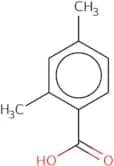
CAS:<p>2,4-Dimethylbenzoic acid is a white solid with the chemical formula CH3C6H2O2. It is an organic acid that can be used as a building block in organic synthesis. The functional groups of 2,4-dimethylbenzoic acid are methyl and carboxyl. The most efficient method for the synthesis of 2,4-dimethylbenzoic acid is by reacting hydrochloric acid with dimethylaniline. This reaction can be carried out in one pot without isolation of intermediates. The structural analysis of 2,4-dimethylbenzoic acid was done using fluorescence lifetimes and hydrochloric acid. The reaction mechanism for the formation of 2,4-dimethylbenzoic acid from dimethylaniline is through a nucleophilic substitution reaction with chloride ion. Sample preparation for 2,4-dimethylbenzoic acid includes dissolution in water and filtration through a 0.45</p>Formula:C9H10O2Purity:Min. 95%Color and Shape:White PowderMolecular weight:150.17 g/mol3',5'-Dihydroxyacetophenone
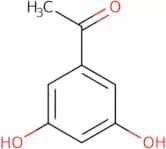
CAS:<p>3',5'-Dihydroxyacetophenone (3,5-DHAP) is a potent antioxidant that has been shown to inhibit the formation of reactive oxygen species. It is also an effective inhibitor of proteins with carbonyl groups such as pterostilbene, bambuterol and other drugs. 3,5-DHAP can be synthesized from carbohydrates by two routes, one of which involves a novel asymmetric synthesis. 3,5-DHAP has been used as a fluorescence probe for the detection of chloride ions in analytical methods.</p>Formula:C8H8O3Purity:Min 98%Color and Shape:White PowderMolecular weight:152.15 g/mol2,4-Dimethoxybenzylamine hydrochloride
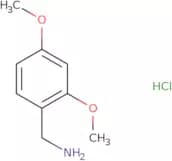
CAS:<p>2,4-Dimethoxybenzylamine hydrochloride is a substrate for glutathione reductase and a competitive inhibitor of dithioerythritol. The reaction mechanism is the same as that of triflic acid, which is generated by the reaction between triflic acid and glutathione. The inhibitory effect of 2,4-dimethoxybenzylamine hydrochloride on glutathione reductase has been studied computationally using molecular docking simulations. It was found that 2,4-dimethoxybenzylamine hydrochloride binds to the active site of glutathione reductase with an affinity comparable to that of triflic acid. This computational study also revealed that 2,4-dimethoxybenzylamine hydrochloride can be converted into triflic acid in vivo.</p>Formula:C9H13NO2HClPurity:Min. 95%Color and Shape:PowderMolecular weight:203.67 g/mol3,5-Dimethylbenzoic acid
CAS:<p>3,5-Dimethylbenzoic acid is a carboxylic acid that is a member of the 3-carboxybenzenesulfonic acid family. The molecule is formed by the reaction of sodium carbonate with benzene in the presence of water. The compound has a redox potential that is close to zero, which makes it a reducing agent and an excellent hydrogen donor. The compound is soluble in water and has been shown to inhibit plant growth as well as promote plant growth by acting as a growth regulator. This molecule has also been shown to be fluorescent.</p>Formula:C9H10O2Purity:Min. 95%Color and Shape:PowderMolecular weight:150.17 g/mol2,6-Difluorobenzonitrile
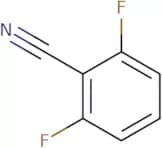
CAS:<p>2,6-Difluorobenzonitrile is a nucleophilic compound that reacts with inorganic acids to form new chemical structures. It has been shown to react with hydrochloric acid, sodium carbonate and phosphotungstic acid. The FT-IR spectroscopy of 2,6-difluorobenzonitrile shows a reaction product with a proton. This means that the molecule is able to transfer a hydrogen ion from one site to another. The reaction between 2,6-difluorobenzonitrile and sodium carbonate produces an insoluble precipitate of sodium phosphate and sodium chloride, which can be analyzed gravimetrically. 2,6-Difluorobenzonitrile has also been shown to have fluorescence properties that are activated by ultraviolet light and naphthalene.</p>Formula:C7H3F2NPurity:Min. 95%Color and Shape:PowderMolecular weight:139.1 g/mol1,4-Dihydroxy-2-naphthoic acid
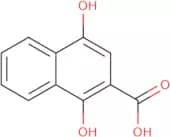
CAS:<p>1,4-Dihydroxy-2-naphthoic acid is a glycol ether that is used as a reagent in vitro for the study of inflammatory bowel disease. It has been shown to have inhibitory effects on polymerase chain reactions and human immunoglobulin synthesis in vitro. This compound also inhibits the activity of enzymes involved in inflammatory bowel disease, such as erythrocyte glutathione reductase, cytochrome p450, and myeloperoxidase. 1,4-Dihydroxy-2-naphthoic acid is an inhibitor molecule with a natural compound structure that binds to enzymes involved in inflammatory bowel disease to inhibit their function.</p>Formula:C11H8O4Purity:Min. 95%Color and Shape:PowderMolecular weight:204.18 g/mol