


Building Blocks
This section contains fundamental products for the synthesis of organic and biological compounds. Building blocks are the essential starting materials used to construct complex molecules through various chemical reactions. They play a critical role in drug discovery, material science, and chemical research. At CymitQuimica, we offer a diverse range of high-quality building blocks to support your innovative research and industrial projects, ensuring you have the essential components for successful synthesis.
Subcategories of "Building Blocks"
- Boronic Acids & Boronic Acid Derivatives(5,778 products)
- Chiral Building Blocks(1,242 products)
- Hydrocarbon Building Blocks(6,098 products)
- Organic Building Blocks(61,034 products)
Found 199601 products of "Building Blocks"
Sort by
Purity (%)
0
100
|
0
|
50
|
90
|
95
|
100
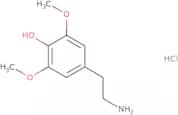
3,5-Dimethoxy-4-hydroxyphenethylamine hydrochloride
CAS:Controlled Product3,5-Dimethoxy-4-hydroxyphenethylamine hydrochloride is a fine chemical that is used as a building block for other compounds and as a reagent in research. It has been shown to be an effective intermediate in the synthesis of many complex compounds, such as 3,4-methylenedioxyamphetamine (MDA) and 3,4-methylenedioxymethamphetamine (MDMA), which are both psychoactive drugs. This building block can also be used to synthesize speciality chemicals such as psychotropic drugs or pharmaceuticals.Formula:C10H16ClNO3Purity:Min. 95%Color and Shape:PowderMolecular weight:233.69 g/mol3,3-Bis(hydroxymethyl)oxetane
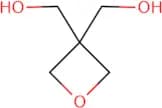
CAS:<p>3,3-Bis(hydroxymethyl)oxetane is a monomer that belongs to the class of polyols. It is synthesized by ring-opening polymerization of 3,3-bis(hydroxymethyl)oxetane with trifluoromethanesulfonic acid as the catalyst. The kinetic studies show that this monomer reacts with water at high rates and has a high melting point. It is also found to be an excellent uptake agent for organic nitrates. 3,3-Bis(hydroxymethyl)oxetane can be used in the production of polyurethanes and other polymers as well as in cosmetic products.</p>Formula:C5H10O3Purity:Min. 95%Color and Shape:PowderMolecular weight:118.13 g/mol4-Methoxycyclohexane-1-sulfonyl chloride
CAS:<p>Versatile small molecule scaffold</p>Formula:C7H13ClO3SPurity:Min. 95%Color and Shape:Clear LiquidMolecular weight:212.7 g/molβ-Glycerophosphate, disodium salt pentahydrate, max. 2% α
CAS:<p>Beta-Glycerophosphate, Disodium Salt Pentahydrate is a complex compound that is used as a reagent, useful intermediate, and fine chemical. It is also useful as a scaffold or building block for the synthesis of organic compounds. Beta-glycerophosphate has CAS No. 13408-09-8 and is classified as a speciality chemical. This compound can be used in research and development for versatile building blocks and reaction components to synthesize organic compounds.</p>Formula:C3H17Na2O11PMolecular weight:306.12 g/molRef: 3D-G-4200
1kgTo inquire100gTo inquire250gTo inquire500gTo inquire2500gTo inquire-Unit-kgkgTo inquireGlycine anhydride
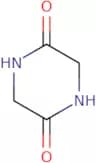
CAS:<p>Glycine anhydride is a fine chemical that is used as a building block in the synthesis of many other compounds. It is also used as a reagent, and can be found in research chemicals, speciality chemicals, or high-quality products. Glycine anhydride is also used as a reaction component to make other molecules. It is versatile and can be used as a scaffold for complex compounds. Glycine anhydride has CAS No. 106-57-0 and can be found in the following chemical name: 3-(2-Aminoethyl)glycine anhydride</p>Formula:C4H6N2O2Molecular weight:114.1 g/molRef: 3D-G-4600
1kgTo inquire5kgTo inquire10kgTo inquire25kgTo inquire2500gTo inquire-Unit-kgkgTo inquire4-Chloro-2-hydroxybenzamide
CAS:<p>4-Chloro-2-hydroxybenzamide is a useful building block that is used in the synthesis of complex compounds. It can be used as a research chemical, reaction component, or a speciality chemical. It has been shown to be a versatile building block that can be used in the synthesis of various compounds with different structures and properties. 4-Chloro-2-hydroxybenzamide has also been shown to have high quality and is structurally related to other useful scaffolds such as 1,3-dihydroxybenzene.</p>Formula:C7H6ClNO2Purity:Min. 95 Area-%Color and Shape:PowderMolecular weight:171.58 g/mol8α-Phenyl-octahydropyrrolo[1,2-a]pyrimidin-6-one
CAS:<p>Versatile small molecule scaffold</p>Formula:C13H16N2OPurity:Min. 95%Color and Shape:PowderMolecular weight:216.3 g/molBenzofuran-4-carbaldehyde
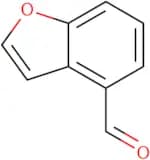
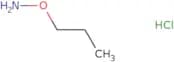
CAS:<p>Benzofuran-4-carbaldehyde is a reactive, low molecular weight compound. It is an oxidative and thermally labile compound that can be used for the preparation of other compounds. Benzofuran-4-carbaldehyde is a colorless liquid with a boiling point of 124°C and a melting point of -27°C. It has a molecular weight of 92.07 g/mol and has a density of 0.91 g/mL at 20°C, which means it will have an octanol:water partition coefficient of 1.2. The molecule has two chiral centers, meaning there are four possible stereoisomers that can be made from it. This compound is primarily broken down into furan, formic acid, and methanol by oxidation mechanisms or by thermal decomposition pathways such as pyrolysis or condensation reactions to produce additional compounds.br>br>Benzofuran-4-carbaldehyde can be oxidized to produce reactive oxygen species</p>Formula:C9H6O2Purity:Min. 95%Molecular weight:146.14 g/mol1-(Aminooxy)propane hydrochloride
CAS:<p>1-Aminooxypropane hydrochloride is an alkylthio group with a phenoxy group and an antibacterial activity. It is used as a precursor for the synthesis of many organic compounds. 1-Aminooxypropane hydrochloride is produced by the reaction of ethyl bromoacetate and ammonia in liquid ammonia, or by the reaction of propylene oxide with methylamine to produce 1-aminooxypropane. It has been shown to exhibit antimicrobial activity against certain strains of Escherichia coli and Salmonella enterica serovar Typhimurium, but not against Staphylococcus aureus. This compound is also used as a building block for metal ion catalysts such as copper complexes, amines, trifluoromethylated heterocyclic compounds, and others.</p>Formula:C3H10ClNOPurity:Min. 95%Color and Shape:PowderMolecular weight:111.57 g/mol3-[5-(Pyridin-2-yl)-1,3,4-oxadiazol-2-yl]propanoic acid
CAS:<p>Versatile small molecule scaffold</p>Formula:C10H9N3O3Purity:Min. 95%Color and Shape:PowderMolecular weight:219.2 g/mol2-{1-[(Pyridin-3-yl)methyl]piperidin-2-yl}ethan-1-ol
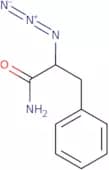
CAS:<p>Versatile small molecule scaffold</p>Formula:C13H20N2OPurity:Min. 95%Color and Shape:PowderMolecular weight:220.31 g/mol2-Azido-3-phenylpropanamide
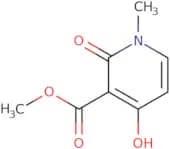
CAS:<p>Versatile small molecule scaffold</p>Formula:C9H10N4OPurity:Min. 95%Color and Shape:PowderMolecular weight:190.2 g/molMethyl 4-hydroxy-1-methyl-2-oxo-1,2-dihydropyridine-3-carboxylate
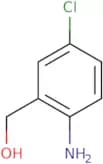
CAS:<p>Methyl 4-hydroxy-1-methyl-2-oxo-1,2-dihydropyridine-3-carboxylate is a versatile building block that is used in the synthesis of complex compounds. It is also a reagent and speciality chemical that can be used as a reaction component or scaffold in chemical research. Methyl 4-hydroxy-1-methyl-2-oxo-1,2 -dihydropyridine 3 carboxylate is an intermediate in the synthesis of various pharmaceuticals, agrochemicals, and fine chemicals. This compound has been shown to be useful for the synthesis of natural products such as pseudodipeptides.</p>Formula:C8H9NO4Purity:Min. 95%Color and Shape:PowderMolecular weight:183.16 g/mol2-Amino-5-chlorobenzyl alcohol
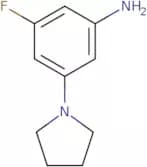
CAS:<p>2-Amino-5-chlorobenzyl alcohol is a sustainable chemical that can be synthesized from acetylacetonate, an organic compound. It undergoes uv radiation in the presence of oxygen and water to form a variety of products. This reaction takes place in less than 10 minutes at room temperature and is operational under a variety of conditions. 2-Amino-5-chlorobenzyl alcohol has been used as an active compound for the synthesis of carbenes, methyl ketones, and aryl chlorides. The product's luminescent properties can be used for biomolecular applications such as DNA sequencing or identification.</p>Formula:C7H8ClNOPurity:Min. 95%Color and Shape:PowderMolecular weight:157.6 g/mol3-Fluoro-5-(pyrrolidin-1-yl)aniline
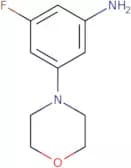
CAS:<p>3-Fluoro-5-(pyrrolidin-1-yl)aniline is a useful building block in organic synthesis, research chemicals, and a reagent. It is also used as a speciality chemical used in the production of other compounds. 3-Fluoro-5-(pyrrolidin-1-yl)aniline has been shown to be an intermediate for the synthesis of several novel compounds with potential pharmaceutical applications. This compound is also a versatile scaffold for the design of new molecules with anti-inflammatory properties.</p>Formula:C10H13FN2Purity:Min. 95%Color and Shape:PowderMolecular weight:180.22 g/mol3-Fluoro-5-(morpholin-4-yl)aniline
CAS:<p>3-Fluoro-5-(morpholin-4-yl)aniline is a synthetic compound that has been shown to inhibit the growth of bacteria by binding to the enzyme dihydropteroate synthase. This drug inhibits bacterial growth by preventing the formation of folic acid, which is essential for DNA synthesis. 3-Fluoro-5-(morpholin-4-yl)aniline has also been shown to be selective against other enzymes in the folate pathway, such as thymidylate synthase and glycinamide ribonucleotide formyltransferase. Theoretical studies suggest that 3-fluoro-5-(morpholin-4-yl)aniline binds to the substrate binding site on dihydropteroate synthase and sterically hinders access to substrates in this region of the enzyme. Density functional theory calculations show that this compound binds more tightly than a number of natural products. Intramolecular</p>Formula:C10H13FN2OPurity:Min. 95%Color and Shape:PowderMolecular weight:196.22 g/mol6-Methyl-DL-tryptophan
CAS:<p>6-Methyl-DL-tryptophan is a useful intermediate and building block for the synthesis of natural products, pharmaceuticals, and agrochemicals. It is also a versatile building block for organic synthesis as it can be used in the preparation of various types of compounds. 6-Methyl-DL-tryptophan has been shown to inhibit the production of nitric oxide by macrophages and microglia cells in response to proinflammatory cytokines. It is an inhibitor of protein biosynthesis, which may be due to its ability to inhibit tryptophan synthase.</p>Formula:C12H14N2O2Molecular weight:218.26 g/mol2-Methyl-3-nitrobenzoic acid
CAS:<p>Please enquire for more information about 2-Methyl-3-nitrobenzoic acid including the price, delivery time and more detailed product information at the technical inquiry form on this page</p>Formula:C8H7NO4Molecular weight:181.15 g/molRef: 3D-M-4209
1kgTo inquire5kgTo inquire10kgTo inquire25kgTo inquire2500gTo inquire-Unit-kgkgTo inquire5-Methoxyindole-3-acetic acid
CAS:<p>5-Methoxyindole-3-acetic acid is a chemical that can be used to synthesize a variety of compounds. It is a versatile building block that has been used in the synthesis of complex compounds, as well as an intermediate for the production of other chemicals. 5-Methoxyindole-3-acetic acid is also an important reaction component and reagent for organic synthesis. This substance is not currently on the list of speciality chemicals, but it has shown high quality and usefulness in research.</p>Formula:C11H11NO3Molecular weight:205.22 g/mol3-(Trifluoromethyl)-1-oxa-2,8-diazaspiro[4.5]dec-2-ene
CAS:<p>Versatile small molecule scaffold</p>Formula:C8H11F3N2OPurity:(%) Min. 85%Color and Shape:PowderMolecular weight:208.18 g/mol




![8α-Phenyl-octahydropyrrolo[1,2-a]pyrimidin-6-one](/_next/image/?url=https%3A%2Fstatic.cymitquimica.com%2Fproducts%2F3D%2Fthumb-webp%2FGAA02925.webp&w=3840&q=75)
![3-[5-(Pyridin-2-yl)-1,3,4-oxadiazol-2-yl]propanoic acid](/_next/image/?url=https%3A%2Fstatic.cymitquimica.com%2Fproducts%2F3D%2Fthumb-webp%2FIMB68525.webp&w=3840&q=75)
![2-{1-[(Pyridin-3-yl)methyl]piperidin-2-yl}ethan-1-ol](/_next/image/?url=https%3A%2Fstatic.cymitquimica.com%2Fproducts%2F3D%2Fthumb-webp%2FZZB80618.webp&w=3840&q=75)


![3-(Trifluoromethyl)-1-oxa-2,8-diazaspiro[4.5]dec-2-ene](/_next/image/?url=https%3A%2Fstatic.cymitquimica.com%2Fproducts%2F3D%2Fthumb-webp%2FRID39800.webp&w=3840&q=75)