Building Blocks
This section contains fundamental products for the synthesis of organic and biological compounds. Building blocks are the essential starting materials used to construct complex molecules through various chemical reactions. They play a critical role in drug discovery, material science, and chemical research. At CymitQuimica, we offer a diverse range of high-quality building blocks to support your innovative research and industrial projects, ensuring you have the essential components for successful synthesis.
Subcategories of "Building Blocks"
- Boronic Acids & Boronic Acid Derivatives(5,778 products)
- Chiral Building Blocks(1,242 products)
- Hydrocarbon Building Blocks(6,098 products)
- Organic Building Blocks(61,034 products)
Found 199601 products of "Building Blocks"
Sort by
Purity (%)
0
100
|
0
|
50
|
90
|
95
|
100
1,2-Diiodoethane
CAS:<p>1,2-Diiodoethane is a useful building block that can be used as a reaction component in organic synthesis. It is also used as a reagent and can be used to produce high quality research chemicals. This chemical has many uses, including as a versatile building block or as an intermediate. 1,2-Diiodoethane is not found naturally in the environment and has been assigned CAS number 624-73-7.</p>Formula:C2H4I2Purity:Min. 98.5 Area-%Molecular weight:281.86 g/mol2,3-Dichloro-5,6-dicyanobenzoquinone
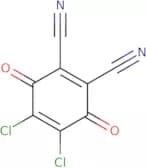
CAS:<p>2,3-Dichloro-5,6-dicyanobenzoquinone is a chemical compound with the molecular formula C12H4Cl2O2. It is used as a chemical intermediate in the production of dyes and pesticides. 2,3-Dichloro-5,6-dicyanobenzoquinone has been shown to have cytotoxic properties against lung fibroblasts in a model system that mimics the human body's reaction to this compound. The mechanism of action is thought to involve the formation of reactive oxygen species that leads to DNA damage. 2,3-Dichloro-5,6-dicyanobenzoquinone also has antiestrogenic activity and has been shown to be active against MDA-MB-231 breast cancer cells. The activation energies for these reactions are 7.8 kcal/mol for carbonyl group elimination and 8.1 kcal/mol for hyd</p>Formula:C8Cl2N2O2Color and Shape:Yellow PowderMolecular weight:227 g/molN,N'-Dimethyl-trans-1,2-cyclohexanediamine
CAS:<p>N,N'-Dimethyl-trans-1,2-cyclohexanediamine (DMCDA) is a hydroxy compound that can be used as an intermediate for the synthesis of various organic compounds. It has been shown to have a stable hydroxy group and hydrogen bond donor. DMCDA is also reactive, with a reaction rate of 10.5x10 mol/s at room temperature. DMCDA forms reaction intermediates such as oxazolidinones and 1,4-dioxanes. These intermediates have been studied by structural studies and kinetic methods to understand the mechanism of the reaction. The chronic oral toxicity of DMCDA has been determined in rats through a series of experiments and tests on protein genes. The oral LD50 value was found to be more than 5000 mg/kg body weight. This means that there is no adverse effect on the body when 5000 mg/kg or more is taken orally over an extended period (usually 28 days). Functional</p>Formula:C8H18N2Purity:Min. 98.5%Color and Shape:Clear Liquid Solidified MassMolecular weight:142.24 g/mol2-(Diphenylamino)benzoic acid
CAS:<p>Please enquire for more information about 2-(Diphenylamino)benzoic acid including the price, delivery time and more detailed product information at the technical inquiry form on this page</p>Formula:C19H15NO2Purity:Min. 95%Molecular weight:289.33 g/molDipropyl ether
CAS:<p>Dipropyl ether is a reagent that is used in organic synthesis as a reaction component or building block for the preparation of complex compounds. It is also known to be an intermediate in the production of propylene oxide, which is used in the production of polyurethane. Dipropyl ether has been shown to be useful as a research chemical and speciality chemical. This compound has CAS number 111-43-3 and can be prepared by reacting diethyl ether with propene, acetone, or chloroform.</p>Formula:C4H9NO2SMolecular weight:135.19 g/mol4-Bromo-1-butene
CAS:<p>4-Bromo-1-butene is a useful building block, reaction component, and useful scaffold that can be used in the synthesis of various chemical compounds. This compound is a high quality, complex compound with versatile building blocks that can be used as a reagent in research or as a speciality chemical. 4-Bromo-1-butene has been found to have many uses in the production of other chemicals such as pharmaceuticals, pesticides, and cosmetics.</p>Formula:C3H8INMolecular weight:185.01 g/mol2-[2-(Morpholin-4-yl)ethoxy]ethan-1-amine
CAS:2-[2-(Morpholin-4-yl)ethoxy]ethan-1-amine is a research chemical that is used as a reagent, reaction component, or building block in the synthesis of more complex compounds. It can be used to synthesize fine chemicals such as pharmaceuticals and agrochemicals.Formula:C8H18N2O2Purity:Min. 95%Color and Shape:Clear LiquidMolecular weight:174.24 g/mol4-Methoxybenzenediazonium tetrafluoroborate
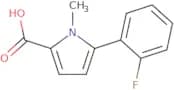
CAS:<p>4-Methoxybenzenediazonium tetrafluoroborate is a reactive chemical that is used as a component of a number of reagents, including those used in organic chemistry. This compound has been used as an intermediate for the synthesis of other chemicals, such as 4-methoxybenzenediazonium chloride and 4-methoxybenzenediazonium bromide. 4-Methoxybenzenediazonium tetrafluoroborate is also an excellent building block for complex compounds and fine chemicals. The CAS No. for this chemical is 459-64-3.</p>Formula:C6H16N2Molecular weight:116.2 g/mol5-(2-Fluorophenyl)-1-methyl-1H-pyrrole-2-carboxylic acid
CAS:<p>Versatile small molecule scaffold</p>Formula:C12H10FNO2Purity:Min. 95%Color and Shape:PowderMolecular weight:219.21 g/mol4-Cyanobenzophenone
CAS:<p>4-Cyanobenzophenone is an organic compound that is used as a reactant in the synthesis of other compounds. 4-Cyanobenzophenone has a number of applications, including use as a reagent in organic synthesis and as a building block for the synthesis of more complex compounds. It can also be used to synthesize antimalarial drugs, antibiotics, and other pharmaceuticals.</p>Formula:C14H9NOPurity:Min. 98 Area-%Molecular weight:207.23 g/mol1,1-Dimethylethyl (2S)-2-[[[5-(tributylstannyl)-3-pyridinyl]oxy]methyl]-1-azetidinecarboxylate
CAS:Controlled Product<p>Please enquire for more information about 1,1-Dimethylethyl (2S)-2-[[[5-(tributylstannyl)-3-pyridinyl]oxy]methyl]-1-azetidinecarboxylate including the price, delivery time and more detailed product information at the technical inquiry form on this page</p>Formula:C26H46N2O3SnPurity:Min. 95%Color and Shape:Clear LiquidMolecular weight:553.37 g/mol4-[8-[(2,6-Diethoxy-4′-fluoro[1,1′-biphenyl]-4-yl)methyl]-3-oxo-2,8-diazaspiro[4.5]dec-2-yl]benzoic acid hydrochloride
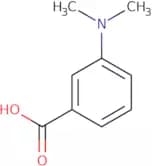
<p>Please enquire for more information about 4-[8-[(2,6-Diethoxy-4′-fluoro[1,1′-biphenyl]-4-yl)methyl]-3-oxo-2,8-diazaspiro[4.5]dec-2-yl]benzoic acid hydrochloride including the price, delivery time and more detailed product information at the technical inquiry form on this page</p>Formula:C32H35FN2O5•(HCl)xPurity:Min. 95%Color and Shape:Powder3-Dimethylaminobenzoic acid - 90%
CAS:<p>3-Dimethylaminobenzoic acid is a carboxylate that can be found in plants and animals. It is a precursor to many biologically important molecules, including the amino acid tryptophan. 3-Dimethylaminobenzoic acid has been shown to have a redox potential of -0.38 V, which makes it an excellent candidate for use as an electron acceptor. This compound is also used as an intermediate in the synthesis of cholesterol esters and fatty acids, and has been shown to inhibit the growth of basophilic leukemia cells in mice. 3-Dimethylaminobenzoic acid has also been shown to have a cholesterol esterase activity on human liver cytosol, with an enzyme activity of 0.0015 U/mg protein at pH 7.5 and 37°C, and on human urine samples with an enzyme activity of 0.0027 U/mg protein at pH 6.0 and 37</p>Formula:C9H11NO2Purity:Min. 95%Color and Shape:PowderMolecular weight:165.19 g/mol4-(Dimethylamino)phenol
CAS:<p>4-(Dimethylamino)phenol is a reactive molecule that can react with sodium carbonate to form a fluorescent product. The reaction mechanism has been elucidated by fluorescence spectroscopy and linear calibration curves. 4-DMA(OH)P reacts with sodium carbonate in water at physiological levels, producing p-hydroxybenzoic acid and 4-dimethylaminobenzoic acid. These compounds are also found in the matrix of bacterial cells and may serve as markers for the identification of bacterial metabolism. The reaction between 4DMA(OH)P and sodium carbonate was examined by X-ray crystal structures, which revealed that the reactive site is located on the phenolic hydroxyl group of 4DMA(OH)P. This study showed that the reactive site is localized on the phenolic hydroxy group of 4DMA(OH)P, which makes this molecule useful for identification of bacterial metabolism by means of matrix effect.</p>Formula:C8H11NOPurity:Min. 95%Molecular weight:137.18 g/mol1,1'-Dichloroferrocene
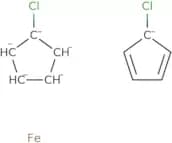
CAS:<p>1,1'-Dichloroferrocene is a molecule that belongs to the group of benzenes and has a gaseous form. It has potential energy and is an optical active compound. 1,1'-Dichloroferrin can be found in synchrotron radiation and it's optical absorption is dipole. The ligand for 1,1'-dichloroferrocene is ferrocene. This molecule transfers energy through radiation and optical excitation. The parameters for bromoferrocene are similar to those of 1,1'-dichloroferrin except that it does not have the same steric properties.</p>Formula:C10H8Cl2FePurity:Min. 95%Color and Shape:Off-White To Dark Yellow SolidMolecular weight:254.92 g/mol2,5-Diamino-4,6-dichloropyrimidine
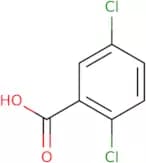
CAS:<p>2,5-Diamino-4,6-dichloropyrimidine is a biomolecule that is made of carbon, hydrogen, nitrogen, and chloride. It has been shown to inhibit cell growth in culture by reacting with malonic acid to form an oxidation product. This product can then react with trifluoroacetic acid to form a chlorinating agent which reacts reversibly with amine groups on the nucleobases in DNA. The reaction mechanism may be due to the ability of 2,5-Diamino-4,6-dichloropyrimidine to react with amino function and amide groups on nucleobases in DNA. 2,5-Diamino-4,6-dichloropyrimidine has also been shown to have anti-cancer activity against leukemia cells.</p>Formula:C4H4N4Cl2Purity:Min. 95%Color and Shape:PowderMolecular weight:179.01 g/mol2,5-Dichlorobenzoic acid
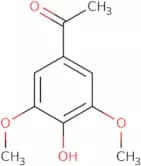
CAS:<p>2,5-Dichlorobenzoic acid is a hydrogen-bonding agent that interacts with other molecules by forming hydrogen bonds. It reacts with benzoate to form 2,5-dichlorobenzoate, which is an intermediate in the synthesis of phenylbenzene and biphenyl. 2,5-Dichlorobenzoic acid has been shown to inhibit the growth of bacteria such as Stenotrophomonas maltophilia and Pseudomonas aeruginosa. The compound also lowers cholesterol levels in rats and humans.<br>2,5-Dichlorobenzoic acid has a redox potential of -0.25 V and can be used to reduce sodium hydroxide solution or hydroxide solution. This chemical's structure allows it to be taken up by cells through passive diffusion and active transport mechanisms.</p>Formula:C7H4Cl2O2Purity:Min. 95%Color and Shape:White PowderMolecular weight:191.01 g/mol3',5'-Dimethoxy-4'-hydroxyacetophenone
CAS:<p>Inducer of transformation in Agrobacterium tumefaciens</p>Formula:C10H12O4Purity:Min. 97 Area-%Color and Shape:Brown White PowderMolecular weight:196.2 g/molMetosulam
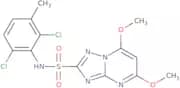
CAS:<p>Metosulam is a triazolopyrimidine herbicide that inhibits the growth of weeds by interfering with plant photosynthesis. Metosulam binds to fatty acids and carbohydrates, which prevents these molecules from binding to the enzyme ATP synthase. This results in a loss of energy production, leading to cell death. Metosulam has been shown to cause chronic cough in mice when given at sublethal doses for long periods of time. The chronic cough was found to be due to an interactive effect between metosulam and polymeric matrix in the lungs that caused inflammation.</p>Formula:C14H13Cl2N5O4SPurity:Min. 90%Color and Shape:Beige PowderMolecular weight:418.26 g/mol1,4-Dimethoxy-2-fluorobenzene
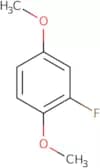
CAS:<p>1,4-Dimethoxy-2-fluorobenzene is a synthetic molecule that belongs to the class of halides. It is used as a ligand in X-ray crystallography and has been shown to have anti-cancer properties. 1,4-Dimethoxy-2-fluorobenzene can be prepared by reacting primary amines with chloroformates in the presence of bases at temperatures between -20 °C and 100 °C. This method is efficient and produces high yields. The synthesis of 1,4-dimethoxy 2-fluorobenzene can be optimized by using strategies such as preparative scale techniques or temperature changes.</p>Formula:C8H9FO2Purity:Min. 95%Color and Shape:PowderMolecular weight:156.15 g/mol





![2-[2-(Morpholin-4-yl)ethoxy]ethan-1-amine](/_next/image/?url=https%3A%2Fstatic.cymitquimica.com%2Fproducts%2F3D%2Fthumb-webp%2FVAA20713.webp&w=3840&q=75)


![1,1-Dimethylethyl (2S)-2-[[[5-(tributylstannyl)-3-pyridinyl]oxy]methyl]-1-azetidinecarboxylate](/_next/image/?url=https%3A%2Fstatic.cymitquimica.com%2Fproducts%2F3D%2Fthumb-webp%2FFD183344.webp&w=3840&q=75)
![4-[8-[(2,6-Diethoxy-4′-fluoro[1,1′-biphenyl]-4-yl)methyl]-3-oxo-2,8-diazaspiro[4.5]dec-2-yl]benzoi…](/_next/image/?url=https%3A%2Fstatic.cymitquimica.com%2Fproducts%2F3D%2Fthumb-webp%2FFD183056.webp&w=3840&q=75)