Building Blocks
This section contains fundamental products for the synthesis of organic and biological compounds. Building blocks are the essential starting materials used to construct complex molecules through various chemical reactions. They play a critical role in drug discovery, material science, and chemical research. At CymitQuimica, we offer a diverse range of high-quality building blocks to support your innovative research and industrial projects, ensuring you have the essential components for successful synthesis.
Subcategories of "Building Blocks"
- Boronic Acids & Boronic Acid Derivatives(5,756 products)
- Chiral Building Blocks(1,242 products)
- Hydrocarbon Building Blocks(6,095 products)
- Organic Building Blocks(61,055 products)
Found 199650 products of "Building Blocks"
Sort by
Purity (%)
0
100
|
0
|
50
|
90
|
95
|
100
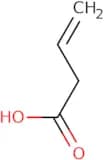
3-Butenoic acid
CAS:<p>3-Butenoic acid is a fatty acid that belongs to the group of short chain carboxylic acids. It is used in detergent compositions where it functions as a cationic surfactant and has a hydroxyl group that can be used for polymerization reactions. 3-Butenoic acid is also used as an analytical reagent, e.g., in electrochemical impedance spectroscopy, in which it has been shown to have phase transition temperature of around 38°C. 3-Butenoic acid can be synthesized by reacting butanol with hydrochloric acid and copper chloride in the presence of a cationic surfactant such as alkyltrimethylammonium chloride or benzalkonium chloride. 3-Butenoic acid also acts as a Jak1 inhibitor and has receptor activity against all types of receptors, including those for histamine, acetylcholine, dopamine, serotonin, and GABA (gamma aminob</p>Formula:C4H6O2Purity:Min. 95 Area-%Color and Shape:Colorless Clear LiquidMolecular weight:86.09 g/mol2-Bromo-1,3-diethylbenzene
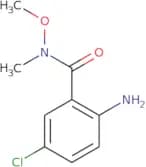
CAS:<p>2-Bromo-1,3-diethylbenzene is a reactive intermediate that can be used for the synthesis of styrene derivatives. It is also used as an anesthetic agent and has been shown to have cognition-enhancing properties. This compound reacts with electrophiles to form monoadducts, which are useful for protein targetting. The pharmacophore of 2-bromo-1,3-diethylbenzene consists of vinyl groups and halides. Radiation induces substitution reactions on the vinyl groups. Pharmacophores are important in drug design because they help identify specific chemical features that are necessary for binding to a particular protein target or protein targets.</p>Formula:C10H13BrPurity:Min. 95%Color and Shape:Clear LiquidMolecular weight:213.11 g/mol2-Amino-5-chloro-N-methoxy-N-methylbenzamide
CAS:<p>Versatile small molecule scaffold</p>Formula:C9H11ClN2O2Purity:Min. 95%Color and Shape:PowderMolecular weight:214.65 g/molBis(2-ethylbutyl)phthalate
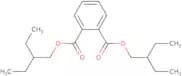
CAS:<p>Bis(2-ethylbutyl)phthalate (BEBP) is a chemical that has been used in the production of polyvinyl chloride (PVC) plastics, and as a stabilizer for PVC resins. BEBP is found in low levels in human tissue samples and sediments. Levels of BEBP have been measured through gas chromatography-mass spectrometry and liquid chromatography-mass spectroscopy methods. The environmental concentrations of BEBP can be calculated using the linear regression equation. Biota are also exposed to this chemical, which may be due to its use as an additive in certain food packaging materials.</p>Formula:C20H30O4Purity:Min. 95%Color and Shape:Colourless To Pale Yellow LiquidMolecular weight:334.45 g/mol4-(Bromomethyl)-4'-methyl-2,2'-bipyridyl
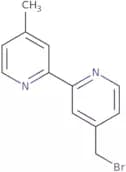
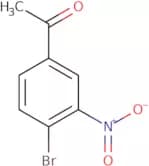
CAS:<p>4-(Bromomethyl)-4'-methyl-2,2'-bipyridyl is a high quality reagent with versatile applications. It is a complex compound that can be used as an intermediate or building block in the synthesis of other compounds. 4-(Bromomethyl)-4'-methyl-2,2'-bipyridyl has been shown to be useful in the synthesis of speciality chemicals and research chemicals. This product is a versatile building block that can be used as a reaction component in many organic syntheses.</p>Formula:C12H11BrN2Purity:Min. 95%Color and Shape:PowderMolecular weight:263.13 g/mol4-Bromo-3-nitroacetophenone - 90%
CAS:<p>4-Bromo-3-nitroacetophenone is a chemical compound with the molecular formula C6H4BrNO2. It is an organic nitroaromatic compound that is used in organic synthesis as a building block for pharmaceuticals. 4-Bromo-3-nitroacetophenone has been shown to be effective in relieving pain and it has been used as an analgesic. The compound was synthesized by the Suzuki reaction, which involves the use of palladium as a catalyst, and thermogravimetric analysis showed that it hydrolyzes in water. 4-Bromo-3-nitroacetophenone also reacts with europium ion to produce phosphor, which can be observed using absorption spectroscopy. This chemical has also been shown to have an emission spectrum. The reaction product of 4-bromo-3-nitroacetophenone and ligands can be measured using various fields or cross coupling reactions.</p>Formula:C8H6BrNO3Purity:Min. 95%Color and Shape:PowderMolecular weight:244.04 g/molBis(p-sulfonatophenyl)phenylphosphine dihydrate dipotassium
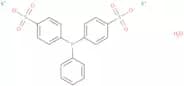
CAS:<p>A common water soluble substitute for triphenylphosphine in palladium coupling reactions</p>Formula:C18H15O6PS2•K2•(H2O)2Purity:Min. 95%Color and Shape:PowderMolecular weight:536.64 g/mol5-Bromo-3-methylisoxazole
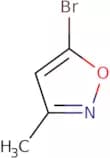
CAS:<p>5-Bromo-3-methylisoxazole is a brominated heterocycle with a pyridine ring. It is used in research as a reagent, speciality chemical, and intermediate for the preparation of complex compounds. 5-Bromo-3-methylisoxazole is also useful as a building block for the synthesis of more complex molecules. The compound is also used as an intermediate for organic synthesis, reaction component, and scaffold.</p>Formula:C4H4BrNOPurity:Min. 90%Color and Shape:Clear LiquidMolecular weight:161.98 g/mol6-Benzyladenine
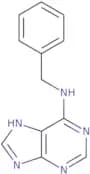
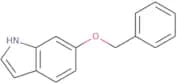
CAS:<p>Plant growth regulator. Member of the cytokinin family. Stimulates cell division.</p>Formula:C12H11N5Purity:Min. 98.0 Area-%Molecular weight:225.25 g/mol6-Benzyloxyindole
CAS:<p>6-Benzyloxyindole is a high quality chemical compound that can be used as a research chemical, speciality chemical, or versatile building block.</p>Formula:C15H13NOPurity:Min. 98.0 Area-%Molecular weight:223.28 g/molRef: 3D-B-1640
1kgTo inquire50gTo inquire100gTo inquire250gTo inquire500gTo inquire-Unit-ggTo inquireNα-Nim-Bis-Z-L-histidine ethanol
CAS:<p>Please enquire for more information about Nα-Nim-Bis-Z-L-histidine ethanol including the price, delivery time and more detailed product information at the technical inquiry form on this page</p>Formula:C22H21N3O6•C2H6OPurity:Min. 95%Color and Shape:PowderMolecular weight:469.49 g/molBP fluor 647 NHS ester trisodium
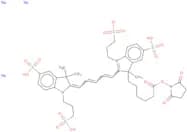
CAS:<p>Please enquire for more information about BP fluor 647 NHS ester trisodium including the price, delivery time and more detailed product information at the technical inquiry form on this page</p>Formula:C40H46N3Na3O16S4Purity:90%MinColor and Shape:PowderMolecular weight:1,022 g/moltert-Butyl 2-(furan-2-yl)-1H-indole-1-carboxylate
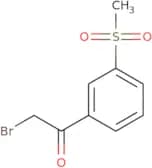
CAS:<p>Please enquire for more information about tert-Butyl 2-(furan-2-yl)-1H-indole-1-carboxylate including the price, delivery time and more detailed product information at the technical inquiry form on this page</p>Formula:C17H17NO3Purity:Min. 95%Color and Shape:Clear LiquidMolecular weight:283.32 g/mol2-Bromo-1-(3-methanesulfonylphenyl)ethan-1-one
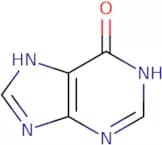
CAS:<p>2-Bromo-1-(3-methanesulfonylphenyl)ethan-1-one is a fine chemical that has been used as a building block for research chemicals, reagents, and speciality chemicals. It is a versatile building block that can be used in multi-step reactions to form complex compounds. This compound is also an intermediate in the synthesis of many pharmaceuticals and agrochemicals.</p>Formula:C9H9BrO3SPurity:Min. 95%Color and Shape:PowderMolecular weight:277.14 g/molHypoxanthine
CAS:<p>Hypoxanthine is a nucleoside that is found in human cells. It is synthesized from guanine by the enzyme, xanthine oxidoreductase. Hypoxanthine is also produced from xanthine by adenosine deaminase and converted back to xanthine, which can then be reused for DNA synthesis. Hypoxanthine has been shown to inhibit the growth of photosynthetic bacteria, such as Rhodopseudomonas viridis and Rhodobacter sphaeroides. This inhibition may be due to an equilibrative nucleotide effect on the folate receptor. The x-ray diffraction data collected from the chrysanthemum flower (a source of hypoxanthine) showed that hypoxanthine has a calcium salt structure.</p>Formula:C5H4N4OPurity:Min. 95%Color and Shape:White PowderMolecular weight:136.11 g/moltert-Butyl (R)-3-(piperidin-3-yl)azetidine-1-carboxylate
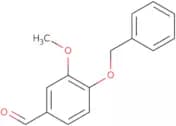
CAS:A useful building block for organic synthesis.Formula:C13H24N2O2Molecular weight:240.34 g/mol4-Benzyloxy-3-methoxybenzaldehyde
CAS:<p>4-Benzyloxy-3-methoxybenzaldehyde is a deuterium isotope analog of the natural compound benzaldehyde. This molecule has been shown to inhibit the growth of cancer cells in tissue culture by binding to DNA. The molecular mechanism of this inhibition is believed to involve an enzymatic process that results in the substitution of chloride for chlorine, thereby inhibiting DNA synthesis and preventing cell division. 4-Benzyloxy-3-methoxybenzaldehyde also inhibits the production of growth factors and thus has anticancer activity.</p>Formula:C15H14O3Purity:Min. 95%Color and Shape:PowderMolecular weight:242.27 g/mol2-(4-Benzyloxyphenyl)ethanol
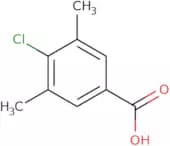
CAS:2-(4-Benzyloxyphenyl)ethanol is an organic compound that has a particle size of less than 10 μm and is soluble in water. It is used as a reaction system for the production of tannins, which are polyphenolic compounds that have antioxidant properties. 2-(4-Benzyloxyphenyl)ethanol also inhibits maltase activity and metal ion-induced allylic oxidation. This compound can be used to inhibit fatty acid synthesis, which is important for the prevention of atherosclerosis and other cardiovascular diseases.Formula:C15H16O2Purity:Min. 95%Color and Shape:PowderMolecular weight:228.29 g/mol4-Chloro-3,5-dimethylbenzoic acid
CAS:<p>4-Chloro-3,5-dimethylbenzoic acid (4CMB) is a building block in organic chemistry. It can be used as a reagent, speciality chemical, and research chemical. 4CMB is used to make an intermediate for the synthesis of other chemicals and it can also be used as a reaction component in more complex reactions. CAS No. 90649-78-8</p>Formula:C9H9ClO2Purity:Min. 95%Color and Shape:PowderMolecular weight:184.62 g/molBis(4-hydroxy)benzophenone
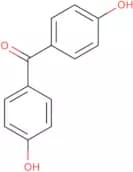
CAS:<p>Bis(4-hydroxyphenyl)benzene is a cross-linking agent that is used as a photoinitiator in the production of polymers and coatings. It is also used in wastewater treatment to remove organic matter, phenols, and other pollutants. This chemical has been shown to have physiological effects on hamster V79 cells and may cause cancer. The toxicity of Bis(4-hydroxyphenyl)benzene can be reduced by the addition of hydroxylamine or hydrogen fluoride. Hydroxyl groups can be quantified using diphenyl ether or p-hydroxybenzoic acid. Bis(4-hydroxyphenyl)benzene also reacts with serine protease and has been shown to inhibit the growth of V79 cells in urine samples.</p>Formula:C13H10O3Purity:Min. 95%Color and Shape:White Off-White PowderMolecular weight:214.22 g/mol