Building Blocks
This section contains fundamental products for the synthesis of organic and biological compounds. Building blocks are the essential starting materials used to construct complex molecules through various chemical reactions. They play a critical role in drug discovery, material science, and chemical research. At CymitQuimica, we offer a diverse range of high-quality building blocks to support your innovative research and industrial projects, ensuring you have the essential components for successful synthesis.
Subcategories of "Building Blocks"
- Boronic Acids & Boronic Acid Derivatives(5,778 products)
- Chiral Building Blocks(1,242 products)
- Hydrocarbon Building Blocks(6,098 products)
- Organic Building Blocks(61,098 products)
Found 199594 products of "Building Blocks"
Sort by
Purity (%)
0
100
|
0
|
50
|
90
|
95
|
100
6-Azaindole
CAS:<p>6-Azaindole is a drug that inhibits the activity of the enzyme aromatase, which is responsible for the conversion of testosterone to estrogen. 6-Azaindole has shown potent inhibitory activity against cancer cells in vitro and in vivo. It also has an inhibitory effect on pain relief mechanisms at low doses, but not at high doses. The mechanism of action is complex and multifactorial; it may involve inhibition of proton transfer, receptor activity, and/or inhibition of nitrogen atoms. The synthesis of 6-azaindoles can be carried out using a variety of methods and starting materials, including asymmetric synthesis or reduction of an n-oxide moiety.</p>Formula:C7H6N2Purity:Min. 95%Color and Shape:PowderMolecular weight:118.14 g/mol7-Hydroxyindole
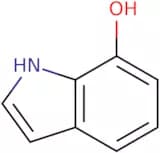
CAS:<p>7-Hydroxyindole is a biochemical that is produced by wild-type strains of Escherichia coli. It has been shown to inhibit the action of an efflux pump, which is a protein that pumps drugs and other foreign substances out of the cell. The alkoxy radical reacts with 7-hydroxyindole to form a hydroperoxide intermediate. This intermediate then reacts with molecular oxygen to form hydrogen peroxide, which may be responsible for the antimicrobial activity of 7-hydoxyindole. Studies have shown that this compound can also inhibit multidrug efflux pumps in Pseudomonas aeruginosa cells, which may lead to an increase in antibiotic uptake.</p>Formula:C8H7NOPurity:Min. 98 Area-%Color and Shape:Off-White PowderMolecular weight:133.15 g/mol1H-Tetrazole - ~0.45M solution in acetonitrile
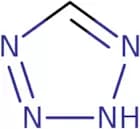
CAS:<p>Catalyst; intermediate in organic syntheses</p>Formula:CH2N4Purity:Min. 98.0%Color and Shape:Colorless Clear LiquidMolecular weight:70.05 g/mol6-Aminoindole
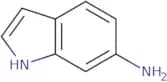
CAS:<p>6-Aminoindole is a model complex that can be used for studying the interactions of primary amines with acidic molecules in bioinorganic chemistry. The molecule was synthesized by electropolymerization, which involves the oxidation of aniline with bifunctional oxidases. 6-Aminoindole has been shown to have protonation and salicylaldehyde properties. It reacts with metal surfaces to form a molecular target.</p>Formula:C8H8N2Purity:Min. 97 Area-%Color and Shape:PowderMolecular weight:132.16 g/mol2-Amino-1-methoxypropane
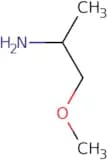
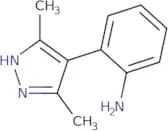
CAS:<p>2-Amino-1-methoxypropane (AMP) is a bifunctional amine that has been used as a diluent for lipase. It has been shown to have deprotective properties against metal surfaces and to be able to react with the nucleophilic group of an amine, which is useful in organic synthesis. The constant temperature of AMP, which is useful in organic synthesis, was obtained by recycling it through a constant temperature bath. This process also prevents the formation of unwanted products during the reaction.</p>Formula:C4H11NOPurity:Min. 95 Area-%Color and Shape:Clear LiquidMolecular weight:89.14 g/mol2-(3,5-Dimethyl-1H-pyrazol-4-yl)aniline
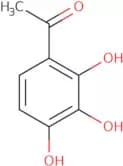
CAS:Versatile small molecule scaffoldFormula:C11H13N3Purity:Min. 95%Color and Shape:PowderMolecular weight:187.24 g/mol2',3',4'-Trihydroxyacetophenone
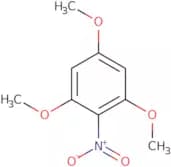
CAS:<p>2',3',4'-Trihydroxyacetophenone is a polycarboxylic acid that has potent inhibitory activity against tyrosinase, an enzyme that catalyzes the conversion of tyrosine to DOPA. This compound can be used as a cross-linking agent for polymerization reactions and has been shown to have optimum inhibitory concentrations in the range of 0.01-1 mM. 2',3',4'-Trihydroxyacetophenone inhibits the production of melanin by inhibiting tyrosinase and can be used as a skin whitening agent. In addition, this compound can be used as a cox-2 inhibitor in food composition and may also be useful in preventing or treating inflammatory conditions such as asthma and arthritis.</p>Formula:C8H8O4Purity:Min. 95%Color and Shape:Off-White PowderMolecular weight:168.15 g/mol1-Nitro-2,4,6-trimethoxybenzene
CAS:<p>1-Nitro-2,4,6-trimethoxybenzene is a chemical compound that belongs to the nitro group. It has been found to be an electron donor in bacterial cells, and has been shown to be effective against the growth of bacteria by catalytic reduction. This reaction is highly specific for nitro compounds and does not occur with other classes of compounds. Mass spectrometric analysis of the reaction solution revealed that significant amounts of hydrogen gas were generated during this process. The use of aminoguanidine as a reducing agent resulted in a decrease in the production of hydrogen gas. 1-Nitro-2,4,6-trimethoxybenzene also has been shown to inhibit cytochrome p450 enzymes in rats and humans.</p>Formula:C9H11NO5Purity:Min. 95%Color and Shape:PowderMolecular weight:213.19 g/mol6,7-Dimethoxy-1-methyl-1,2,3,4-tetrahydro-isoquinoline
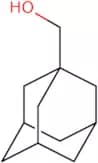
CAS:<p>6,7-Dimethoxy-1-methyl-1,2,3,4-tetrahydroisoquinoline is a trifluoroacetic acid derivative that inhibits the synthesis of dopamine by inhibiting the enzyme tyrosine hydroxylase. It has been shown to be an inhibitor of tissue culture cells and natural compounds. The compound was synthesized from allyl carbonate and pueraria lobata in an asymmetric synthesis with a magnesium salt as a catalyst.</p>Formula:C12H17NO2Purity:Min. 90%Color and Shape:PowderMolecular weight:207.27 g/mol1-Adamantanemethanol
CAS:<p>Adamantanemethanol is a molecule used in the process of translation. It is structurally analyzed by trifluoromethanesulfonic acid, which is a cavity. The pharmacokinetic properties of adamantanemethanol are determined by its acyl chain. Adamantanemethanol has been studied in clinical trials, and the minimal inhibitory concentration for this drug is determined by chloride. This molecule also forms hydrogen bonds with hydroxyl groups and functional groups. Adamantanemethanol has been shown to be an effective antimicrobial agent against bacterial replication in cell culture and has optical properties that can be used to identify it.</p>Formula:C11H18OPurity:Min. 95%Color and Shape:White PowderMolecular weight:166.26 g/mol4-Aminobenzonitrile
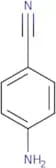
CAS:<p>4-Aminobenzonitrile is a chemical compound that has been shown to be an antimicrobial agent. It has been found to be active against bacteria and fungi, such as Candida albicans and Aspergillus niger. 4-Aminobenzonitrile binds with epidermal growth factor (EGF) by intramolecular hydrogen bonding, which leads to the disruption of the protein's tertiary structure. The nitrogen atoms in this compound have been shown to react with water vapor at high temperatures, which results in the release of hydrogen gas. This reaction can be used for phase transition temperature studies. 4-Aminobenzonitrile also shows intermolecular hydrogen bonding with fatty acids, which causes the molecule to change its shape and protonation state. These changes affect its frequency shift and molecular modeling study results.</p>Formula:C7H6N2Purity:Min. 95%Color and Shape:Off-White PowderMolecular weight:118.14 g/mol4-Hydroxyquinoline
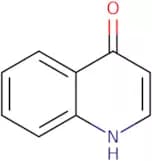
CAS:<p>4-Hydroxyquinoline is a chemical compound that has been shown to have anticancer, anti-inflammatory, and antiviral properties. It is an inhibitor of the enzyme tyrosinase, which is required for the production of melanin. 4-Hydroxyquinoline has also been shown to suppress bowel inflammation by inhibiting the synthesis of 3-hydroxyanthranilic acid in cells. 4-Hydroxyquinoline has been found to be effective against Herpes Simplex Virus Type 1 (HSV1) in cell culture and in vitro assays. <br>4-Hydroxyquinoline's photochemical properties make it a useful precursor for the synthesis of other biologically active compounds. This chemical undergoes a reaction with trifluoroacetic acid to form diazonium salt intermediate, which then reacts with hydrogen peroxide to form an active oxygen species that damages DNA and kills cells.</p>Formula:C9H7NOPurity:Min. 95%Color and Shape:White PowderMolecular weight:145.16 g/mol4-Hydroxyindole
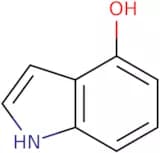
CAS:<p>4-Hydroxyindole is an inorganic acid that is produced by the oxidation of 4-hydroxyphenylacetic acid. It is a metabolite of the synthetic cannabinoids, JWH-018 and JWH-073. The production of 4-hydroxyindole has been shown to be dependent on the presence of a nucleophilic attack on the diazonium salt, which leads to protonation. The fluorescence properties of this molecule are dependent on its hydroxyl group, which allows for detection using magnetic resonance spectroscopy. Hydrochloric acid can be used as an alternate solvent to produce 4-hydroxyindole from 4-hydroxyphenylacetic acid. 4-Hydroxyindole has been shown to have pharmacokinetic properties that are similar to those of THC, but it does not bind well to cannabinoid receptors or activate them.br> br> The structure of this molecule can be seen below</p>Formula:C8H7NOColor and Shape:White PowderMolecular weight:133.15 g/mol(R)-(+)-3-Aminoquinuclidine dihydrochloride
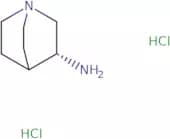
CAS:A building block; used for synthesis tryptophan 2,?3-?dioxygenase inhibitorsFormula:C7H14N2•(HCl)2Purity:Min. 95%Color and Shape:PowderMolecular weight:199.12 g/mol3-Amino-6-chloropyridazine
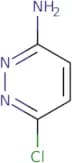
CAS:<p>3-Amino-6-chloropyridazine is a synthetic compound that is soluble in hydrochloric acid. It has been shown to inhibit the proliferation of cells and induce apoptosis, which may be due to its inhibition of the growth factor receptor, factor. 3-Amino-6-chloropyridazine also inhibits bcr-abl kinase, an enzyme that is involved in the development of chronic myelogenous leukemia (CML). This chemical can be synthesized by coupling amino acids with chloropyridazine using cross coupling reactions. 3-Amino-6-chloropyridazine is a synthetic analogue of pyridoxal phosphate and may have use as an antiinflammatory agent.</p>Formula:C4H4ClN3Purity:Min. 95%Color and Shape:PowderMolecular weight:129.55 g/mol1-Adamantane carbonitrile
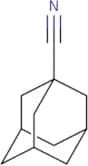
CAS:<p>1-Adamantane carbonitrile is a compound that has been shown to have high binding constants to the covid-19 pandemic. The compound has been shown to be a good candidate for oxidation catalysts and radiation. 1-Adamantane carbonitrile is also a metastable molecule, which means it can exist in two different states with different energy levels. This compound has been found to bind to an endogenous enzyme, as well as being crystalline and having a coordination complex. It has been shown that 1-Adamantane carbonitrile reacts with hydrogen chloride and produces reactive intermediates such as hydrogen chloride. 1-Adamantane carbonitrile has also been shown to have antiviral properties against influenza virus with nmr spectra data showing the presence of this compound in the active site of the influenza virus.</p>Formula:C11H15NPurity:Min. 96.0%Color and Shape:PowderMolecular weight:161.24 g/mol5-Aminoindole
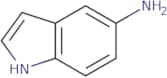
CAS:<p>5-Aminoindole is a hydrogen bond acid. It has been shown to have an optimum concentration of 0.1 mM in the presence of 0.2 mM potassium chloride and 2 mM magnesium chloride, which is similar to the pH range for biological systems. 5-Aminoindole also acts as a competitive inhibitor of quinoline derivatives, such as chloroquine and hydroxychloroquine, which are used in the treatment of malaria and rheumatoid arthritis. The compound has been shown to be active against primary cells grown in culture, including mouse erythrocytes and human hepatocytes. When used with agarose gel electrophoresis or electrochemical impedance spectroscopy, 5-aminoindole shows excellent selectivity for kinases over other enzymes. 5-Aminoindole is not reactive under physiological conditions because it does not have any redox potentials that can be measured by Langmuir adsorption isother</p>Formula:C8H8N2Purity:Min. 97%Color and Shape:Brown PowderMolecular weight:132.16 g/mol4-Amino-3-nitropyridine
CAS:<p>4-Amino-3-nitropyridine is a molecule with the chemical formula C6H6N4O2. It is an organic compound that has been shown to have analgesic, antimicrobial, and antiviral properties. 4-Amino-3-nitropyridine has been shown to inhibit the growth of bacteria in vitro by reducing the ability of bacteria to synthesize DNA. It is not active against bacteria that use RNA as their genetic material. 4-Amino-3-nitropyridine also inhibits viral replication and may be useful in treating chronic pain, diabetic neuropathy, and other conditions related to nerve damage. This drug binds to chloride ions and nucleophilic functional groups on microbial metabolites, which prevents their conversion into other metabolites.</p>Formula:C5H5N3O2Purity:Min. 95%Color and Shape:PowderMolecular weight:139.11 g/mol4-Acetoxyindole
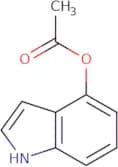
CAS:<p>4-Acetoxyindole is a chromophore that belongs to the pyrrole family of compounds. It has been shown to react with an ionic liquid under acidic conditions to form a protonated intermediate, which can be deprotonated by a nucleophile. This reaction yields an acetate anion and a fluorescing product. 4-Acetoxyindole also reacts with deuterium gas, yielding an acetate, a deuterium atom, and fluorescing product. The reaction is reversible and the yield of the product depends on the concentration of the reactants. 4-Acetoxyindole has strong carbonyl groups that make it reactive towards other functional groups. These reactions are useful for synthesizing heterocycles such as indoles and isoquinolines.</p>Formula:C10H9NO2Purity:Min. 97 Area-%Color and Shape:White PowderMolecular weight:175.18 g/mol2-(3-Hydroxypropyl)benzimidazole
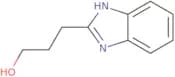
CAS:<p>2-(3-Hydroxypropyl)benzimidazole is a chloroform extract of the bark of the tree, Pongamia pinnata. It has been shown to have antibacterial and antitumor activity. 2-(3-Hydroxypropyl)benzimidazole has been found to be active against methicillin-resistant Staphylococcus aureus (MRSA), showing strong inhibitory effects on bacterial cell growth in vitro. The mechanism of action may be due to its ability to bind to DNA and RNA, preventing transcription and replication. 2-(3-Hydroxypropyl)benzimidazole also inhibits protein synthesis by binding to ribosomes and interfering with the function of enzymes that are involved in this process such as cytochrome c reductase, glutathione reductase, and 3-ketoacyl coenzyme A thiolase.</p>Formula:C10H12N2OPurity:Min. 95%Color and Shape:White PowderMolecular weight:176.22 g/mol