Building Blocks
This section contains fundamental products for the synthesis of organic and biological compounds. Building blocks are the essential starting materials used to construct complex molecules through various chemical reactions. They play a critical role in drug discovery, material science, and chemical research. At CymitQuimica, we offer a diverse range of high-quality building blocks to support your innovative research and industrial projects, ensuring you have the essential components for successful synthesis.
Subcategories of "Building Blocks"
- Boronic Acids & Boronic Acid Derivatives(5,778 products)
- Chiral Building Blocks(1,242 products)
- Hydrocarbon Building Blocks(6,098 products)
- Organic Building Blocks(61,034 products)
Found 199601 products of "Building Blocks"
Sort by
Purity (%)
0
100
|
0
|
50
|
90
|
95
|
100
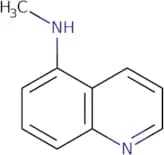
N-Methylquinolin-5-amine
CAS:<p>Versatile small molecule scaffold</p>Formula:C10H10N2Purity:Min. 95%Color and Shape:PowderMolecular weight:158.2 g/mol1-Butanoic acid-2-(O-methyl-L-tyrosine)-1-carbaoxytocin
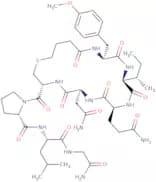
CAS:<p>1-Butanoic acid-2-(O-methyl-L-tyrosine)-1-carbaoxytocin (BMT) is a synthetic analog of oxytocin. Oxytocin is a hormone that is produced in the hypothalamus and released by the pituitary gland to stimulate uterine contractions and milk letdown in mammals. 1-Butanoic acid-2-(O-methyl-L-tyrosine)-1-carbaoxytocin has been shown to bind to the oxytocin receptor and stimulate the release of insulin, which may be useful for treating type 2 diabetes. BMT also stimulates epidermal growth factor (EGF) production and induces skin cell growth. It has been used as an animal health drug for stimulating appetite, increasing weight gain, reducing inflammation, and lowering blood pressure.</p>Formula:C45H69N11O12SPurity:Min. 95%Color and Shape:White PowderMolecular weight:988.16 g/moltert-Butyl 2-(furan-2-yl)-1H-indole-1-carboxylate
CAS:<p>Please enquire for more information about tert-Butyl 2-(furan-2-yl)-1H-indole-1-carboxylate including the price, delivery time and more detailed product information at the technical inquiry form on this page</p>Formula:C17H17NO3Purity:Min. 95%Color and Shape:Clear LiquidMolecular weight:283.32 g/molBP fluor 647 NHS ester trisodium
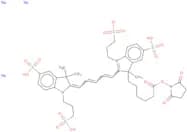
CAS:<p>Please enquire for more information about BP fluor 647 NHS ester trisodium including the price, delivery time and more detailed product information at the technical inquiry form on this page</p>Formula:C40H46N3Na3O16S4Purity:90%MinColor and Shape:PowderMolecular weight:1,022 g/molNα-Nim-Bis-Z-L-histidine ethanol
CAS:<p>Please enquire for more information about Nα-Nim-Bis-Z-L-histidine ethanol including the price, delivery time and more detailed product information at the technical inquiry form on this page</p>Formula:C22H21N3O6•C2H6OPurity:Min. 95%Color and Shape:PowderMolecular weight:469.49 g/mol4-Bromo-3-nitroacetophenone - 90%
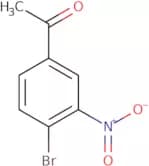
CAS:<p>4-Bromo-3-nitroacetophenone is a chemical compound with the molecular formula C6H4BrNO2. It is an organic nitroaromatic compound that is used in organic synthesis as a building block for pharmaceuticals. 4-Bromo-3-nitroacetophenone has been shown to be effective in relieving pain and it has been used as an analgesic. The compound was synthesized by the Suzuki reaction, which involves the use of palladium as a catalyst, and thermogravimetric analysis showed that it hydrolyzes in water. 4-Bromo-3-nitroacetophenone also reacts with europium ion to produce phosphor, which can be observed using absorption spectroscopy. This chemical has also been shown to have an emission spectrum. The reaction product of 4-bromo-3-nitroacetophenone and ligands can be measured using various fields or cross coupling reactions.</p>Formula:C8H6BrNO3Purity:Min. 95%Color and Shape:PowderMolecular weight:244.04 g/mol2-Bromo-4-hydroxyacetophenone
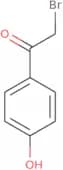
CAS:<p>2-Bromo-4-hydroxyacetophenone is a membrane permeable inhibitor of monoamine oxidase (MAO) that has been shown to inhibit the enzyme's activity with an IC50 of 10 μM. It is used as a research tool in biological studies and has been shown to be active against MAO A, MAO B, and MAO C. 2-Bromo-4-hydroxyacetophenone has also been shown to inhibit the growth of carcinoma cells in vitro. This molecule is also a β-unsaturated ketone that binds to catalytic domains and forms covalent bonds with chloride ions. 2-Bromo-4-hydroxyacetophenone can be used as an industrial process catalyst for chemical reactions involving chloride.<br>2-Bromo-4-hydroxyacetophenone synergistically inhibits the growth of cancer cells when combined with other compounds such as trifluoroacetic acid or dichloromet</p>Formula:C8H7BrO2Purity:(%) Min. 85%Color and Shape:PowderMolecular weight:215.04 g/mol3-Buten-3-ethyl-1-ol
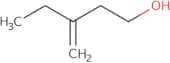
CAS:<p>3-Buten-3-ethyl-1-ol is a versatile building block that can be used as a reagent for chemical synthesis. It is a complex compound that can be used as a reaction component or intermediate in organic synthesis. 3-Buten-3-ethyl-1-ol has been shown to have antiinflammatory properties, which may be due to the inhibition of prostaglandin synthesis.</p>Formula:C6H12OPurity:Min. 95%Color and Shape:Clear LiquidMolecular weight:100.16 g/mol(S)-N-Boc-2-aminopent-4-en-1-ol
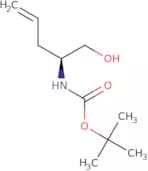
CAS:<p>(S)-N-Boc-2-aminopent-4-en-1-ol is an organic compound that is a useful scaffold for the synthesis of complex compounds. It is also a useful intermediate in organic synthesis and can be used as a building block to synthesize fine chemicals. The chemical has been registered with CAS number 116613-81-1.</p>Formula:C10H19NO3Purity:Min. 95%Color and Shape:Colourless To Yellow LiquidMolecular weight:201.26 g/mol5-(2-Bromoethyl)-4-methyl-1,3-thiazole
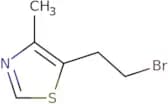
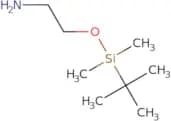
CAS:<p>Versatile small molecule scaffold</p>Formula:C6H8BrNSPurity:Min. 95%Molecular weight:206.11 g/mol2-(tert-Butyldimethylsilyloxy)ethanamine
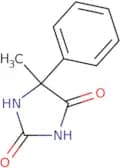
CAS:Versatile small molecule scaffoldFormula:C8H21NOSiPurity:Min. 95%Molecular weight:175.35 g/mol(5R)-5-Methyl-5-phenylimidazolidine-2,4-dione
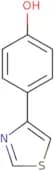
CAS:<p>Versatile small molecule scaffold</p>Formula:C10H10N2O2Purity:Min. 95%Color and Shape:PowderMolecular weight:190.2 g/mol4-(1,3-Thiazol-4-yl)phenol
CAS:<p>4-(1,3-Thiazol-4-yl)phenol is a diagnostic marker for bladder cancer. It is expressed in bladder cells and its levels are higher in urine samples of patients with bladder cancer than in controls. 4-(1,3-Thiazol-4-yl)phenol can be used as a biomarker for diagnosis of bladder cancer and to monitor the treatment response. The concentration of this compound can also be used to assess the risk of recurrence or progression to invasive disease. The function of 4-(1,3-thiazol-4-yl)phenol in the body is not known, but it may act as a growth factor or stabilizer for cells. This molecule has been shown to have therapeutic effects on epithelial cancers such as colorectal and pancreatic cancers.</p>Formula:C9H7NOSPurity:Min. 95%Color and Shape:PowderMolecular weight:177.22 g/molTetrahydro-2H-pyran-2-ol
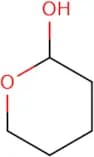
CAS:<p>Tetrahydro-2H-pyran-2-ol is a chemical compound that belongs to the class of organic compounds called alcohols. It has been shown to have a taste and smell similar to ethyl alcohol, but can be distinguished by its higher boiling point. Tetrahydro-2H-pyran-2-ol is also used as a biological sample in assays for metabolic disorders and as a reactant in cell lysis reactions. This alcohol binds with proteins, which may be due to hydrogen bonding interactions between the hydroxyl group on the alcohol and the amide group on the proteins. The conformational properties of tetrahydro-2H-pyran-2-ol are dependent on its intramolecular hydrogen bonds, which can be broken by x-ray diffraction data.</p>Formula:C20H21N3O2Purity:Min. 95%Molecular weight:335.4 g/molTricyclo[2.2.1.0,2,6]heptane-1-carboxylic acid
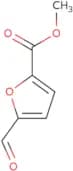
CAS:<p>Versatile small molecule scaffold</p>Formula:C8H10O2Purity:Min. 95%Molecular weight:138.16 g/molMethyl 5-formylfuran-2-carboxylate
CAS:<p>Methyl 5-formylfuran-2-carboxylate (MFC) is a furan derivative that has been used for the synthesis of pharmaceuticals, agrochemicals, and other organic compounds. MFC is synthesized from methanol and formaldehyde in a low concentration to produce a mixture containing methyl 5-formylfuran-2-carboxylate. It can also be synthesized from methanol and formaldehyde in a high concentration to produce crystalline solid MFC. The use of MFC as a template for crystallization has been investigated with success. This compound can be used as a catalyst in the oxidative dehydrogenation of 5-hydroxymethylfurfural to produce 5-formylfuran. MFC is efficient and selective for this reaction, making it an attractive candidate for industrial production of furan derivatives.</p>Formula:C7H6O4Purity:Min. 95%Color and Shape:PowderMolecular weight:154.1 g/mol1-[3-(Trifluoromethyl)phenyl]-1H-1,2,3-triazole-4-carboxylic acid
CAS:<p>1-[3-(Trifluoromethyl)phenyl]-1H-1,2,3-triazole-4-carboxylic acid (TFTCA) is a versatile building block used as a reagent in research and speciality chemical synthesis. TFTCA is used as a reactant in the synthesis of complex compounds and can be used as an intermediate or scaffold. The compound has been used to synthesize drugs such as 3,5-dichloro-N-(3-(trifluoromethyl)phenyl)-2-thiophenecarboxamide (PF23410), which is a potent inhibitor of protein kinase C.</p>Formula:C10H6F3N3O2Purity:Min. 95%Color and Shape:PowderMolecular weight:257.17 g/mol10-Undecen-1-ol
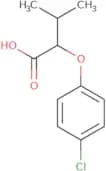
CAS:<p>10-Undecen-1-ol is a fatty acid with a hydroxyl group at the 10th position. It has strong intermolecular hydrogen bonding and reacts to form esters and ethers. 10-Undecen-1-ol is used as a multi-walled carbon for wastewater treatment, which removes organic contaminants. This compound also has a high degree of chemical stability, which makes it suitable for use in anhydrous sodium synthesis methods.</p>Formula:C11H22OPurity:Min. 98%Color and Shape:Colorless Clear LiquidMolecular weight:170.29 g/mol2-(4-Chlorophenoxy)-3-methylbutanoic acid
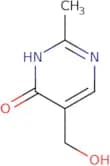
CAS:<p>Versatile small molecule scaffold</p>Formula:C11H13ClO3Purity:Min. 95%Color and Shape:PowderMolecular weight:228.67 g/mol5-(Hydroxymethyl)-2-methylpyrimidin-4(1H)-one
CAS:5-(Hydroxymethyl)-2-methylpyrimidin-4(1H)-one is a pyrimidine compound that is used as an intermediate in the synthesis of other compounds. 5-(Hydroxymethyl)-2-methylpyrimidin-4(1H)-one is converted to 2,5-dihydro-5-[(hydroxymethyl)amino]pyrimidine-4,6-dione by the enzyme glutamic decarboxylase and may be metabolized to form 2,5-dihydro-5-[(hydroxymethyl)amino]-4,6,-dimethylpyrimidine by microorganisms. It can also be converted to 5-(hydroxymethyl)amino-2,6-dimethylpyrimidine by the enzyme carboxypeptidase B. This compound is used in biochemical analyses and has shown to damage the cellular structure of microorganisms. ItFormula:C6H8N2O2Purity:Min. 95%Color and Shape:PowderMolecular weight:140.14 g/mol

![Tricyclo[2.2.1.0,2,6]heptane-1-carboxylic acid](/_next/image/?url=https%3A%2Fstatic.cymitquimica.com%2Fproducts%2F3D%2Fthumb-webp%2FAAA69725.webp&w=3840&q=75)
![1-[3-(Trifluoromethyl)phenyl]-1H-1,2,3-triazole-4-carboxylic acid](/_next/image/?url=https%3A%2Fstatic.cymitquimica.com%2Fproducts%2F3D%2Fthumb-webp%2FNEA93433.webp&w=3840&q=75)