Building Blocks
This section contains fundamental products for the synthesis of organic and biological compounds. Building blocks are the essential starting materials used to construct complex molecules through various chemical reactions. They play a critical role in drug discovery, material science, and chemical research. At CymitQuimica, we offer a diverse range of high-quality building blocks to support your innovative research and industrial projects, ensuring you have the essential components for successful synthesis.
Subcategories of "Building Blocks"
- Boronic Acids & Boronic Acid Derivatives(5,756 products)
- Chiral Building Blocks(1,242 products)
- Hydrocarbon Building Blocks(6,095 products)
- Organic Building Blocks(61,051 products)
Found 199813 products of "Building Blocks"
Sort by
Purity (%)
0
100
|
0
|
50
|
90
|
95
|
100
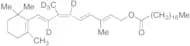
9-cis-Retinyl Stearate-d5
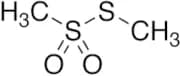
CAS:Controlled Product<p>Applications 9-cis-Retinyl Stearate-d5, is the labeled analogue of 9-cis-Retinyl Stearate (R275600), a fatty acid ester of Retinol isomer, found mainly in the retina.<br>References Bridges, C.D.B., et al.: Methods Enzymol., 81, 463 (1982),<br></p>Formula:C38D5H59O2Color and Shape:NeatMolecular weight:557.944Methyl Methanethiosulfonate
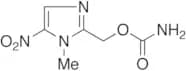
CAS:Controlled ProductFormula:C2H6O2S2Color and Shape:NeatMolecular weight:126.20Ronidazole
CAS:<p>Applications Antimicrobial.<br>References Yamada, R., et al.: Biosci. Biotechnol. Biochem., 70, 54 (2006), Mohamed, R., et al.: J. Agric. Food Chem., 56, 3500 (2008), Leitsch, D., et al.: Mol. Microbiol., 72, 518 (2009),<br></p>Formula:C6H8N4O4Color and Shape:Light YellowMolecular weight:200.154-Methyl-5-(2-phosphorylethyl)thiazole
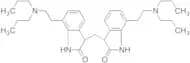
CAS:Controlled ProductFormula:C6H10NO4PSColor and Shape:NeatMolecular weight:222.18Ropinirole Methylene Dimer
CAS:Controlled Product<p>Applications Ropinirole Methylene Dimer is an impurity of Ropinirole (R641000(P)), which is an antiparkinsonian agent & a selective dopamine D2-receptor agonist.<br>References Singh, S., et al.: Int. J. PharmTech Res., 5, 431 (2013), Eden, R.J., et al.: Pharmacol. Biochem. Behav., 38, 147 (1991), Rascol, O., et al.: Mov. Disord., 13, 39 (1998)<br></p>Formula:C33H48N4O2Color and Shape:NeatMolecular weight:532.762-Methylpropylboronic Acid
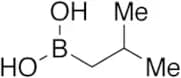
CAS:Controlled Product<p>Applications 2-Methylpropylboronic Acid is used in the preparation of isocoumarin analogs as inhibitors of γ-secretase cleavage. Also used in the preparation of peptide boronc acid.<br>References Peuchmaur, M. et al.: Bioorg. Med. Chem. Lett., 21, 1018 (2013); Roemmele, R. et al.: Org. Proc. Res. Devel., 17, 422 (2013);<br></p>Formula:C4H11BO2Color and Shape:NeatMolecular weight:101.94Methyl 1,2,4-Triazole-3-carboxylate
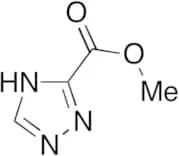
CAS:Controlled ProductFormula:C4H5N3O2Color and Shape:Off-WhiteMolecular weight:127.14′-Methylpropiophenone
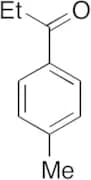
CAS:Controlled Product<p>Applications 4′-Methylpropiophenone is a chemical reagent used in electrocarboxylation reactions.<br>References Zhang, K. et al.: Chin. J. Chem., 28, 509 (2010); Zhao, S. et al.: Tetra. Lett., 52, 2702 (2011);<br></p>Formula:C10H12OColor and Shape:NeatMolecular weight:148.20Methyl Thiocyanate
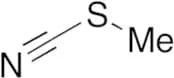
CAS:Controlled Product<p>Applications Methyl thiocyanate is a reagent that is used in the synthesis of WAK 4103 (W498200), which is a metabolite of Imidacloprid (I274990), a neonicotinoid; the active ingredient in certain neuro-active insecticides. Reports show that when exposed to neonicotinid pesticides honeybees have probelms returnign home after foraging and bumblebee colonies grow poorly and produce fewer queens.Nauen, R., et. al.: Pestic. Sci., 55, 265 (1999); Chauzat, M., et al.: Env. Entomol., 38, 514 (2009); Patial, A., et al.: Env. Ecol., 27, 320 (2009); Fernandez-Bayo, J., et al.: J. Agric., Food Chem., 57, 5435 (2009); Tomizawa, M., et al.: J. Med. Chem., 52, 3735 (2009); Chem. and Eng. News 90: 10 (2012)<br> Not a dangerous good if item is equal to or less than 1g/ml and there is less than 100g/ml in the package<br>References Nauen, R., et. al.: Pestic. Sci., 55, 265 (1999); Chauzat, M., et al.: Env. Entomol., 38, 514 (2009); Patial, A., et al.: Env. Ecol., 27, 320 (2009); Fernandez-Bayo, J., et al.: J. Agric., Food Chem., 57, 5435 (2009); Tomizawa, M., et al.: J. Med. Chem., 52, 3735 (2009); Chem. and Eng. News 90: 10 (2012)<br></p>Formula:C2H3NSColor and Shape:NeatMolecular weight:73.12Triethyl Orthobenzoate
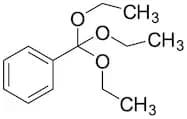
CAS:Controlled Product<p>Applications Triethyl Orthobenzoate can be used as a thermal additive to air conditioning refrigerant oil. This compound can also be used as a catalyst for olefin polymerization.<br>References Appler. R., et.al., U.S.Pat.Appl.Publ., 11,(2019); Zhang, T., et.al., Faming Zhuanli Shenqing,12,(2018);<br></p>Formula:C13H20O3Color and Shape:NeatMolecular weight:224.33-Methyl-thiopropanal
CAS:<p>Applications 3-Methyl-thiopropanal is used as an analytical standard for the quanitiative determination of 2-Furfurylthiol.<br> Not a dangerous good if item is equal to or less than 1g/ml and there is less than 100g/ml in the package<br>References Sen, A. and Grosch, W.: Z. lebensm Unters Forsch, 192, 541 (1991)<br></p>Formula:C4H8OSColor and Shape:NeatMolecular weight:104.17N-(4-Methyl-2-thiazolyl)-guanidine hydrochloride
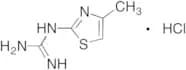
CAS:Controlled Product<p>Applications N-(4-Methyl-2-thiazolyl)-guanidine hydrochloride is the hydrochloride base salt of N-(4-Methyl-2-thiazolyl)-guanidine which is used as a test compound for various studies involving permeability through the blood-brain barrier.<br>References Bolboaca, S.D., et al.: Int. J. Mol. Sci., 12, 4348-64 (2011); Dureja, H., et al.: Acta Pharm. 57, 451-67 (2007); Fu, X., et al.: nt. J. Mol. Sci., 10, 737-50 (2005)<br></p>Formula:C5H8N4S·HClColor and Shape:NeatMolecular weight:156.21 + (36.46)1,10-Decanedioic-2,2,9,9-d4 Acid
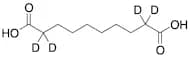
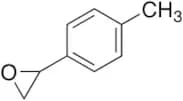
CAS:Controlled Product<p>Applications 1,10-Decanedioic-2,2,9,9-d4 Acid (CAS# 339080-77-2) is a useful isotopically labeled research compound.<br></p>Formula:C10H14D4O4Color and Shape:NeatMolecular weight:206.272-(4-methylphenyl)oxirane
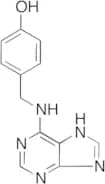
CAS:Controlled Product<p>Applications 2-(4-methylphenyl)oxirane (cas# 13107-39-6) is a useful research chemical.<br></p>Formula:C9H10OColor and Shape:ColourlessMolecular weight:134.17para-Topolin
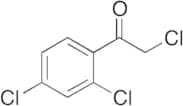
CAS:Controlled Product<p>Applications para-Topolin can be used for biological study for evaluation of antioxidant activity and capacity of some natural N6-substituted adenine derivatives (cytokinins) by fluorimetric and spectrophotometric assays.<br>References Brizzolari, A., et al.: J. Chromatogr. B., 1019, 164-168 (2016)<br></p>Formula:C12H11N5OColor and Shape:NeatMolecular weight:241.25α,2,4-Trichloroacetophenone
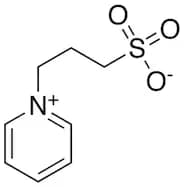
CAS:Controlled Product<p>Applications α,2,4-Trichloroacetophenone is a reagent used in the synthesis of isoconazole, a potent antifungal agent.<br>References Dulcevscaia, G. et al.: Polyhed., 52, 106 (2013); Wang, Y. et al.: Bioorg. Med. Chem. Lett., 22, 5363 (2012);<br></p>Formula:C8H5Cl3OColor and Shape:NeatMolecular weight:223.481-(3-Sulfopropyl)pyridinium Inner Salt
CAS:Controlled Product<p>Applications A non detergent sulfobetaine used as a mild solubilizing and stabilizing agent for halophilic malate dehydrogenase, halophilic elongation factor Tu (hTu), pig heart malate dehydrogenase, chicken egg white lysozyme and E. coli beta-galactosidase. Preserves the antigenic conformation of serine protease gp76. Does not interfere with colorimetric assays using p-nitrophenylphosphate and o-nitrophenyl-b-D-galactopyranoside as substrates. Reduces aggregation and significantly improves protein renaturation. Zwitterionic over a wide pH range. Does not absorb significantly in the near-UV range. Can be easily removed by dialysis.This compound is suitable for malate dehydrogenase (MDH) related research.<br>References Vuillard, L., et al.: Anal. Biochem., 230, 290 (1995); Vuillard, L., et al.: FEBS Lett., 353, 294 (1995); Vuillard, L., et al.: Biochem. J., 305, 337 (1995); Goldberg, M.E., et al.: Folding & Design, 1, 21 (1996).<br></p>Formula:C8H11NO3SColor and Shape:NeatMolecular weight:201.24