Building Blocks
This section contains fundamental products for the synthesis of organic and biological compounds. Building blocks are the essential starting materials used to construct complex molecules through various chemical reactions. They play a critical role in drug discovery, material science, and chemical research. At CymitQuimica, we offer a diverse range of high-quality building blocks to support your innovative research and industrial projects, ensuring you have the essential components for successful synthesis.
Subcategories of "Building Blocks"
- Boronic Acids & Boronic Acid Derivatives(5,756 products)
- Chiral Building Blocks(1,242 products)
- Hydrocarbon Building Blocks(6,095 products)
- Organic Building Blocks(61,051 products)
Found 199813 products of "Building Blocks"
Sort by
Purity (%)
0
100
|
0
|
50
|
90
|
95
|
100
Alizarin
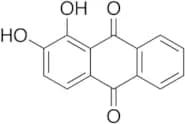
CAS:<p>Applications Alizarin is used widely as a prominent red dye for textile facbrics. Alizarin red is now used in biochemical assay to determine quantitatively by colorimetry, the presence of calcific deposition by cells of the osteogenic lineage. Alzarine derivatives was evaluated as new inhibitors of the HIV-1 reverse transcriptase associated DNA polymerase and RNase H. Alizarin was also shown to inhibit proliferation, tumor growth and suppress tumorigenesis in human osteosarcoma and breast cancer cell representative for bone metastasis. Dyes and metabolites.<br>References Yuan, H.S., et al.: Mycol., 3, 100 (2012); Esposito, F. et al.: FEBS. J., 278, 1444 (2011); Fotia, Caterina, J. Orthop. Rsch. 30, 1486 (2012);<br></p>Formula:C14H8O4Color and Shape:NeatMolecular weight:240.212-Phenylacetimidamide Hydrochloride
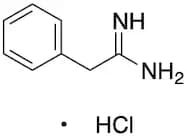
CAS:Controlled Product<p>Applications 2-Phenylacetimidamide hydrochloride (cas# 2498-46-6) is a useful research chemical.<br></p>Formula:C8H10N2·HClColor and Shape:NeatMolecular weight:134.18 + (36.46)4′-Methylpropiophenone
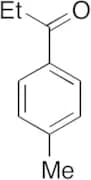
CAS:Controlled Product<p>Applications 4′-Methylpropiophenone is a chemical reagent used in electrocarboxylation reactions.<br>References Zhang, K. et al.: Chin. J. Chem., 28, 509 (2010); Zhao, S. et al.: Tetra. Lett., 52, 2702 (2011);<br></p>Formula:C10H12OColor and Shape:NeatMolecular weight:148.203-Diethylaminophenol
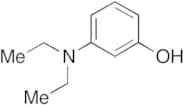
CAS:Controlled Product<p>Applications 3-Diethylaminophenol is used as a reagent in the synthesis of coumarin- and rhodamine-fused deep red fluorescent dyes.<br>References Chen, J., et al.: J. Org. Chem., 78, 6121 (2013)<br></p>Formula:C10H15NOColor and Shape:BlackMolecular weight:165.23Glycidyl Caprate
CAS:Controlled Product<p>Applications Glycidyl Caprate is an epoxy monomer used as a crosslinking agents for alkyd coatings.<br>References Sorokin, M.F. et al.: Lakokras. Mat. Ikh Prim., 5, 9 (1979);<br></p>Formula:C13H24O3Color and Shape:ColourlessMolecular weight:228.33Pyrrolo[1,2-a]pyrazine-1-carboxylic Acid (>90%)
CAS:Controlled Product<p>Applications pyrrolo[1,2-a]pyrazine-1-carboxylic acid (cas# 1895300-97-6) is a useful research chemical.<br></p>Formula:C8H6N2O2Purity:>90%Color and Shape:YellowMolecular weight:162.145Methyl Thiocyanate
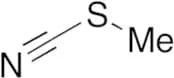
CAS:Controlled Product<p>Applications Methyl thiocyanate is a reagent that is used in the synthesis of WAK 4103 (W498200), which is a metabolite of Imidacloprid (I274990), a neonicotinoid; the active ingredient in certain neuro-active insecticides. Reports show that when exposed to neonicotinid pesticides honeybees have probelms returnign home after foraging and bumblebee colonies grow poorly and produce fewer queens.Nauen, R., et. al.: Pestic. Sci., 55, 265 (1999); Chauzat, M., et al.: Env. Entomol., 38, 514 (2009); Patial, A., et al.: Env. Ecol., 27, 320 (2009); Fernandez-Bayo, J., et al.: J. Agric., Food Chem., 57, 5435 (2009); Tomizawa, M., et al.: J. Med. Chem., 52, 3735 (2009); Chem. and Eng. News 90: 10 (2012)<br> Not a dangerous good if item is equal to or less than 1g/ml and there is less than 100g/ml in the package<br>References Nauen, R., et. al.: Pestic. Sci., 55, 265 (1999); Chauzat, M., et al.: Env. Entomol., 38, 514 (2009); Patial, A., et al.: Env. Ecol., 27, 320 (2009); Fernandez-Bayo, J., et al.: J. Agric., Food Chem., 57, 5435 (2009); Tomizawa, M., et al.: J. Med. Chem., 52, 3735 (2009); Chem. and Eng. News 90: 10 (2012)<br></p>Formula:C2H3NSColor and Shape:NeatMolecular weight:73.123-Methyl-thiopropanal
CAS:<p>Applications 3-Methyl-thiopropanal is used as an analytical standard for the quanitiative determination of 2-Furfurylthiol.<br> Not a dangerous good if item is equal to or less than 1g/ml and there is less than 100g/ml in the package<br>References Sen, A. and Grosch, W.: Z. lebensm Unters Forsch, 192, 541 (1991)<br></p>Formula:C4H8OSColor and Shape:NeatMolecular weight:104.17N-Nitroso-4-piperidone
CAS:Controlled ProductFormula:C5H8N2O2Color and Shape:NeatMolecular weight:128.13Glutaconic Acid
CAS:Controlled Product<p>Applications Glutaconic Acid is used in the synthesis of dialkyltin derivatives of dicarboxylic acids which display antitumor properties. Also used in the synthesis of novel tetracyclic compounds as peripheral benzodiazepine receptor ligands with potential use for CNS illness treatments.<br>References Gielen, M. et al.: Hetero. Chem., 3, 449 (1992); Okubo, T. et al.: Bioorg. Med. Chem. Lett., 12, 3569 (2004);<br></p>Formula:C5H6O4Color and Shape:NeatMolecular weight:130.1N-(4-Methyl-2-thiazolyl)-guanidine hydrochloride
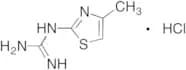
CAS:Controlled Product<p>Applications N-(4-Methyl-2-thiazolyl)-guanidine hydrochloride is the hydrochloride base salt of N-(4-Methyl-2-thiazolyl)-guanidine which is used as a test compound for various studies involving permeability through the blood-brain barrier.<br>References Bolboaca, S.D., et al.: Int. J. Mol. Sci., 12, 4348-64 (2011); Dureja, H., et al.: Acta Pharm. 57, 451-67 (2007); Fu, X., et al.: nt. J. Mol. Sci., 10, 737-50 (2005)<br></p>Formula:C5H8N4S·HClColor and Shape:NeatMolecular weight:156.21 + (36.46)2-[(1-Hydroxy-2-oxo-2-phenylethyl)sulfanyl]acetic Acid
CAS:Controlled ProductFormula:C10H10O4SPurity:>90%Color and Shape:NeatMolecular weight:226.25Cinoxate
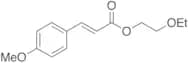
CAS:Controlled Product<p>Applications Cinoxate is an organic compound used as an ingredient in some types of sunscreens. Cinoxate is an ester formed from methoxycinnamic acid and 2-ethoxyethanol. Cinoxate is a slightly yellow viscous liquid that is insoluble in water, but miscible with alcohols, esters, and vegetable oils.Cinoxate protects skin against the sun by absorbing UV-A and UV-B rays.<br>References Delattre., et al.: Enzyme Microb. Tech., 41, 250 (2007); Fukuoka, T., et al.: Oleoscience, 9, 127 (2009);<br></p>Formula:C14H18O4Color and Shape:NeatMolecular weight:250.29Ethoxymethylene Malononitrile
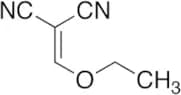
CAS:Controlled ProductFormula:C6H6N2OColor and Shape:NeatMolecular weight:122.12Bis(2-chloroethyl)amine Hydrochloride
CAS:Controlled Product<p>Impurity Cyclophosphamide Impurity A<br>Applications A cytotoxic metabolite of Cyclophosphamide; a deuterated analog of Nor-nitrogen mustard. Cyclophosphamide Impurity A<br>References Colvin, M. et al.: Cancer Res., 36, 1121 (1976); Ludeman, S. et al.: Drug Metab Dispos., 20, 337 (1992); Ludeman, S.M. et al.: J. Pharmaceut. Sci., 84, 393 (1995); Yu, L. et al.: Drug Metab. Dispos., 24, 1254 (1996);<br></p>Formula:C4H9Cl2N·ClHColor and Shape:White To Light YellowMolecular weight:178.49Bis(2-chloroethyl)-d8-amine HCl
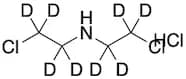
CAS:Controlled Product<p>Applications Bis(2-chloroethyl)-d8-amine HCl (CAS# 102092-04-6) is a useful isotopically labeled research compound.<br></p>Formula:C4H2D8Cl3NColor and Shape:NeatMolecular weight:186.53Paeonol
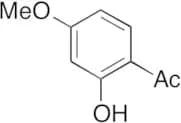
CAS:Controlled Product<p>Applications Paeonol acting as a β-Secretase inhibitor an anti-apoptotic agent is used in the treatment of memory loss after ischemic stroke. Anti-inflammatory and analgesic.<br>References Hsieh, C., et al.: J. Ethnopharmacol., 106, 208 (2006); Chou, T., et al.: Brit. J. Pharmacol., 139, 1146 (2003);<br></p>Formula:C9H10O3Color and Shape:NeatMolecular weight:166.172-Carboxybenzaldehyde
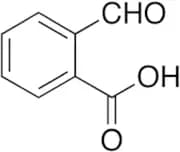
CAS:Controlled ProductFormula:C8H6O3Color and Shape:NeatMolecular weight:150.13trans-2-Octenoic Acid
CAS:Controlled Product<p>Stability Light Sensitive<br>Applications TRANS-2-OCTENOIC ACID (cas# 1871-67-6) is a useful research chemical.<br> Not a dangerous good if item is equal to or less than 1g/ml and there is less than 100g/ml in the package<br></p>Formula:C8H14O2Color and Shape:NeatMolecular weight:142.2


![Pyrrolo[1,2-a]pyrazine-1-carboxylic Acid (>90%)](/_next/image/?url=https%3A%2Fstatic.cymitquimica.com%2Fproducts%2FTR%2Fthumb-webp%2FP308506.webp&w=3840&q=75)


![2-[(1-Hydroxy-2-oxo-2-phenylethyl)sulfanyl]acetic Acid](/_next/image/?url=https%3A%2Fstatic.cymitquimica.com%2Fproducts%2FTR%2Fthumb-webp%2FH956065.webp&w=3840&q=75)