Building Blocks
This section contains fundamental products for the synthesis of organic and biological compounds. Building blocks are the essential starting materials used to construct complex molecules through various chemical reactions. They play a critical role in drug discovery, material science, and chemical research. At CymitQuimica, we offer a diverse range of high-quality building blocks to support your innovative research and industrial projects, ensuring you have the essential components for successful synthesis.
Subcategories of "Building Blocks"
- Boronic Acids & Boronic Acid Derivatives(5,778 products)
- Chiral Building Blocks(1,242 products)
- Hydrocarbon Building Blocks(6,098 products)
- Organic Building Blocks(61,034 products)
Found 199601 products of "Building Blocks"
Sort by
Purity (%)
0
100
|
0
|
50
|
90
|
95
|
100
5-Methoxyindole-2-carboxylic acid
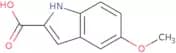
CAS:<p>5-Methoxyindole-2-carboxylic acid is a molecule that belongs to the class of diazonium salts. It is a potent inhibitor of mitochondrial membrane potential and has been shown to have anti-diabetic effects in animal models. 5-Methoxyindole-2-carboxylic acid also inhibits sperm motility, which may be due to its ability to inhibit uv absorption. This compound has been shown to be an effective agent in the treatment of brain infarctions when administered chronically orally. The mechanism of action is not known, but it may involve inhibition of potassium ion uptake or hydrogen bond formation with fatty acids.</p>Formula:C10H9NO3Color and Shape:PowderMolecular weight:191.18 g/mol4-Methyl-3-nitrobenzoic acid
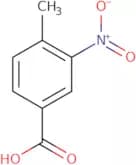
CAS:<p>4-Methyl-3-nitrobenzoic acid is a hydroxide solution that has been shown to be cytotoxic to malignant melanoma cells in vitro. 4-Methyl-3-nitrobenzoic acid also inhibits the growth of normal cells by blocking epidermal growth factor receptor signaling. This molecule is converted to hippuric acid, which may have an anti-cancer effect by inhibiting metal ion uptake and causing DNA damage. There are no known adverse effects or interactions with other drugs.</p>Formula:C8H7NO4Purity:Min. 95%Color and Shape:PowderMolecular weight:181.15 g/mol2-Methylindole
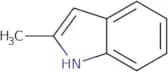
CAS:<p>2-Methylindole is a reactive molecule that can undergo electrophilic substitution at the 2-position. It reacts with a variety of nitrogen nucleophiles, acylating them at the 2-position. These reactions are catalyzed by enzymes such as carbonyl reductase and methyl ketone reductase. The reaction mechanism is not yet fully understood, but it has been proposed that it proceeds through an acylation reaction between two molecules of 2-methylindole to form a linear product. The regiospecificity of this reaction has been demonstrated in vivo using a model system.</p>Formula:C9H9NColor and Shape:PowderMolecular weight:131.17 g/mol5-Methoxyindole
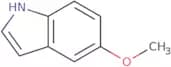
CAS:<p>5-Methoxyindole is a chemical compound that is soluble in water. It has been shown to inhibit tumor growth and induce apoptosis, as well as inhibit the expression of glycogen synthase kinase-3. The structure of 5-methoxyindole was determined by NMR spectroscopy and FT-IR spectroscopy. The compound has been observed to exhibit fluorescence properties at a wavelength of 490 nm when it is excited with UV light. A copper complex of 5-methoxyindole was studied using molecular modeling and FT-IR spectroscopy, which revealed that it can undergo nucleophilic attack by hydrogen bond formation or an acid/base reaction to form a new hydrogen bond. This study also found that 5-methoxyindole is able to form hydrogen bonds with its neighboring molecules, which may contribute to its high solubility in water.</p>Formula:C9H9NOColor and Shape:PowderMolecular weight:147.17 g/mol3-Methyl-4-nitrobenzonitrile
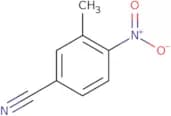
CAS:<p>3-Methyl-4-nitrobenzonitrile is a fluorescing aromatic amine that is synthesized by aliphatic amines. It has been shown to inhibit the growth of cells in culture, which may be due to its ability to bind with and inhibit the insulin-like growth factor receptor-1 (IGF-1R). 3-Methyl-4-nitrobenzonitrile has also been shown to bind with cytochrome P450 enzymes, where it can be oxidized or reduced. The conformation of 3-methyl-4 nitrobenzonitrile is dependent on the solvent molecules present.</p>Formula:C8H6N2O2Purity:Min. 95%Color and Shape:PowderMolecular weight:162.15 g/mol3-Methyl-4-nitrobenzoic acid
CAS:<p>3-Methyl-4-nitrobenzoic acid is a white solid that can be synthesized by heating 2,4-dichlorobenzoic acid with potassium dichromate in the presence of nitrogen. It has been shown to be effective against Candida glabrata strains and other bacteria. 3-Methyl-4-nitrobenzoic acid is soluble in water and other polar solvents, such as acetic acid or sodium carbonate, but insoluble in nonpolar solvents such as hexane or ether. The reaction mechanism for this compound is not yet known. It has been found to have a phase equilibrium between its solid and liquid forms at room temperature. Solubility data for this compound are available from experimental measurements.</p>Formula:C8H7NO4Purity:Min. 95%Color and Shape:PowderMolecular weight:181.15 g/mol2-Methoxybenzoic acid
CAS:<p>2-Methoxybenzoic acid is a nonsteroidal anti-inflammatory drug that belongs to the group of acetate extract. This compound has been shown to inhibit the production of prostaglandin E2 by inhibiting cyclooxygenase activity. 2-Methoxybenzoic acid also acts as an antagonist at serotonin 5HT1A receptors, which are involved in the regulation of mood and cognition. It is a competitive inhibitor of p-hydroxybenzoic acid, natural compounds, and protocatechuic acid with hydrogen bond interactions. 2-Methoxybenzoic acid also binds to tissue culture cells and inhibits cell growth through receptor binding.</p>Formula:C8H8O3Purity:Min. 95%Color and Shape:PowderMolecular weight:152.15 g/molKojic acid dipalmitate
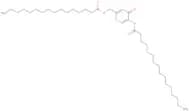
CAS:<p>Tyrosinase inhibitor; skin whitener</p>Formula:C38H66O6Purity:(Hplc) Min. 98.5%Color and Shape:White Off-White PowderMolecular weight:618.93 g/mol2-Amino-1-methoxypropane
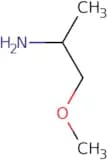
CAS:<p>2-Amino-1-methoxypropane (AMP) is a bifunctional amine that has been used as a diluent for lipase. It has been shown to have deprotective properties against metal surfaces and to be able to react with the nucleophilic group of an amine, which is useful in organic synthesis. The constant temperature of AMP, which is useful in organic synthesis, was obtained by recycling it through a constant temperature bath. This process also prevents the formation of unwanted products during the reaction.</p>Formula:C4H11NOPurity:Min. 95 Area-%Color and Shape:Clear LiquidMolecular weight:89.14 g/mol1-Adamantanemethanol
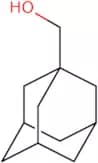
CAS:<p>Adamantanemethanol is a molecule used in the process of translation. It is structurally analyzed by trifluoromethanesulfonic acid, which is a cavity. The pharmacokinetic properties of adamantanemethanol are determined by its acyl chain. Adamantanemethanol has been studied in clinical trials, and the minimal inhibitory concentration for this drug is determined by chloride. This molecule also forms hydrogen bonds with hydroxyl groups and functional groups. Adamantanemethanol has been shown to be an effective antimicrobial agent against bacterial replication in cell culture and has optical properties that can be used to identify it.</p>Formula:C11H18OPurity:Min. 95%Color and Shape:White PowderMolecular weight:166.26 g/mol4-Aminobenzonitrile
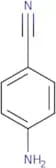
CAS:<p>4-Aminobenzonitrile is a chemical compound that has been shown to be an antimicrobial agent. It has been found to be active against bacteria and fungi, such as Candida albicans and Aspergillus niger. 4-Aminobenzonitrile binds with epidermal growth factor (EGF) by intramolecular hydrogen bonding, which leads to the disruption of the protein's tertiary structure. The nitrogen atoms in this compound have been shown to react with water vapor at high temperatures, which results in the release of hydrogen gas. This reaction can be used for phase transition temperature studies. 4-Aminobenzonitrile also shows intermolecular hydrogen bonding with fatty acids, which causes the molecule to change its shape and protonation state. These changes affect its frequency shift and molecular modeling study results.</p>Formula:C7H6N2Purity:Min. 95%Color and Shape:Off-White PowderMolecular weight:118.14 g/molPropan-2-yl 2-hydroxy-4-(methylsulfanyl)butanoate
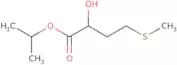
CAS:Propan-2-yl 2-hydroxy-4-(methylsulfanyl)butanoate, also known as 2HMB, is a polycarboxylic acid that belongs to the group of fatty acids. It is an analog of the amino acid methionine and has been shown to have potential health benefits. Propan-2-yl 2-hydroxy-4-(methylsulfanyl)butanoate has been shown to stimulate protein synthesis by increasing levels of growth factors in rats. This compound may be beneficial for those with low dietary concentrations of amino acids or amides, or those who are on a ketogenic diet. The antioxidant properties of this compound may help combat oxidative stress and maintain healthy cells.Formula:C8H16O3SPurity:Min. 95%Color and Shape:Clear LiquidMolecular weight:192.28 g/mol(R)-(+)-3-Aminoquinuclidine dihydrochloride
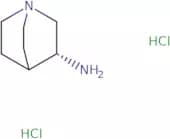
CAS:A building block; used for synthesis tryptophan 2,?3-?dioxygenase inhibitorsFormula:C7H14N2•(HCl)2Purity:Min. 95%Color and Shape:PowderMolecular weight:199.12 g/mol3-Amino-6-chloropyridazine
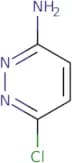
CAS:<p>3-Amino-6-chloropyridazine is a synthetic compound that is soluble in hydrochloric acid. It has been shown to inhibit the proliferation of cells and induce apoptosis, which may be due to its inhibition of the growth factor receptor, factor. 3-Amino-6-chloropyridazine also inhibits bcr-abl kinase, an enzyme that is involved in the development of chronic myelogenous leukemia (CML). This chemical can be synthesized by coupling amino acids with chloropyridazine using cross coupling reactions. 3-Amino-6-chloropyridazine is a synthetic analogue of pyridoxal phosphate and may have use as an antiinflammatory agent.</p>Formula:C4H4ClN3Purity:Min. 95%Color and Shape:PowderMolecular weight:129.55 g/molBCN-PNP carbonate
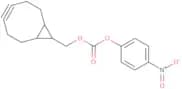
CAS:<p>BCN-PNP carbonate is a versatile building block that can be used as an intermediate in the synthesis of complex compounds. It has a variety of uses in research and as a reagent for fine chemicals. BCN-PNP carbonate is an effective reaction component for the synthesis of speciality chemicals, which are used for research purposes or as intermediates for pharmaceuticals. BCN-PNP carbonate is also useful scaffold for the synthesis of highly pure, high quality building blocks.</p>Formula:C17H17NO5Purity:Min. 95%Color and Shape:PowderMolecular weight:315.32 g/mol5-Amino-1H-indole-2-carboxylic acid
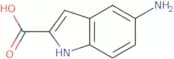
CAS:<p>5-Amino-1H-indole-2-carboxylic acid is a chemical compound that belongs to the group of alcohols. It has been shown to have a viscosity increasing effect in industrial applications and can be used as an environmental pollutant. This compound is also a surface active agent, and it has been shown to be an effective antitumor agent. 5-Amino-1H-indole-2-carboxylic acid is a nonionic surfactant with urea derivative properties. It can be used for the treatment of skin conditions such as eczema and psoriasis, but should not be applied to open wounds.</p>Formula:C9H8N2O2Purity:Min. 95%Color and Shape:PowderMolecular weight:176.17 g/mol3-Methylhexan-2-amine hydrochloride
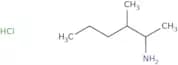
CAS:Controlled Product<p>Versatile small molecule scaffold</p>Formula:C7H18ClNPurity:Min. 95%Color and Shape:PowderMolecular weight:151.7 g/mol3-Methyl-5-(trifluoromethyl)isoxazole-4-carboxylic acid
CAS:<p>Versatile small molecule scaffold</p>Formula:C6H4F3NO3Purity:Min. 95%Molecular weight:195.1 g/mol3-(Azidopropyl)triethoxysilane
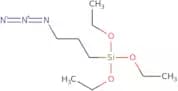
CAS:<p>3-(Azidopropyl)triethoxysilane is a chemical compound that is used as an immobilization agent for metal ions. It is typically synthesized by reacting triethoxysilane with azide and can be used to immobilize metal ions on the surface of various materials, such as glass, silicon, or other substrates. 3-(Azidopropyl)triethoxysilane has been shown to have anticancer activity in vitro against MCF-7 cells. This compound induces cancer cell death by binding to the cell membrane and disrupting its lipid bilayer. 3-(Azidopropyl)triethoxysilane also has a diameter of 6.3 nm, which allows it to cross the membrane easily.</p>Formula:C9H21N3O3SiPurity:Min. 95 Area-%Color and Shape:Clear LiquidMolecular weight:247.37 g/mol2-Iodo-5-nitrobenzoic acid
CAS:<p>2-Iodo-5-nitrobenzoic acid is a reactive molecule that reacts with terminal alkynes to form a fluorescent compound. It was immobilized on an electrode and used as a probe in voltammetry studies. 2-Iodo-5-nitrobenzoic acid is also used as a reagent in the synthesis of amides, which are important in many biochemical reactions. The use of this compound may be limited by the toxicity to cells, which can be increased through the presence of cisplatin or 3-aminobenzoic acid. The microenvironment around cancer cells may also alter the reactivity of 2-iodo-5-nitrobenzoic acid.</p>Formula:C7H4INO4Purity:Min. 95%Color and Shape:Beige PowderMolecular weight:293.02 g/mol