Building Blocks
This section contains fundamental products for the synthesis of organic and biological compounds. Building blocks are the essential starting materials used to construct complex molecules through various chemical reactions. They play a critical role in drug discovery, material science, and chemical research. At CymitQuimica, we offer a diverse range of high-quality building blocks to support your innovative research and industrial projects, ensuring you have the essential components for successful synthesis.
Subcategories of "Building Blocks"
- Boronic Acids & Boronic Acid Derivatives(5,756 products)
- Chiral Building Blocks(1,242 products)
- Hydrocarbon Building Blocks(6,095 products)
- Organic Building Blocks(61,055 products)
Found 199650 products of "Building Blocks"
Sort by
Purity (%)
0
100
|
0
|
50
|
90
|
95
|
100
5-Amino-2-nitrobenzoic acid
CAS:<p>5-Amino-2-nitrobenzoic acid is an organic compound that belongs to the class of versatile building block. It is a white solid that has been used as a research chemical, reagent, and specialty chemical for the synthesis of complex compounds and pharmaceuticals. 5-Amino-2-nitrobenzoic acid is also known as 2-amino-5-chlorobenzoic acid (ACBA). It is soluble in water, but insoluble in ethanol. The CAS number for this chemical is 13280-60-9.</p>Formula:C7H6N2O4Molecular weight:182.14 g/molRef: 3D-A-6802
1kgTo inquire100gTo inquire250gTo inquire500gTo inquire2500gTo inquire-Unit-ggTo inquire5-Amino-2-nitrobenzoic acid
CAS:<p>5-Amino-2-nitrobenzoic acid is a versatile compound that can be used as a reagent, a reaction component, or as a useful scaffold in research. It reacts with alcohols to produce esters and amides. The high quality of this chemical makes it suitable for use in many different reactions. CAS No. 13280-60-9</p>Formula:C7H6N2O4Molecular weight:182.14 g/molRef: 3D-A-6803
1kgTo inquire100gTo inquire250gTo inquire500gTo inquire2500gTo inquire-Unit-ggTo inquire5-Hydroxyindole-3-acetic acid
CAS:<p>5-Hydroxyindole-3-acetic acid is a versatile building block that is useful as a reagent, speciality chemical, and reaction component. It has been used in the synthesis of complex compounds with various applications. The compound can be distilled to produce high-purity 5-hydroxyindole-3-acetic acid for research purposes.</p>Formula:C10H9NO3Purity:Min. 98.0 Area-%Molecular weight:191.19 g/molDL-Asparagine monohydrate
CAS:<p>DL-Asparagine monohydrate is a white crystalline powder that is soluble in water. It has been used as a building block for the synthesis of various compounds and as a reaction component in chemical research.</p>Formula:C4H10N2O4Molecular weight:150.14 g/mol2-Pyridinepropanol
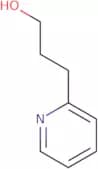
CAS:<p>2-Pyridinepropanol is a tetranuclear compound that contains two nitrogen atoms and two silver ions. It has been shown to be an inhibitor of arthropoda development in the laboratory. 2-Pyridinepropanol also has potent inhibitory activity against the growth of bacteria, including Staphylococcus aureus and Pseudomonas aeruginosa. This compound was synthesized from 2-benzoylbenzoic acid, which is a product of the plant metabolism. The structure of this molecule was determined by X-ray crystallography and electrochemical studies.<br>2-Pyridinepropanol binds to the bacterial enzyme hydrogenase, which catalyzes the production of hydrogen gas, thereby inhibiting its activity (hydrogenase is an enzyme that catalyses the reduction of protons to hydrogen gas).</p>Formula:C8H11NOPurity:Min. 95%Color and Shape:Colorless PowderMolecular weight:137.18 g/mol3-Thiopheneacetic acid
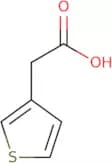
CAS:<p>3-Thiopheneacetic acid (3-TAA) is an insoluble polymer that can be used in analytical chemistry to measure the concentration of sodium carbonate. This polymer is prepared by reacting 3-thiophenecarboxylic acid with sodium carbonate. 3-TAA is a white powder and soluble in water, but insoluble in organic solvents. The transfer reactions of 3-TAA have been studied using electrochemical impedance spectroscopy and thermal expansion measurements. Due to its redox potential, it has been shown to be a potent inhibitor of human serum albumin transport and also inhibits the activity of enzymes such as glyceraldehyde phosphate dehydrogenase, phosphofructokinase, and pyruvate kinase.</p>Formula:C6H6O2SPurity:Min. 97.5 Area-%Color and Shape:White PowderMolecular weight:142.18 g/mol7-Azaindole
CAS:<p>7-Azaindole is a chemical compound that can be used as a building block in organic synthesis. It can be used as a reactant in the preparation of other chemicals, such as dyes, rubber accelerators, and pharmaceuticals. 7-Azaindole is also useful as an intermediate in the production of polymers, such as polyurethanes and polyesters. This chemical is soluble in water and alcohols, but insoluble in ethers and chloroform. 7-Azaindole has been classified by the International Agency for Research on Cancer (IARC) as Group 3: Not Classifiable as to its Carcinogenicity to Humans.</p>Formula:C7H6N2Purity:Min. 98.0 Area-%Molecular weight:118.14 g/molRef: 3D-A-9500
1kgTo inquire5kgTo inquire250gTo inquire500gTo inquire2500gTo inquire-Unit-kgkgTo inquire4-(1-Adamantyl)aniline
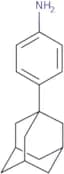
CAS:<p>4-(1-Adamantyl)aniline is a monomer with electron-deficient properties. It can be synthesized from 1-adamantanol and trifluoroacetic acid, followed by hydrolysis to remove the trifluoromethyl group. 4-(1-Adamantyl)aniline has been shown to have high cytotoxicity against tumor cells in vitro. This compound also inhibits the production of necrosis factor, an inflammatory cytokine that plays an important role in many pathological processes, such as septic shock and acute respiratory distress syndrome.</p>Formula:C16H21NPurity:Min. 95%Color and Shape:White PowderMolecular weight:227.34 g/mol1-Anilinonaphthalene-8-sulphonic acid magnesium
CAS:<p>Trifluoroacetic acid is a hydrophobic molecule that has been used in the synthesis of 1-anilinonaphthalene-8-sulphonic acid magnesium. The magnesium salt of this compound is soluble in water and can be obtained as a white solid. Trifluoroacetic acid has been shown to have anti-inflammatory effects by binding to chloride ions, which are present in high concentrations on the surface of inflamed cells. Trifluoroacetic acid also has a surfactant property, which may be due to its ability to form micelles with fatty acids. This property is important for drug absorption because it helps solubilize lipophilic drugs and improve their bioavailability.</p>Formula:(C16H13NO3S)2•MgPurity:Min. 95%Color and Shape:PowderMolecular weight:623 g/mol4-Amino-2-bromobenzonitrile
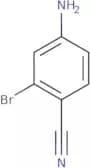
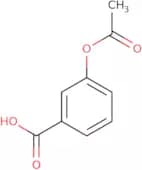
CAS:<p>4-Amino-2-bromobenzonitrile is a crystallized ligand with a molecular formula of C6H7BrN. It belongs to the cationic class of ligands and has been shown to form intermolecular hydrogen bonds with aromatic rings. The crystal has a hexagonal unit cell and space group P-1. 4-Amino-2-bromobenzonitrile has been used as an elemental analysis reagent in the determination of copper, lead, zinc, and cadmium.</p>Formula:C7H5BrN2Purity:Min. 95%Color and Shape:PowderMolecular weight:197.03 g/mol3-Acetoxybenzoic acid
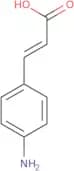
CAS:<p>3-Acetoxybenzoic acid is a metabolite of 3-hydroxybenzoic acid, which is an intermediate in the biosynthesis of salicylic acid. It has been shown to have antibacterial properties and may be used as a topical treatment for skin infections caused by staphylococcus. 3-Acetoxybenzoic acid also has antiviral properties, which may be related to its ability to bind histone H3. 3-Acetoxybenzoic acid inhibits leishmania infantum growth and development by binding to chloride ions and preventing the formation of hydrogen bonds in the cell membrane. This prevents chloride ions from entering the cell and causes water channels to close, leading to dehydration and death.</p>Formula:C9H8O4Purity:Min. 95%Color and Shape:PowderMolecular weight:180.16 g/mol4-Aminocinnamic acid
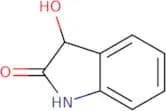
CAS:<p>4-Aminocinnamic acid is a monomer that can be polymerized to form polymers. It is soluble in organic solvents and is resistant to UV light. 4-Aminocinnamic acid has been shown to have photochemical properties and can be used to produce hydrogen bonds with other molecules. This compound has been used as a carbon source for microbial growth and has been shown to be an effective genetic control agent for the bacteria Escherichia coli. 4-Aminocinnamic acid has also been shown to inhibit the growth of butyric acid producing bacteria, such as Clostridium butyricum, while promoting the growth of lactic acid producing bacteria, such as Lactobacillus plantarum.</p>Formula:C9H9NO2Purity:90%Color and Shape:PowderMolecular weight:163.17 g/mol3-Hydroxy-2,3-dihydro-1H-indol-2-one
CAS:<p>3-Hydroxy-2,3-dihydro-1H-indol-2-one (3HID) is a heterocyclic compound that contains a trifluoroacetate group. It is an intermediate in the synthesis of histamine, serotonin, and melatonin. 3HID is an inhibitor of the growth factor receptor, which inhibits the proliferation of human liver cells. 3HID also has a strong affinity for basic proteins such as albumin and hemoglobin. These interactions are thought to be important for its cytotoxic activity in cancer cells. 3HID can be synthesized by reacting acetyl chloride with 2-aminobutyric acid in the presence of potassium hydroxide or sodium hydroxide at room temperature, followed by hydrolysis with water. The reaction produces 3HID and acetic acid, which can be removed by distillation. The product can then be purified by recrystallization from methanol or</p>Formula:C8H7NO2Purity:Min. 95%Color and Shape:PowderMolecular weight:149.15 g/mol3-Amino-2,4,6-triiodobenzoic acid
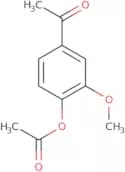
CAS:<p>3-Amino-2,4,6-triiodobenzoic acid (3AIBA) is a chemical compound that is used as a contrast agent for medical imaging. It has been shown to be useful in the diagnosis of bladder cancer, and is used in the embolization of renal artery and ureteral calculi. 3AIBA functions by binding to the antigen binding sites on the tumor cells and allows visualization with X-rays. It has also been shown to be effective in reducing blood flow in tumors by blocking blood vessels with its cationic monomer. 3AIBA binds to the phosphate groups on DNA and causes crosslinking, which prevents DNA polymerase from binding with DNA. This inhibits DNA synthesis and cell division.</p>Formula:C7H4I3NO2Purity:Min. 95%Color and Shape:PowderMolecular weight:514.83 g/mol4-Acetoxy-3-methoxyacetophenone
CAS:<p>4-Acetoxy-3-methoxyacetophenone is a phenol that belongs to the group of phenolates. It is an oxidation product of eugenol, which is formed during the reaction of eugenol with halides, such as chlorine or bromine. 4-Acetoxy-3-methoxyacetophenone has been shown to be a potent inhibitor of the growth of bacteria, including Staphylococcus aureus and Escherichia coli. This compound has been studied by x-ray crystallography and it has been found to have a conformation that reproduces well in different conditions. The molecule contains a carbonyl group and an oxygenated group that are essential for its properties.</p>Formula:C11H12O4Purity:Min. 95%Color and Shape:White PowderMolecular weight:208.21 g/mol3-Amino-4-methylbenzonitrile
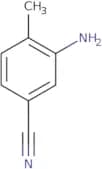
CAS:<p>3-Amino-4-methylbenzonitrile is an organic compound that is produced by the oxidative dehydrogenation of 3,4-dimethylaniline. It has been shown to undergo a number of reactions, including hydrochloric acid transfer hydrogenation and diazotization. This reaction yields 3-amino-4-methylbenzonitrile, dimethylamine and anilines. The transfer hydrogenation of nitroarenes with 3-amino-4-methylbenzonitrile gives 3-(3,4)-diaminobenzonitrile and 2,6-dinitrotoluene. The optimization of this reaction has led to the discovery of new nitrite derivatives as a result of the addition of nitrite in the presence of 3-amino-4-methylbenzonitrile.</p>Formula:C8H8N2Purity:Min. 95%Color and Shape:PowderMolecular weight:132.16 g/mol2-Acetoxybenzonitrile
CAS:<p>2-Acetoxybenzonitrile is an atypical, acidic organic compound with a molecular weight of 136.06 g/mol. It has a melting point of -5.5 °C and decomposes spontaneously at high temperatures to form benzonitrile, carbon dioxide, and water. 2-Acetoxybenzonitrile is able to act as a competitive inhibitor of acetylsalicylic acid (ASA) in the kinetic determination of ASA using acetylation as the rate-determining step. In this experiment, 2-acetoxybenzonitrile was found to be an effective inhibitor of acetylation with a KI value of 1.8 x 10 M. The spectrometer can be used to determine the molecular weight and purity of 2-acetoxybenzonitrile by measuring its absorbance in the ultraviolet region.<br>2-Acetoxybenzonitrile binds metal cations such as Cu(II), Fe(</p>Formula:C9H7NO2Purity:Min. 95%Color and Shape:Clear LiquidMolecular weight:161.16 g/mol4-Acetamidocinnamic acid
CAS:<p>4-Acetamidocinnamic acid is a useful building block for many different organic synthesis reactions. It can be used as a reagent, research chemical or specialty chemical, and is often used as a reaction component or intermediate in the synthesis of complex compounds. 4-Acetamidocinnamic acid is also a versatile building block with many applications in organic synthesis. It has been shown to be useful as a scaffold in synthesizing peptides and other bioactive molecules.</p>Formula:C11H11NO3Purity:Min. 95%Color and Shape:PowderMolecular weight:205.21 g/mol3-Hydroxyindole
CAS:<p>3-Hydroxyindole is a fine chemical that can be used as a versatile building block, useful intermediate, and research chemical. It is a complex compound that can be used to make compounds with a wide variety of properties. 3-Indole has been used in the synthesis of high quality reagents and as a reaction component. 3-Indole is soluble in water and other solvents such as ethanol and acetone. Its CAS number is 480-93-3.</p>Formula:C8H7NOMolecular weight:133.15 g/mol4-Acetoxyacetophenone
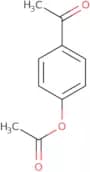
CAS:<p>4-Acetoxyacetophenone is an organic compound that has a functional group with a hydroxyl group. It can undergo dehydration to form acetone and acetic acid, which are the reaction products. The reaction system is activated by a reactive or acid catalyst, and the reaction solution is made up of non-polar solvents. Hydrogenation reduction can be used to synthesize 4-Acetoxyacetophenone from 2-hydroxyacetophenone.</p>Formula:C10H10O3Purity:Min. 95%Color and Shape:PowderMolecular weight:178.18 g/mol