Building Blocks
This section contains fundamental products for the synthesis of organic and biological compounds. Building blocks are the essential starting materials used to construct complex molecules through various chemical reactions. They play a critical role in drug discovery, material science, and chemical research. At CymitQuimica, we offer a diverse range of high-quality building blocks to support your innovative research and industrial projects, ensuring you have the essential components for successful synthesis.
Subcategories of "Building Blocks"
- Boronic Acids & Boronic Acid Derivatives(5,756 products)
- Chiral Building Blocks(1,242 products)
- Hydrocarbon Building Blocks(6,095 products)
- Organic Building Blocks(61,055 products)
Found 199650 products of "Building Blocks"
Sort by
Purity (%)
0
100
|
0
|
50
|
90
|
95
|
100
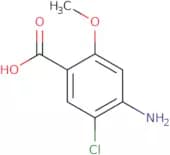
4-Amino-5-chloro-2-methoxybenzoic acid
CAS:<p>4-Amino-5-chloro-2-methoxybenzoic acid is a compound that has been shown to be a potent 5-HT4 receptor agonist. It is used in the treatment of obesity and diabetes. The molecular structure of 4-Amino-5-chloro-2-methoxybenzoic acid consists of a carbonyl group and an amine group, which are bound to each other by a covalent bond. This molecule is found to bind to the 5HT4 receptor with high affinity, which leads to its efficacy as an antiobesity agent.</p>Formula:C8H8ClNO3Color and Shape:White PowderMolecular weight:201.61 g/mol2-Amino-5-methylbenzoic acid
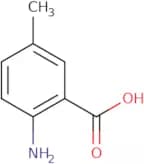
CAS:<p>2-Amino-5-methylbenzoic acid is an anthranilic acid derivative that has been shown to have potent antitumor activity. It inhibits the growth of cancer cells and is effective against light emission. 2-Amino-5-methylbenzoic acid blocks the production of porphyrins, which are necessary for the production of heme, a cofactor in many enzymes. The compound also inhibits serine protease, which is involved in tumor cell proliferation and metastasis.<br>2-Amino-5-methylbenzoic acid has been shown to inhibit the growth of human liver cancer cells in vitro. This compound can be synthesized by a Suzuki coupling reaction with phenylacetic acid and 3-(2'-aminoethyl)aminobenzene.</p>Formula:C8H9NO2Purity:Min. 95%Color and Shape:PowderMolecular weight:151.16 g/mol6-Amino-9H-purine-9-propanoic acid
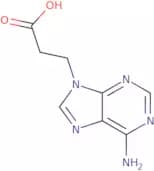
CAS:<p>6-Amino-9H-purine-9-propanoic acid is an acid lactam that belongs to the class of dihedral molecules. It is a colorless solid that crystallizes in plates, which have been shown to have a strong affinity for ammonium ions. 6-Amino-9H-purine-9-propanoic acid has been shown to be a substrate for the enzyme purine nucleoside phosphorylase, which catalyzes the phosphorolysis of nucleosides with the release of inorganic phosphate and ribose 5'-phosphate. The molecule can also react with electron radiation to form gamma rays, which may lead to its use as a molecular probe.</p>Formula:C8H9N5O2Purity:Min. 95%Color and Shape:PowderMolecular weight:207.19 g/mol2-Aminoacridone
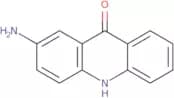
CAS:<p>2-Aminoacridone is a fluorescent dye. The applications of 2-Aminoacridone are extensive in biochemical and analytical research. It is commonly employed in glycoprotein and glycoconjugate studies, leveraging its high sensitivity and specificity in detecting saccharide structures. Researchers utilize this dye in various assays, including high-performance liquid chromatography (HPLC) and electrophoresis, to analyze carbohydrate content and structure. Its role is critical in advancing our understanding of carbohydrate-related biological processes, such as cell signaling and disease pathogenesis, facilitating developments in both diagnostics and therapeutic strategies.</p>Formula:C13H10N2OPurity:Min. 95%Color and Shape:PowderMolecular weight:210.23 g/mol4-Aminobenzoic acid
CAS:<p>4-Aminobenzoic acid is a chemical compound that can be used as an antibacterial agent in wastewater treatment. It has been shown to be effective against Aerobacter aerogenes and other bacteria. 4-Aminobenzoic acid is a basic compound with an aromatic ring and four amine groups. It is often used in the synthesis of polymers, pharmaceuticals, dyes, and pigments. The polymerase chain reaction (PCR) technique uses 4-aminobenzoic acid as a cofactor for DNA synthesis. Electrochemical impedance spectroscopy (EIS) is another application of this chemical compound in which it acts as a redox mediator in the electrical circuit. 4-Aminobenzoic acid also has been shown to have toxic effects on bowel disease cells, which may be due to its ability to react with nucleophilic groups on cell surfaces or by inhibiting the production of essential proteins or enzymes within the cells</p>Formula:C7H7NO2Purity:Min. 98 Area-%Color and Shape:PowderMolecular weight:137.14 g/mol4-Aminoindole hydrochloride
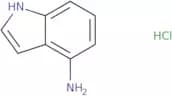
CAS:<p>4-Aminoindole hydrochloride is a white crystalline solid that can be used as a versatile building block in organic synthesis. It is also used as an intermediate in the production of various pharmaceuticals and other chemical compounds. 4-Aminoindole hydrochloride is soluble in most polar solvents, but insoluble in ethers and oils. This compound is also a useful reagent for the conversion of nitrobenzenes to aminobenzoic acids. CAS Number 174854-93-4</p>Formula:C8H9ClN2Purity:Min. 95%Color and Shape:PowderMolecular weight:168.62 g/mol4-Aminopyridine N-oxide
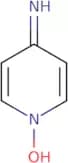
CAS:<p>4-Aminopyridine N-oxide is a white, crystalline solid that is soluble in water and alcohol. It has a molecular weight of 128.2 and formula weight of 135.2. 4-Aminopyridine N-oxide reacts with acid solutions to produce nitrous acid and ammonia gas. The rate of the reaction depends on the concentration of aminopyridine and aniline, as well as the pH of the solution. The acetylation, diazotisation, and kinetics have also been studied extensively for this compound. Nitrous acid can react with amides to form azulene, which can then react with amines to form a molecule containing nitrogen, oxygen, carbon, hydrogen and one other element or compound from each group (e.g., NHCOCH). This reaction is reversible when solvents are present.br> 4-Aminopyridine N-oxide may be used as a precursor for other organic</p>Formula:C5H6N2OPurity:Min. 95%Color and Shape:Slightly Yellow PowderMolecular weight:110.11 g/molAsoxime chloride
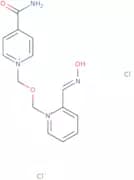
CAS:<p>A Hagedorn oxime used in the treatment of organophosphate poisoning.</p>Formula:C14H16Cl2N4O3Purity:Min. 95%Color and Shape:PowderMolecular weight:359.21 g/mol4-Amino-1-(2-deoxy-2-fluoro-β-D-arabinofuranosyl)-2(1H)-pyrimidinone
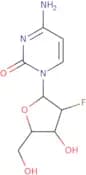
CAS:<p>Please enquire for more information about 4-Amino-1-(2-deoxy-2-fluoro-β-D-arabinofuranosyl)-2(1H)-pyrimidinone including the price, delivery time and more detailed product information at the technical inquiry form on this page</p>Formula:C9H12FN3O4Purity:Min. 95%Molecular weight:245.21 g/mol1,5-Anhydro-D-glucitol 6-dihydrogenphosphate disodium
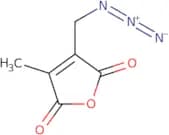
CAS:<p>Please enquire for more information about 1,5-Anhydro-D-glucitol 6-dihydrogenphosphate disodium including the price, delivery time and more detailed product information at the technical inquiry form on this page</p>Formula:C6H13O8P•Na2Purity:Min. 95%Molecular weight:290.12 g/mol3-(Azidomethyl)-4-methyl-2,5-dihydrofuran-2,5-dione, 1M in acetonitrile
CAS:Please enquire for more information about 3-(Azidomethyl)-4-methyl-2,5-dihydrofuran-2,5-dione, 1M in acetonitrile including the price, delivery time and more detailed product information at the technical inquiry form on this pageFormula:C6H5N3O3Purity:Min. 95%Color and Shape:PowderMolecular weight:167.12 g/mol1,6-Anhydrochitobiose hydrochloride
<p>Please enquire for more information about 1,6-Anhydrochitobiose hydrochloride including the price, delivery time and more detailed product information at the technical inquiry form on this page</p>Formula:C12H22N2O8•(HCl)xPurity:Min. 95%Color and Shape:PowderMolecular weight:322.31 g/mol2-Amino-3-(furan-3-yl)propanoic acid hydrochloride
CAS:<p>Please enquire for more information about 2-Amino-3-(furan-3-yl)propanoic acid hydrochloride including the price, delivery time and more detailed product information at the technical inquiry form on this page</p>Formula:C7H9NO3•HClPurity:Min. 95%Color and Shape:PowderMolecular weight:191.61 g/mol5-Amino-1-[2,6-dichloro-4-(trifluoromethyl)phenyl]-4-[(trifluoromethyl)sulfinyl]-1H-pyrazole-3-carbonitrile
CAS:<p>5-Amino-1-[2,6-dichloro-4-(trifluoromethyl)phenyl]-4-[(trifluoromethyl)sulfinyl]-1H-pyrazole-3-carbonitrile (TCFP), also known as CX-546, is a photosynthetic activity enhancer that inhibits oxidative injury to chloroplasts. TCFP is a pyrazole ring with a sulfinyl group and a chlorine atom. TCFP has been shown to have no genotoxic or carcinogenic potential in vitro and in vivo studies. TCFP is not active against infectious diseases. TCFP can be used as an analytical reagent for the detection of cytochrome P450 activities in human serum.</p>Formula:C12H4Cl2F6N4OSPurity:Min. 95%Color and Shape:PowderMolecular weight:437.15 g/mol4-(Acetylamino)phenetole
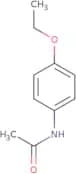
CAS:<p>4-(Acetylamino)phenetole is a drug that belongs to the class of nonsteroidal anti-inflammatory drugs. It is a reactive, toxic chemical that has been shown to inhibit ATP binding cassette transporter (ABC) proteins and can be used for treatment of pain. 4-(Acetylamino)phenetole inhibits cellular energy metabolism by inhibiting an enzyme in the electron transport chain, which prevents the formation of reactive oxygen species necessary for cell growth. 4-(Acetylamino)phenetole also binds to DNA and reduces the transcriptional activity of certain genes. This drug has been found to show cytotoxicity in solid tumours and can be used as a chemotherapeutic agent.</p>Formula:C10H13NO2Purity:Min. 95%Color and Shape:White PowderMolecular weight:179.22 g/mol4-Amino-3-methoxybenzoic acid
CAS:<p>4-Amino-3-methoxybenzoic acid is an inhibitor of the enzyme hydroxylase. It has been shown to inhibit cancer cell growth in nanomolar concentrations and may be a potential anti-cancer drug candidate. 4-Amino-3-methoxybenzoic acid inhibits the production of 3-methoxy-4-nitrobenzoic acid, which is an intermediate in the biosynthesis of cyclic peptides. This compound also has potent inhibitory activity against active enzymes involved in the biosynthesis of 3-methoxy-4-nitrobenzoic acid, such as hydroxylases, nitroreductases, and methyltransferases.</p>Formula:C8H9NO3Purity:Min. 95%Color and Shape:PowderMolecular weight:167.16 g/mol4-Acetamidobenzaldehyde
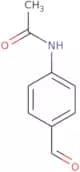
CAS:<p>4-Acetamidobenzaldehyde is an organic compound that has been shown to exhibit inhibitory effects on influenza virus replication in cell culture. 4-Acetamidobenzaldehyde is a dihedral molecule with a p2 group and can be synthesized from benzaldehyde and acetamide. It has also been shown to have potential use in the treatment of tuberculosis. The biological properties of 4-acetamidobenzaldehyde are not well understood, but it is thought that uptake may occur through the imine nitrogen. This molecule has been detected in tissue samples such as lung, liver, and kidney.</p>Formula:C9H9NO2Purity:Min. 95%Color and Shape:PowderMolecular weight:163.17 g/molDL-Asparagine monohydrate
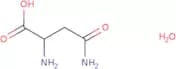
CAS:<p>DL-Asparagine monohydrate is a low potency amino acid that can be used as a biomarker for wastewater treatment. It has been shown to inhibit the activity of enzymes such as guanine nucleotide-binding proteins, toll-like receptors, and response elements. Asparagine also has inhibitory properties against tumour cells in solid tumours.</p>Formula:C4H10N2O4Color and Shape:PowderMolecular weight:150.14 g/molAlafosfalin
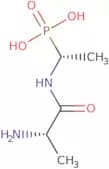
CAS:<p>Antibacterial phosphonopeptide mimic of peptidoglycan dipeptide D-Ala-D-Ala</p>Formula:C5H13N2O4PPurity:Min. 98 Area-%Color and Shape:White PowderMolecular weight:196.14 g/mol(S)-(+)-2-Amino-3-methylbutane
CAS:<p>(S)-(+)-2-Amino-3-methylbutane is a chiral, optically active pyruvate. It can be used as an optical reagent to determine the configuration of an amino acid in the presence of a hydrazone or amine. The 2-amino group is attached to the C1 carbon atom and the methyl group is attached to the C4 carbon atom. Hydrogenolysis of (S)-(+)-2-amino-3-methylbutane produces ethyl pyruvate and hydrogen gas.</p>Formula:C5H13NPurity:Min. 95%Color and Shape:Clear LiquidMolecular weight:87.17 g/mol



![5-Amino-1-[2,6-dichloro-4-(trifluoromethyl)phenyl]-4-[(trifluoromethyl)sulfinyl]-1H-pyrazole-3-car…](/_next/image/?url=https%3A%2Fstatic.cymitquimica.com%2Fproducts%2F3D%2Fthumb-webp%2FFA23290.webp&w=3840&q=75)