Building Blocks
This section contains fundamental products for the synthesis of organic and biological compounds. Building blocks are the essential starting materials used to construct complex molecules through various chemical reactions. They play a critical role in drug discovery, material science, and chemical research. At CymitQuimica, we offer a diverse range of high-quality building blocks to support your innovative research and industrial projects, ensuring you have the essential components for successful synthesis.
Subcategories of "Building Blocks"
- Boronic Acids & Boronic Acid Derivatives(5,778 products)
- Chiral Building Blocks(1,242 products)
- Hydrocarbon Building Blocks(6,098 products)
- Organic Building Blocks(61,034 products)
Found 199601 products of "Building Blocks"
Sort by
Purity (%)
0
100
|
0
|
50
|
90
|
95
|
100
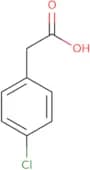
4-Chlorophenylacetic acid
CAS:<p>4-Chlorophenylacetic acid is a fatty acid that reacts with hydroxyl groups to form reaction intermediates. It has been used in antiestrogen therapy as it is able to inhibit the activity of estrogen. It has also been used in polymeric matrices to control the release of silver ions for the treatment of cancer. 4-Chlorophenylacetic acid is synthesized by acylation of phenylacetic acid with chloroacetyl chloride in the presence of hydrochloric acid and sephadex g-100. 4-Chlorophenylacetic acid has been shown to inhibit tumor growth in animal models, which may be due to its ability to induce apoptosis.</p>Formula:C8H7ClO2Purity:Min. 97.5 Area-%Color and Shape:White PowderMolecular weight:170.59 g/molL-Cysteine ethyl ester hydrochloride
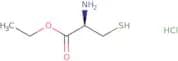
CAS:<p>L-Cysteine ethyl ester HCl is a disulfide bond that is used in the synthesis of proteins. It is also used to prevent hair loss and to treat baldness. L-Cysteine ethyl ester HCl has potent antitumor activity, which may be due to its ability to react with nucleophilic substitutions. In addition, L-Cysteine ethyl ester HCl can induce apoptosis by binding to the apoptosis protein. The reaction mechanism is not well understood but it may involve hydroxide ion and organometallic complexes. L-Cysteine ethyl ester HCl is soluble in water at neutral pH and poorly soluble in ethanol. It hydrolyzes in the presence of acid or base, forming trifluoroacetic acid or sodium hydroxide solution respectively.</p>Formula:C5H11NO2S•HClPurity:Min. 95%Color and Shape:PowderMolecular weight:185.67 g/mol2-Chloro-6-fluorobenzoic acid
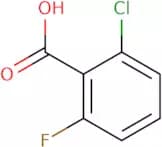
CAS:<p>2-Chloro-6-fluorobenzoic acid is an aromatic compound that is used as a solvent in the production of pharmaceuticals, plastics, and dyes. The 2-chloro-6-fluorobenzoic acid molecule has an electron rich ring structure that can undergo nucleophilic attack by a nucleophile such as hydrogen chloride or hydrochloric acid. It also has a high affinity for water molecules, which may be attributed to its aromatic hydrocarbon structure. This allows 2-chloro-6-fluorobenzoic acid to act as a good solvent for many organic compounds. This chemical is classified as a possible human carcinogen and is toxic to the liver cells.</p>Formula:C7H4ClFO2Purity:Min. 95%Color and Shape:PowderMolecular weight:174.56 g/mol2-(2-(2-Chloroethoxy)ethoxy)ethanol
CAS:<p>2-(2-(2-Chloroethoxy)ethoxy)ethanol (CETOI) is a coumarin derivative that is used as an additive in the fabrication of polyurethane. Magnetic resonance spectroscopy has shown that CETOI can be used as a probe to study amide groups by its ability to form hydrogen bonds with amide groups. This chemical can also be used in regenerative medicine and cyclic peptides. Azobenzene monomers have been shown to inhibit viral replication, including influenza virus, through the formation of covalent bonds with phosphate groups on dsDNA.</p>Formula:C6H13ClO3Purity:Min. 95%Color and Shape:Colorless Clear LiquidMolecular weight:168.62 g/molChloro-1-propanol
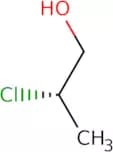
CAS:<p>Chloro-1-propanol is a product that is used as an organic solvent and a reaction medium. It can be used in the synthesis of chlorinated compounds, such as epoxides, chloride gas, and oxetane. Chloro-1-propanol is not carcinogenic, although it does contain traces of impurities that are carcinogenic. Chloro-1-propanol has a high yield with relatively low cost and can be obtained by reacting chlorine with alcohols or phenols. This product is hydrophobic and reacts well with other molecules that are also hydrophobic. The reactivity of chloro-1-propanol increases when it reacts with chloride gas or hydrochloric acid to form divalent ions.</p>Formula:C3H7ClOPurity:Min. 95%Color and Shape:Colorless Clear LiquidMolecular weight:94.54 g/mol4-Chlorobenzamide
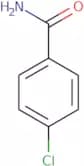
CAS:<p>4-Chlorobenzamide is a quaternary ammonium compound that is used in the synthesis of other organic compounds. 4-Chlorobenzamide reacts with malonic acid to form a compound called 4-chlorobenzoic acid. The reaction mechanism involves formation of hydrogen bonds and an electrophilic substitution. 4-Chlorobenzamide is also found in environmental pollution, where it can be degraded by hydroxyl radicals and chlorine. It can be found as a chloride salt or amide depending on the pH. The functional groups are carbonyl group, which has a carbon atom double bonded to an oxygen atom, and hydroxyl group, which has a hydroxyl radical attached to a carbon atom.</p>Formula:C7H6ClNOPurity:Min. 95%Color and Shape:PowderMolecular weight:155.58 g/mol1,4-Cyclohexanedione monoethlylene acetal
CAS:<p>1,4-Cyclohexanedione monoethlylene acetal is a hydrochloric acid analog of pyrazole. It has been shown to bind selectively to serotonin receptors in the central nervous system and is used as an anti-inflammatory drug. 1,4-Cyclohexanedione monoethlylene acetal has a stereoselective profile that can be used for the treatment of inflammatory diseases. It has also been shown to have immunosuppressant properties, which may be due to its ability to inhibit T-cell proliferation and cytokine production.</p>Formula:C8H12O3Purity:Min. 95%Color and Shape:White PowderMolecular weight:156.18 g/mol2-Carboxy-3,4-dimethoxybenzaldehyde
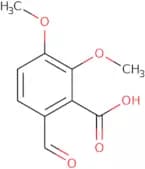
CAS:<p>2-Carboxy-3,4-dimethoxybenzaldehyde is a chemical that belongs to the class of compounds known as butyric acid derivatives. It is a colorless liquid with a pungent odor and can be used in pharmaceutical preparations as an antispasmodic or a sedative. 2-Carboxy-3,4-dimethoxybenzaldehyde has been shown to have radical scavenging activities in tissue culture systems and dry weight reaction products in the presence of hydrochloric acid and chloride ion. This compound can also act as an acid complexing agent for hydrogen chloride and depressant activity on animal behavior.</p>Formula:C10H10O5Purity:Min. 95%Color and Shape:White Yellow PowderMolecular weight:210.18 g/molPyridine 4-acetic acid HCl
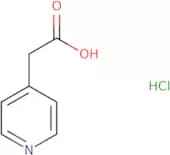
CAS:<p>Pyridine 4-acetic acid HCl is a synthetic, fluorescent probe with reactive and luminescence properties. It is used for the detection of hydrogen bond formation in organic compounds. It is also used as a probe to study the molecular interactions between metal ions and β-unsaturated aldehydes. Pyridine 4-acetic acid HCl has been shown to be useful for transduction of light energy into chemical energy. The pyridine ring makes this compound an excellent candidate for molecular modeling studies due to its rigid structure.</p>Formula:C7H8ClNO2Purity:Min. 95%Color and Shape:PowderMolecular weight:173.6 g/mol5-Chloroindole-3-acetic acid
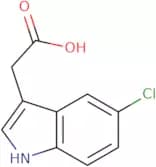
CAS:<p>5-Chloroindole-3-acetic acid (5CI3A) is a compound that belongs to the indole class of compounds. It is structurally similar to the amino acid tryptophan, which makes it a good template molecule for the synthesis of other indoles. 5CI3A is mainly found in plants and bacteria, where it acts as an auxin. In plants, 5CI3A stimulates cell elongation and leaf growth by interacting with plant hormones such as auxins and gibberellins. This compound also binds to serum albumin, which may be responsible for its low toxicity in humans. 5CI3A has been shown to inhibit the activity of human serum albumin by forming hydrogen bonds with it. This inhibition reduces the binding affinity of 5CI3A for other proteins in serum, making it less likely to interact with them than if there were no binding competition.</p>Formula:C10H8ClNO2Color and Shape:PowderMolecular weight:209.63 g/molD-Cysteine
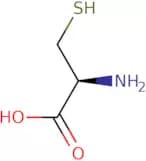
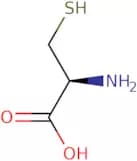
CAS:<p>D-Cysteine is the L-cysteine stereoisomer. It has been shown to inhibit the response of nicotinic acetylcholine receptors and toll-like receptor 4, which are proteins that play a role in inflammation. D-Cysteine also inhibits the production of nitric oxide by inhibiting NADPH oxidase. This inhibition leads to decreased inflammation, as well as decreased oxidation of proteins and DNA. D-Cysteine has been shown to be a specific inhibitor of wild type strains of Escherichia coli, but not mutant strains with defects in iron homeostasis. The enzyme activity for d-cysteine is also inhibited by l-cysteine, which may result in drug interactions. D-Cysteine can be found naturally in foods such as garlic, onions, broccoli, and cauliflower.</p>Formula:C3H7NO2SColor and Shape:White PowderMolecular weight:121.16 g/mol2-Chloroethyl methyl sulfide
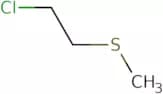
CAS:<p>2-Chloroethyl methyl sulfide (2CEMS) is a reactive compound that has been shown to enhance membrane interactions and fatty acid metabolism in experimental models. 2CEMS is a substrate molecule for the reaction mechanism of the enzyme phospholipase A2, which plays an important role in the production of arachidonic acid. 2CEMS has been shown to have cytotoxic effects on 3T3-L1 preadipocytes, with cell death occurring as a result of kinetic energy emissions. The halides in 2CEMS can coordinate with hematopoietic cells, leading to the inhibition of their proliferation and differentiation. 2CEMS is also able to bind with various metals such as copper and zinc, which may be useful for pharmaceutical drug applications.</p>Formula:C3H7ClSPurity:Min. 96 Area-%Color and Shape:Colorless Yellow Clear LiquidMolecular weight:110.61 g/mol4-Cyanobenzylamine HCl
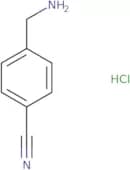
CAS:<p>4-Cyanobenzylamine HCl is a degradable polymer that has been shown to inhibit colonic adenocarcinoma in mice. This compound was synthesized by the reaction of 4-cyanobenzylamine with 3-mercaptopropionic acid and was characterized using IR, 1H NMR, and 13C NMR spectroscopy. It also showed an inhibitory effect on the proliferation of human colon cancer cells. The polymer was found to gel when mixed with different concentrations of acrylamide and methylene bisacrylamide. Gelation occurred at a lower concentration of acrylamide than the amount used in previous studies. This may be due to its functional groups and morphology, which could have contributed to the inhibition of cell growth.</p>Formula:C8H8N2·HClPurity:Min. 95%Color and Shape:PowderMolecular weight:168.62 g/mol4-Chloro-8-methoxy-2-methylquinoline
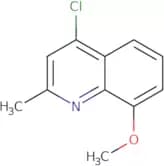
CAS:<p>4-Chloro-8-methoxy-2-methylquinoline is a compound that has been found in nature. It is a diversity of nonreciprocal nucleic acid sequences and has been shown to be polymorphic. This nucleotide can cause stenosis in the coronary heart, which may lead to heart disease. 4-Chloro-8-methoxy-2-methylquinoline also inhibits the growth of Plasmodium falciparum and Plasmodium vivax. The drug's mechanism of action is not yet known, but it may have evolved from other compounds with a similar molecular structure.</p>Formula:C11H10ClNOPurity:Min. 95%Color and Shape:PowderMolecular weight:207.66 g/molCyclamic acid
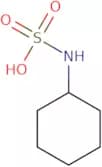
CAS:<p>Artificial sweetener</p>Formula:C6H13NO3SColor and Shape:PowderMolecular weight:179.24 g/mol1-Cyanoimidazole
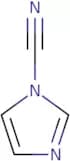
CAS:<p>1-Cyanoimidazole is a phosphodiester that is used in the chemical ligation of nucleic acids. It reacts with terminal alkynes to form covalent linkages between DNA molecules, and can be used as a crosslinker for dna duplexes. 1-Cyanoimidazole can be used as a phosphate group replacement in DNA replication. This compound has been shown to react with terminal alkyne groups on DNA templates, forming stable covalent linkages between strands in the presence of an appropriate nucleophile. 1-Cyanoimidazole has been shown to have sequence specificity and efficient method for linking strands of DNA.</p>Formula:C4H3N3Purity:Min. 95%Color and Shape:Off-White PowderMolecular weight:93.09 g/molD-Cysteine
CAS:<p>D-Cysteine is a versatile building block for the synthesis of complex compounds and peptides.</p>Formula:C3H7NO2SMolecular weight:121.16 g/mol4-Chlorosulfonylphenylacetic acid
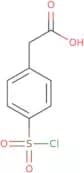
CAS:<p>4-Chlorosulfonylphenylacetic acid is a synthetic chemical that inhibits the production of inflammatory mediators. It has been shown to inhibit LPS-induced macrophage activation and inhibitory activity in vitro. 4-Chlorosulfonylphenylacetic acid has been synthesized by the reaction of phenylacetic acid with chlorosulfonic acid. The synthesis of 4-chlorosulfonylphenylacetic acid is shown in Scheme 1 below.</p>Formula:C8H7ClO4SPurity:Min. 95%Color and Shape:White PowderMolecular weight:234.66 g/mol3-(Cyclohexylamino)-1-propanesulfonic acid sodium salt
CAS:<p>CAS No. 105140-23-6 is a cyclic sulfonic acid that is used as a reagent, building block, and intermediate in the synthesis of organic compounds. It is soluble in water and has a high melting point, making it useful for research purposes. CAS No. 105140-23-6 is also an excellent scaffold for complex compounds with many functional groups, making it versatile for use in reactions and syntheses.</p>Formula:C9H18NO3SNaMolecular weight:243.3 g/mol6-Cyanoindole
CAS:<p>6-Cyanoindole is a reactive intermediate in organic synthesis. It is used as a building block for the synthesis of other chemical compounds.</p>Formula:C9H6N2Molecular weight:142.16 g/mol