


Building Blocks
This section contains fundamental products for the synthesis of organic and biological compounds. Building blocks are the essential starting materials used to construct complex molecules through various chemical reactions. They play a critical role in drug discovery, material science, and chemical research. At CymitQuimica, we offer a diverse range of high-quality building blocks to support your innovative research and industrial projects, ensuring you have the essential components for successful synthesis.
Subcategories of "Building Blocks"
- Boronic Acids & Boronic Acid Derivatives(5,778 products)
- Chiral Building Blocks(1,242 products)
- Hydrocarbon Building Blocks(6,098 products)
- Organic Building Blocks(61,098 products)
Found 199594 products of "Building Blocks"
Sort by
Purity (%)
0
100
|
0
|
50
|
90
|
95
|
100
5-Azetidin-3-yl-3-methyl-[1,2,4]oxadiazole hydrochloride
CAS:<p>5-Azetidin-3-yl-3-methyl-[1,2,4]oxadiazole hydrochloride is a solid that is used as a reagent in the preparation of other chemicals. This chemical has been shown to be useful in the synthesis of complex compounds, such as pharmaceuticals and pesticides.</p>Formula:C6H9N3O•HClPurity:Min. 95%Color and Shape:PowderMolecular weight:175.62 g/mol3-{[(Benzylsulfanyl)methanethioyl]sulfanyl}propanoic acid
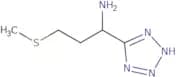
CAS:<p>3-{[(Benzylsulfanyl)methanethioyl]sulfanyl}propanoic acid are essential mediators for reversible addition-fragmentation chain transfer (RAFT) polymerization, common type of controlled radical polymerization.</p>Formula:C11H12O2S3Purity:Min. 95%Color and Shape:PowderMolecular weight:272.4 g/mol(1S)-3-(Methylsulfanyl)-1-(2H-1,2,3,4-tetrazol-5-yl)propan-1-amine
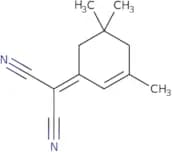
CAS:Versatile small molecule scaffoldFormula:C5H11N5SPurity:Min. 95%Color and Shape:PowderMolecular weight:173.24 g/mol(3,5,5-Trimethylcyclohex-2-enylidene)malononitrile
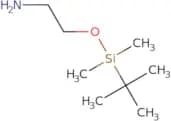
CAS:<p>(3,5,5-Trimethylcyclohex-2-enylidene)malononitrile is a versatile compound that has various applications in different fields. It is commonly used as a research chemical and has shown promising results in the development of new medicaments. Its unique structure and properties make it an ideal candidate for further exploration.</p>Formula:C12H14N2Purity:Min. 95%Molecular weight:186.25 g/mol2-(tert-Butyldimethylsilyloxy)ethanamine
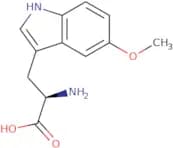
CAS:Versatile small molecule scaffoldFormula:C8H21NOSiPurity:Min. 95%Molecular weight:175.35 g/mol5-Methoxy-D-tryptophan
CAS:<p>5-Methoxy-D-tryptophan is a biaryl amino acid derivative that belongs to the class of alkaloids. It is a chiral monomeric building block derived from D-tryptophan. 5-Methoxy-D-tryptophan is commonly used in research chemicals and has been found in natural products such as lochnerine and indole. This compound exhibits unique properties and can be utilized for various applications in the field of chemistry and biochemistry. Its versatility makes it an essential component for researchers and scientists looking to explore new avenues in their studies.</p>Formula:C12H14N2O3Purity:Min. 95%Color and Shape:PowderMolecular weight:234.25 g/mol5-Methanesulfinylpentanenitrile
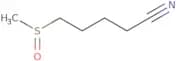
CAS:<p>5-Methanesulfinylpentanenitrile is a compound that is found in plants such as broccoli, cabbage, and cauliflower. It has been shown to have anticarcinogenic properties in cell culture studies. The activity of sulforaphane can be increased by the presence of glucosinolates. Sulforaphane inhibits the synthesis of fatty acids and is metabolized by detoxification enzymes. Amides are formed from sulforaphane, which can be detected using preparative high performance liquid chromatography (prep-HPLC). The water solubility of sulforaphane can be increased by heating it to a temperature above its boiling point so that it becomes supercritical (above its critical temperature). This allows for the preparation of dry weight samples for analysis.</p>Formula:C6H11NOSPurity:Min. 95%Molecular weight:145.23 g/mol5-Hydroxy-2-methoxybenzoic acid
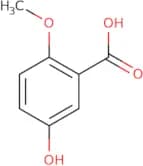
CAS:<p>Apigenin is a flavonoid found in plants of the genus Labiatae, such as chamomile and feverfew. It is a potent anti-inflammatory agent that may be due to its ability to inhibit cyclooxygenase (COX) enzymes and subsequent production of proinflammatory prostaglandins, leukotrienes, and thromboxanes. Apigenin has also been shown to inhibit cancer cell growth by binding to DNA and inhibiting transcription. Apigenin is chemically stable at room temperature and has been used in techniques such as liquid chromatography-mass spectrometry (LC-MS).</p>Formula:C8H8O4Purity:Min. 95%Color and Shape:PowderMolecular weight:168.14 g/mol5-Chloro-indan-2-ylamine hydrochloride
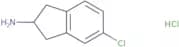
CAS:Controlled Product5-Chloro-indan-2-ylamine hydrochloride is a chemical that can be used as a building block in the synthesis of other chemicals. It is a reagent and useful scaffold in organic synthesis reactions, such as Friedel-Crafts reactions, and can be used to produce indenes. 5-Chloro-indan-2-ylamine hydrochloride is also an intermediate for the production of complex compounds, fine chemicals, and pharmaceuticals. The CAS number for this chemical is 73536-86-4.Formula:C9H10NCl·HClPurity:Min. 95%Color and Shape:PowderMolecular weight:204.09 g/mol4-Azidopiperidine hydrochloride
CAS:<p>4-Azidopiperidine hydrochloride is a chemical compound that is used as a versatile building block in the synthesis of complex chemical compounds. It is also used as a reagent or speciality chemical, and has many applications in research, such as being an intermediate for the synthesis of other chemicals. 4-Azidopiperidine hydrochloride can be used to make useful building blocks, reaction components, and scaffolds for chemical reactions.</p>Formula:C5H11ClN4Purity:Min. 95%Color and Shape:PowderMolecular weight:162.62 g/mol2-Phenoxybenzoic acid
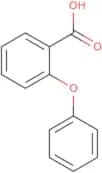
CAS:<p>2-Phenoxybenzoic acid is a hydrochloride salt that is used as a reagent in analytical chemistry. It reacts with the carboxylate group of amino acids, proteins, and peptides to form a stable, water-soluble complex. The reaction is typically monitored by measuring the change in optical density at 260 nm. 2-Phenoxybenzoic acid reacts with bcr-abl kinase and colloidal gold to form an insoluble precipitate that can be detected with electron microscopy. This compound also has biological properties such as inhibiting carbonic anhydrase activity and changing the pH of the solution. 2-Phenoxybenzoic acid was originally synthesized from diphenyl ether and phenol (C6H5OH).<br>2-Phenoxybenzoic acid can be converted into 2-(4-nitrophenoxy) benzoic acid by reacting it with sodium nitrite followed by hydrochloric acid</p>Formula:C13H10O3Purity:Min. 95%Color and Shape:PowderMolecular weight:214.22 g/mol3-Methyl-4-(trifluoromethyl)benzaldehyde
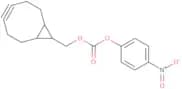
CAS:3-Methyl-4-(trifluoromethyl)benzaldehyde is a high quality research chemical. It is a versatile building block that can be used in the synthesis of complex compounds, such as pharmaceuticals and pesticides. 3-Methyl-4-(trifluoromethyl)benzaldehyde can be used as a reagent to synthesize other chemicals and as a reaction component to produce new organic compounds. 3-Methyl-4-(trifluoromethyl)benzaldehyde has CAS No. 951232-01-2.Formula:C9H7F3OPurity:Min. 95%Color and Shape:PowderMolecular weight:188.15 g/molBCN-PNP carbonate
CAS:<p>BCN-PNP carbonate is a versatile building block that can be used as an intermediate in the synthesis of complex compounds. It has a variety of uses in research and as a reagent for fine chemicals. BCN-PNP carbonate is an effective reaction component for the synthesis of speciality chemicals, which are used for research purposes or as intermediates for pharmaceuticals. BCN-PNP carbonate is also useful scaffold for the synthesis of highly pure, high quality building blocks.</p>Formula:C17H17NO5Purity:Min. 95%Color and Shape:PowderMolecular weight:315.32 g/mol2-[4-(Trifluoromethyl)-1H-imidazol-1-yl]acetic acid
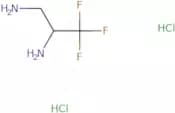
CAS:<p>Versatile small molecule scaffold</p>Formula:C6H5F3N2O2Purity:Min. 95%Color and Shape:PowderMolecular weight:194.11 g/mol3,3,3-Trifluoropropane-1,2-diamine dihydrochloride
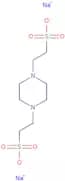
CAS:3,3,3-Trifluoropropane-1,2-diamine dihydrochloride is a high quality chemical that belongs to the group of useful building blocks. It is a versatile and complex compound that can be used in research or as a reagent. 3,3,3-Trifluoropropane-1,2-diamine dihydrochloride is also a reaction component for the synthesis of other compounds. This compound has been used as an intermediate for the production of pharmaceuticals and pesticides. It has been studied for its ability to inhibit protein kinase C (PKC) and calcium ion channels.Formula:C3H7F3N2•(HCl)2Purity:Min. 95%Molecular weight:201.02 g/molPiperazine-1,4-bis(2-ethanesulfonic acid) disodium
CAS:<p>Piperazine-1,4-bis(2-ethanesulfonic acid) disodium (PIPES) is a conjugate that can be used as a catalyst in organic syntheses. PIPES is also used to modulate biological processes, such as the treatment of chronic pain. It has been shown to be an effective inhibitor of cholesterol esterase and gene product, which are enzymes associated with the development of Alzheimer's disease. PIPES has been shown to reduce axonal growth in vitro.</p>Formula:C8H18N2O6S2•Na2Color and Shape:PowderMolecular weight:348.35 g/mol3-azido-4,5-dihydro-1H-benzo[b]azepin-2(3H)-one
CAS:<p>Versatile small molecule scaffold</p>Formula:C10H10N4OPurity:Min. 95%Color and Shape:PowderMolecular weight:202.21 g/mol2-[2-(Morpholin-4-yl)ethoxy]ethan-1-amine
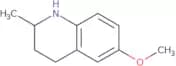
CAS:2-[2-(Morpholin-4-yl)ethoxy]ethan-1-amine is a research chemical that is used as a reagent, reaction component, or building block in the synthesis of more complex compounds. It can be used to synthesize fine chemicals such as pharmaceuticals and agrochemicals.Formula:C8H18N2O2Purity:Min. 95%Color and Shape:Clear LiquidMolecular weight:174.24 g/mol6-Methoxy-2-methyl-1,2,3,4-tetrahydroquinoline
CAS:<p>Versatile small molecule scaffold</p>Formula:C11H15NOPurity:Min. 95%Color and Shape:PowderMolecular weight:177.24 g/mol2-{[(9H-Fluoren-9-yl)methoxy]carbonyl}-1,2,3,4-tetrahydroisoquinoline-6-carboxylic acid
CAS:<p>2-{[(9H-Fluoren-9-yl)methoxy]carbonyl}-1,2,3,4-tetrahydroisoquinoline-6-carboxylic acid is a high quality reagent. It is a useful intermediate for the synthesis of various complex compounds. This compound is also a useful scaffold and building block for research chemicals. 2-{[(9H-Fluoren-9-yl)methoxy]carbonyl}-1,2,3,4-tetrahydroisoquinoline-6-carboxylic acid is versatile in that it can be used as a reaction component in different reactions.</p>Formula:C25H21NO4Purity:Min. 95%Color and Shape:PowderMolecular weight:399.4 g/mol
![5-Azetidin-3-yl-3-methyl-[1,2,4]oxadiazole hydrochloride](/_next/image/?url=https%3A%2Fstatic.cymitquimica.com%2Fproducts%2F3D%2Fthumb-webp%2FKXB30398.webp&w=3840&q=75)

![3-{[(Benzylsulfanyl)methanethioyl]sulfanyl}propanoic acid](/_next/image/?url=https%3A%2Fstatic.cymitquimica.com%2Fproducts%2F3D%2Fthumb-webp%2FXUA93176.webp&w=3840&q=75)


![2-[4-(Trifluoromethyl)-1H-imidazol-1-yl]acetic acid](/_next/image/?url=https%3A%2Fstatic.cymitquimica.com%2Fproducts%2F3D%2Fthumb-webp%2FRXB25564.webp&w=3840&q=75)
![3-azido-4,5-dihydro-1H-benzo[b]azepin-2(3H)-one](/_next/image/?url=https%3A%2Fstatic.cymitquimica.com%2Fproducts%2F3D%2Fthumb-webp%2FLDA49924.webp&w=3840&q=75)
![2-[2-(Morpholin-4-yl)ethoxy]ethan-1-amine](/_next/image/?url=https%3A%2Fstatic.cymitquimica.com%2Fproducts%2F3D%2Fthumb-webp%2FVAA20713.webp&w=3840&q=75)
![2-{[(9H-Fluoren-9-yl)methoxy]carbonyl}-1,2,3,4-tetrahydroisoquinoline-6-carboxylic acid](/_next/image/?url=https%3A%2Fstatic.cymitquimica.com%2Fproducts%2F3D%2Fthumb-webp%2FNKD22621.webp&w=3840&q=75)