Building Blocks
This section contains fundamental products for the synthesis of organic and biological compounds. Building blocks are the essential starting materials used to construct complex molecules through various chemical reactions. They play a critical role in drug discovery, material science, and chemical research. At CymitQuimica, we offer a diverse range of high-quality building blocks to support your innovative research and industrial projects, ensuring you have the essential components for successful synthesis.
Subcategories of "Building Blocks"
- Boronic Acids & Boronic Acid Derivatives(5,756 products)
- Chiral Building Blocks(1,242 products)
- Hydrocarbon Building Blocks(6,095 products)
- Organic Building Blocks(61,051 products)
Found 199813 products of "Building Blocks"
Sort by
Purity (%)
0
100
|
0
|
50
|
90
|
95
|
100
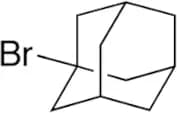
1-Adamantyl Bromide
CAS:Controlled Product<p>Applications Shows some anti-viral activity due to the adamantane structure. In addition it shows anti-microbial activity and cytotoxic application.<br>References Aigami, K. et al.: J. Med. Chem., 18, 713 (1975); Aigami, K. et al.: J. Pharm. Res., 4, 1407 (2011);<br></p>Formula:C10H15BrColor and Shape:Off-White To BeigeMolecular weight:215.13Adipic Acid Monoethyl Ester
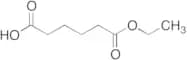
CAS:Controlled Product<p>Applications Adipic Acid Monoethyl Ester is used in the selection of streptavidin binder from DNA-encoded chemical library. Reagent in the synthetic preparation of colchicine-SAHA hybrids as antitumor agents.<br>References Dumelin, C. E., et al.: Bioconjugate Chemistry, 17,366 (2006); Zhang, X., et al.: Bioorg. Med. Chem., 21, 3240 (2013)<br></p>Formula:C8H14O4Color and Shape:NeatMolecular weight:174.1941-Naphthyl Isocyanate
CAS:<p>Stability Moisture Sensitive<br>Applications 1-Naphthyl Isocyanate was used in the preparation of cationic aromatic urethane.<br> Not a dangerous good if item is equal to or less than 1g/ml and there is less than 100g/ml in the package<br>References McEntyre, C.J., et al.: Anal. Chim. Acta, 644, 90-94 (2009)<br></p>Formula:C11H7NOColor and Shape:Colourless To Light YellowMolecular weight:169.184-Fluorobenzoic Acid Methyl Ester
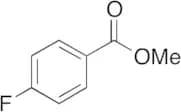
CAS:Controlled Product<p>Applications 4-Fluorobenzoic Acid Methyl Ester, is an organic fluorinated building block used for the synthesis of various pharmaceutical compounds. It can be used for the preparation of Blonanserin (B595850).<br>References Wang, J., et al.: Zhongguo Yiyao Gongye Zazhi, 40, 247 (2009);<br></p>Formula:C8H7FO2Color and Shape:Clear ColourlessMolecular weight:154.14(S)-3-Amino-4-(2,4,5-trifluorophenyl)butanoic Acid Hydrochloride
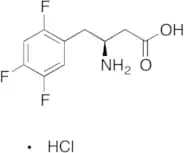
CAS:Controlled Product<p>Applications (S)-3-Amino-4-(2,4,5-trifluorophenyl)butanoic Acid Hydrochloride is used as a reagent in the synthesis of valuable β-amylalkyl-β-amino acid enantiomers.<br>References Tasnadi, G., et al.: Org. Biomol. Chem., 8, 793 (2010)<br></p>Formula:C10H10F3NO2·HClColor and Shape:Off WhiteMolecular weight:269.654-Fluorobenzenesulfonyl Chloride
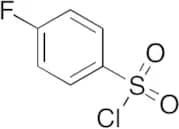
CAS:Controlled Product<p>Applications 4-Fluorobenzenesulfonyl Chloride is found to be an excellent activating agent for the covalent attachment of biological substances to a variety of solid supports e.g. Sepharose beads. 4-Fluorobenzenesulfonyl Chloride is also used as a reagent for the studies of proteins by fluorine NMR.<br> Not a dangerous good if item is equal to or less than 1g/ml and there is less than 100g/ml in the package<br>References Chang, Y.A., et al.: Bioconjugate Chem., 3, 200 (1992); Liao, T.H., et al.: Anal. Biochem., 148, 365 (1985)<br></p>Formula:C6H4ClFO2SColor and Shape:NeatMolecular weight:194.615-Fluoroanthranilic Acid
CAS:Controlled Product<p>Applications Used for the counterselection of TRP1, a commonly used genetic marker in the yeast Saccharoyces Cerevisiae. An antimetabolite for the tryptophan pathway in yeast, and is toxic by virtue of its antimetabolite conversion to 5-Fluorotryptophan. It can be used for the selection of tryptophan auxotroophs.<br>References Toyn, J.H., et al.: Yeast, 16, 553, 560 (2000)<br></p>Formula:C7H6FNO2Color and Shape:NeatMolecular weight:155.131,2-Naphthoquinone (90%)
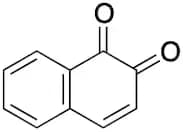
CAS:Controlled ProductFormula:C10H6O2Purity:90%Color and Shape:NeatMolecular weight:158.151-(4-Ethoxycarbonylphenyl)piperazine
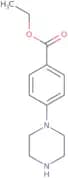
CAS:<p>1-(4-Ethoxycarbonylphenyl)piperazine is an enantiopure phosphatase inhibitor. It is used in the treatment of cancer and other life-threatening diseases. 1-(4-Ethoxycarbonylphenyl)piperazine inhibits phosphatases, which are enzymes that catalyze hydrolysis of phosphate groups from substrates. This inhibition leads to a decrease in the production of fatty acids and cholesterol, resulting in a reduction in body mass index. The drug has been shown to be effective against animal models for cancer, with an effective dose of 100 mg/kg intraperitoneally. In addition, 1-(4-ethoxycarbonylphenyl)piperazine has been shown to inhibit cardiac phosphatases and increase cardiac uptake by inhibiting acylation reactions.</p>Formula:C13H18N2O2Purity:Min. 98%Color and Shape:White PowderMolecular weight:234.29 g/molN-Acetyl-3-hydroxyindole
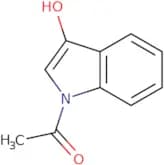
CAS:<p>N-Acetyl-3-hydroxyindole is a chemical compound that can be used as a building block for other organic compounds. It is an intermediate in the synthesis of 3-amino-2,4,6-trichloropyrimidine, which is used in the synthesis of some pharmaceuticals and pesticides. N-Acetyl-3-hydroxyindole has been shown to react with thiourea to yield 2-(3,4-dihydroxyphenyl)acetic acid. It also reacts with hydroxylamine to produce 2-(aminooxymethyl)pyrrolidinone. N-Acetyl-3-hydroxyindole has been shown to have antioxidant properties, which may be due to its ability to reduce lipid peroxidation and scavenge reactive oxygen species.</p>Formula:C10H9NO2Purity:Min. 98.0 Area-%Molecular weight:175.19 g/molAgaric acid
CAS:<p>Agaric acid is a high-quality, versatile chemical that is used as an intermediate in many organic and biochemistry reactions. It is also used as a reagent for the isolation of metals such as silver and gold. As a complex compound, it has many uses, including being a useful building block in the synthesis of various drugs. Agaric acid can be used to produce other chemicals such as speciality chemicals or research chemicals</p>Formula:C22H40O7Molecular weight:416.56 g/molRef: 3D-A-3920
1gTo inquire5gTo inquire250mgTo inquire500mgTo inquire2500mgTo inquire-Unit-ggTo inquire2-Amino-6-chlorobenzoic acid
CAS:<p>2-Amino-6-chlorobenzoic acid is a fine chemical that is used as a reagent or speciality chemical.</p>Formula:C7H6ClNO2Molecular weight:171.58 g/mol5-Aminoindole
CAS:<p>5-Aminoindole is a versatile chemical intermediate that can be used in the synthesis of many different types of compounds. It has been used as a building block for the synthesis of complex molecules, such as antibiotics and other pharmaceuticals. 5-Aminoindole is also useful in research because it is a reagent that can be used to study the reaction between proteins and nucleic acids. This chemical reacts with calf thymus DNA to produce 5-aminoindole phosphate, which can then react with an activated phosphate group on a protein or nucleic acid. 5-Aminoindole is a high quality reagent that will provide you with excellent results in your experiments.</p>Formula:C8H8N2Molecular weight:132.17 g/mol2-Amino-5-iodobenzoic acid
CAS:<p>Please enquire for more information about 2-Amino-5-iodobenzoic acid including the price, delivery time and more detailed product information at the technical inquiry form on this page</p>Formula:C7H6INO2Molecular weight:263.04 g/mol5-Amino-2-nitrobenzoic acid
CAS:<p>5-Amino-2-nitrobenzoic acid is a useful chemical building block that is used in the synthesis of complex compounds and useful scaffolds.</p>Formula:C7H6N2O4Molecular weight:182.13 g/molRef: 3D-A-6800
25gTo inquire50gTo inquire100gTo inquire250gTo inquire500gTo inquire-Unit-ggTo inquire5-Amino-2-nitrobenzoic acid
CAS:<p>5-Amino-2-nitrobenzoic acid is an organic compound that belongs to the class of versatile building block. It is a white solid that has been used as a research chemical, reagent, and specialty chemical for the synthesis of complex compounds and pharmaceuticals. 5-Amino-2-nitrobenzoic acid is also known as 2-amino-5-chlorobenzoic acid (ACBA). It is soluble in water, but insoluble in ethanol. The CAS number for this chemical is 13280-60-9.</p>Formula:C7H6N2O4Molecular weight:182.14 g/molRef: 3D-A-6802
1kgTo inquire100gTo inquire250gTo inquire500gTo inquire2500gTo inquire-Unit-ggTo inquire5-Amino-2-nitrobenzoic acid
CAS:<p>5-Amino-2-nitrobenzoic acid is a versatile compound that can be used as a reagent, a reaction component, or as a useful scaffold in research. It reacts with alcohols to produce esters and amides. The high quality of this chemical makes it suitable for use in many different reactions. CAS No. 13280-60-9</p>Formula:C7H6N2O4Molecular weight:182.14 g/molRef: 3D-A-6803
1kgTo inquire100gTo inquire250gTo inquire500gTo inquire2500gTo inquire-Unit-ggTo inquireDL-Asparagine monohydrate
CAS:<p>DL-Asparagine monohydrate is a white crystalline powder that is soluble in water. It has been used as a building block for the synthesis of various compounds and as a reaction component in chemical research.</p>Formula:C4H10N2O4Molecular weight:150.14 g/mol7-Azaindole
CAS:<p>7-Azaindole is a chemical compound that can be used as a building block in organic synthesis. It can be used as a reactant in the preparation of other chemicals, such as dyes, rubber accelerators, and pharmaceuticals. 7-Azaindole is also useful as an intermediate in the production of polymers, such as polyurethanes and polyesters. This chemical is soluble in water and alcohols, but insoluble in ethers and chloroform. 7-Azaindole has been classified by the International Agency for Research on Cancer (IARC) as Group 3: Not Classifiable as to its Carcinogenicity to Humans.</p>Formula:C7H6N2Purity:Min. 98.0 Area-%Molecular weight:118.14 g/molRef: 3D-A-9500
1kgTo inquire5kgTo inquire250gTo inquire500gTo inquire2500gTo inquire-Unit-kgkgTo inquire