


Building Blocks
This section contains fundamental products for the synthesis of organic and biological compounds. Building blocks are the essential starting materials used to construct complex molecules through various chemical reactions. They play a critical role in drug discovery, material science, and chemical research. At CymitQuimica, we offer a diverse range of high-quality building blocks to support your innovative research and industrial projects, ensuring you have the essential components for successful synthesis.
Subcategories of "Building Blocks"
- Boronic Acids & Boronic Acid Derivatives(5,756 products)
- Chiral Building Blocks(1,242 products)
- Hydrocarbon Building Blocks(6,095 products)
- Organic Building Blocks(61,051 products)
Found 199813 products of "Building Blocks"
Sort by
Purity (%)
0
100
|
0
|
50
|
90
|
95
|
100
Diallyl Tetrasulfide (>85%)
CAS:Controlled ProductFormula:C6H10S4Purity:>85%Color and Shape:NeatMolecular weight:210.4041-(Bromomethyl)pyrene
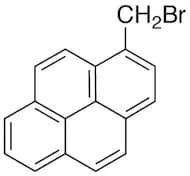
CAS:Controlled Product<p>Applications 1-(Bromomethyl)pyrene (cas# 2595-90-6) is a compound useful in organic synthesis.<br></p>Formula:C17H11BrColor and Shape:NeatMolecular weight:295.17Triphosgene (Technical grade)
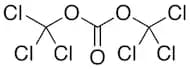
CAS:Controlled Product<p>Applications An efficient carbonylating agent for liquid and solid-phase aza-peptide synthesis.<br> Not a dangerous good if item is equal to or less than 1g/ml and there is less than 100g/ml in the package<br>References Ferrari, B., et al.: Bioorg. Med. Chem. Lett., 4, 45 (1994),<br></p>Formula:C3Cl6O3Color and Shape:NeatMolecular weight:296.75Tris(2-aminoethyl)amine
CAS:Controlled Product<p>Applications Tris(2-aminoethyl)amine is a tetradentate chelating ligand and forms stable complexes with transition metals.<br> Not a dangerous good if item is equal to or less than 1g/ml and there is less than 100g/ml in the package<br>References Xu, C., et al.: J. Mater. Chem. A, 3, 16229-16234 (2015); Sietzen, M., et al.: Organometallics, 34, 1118-1128 (2015);<br></p>Formula:C6H18N4Color and Shape:NeatMolecular weight:146.2342,2,2-Triphenylacetic Acid
CAS:<p>Applications 2,2,2-Triphenylacetic Acid is used in preparation of Rhodium(II) Tetramethyl-benzenedipropioate complex, other Carboxylate complexes, and their catalytic activity.<br>References Martinez-Castro, E., et al.: Organic Process Research & Development, et al.: 24, 1207-1212 (2020);<br></p>Formula:C20H16O2Color and Shape:NeatMolecular weight:288.341-Bromo-3-methylbutane
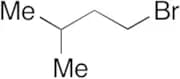
CAS:Controlled Product<p>Applications 1-Bromo-3-methylbutane, is used as an extraction solvent to determine various polycyclic aromatic hydrocarbons in water samples though dispersive liquid-liquid microextraction along with GC-MS (gas chromatography- mass spectrometry).<br> Not a dangerous good if item is equal to or less than 1g/ml and there is less than 100g/ml in the package<br>References Rezaee, M., et al.: J. Chromat. A., 1116, 1 (2006)<br></p>Formula:C5H11BrColor and Shape:NeatMolecular weight:151.04Potassium Phthalimide
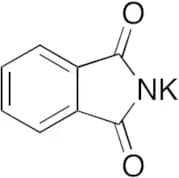
CAS:Controlled Product<p>Applications Potassium Phthalimide is a green, solid-base organocatalys.<br>References Kiyani, H., Ghiasi, M.: Chinese Chem. Lett., 25, 313 (2014)<br></p>Formula:C8H4NO2·KColor and Shape:NeatMolecular weight:185.222-Pinene
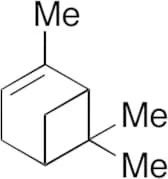
CAS:Controlled Product<p>Applications 2-Pinene is found in the oils of many species of many coniferous trees, notably the pine. At low exposure levels, 2-Pinene is a bronchodilator in humans, and is highly bioavailable with 60% human pulmonary uptake with rapid metabolism or redistribution. 2-Pinene is an anti-inflammatory via PGE1, and seems to be a broad-spectrum antibiotic.<br> Not a dangerous good if item is equal to or less than 1g/ml and there is less than 100g/ml in the package<br>References Russo, E.: Brit. J. Pharmacol, 163, 1344 (2011); Nissen, L., et al.: Fitoterapia 81, 413 (2010)<br></p>Formula:C10H16Color and Shape:ColourlessMolecular weight:136.231,2,3,4-Tetrahydroquinoxaline-5-carboxylic acid
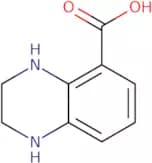
CAS:<p>1,2,3,4-Tetrahydroquinoxaline-5-carboxylic acid is a versatile building block that can be used in the synthesis of complex compounds with a wide range of applications. It has been shown to be useful as a reagent in research chemicals and as a speciality chemical. 1,2,3,4-Tetrahydroquinoxaline-5-carboxylic acid is also used in the preparation of high quality pharmaceuticals and is an important intermediate for the synthesis of drugs. The compound can also be used as a scaffold for drug design.</p>Formula:C9H10N2O2Purity:Min. 95%Color and Shape:PowderMolecular weight:178.19 g/mol6-bromo-2,3-dihydro-1-benzofuran-3-ol
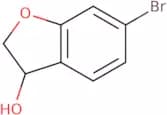
CAS:<p>Versatile small molecule scaffold</p>Formula:C8H7BrO2Purity:Min. 95%Color and Shape:PowderMolecular weight:215.05 g/mol5-(2-Bromoethyl)-4-methyl-1,3-thiazole
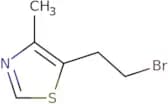
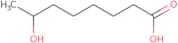
CAS:<p>Versatile small molecule scaffold</p>Formula:C6H8BrNSPurity:Min. 95%Molecular weight:206.11 g/mol7-Hydroxyoctanoic acid
CAS:<p>7-Hydroxyloctanoic acid is a fatty acid that is naturally present in the human body. It is also found in dairy products and some vegetables. 7-Hydroxyoctanoic acid can be converted to isocaproic acid by the enzyme 3-hydroxyacyl coenzyme A dehydrogenase (HAD). HAD deficiency can lead to the accumulation of 7-hydroxyloctanoic acid, which may cause symptoms such as fatigue, dizziness, and mental confusion. The conversion of 7-hydroxyloctanoic acid to isocaproic acid is important for the production of energy from fats, so an HAD deficiency can lead to low levels of energy production.</p>Formula:C8H16O3Purity:Min. 95%Color and Shape:Clear LiquidMolecular weight:160.21 g/mol3-Hydroxy-3,4-dihydro-2H-1-benzopyran-4-one
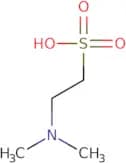
CAS:<p>Versatile small molecule scaffold</p>Formula:C9H8O3Purity:Min. 95%Color and Shape:PowderMolecular weight:164.16 g/mol2-(Dimethylamino)ethane-1-sulfonic acid
CAS:<p>2-(Dimethylamino)ethane-1-sulfonic acid (DMAES) is a sulfonamide drug that binds to basic proteins and has been used in the treatment of microbial infections. DMAES has been shown to bind to human serum albumin, which may be due to its ability to form a covalent bond with the sulfur on the protein. The binding constant for DMAES with human serum albumin is about 5x10 M. The clinical response in patients treated with DMAES was found to depend on the binding constant between DMAES and human serum albumin. The binding constants for DMAES with other proteins have also been studied. These include erythrocyte membrane protein, myelin basic protein, and ganglioside GM1. In addition, it has been found that DMAES can bind to ganglia cells of rat brain tissue by forming a covalent bond with amino acids such as lysine residues</p>Formula:C4H11NO3SPurity:Min. 95%Color and Shape:PowderMolecular weight:153.2 g/mol6-Bromo-3h-imidazo[4,5-β]pyridine-5-carboxylic acid
CAS:<p>Versatile small molecule scaffold</p>Formula:C7H4BrN3O2Purity:Min. 95%Color and Shape:PowderMolecular weight:242.03 g/mol6,7-Dimethoxy-1-methyl-1,2,3,4-tetrahydro-isoquinoline
CAS:<p>6,7-Dimethoxy-1-methyl-1,2,3,4-tetrahydroisoquinoline is a trifluoroacetic acid derivative that inhibits the synthesis of dopamine by inhibiting the enzyme tyrosine hydroxylase. It has been shown to be an inhibitor of tissue culture cells and natural compounds. The compound was synthesized from allyl carbonate and pueraria lobata in an asymmetric synthesis with a magnesium salt as a catalyst.</p>Formula:C12H17NO2Purity:Min. 90%Color and Shape:PowderMolecular weight:207.27 g/mol1-Bromopentane
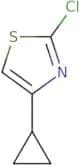
CAS:<p>1-Bromopentane is a colorless liquid that has an unpleasant odor. It is soluble in water and reacts with acids to form bromides. 1-Bromopentane has been used as an oxidation catalyst in the preparation of organic compounds under conditions of constant pressure and light exposure. It has also been used in the synthesis of polymers, such as poly(1-bromopentene). Its biological properties are not well known, but it has been shown to have CB2 receptor agonist activity and inhibitory effects on oxidative stress. The chemical kinetic data for 1-bromopentane are available at various temperatures and pressures. Chloride ions can act as catalysts for its decomposition reaction, which is a stepwise process involving the conversion of hydroxyl groups into chloride atoms. The reaction mechanism starts with the conversion of one bromine atom into a radical by abstraction of a hydrogen atom from the molecule followed by addition of another brom</p>Formula:C5H11BrPurity:Min. 98 Area-%Color and Shape:Colorless Clear LiquidMolecular weight:151.04 g/mol2-Chloro-4-cyclopropyl-1,3-thiazole
CAS:<p>Versatile small molecule scaffold</p>Formula:C6H6ClNSPurity:Min. 90%Color and Shape:Clear LiquidMolecular weight:159.64 g/moltert-Butyl N-[2-(chlorosulfonyl)ethyl]carbamate
CAS:<p>Versatile small molecule scaffold</p>Formula:C7H14ClNO4SPurity:Min. 95%Molecular weight:243.71 g/mol




![3-[(4-Phenylacetamide) ethylamino] propanenitrile-d7](/_next/image/?url=https%3A%2Fstatic.cymitquimica.com%2Fproducts%2FTR%2Fthumb-webp%2FP479851.webp&w=3840&q=75)

![6-Bromo-3h-imidazo[4,5-β]pyridine-5-carboxylic acid](/_next/image/?url=https%3A%2Fstatic.cymitquimica.com%2Fproducts%2F3D%2Fthumb-webp%2FPKB93941.webp&w=3840&q=75)


![tert-Butyl N-[2-(chlorosulfonyl)ethyl]carbamate](/_next/image/?url=https%3A%2Fstatic.cymitquimica.com%2Fproducts%2F3D%2Fthumb-webp%2FJFA01973.webp&w=3840&q=75)