Building Blocks
This section contains fundamental products for the synthesis of organic and biological compounds. Building blocks are the essential starting materials used to construct complex molecules through various chemical reactions. They play a critical role in drug discovery, material science, and chemical research. At CymitQuimica, we offer a diverse range of high-quality building blocks to support your innovative research and industrial projects, ensuring you have the essential components for successful synthesis.
Subcategories of "Building Blocks"
- Boronic Acids & Boronic Acid Derivatives(5,756 products)
- Chiral Building Blocks(1,242 products)
- Hydrocarbon Building Blocks(6,095 products)
- Organic Building Blocks(61,055 products)
Found 199650 products of "Building Blocks"
Sort by
Purity (%)
0
100
|
0
|
50
|
90
|
95
|
100
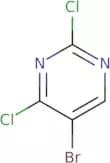
5-Bromo-2,4-dichloropyrimidine
CAS:<p>5-Bromo-2,4-dichloropyrimidine is an aryl halide compound that is synthesized from 2,4-dichloropyrimidine and bromine. It has been shown to have inhibitory activities against cancer cells in vitro. 5-Bromo-2,4-dichloropyrimidine is used in the synthesis of the drug palbociclib (also known as PLX4720), which prevents mitotic progression by binding to the mitotic checkpoint protein (e.g., cyclin B). The reaction yield for this compound is low and its absorption enhancer properties are not well understood. 5-Bromo-2,4-dichloropyrimidine has also been used in conjunction with crotonic acid as a potential anticancer agent.</p>Formula:C4HBrCl2N2Purity:Min. 95%Color and Shape:Off-White Clear LiquidMolecular weight:227.87 g/mol5-Bromo-7-azaindole
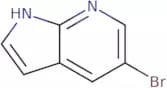
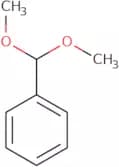
CAS:<p>5-Bromo-7-azaindole is a nitrogen heterocycle that has shown promising anti-cancer properties. This compound is synthesized by the reaction of sodium azide and 5-bromo-2,4,6-trinitrobenzene in anhydrous conditions. 5-Bromo-7-azaindole displays significant cytotoxicity against human ovarian carcinoma cells in vivo and inhibits the proliferation of cancer cells by binding to ATP synthase. The anticancer activity of this compound is due to its ability to inhibit the synthesis of DNA and RNA, which are vital for cell division. 5-Bromo-7-azaindole also shows an increase in hydrogen bonding, which can be used to explain its structural analysis.</p>Formula:C7H5BrN2Purity:Min. 98 Area-%Color and Shape:PowderMolecular weight:197.03 g/molBenzaldehyde dimethyl acetal
CAS:<p>Vegetable, nutty and floral flavour/fragrance</p>Formula:C9H12O2Purity:Min. 95%Color and Shape:Clear LiquidMolecular weight:152.19 g/molBenzylamine
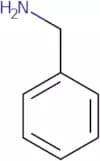
CAS:<p>Substrate of benzylamine oxidase and monoamine oxidase B</p>Formula:C7H9NPurity:Min. 98.0 Area-%Color and Shape:Colorless Slightly Yellow Clear LiquidMolecular weight:107.15 g/mol2,2'-Bipyridine-6,6'-dicarboxylic acid
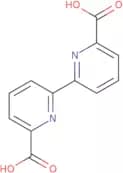
CAS:<p>2,2'-Bipyridine-6,6'-dicarboxylic acid is a molecule that has an acidic functional group. It has been found to have a molecular weight of 220.2 g/mol and is soluble in water at elevated temperatures. 2,2'-Bipyridine-6,6'-dicarboxylic acid has been shown to be photoprocessable in the presence of sodium carbonate as a catalyst. The reaction rate can be increased by adding a diluent to the solution or by using linear models.</p>Formula:C12H8N2O4Purity:Min. 95%Color and Shape:Off-White PowderMolecular weight:244.21 g/mol2-Aminoethyl Acetate Hydrochloride
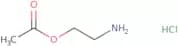
CAS:<p>Versatile small molecule scaffold</p>Formula:C4H9NO2·HClPurity:Min. 95%Color and Shape:PowderMolecular weight:139.58 g/mol5-(4-Chloro-phenyl)-2-methyl-2H-pyrazole-3-carboxylic acid
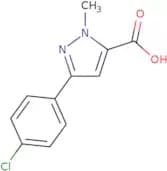
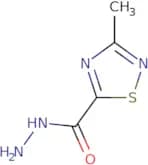
CAS:<p>Versatile small molecule scaffold</p>Formula:C11H9ClN2O2Purity:Min. 95%Molecular weight:236.65 g/mol3-Methyl-1,2,4-thiadiazole-5-carbohydrazide
CAS:3-Methyl-1,2,4-thiadiazole-5-carbohydrazide is an intermediate in the synthesis of fezolinetant. It can be used as a pharmaceutical intermediate.Formula:C4H6N4OSPurity:Min. 95%Molecular weight:158.18 g/mol2,3-Dihydroxy-3-phenylpropanoic acid
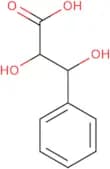
CAS:<p>2,3-Dihydroxy-3-phenylpropanoic acid is a monocarboxylic acid and a benzenes. It has been shown to have antimicrobial properties against bacteria such as Staphylococcus aureus, Proteus vulgaris, and Klebsiella pneumoniae. The monocarboxylic acid inhibits bacterial growth by binding to the beta subunit of the enzyme DNA gyrase, which is necessary for DNA replication. 2,3-Dihydroxy-3-phenylpropanoic acid also binds to the beta subunit of the enzyme RNA polymerase and prevents mRNA synthesis, thus inhibiting protein synthesis in bacteria. !-- --> !-- --> !-- --> !-- --> !-- --> !-- --> !-- --></p>Formula:C9H10O4Purity:Min. 95%Color and Shape:PowderMolecular weight:182.17 g/mol3-Amino-2-hydroxybenzonitrile
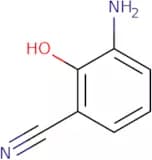
CAS:<p>3-Amino-2-hydroxybenzonitrile is a chemical that can be used as a building block in the synthesis of other compounds. It is also a versatile intermediate for organic synthesis and can be used for the production of pharmaceuticals, agrochemicals, and many other materials. 3-Amino-2-hydroxybenzonitrile is a white solid with a melting point of 203 degrees Celsius. It has high purity, low impurities, and a high quality.</p>Formula:C7H6N2OPurity:Min. 95%Color and Shape:PowderMolecular weight:134.14 g/mol4',6'-Dihydrospiro[cyclopropane-1,5'-pyrrolo[1,2-b]pyrazole]-2'-carboxylic acid
CAS:<p>4,6-Dihydrospiro[cyclopropane-1,5'-pyrrolo[1,2-b]pyrazole]-2'-carboxylic acid is a fine chemical that can be used as a versatile building block in the manufacture of complex compounds. CAS No. 2287271-02-5 is a high quality research chemical and reagent that can be used to synthesize speciality chemicals and useful intermediates. It is also an important reaction component in the synthesis of useful scaffolds.</p>Formula:C9H10N2O2Purity:Min. 95%Color and Shape:PowderMolecular weight:178.19 g/mol4-Chloro-2-methyl-5-(propan-2-yl)phenol
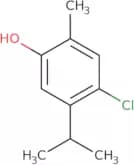
CAS:<p>4-Chloro-2-methyl-5-(propan-2-yl)phenol (4CMPP) is a synthetic compound that belongs to the group of fatty alcohols. It is used in clinical diagnostics for the detection of cancer cells. 4CMPP was detected in the human plasma and erythrocytes using solid phase microextraction (SPME). The homologues of 4CMPP were also identified. The chemical structure of 4CMPP consists of a chain with two methyl groups and a phenolic group at opposite ends. This compound has been shown to be cytotoxic, as well as an inhibitor of translation and protein synthesis.</p>Formula:C10H13ClOPurity:Min. 95%Color and Shape:PowderMolecular weight:184.66 g/mol3,3-Diphenylpropylamine
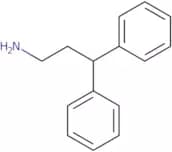
CAS:<p>3,3-Diphenylpropylamine is an organic compound that is used in the analytical method for infectious diseases. It has been shown to be stable under acidic conditions and can be hydrolyzed by enzymes to form 3,3-diphenylpropionic acid. This chemical is also an enantiomer of 2,2-diphenylpropanolamine. The hydrochloride salt of 3,3-diphenylpropylamine has been used as a pharmaceutical preparation for the treatment of gastric ulcers. This drug has pharmacokinetic properties that include a long half-life and low oral bioavailability.</p>Formula:C15H17NPurity:Min. 95%Color and Shape:PowderMolecular weight:211.31 g/mol4,6-Difluorobenzene-1,3-dicarbonitrile
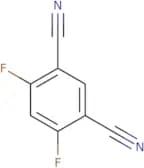
CAS:<p>Symmetrical functionalised aromatic</p>Formula:C8H2F2N2Purity:Min. 95%Color and Shape:PowderMolecular weight:164.11 g/mol{2-Bromo-4-[(2-chlorophenyl)methoxy]-5-methoxyphenyl}methanamine
CAS:<p>This is a chemical intermediate with the CAS No. 937598-86-2. It is a versatile building block that can be used to synthesize new drugs and pharmaceuticals, as well as other fine chemicals. This compound has been shown to be useful in reactions such as the formation of heterocycles, the synthesis of complex compounds, and the preparation of research chemicals. The high quality of this chemical makes it suitable for use in many different types of reactions.</p>Formula:C15H15BrClNO2Purity:Min. 95%Color and Shape:PowderMolecular weight:356.64 g/molCilostazol Related Compound C
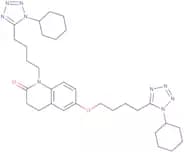
CAS:<p>Cilostazol is a drug that is used to treat the symptoms of intermittent claudication. It is a quinone-type inorganic base, obtained by the hydration of cilostazol. Cilostazol is an inhibitor of phosphodiesterase type 3 (PDE3) and has been shown to inhibit platelet aggregation, which may be due to its ability to inhibit PDE3 and prevent the breakdown of cyclic guanosine monophosphate (cGMP).</p>Formula:C31H45N9O2Purity:Min. 95%Color and Shape:PowderMolecular weight:575.75 g/mol3-Hydroxyheptanoic acid
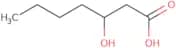
CAS:<p>3-Hydroxyheptanoic acid is a synthetic fatty acid that has been shown to have anti-cancer activity in vitro and in vivo. 3-Hydroxyheptanoic acid binds to the hydrophobic amino acids found in the membrane of cancer cells, preventing them from functioning as a transporter for nutrients and oxygen. This leads to cell death by depriving cells of vital nutrients. 3-Hydroxyheptanoic acid also inhibits the growth of mutant cells that have lost their ability to repair DNA damage, which may be due to its inhibition of protein synthesis. The hydrophobic nature of this molecule may also inhibit cancer cell invasion by inhibiting fatty acid synthase and other enzymes involved in lipid production.</p>Formula:C7H14O3Purity:Min. 95%Color and Shape:PowderMolecular weight:146.18 g/molCinnolin-4-amine
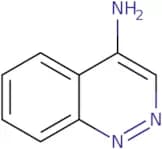
CAS:<p>Cinnolin-4-amine is a protonated cinnoline that has been shown to have tumor-localizing properties. Cinnolin-4-amine has been shown to be cytotoxic to human tumor xenografts in mice, and this activity was demonstrated to be mediated by its interaction with the receptor for the angiotensin II type 1 receptor. It also inhibits the growth of tumor cells in culture by inhibiting DNA synthesis and protein synthesis. Cinnolin-4-amine has been shown to produce antihypertensive effects in animals and humans, which may be due to its ability to decrease blood pressure via inhibition of the sympathetic nervous system.</p>Formula:C8H7N3Purity:Min. 95%Color and Shape:PowderMolecular weight:145.16 g/mol2,3-Dihydroxy-3-methylbutanoic acid
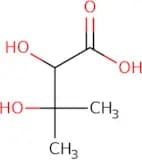
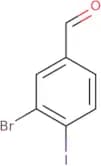
CAS:<p>2,3-Dihydroxy-3-methylbutanoic acid (2,3DMB) is a hydrophobic molecule that is used as an activator of the butyric acid pathway. This activation mechanism has been shown in vitro with the use of 2,3DMB and racemase to convert isovaleric acid into butyric acid. The activation mechanism can be seen in vivo by synthesizing 2,3DMB from its constituent parts: magnesium ion and a monocarboxylic acid. The reaction occurs when magnesium ion binds to the carboxyl group of a monocarboxylic acid in the presence of water. In this reaction, water acts as a base to remove hydrogen ions from the carboxyl group and release protons. The protonated carboxyl group then reacts with magnesium ion to form an intermediate compound called Grignard reagent. The Grignard reagent will react with water to form an</p>Formula:C5H10O4Purity:Min. 95%Color and Shape:PowderMolecular weight:134.13 g/mol3-Bromo-4-iodobenzaldehyde
CAS:<p>Versatile small molecule scaffold</p>Formula:C7H4BrIOPurity:Min. 95%Color and Shape:PowderMolecular weight:310.91 g/mol

![4',6'-Dihydrospiro[cyclopropane-1,5'-pyrrolo[1,2-b]pyrazole]-2'-carboxylic acid](/_next/image/?url=https%3A%2Fstatic.cymitquimica.com%2Fproducts%2F3D%2Fthumb-webp%2FMRD27102.webp&w=3840&q=75)
![{2-Bromo-4-[(2-chlorophenyl)methoxy]-5-methoxyphenyl}methanamine](/_next/image/?url=https%3A%2Fstatic.cymitquimica.com%2Fproducts%2F3D%2Fthumb-webp%2FMMB59886.webp&w=3840&q=75)