


Building Blocks
This section contains fundamental products for the synthesis of organic and biological compounds. Building blocks are the essential starting materials used to construct complex molecules through various chemical reactions. They play a critical role in drug discovery, material science, and chemical research. At CymitQuimica, we offer a diverse range of high-quality building blocks to support your innovative research and industrial projects, ensuring you have the essential components for successful synthesis.
Subcategories of "Building Blocks"
- Boronic Acids & Boronic Acid Derivatives(5,756 products)
- Chiral Building Blocks(1,242 products)
- Hydrocarbon Building Blocks(6,095 products)
- Organic Building Blocks(61,051 products)
Found 199813 products of "Building Blocks"
Sort by
Purity (%)
0
100
|
0
|
50
|
90
|
95
|
100
3-Hydroxypropionic Acid, in aq solution (with varying amounts of 3,3'-Oxydipropanoic Acid)
CAS:<p>Applications 3-Hydroxypropionic Acid induces gene expressions and also functions as a reagent for industrial application.<br>References Zhou, S., et al.: Biotechnol. Biofuels, 8, 169 (2015)<br></p>Formula:C3H6O3Color and Shape:ColourlessMolecular weight:90.0783-Chlorosalicylic Acid
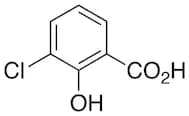
CAS:<p>Applications 3-Chlorosalicylic Acid (cas# 1829-32-9) is a compound useful in organic synthesis.<br>References Shackelford, J.M.: J.O.C., 26, 4908 (1961)<br></p>Formula:C7H5ClO3Color and Shape:NeatMolecular weight:172.573,5-Tolylenediamine
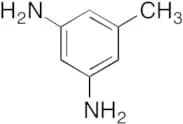
CAS:Controlled Product<p>Applications 3,5-Tolylenediamine, is a building block<br> Not a dangerous good if item is equal to or less than 1g/ml and there is less than 100g/ml in the package<br></p>Formula:C7H10N2Color and Shape:NeatMolecular weight:122.17Trimethyl Orthovalerate
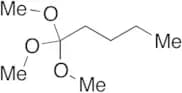
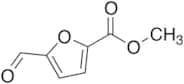
CAS:Controlled Product<p>Stability Unstable in acidic solution<br>Applications Trimethyl Orthovalerate is used in the synthesis of dihydropyran-4-ones, via the Maitland-Japp reaction, which can be converted stereoselectively into tetrahydropyran-4-ones. This conversion is useful in the study of the functionalized tetrahydropyran units that are found in the anticancer polyketide lasonolide A and the Civet fragrance which is used in perfumery.<br> Not a dangerous good if item is equal to or less than 1g/ml and there is less than 100g/ml in the package<br>References Clarke, P., et al.: Org. Biomol. Chem., 13, 4743 (2015)<br></p>Formula:C8H18O3Color and Shape:NeatMolecular weight:162.23methyl 5-formylfuran-2-carboxylate
CAS:Controlled ProductFormula:C7H6O4Color and Shape:NeatMolecular weight:154.12Monopropyl Phthalate
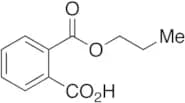
CAS:<p>Applications Phthalate ester metabolite used to study the role of peroxisome proliferator-activated receptor (PPAR) in the mediating effects of phthalates and metabolites in the liver. Studies suggest that it may possess testicular toxicity.<br>References Lapinskas, P.J. et al.: Toxicology, 207, 149 (2005); Watanabe, N. et al.: J. Health Sci., 48, 527 (2002);<br></p>Formula:C11H12O4Color and Shape:NeatMolecular weight:208.212-Chloro-1,3-thiazole-5-carboxylic Acid
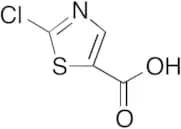
CAS:<p>Applications 2-Chloro-5-thiazolecarboxylic Acid (C411465) was studied as one of the metabolites of thiamethoxam, clothianidin, and dinotefuran in mice.<br>References Ford, K., et al.: Chem. Res. Toxicol., 19, 1549 (2006);<br></p>Formula:C4H2ClNO2SColor and Shape:NeatMolecular weight:163.5826-Carboxyindole
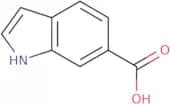
CAS:<p>6-Carboxyindole is an indole that binds to the IL-17A receptor, which leads to the production of pro-inflammatory cytokines. It has been shown to be involved in autoimmune diseases and other inflammatory conditions. 6-Carboxyindole can be used as a probe for studying the biology of IL-17A, by binding to it and inhibiting its effects. The chemical structure of 6-carboxyindole is also useful for diagnostic purposes, as it can bind to antibodies and antigens for detecting infectious diseases or other biological processes. 6-Carboxyindole can be used in the treatment of heart tissue by binding with monoclonal antibodies that are specific for cardiac proteins such as myosin light chain kinase.</p>Formula:C9H7NO2Purity:Min. 95%Molecular weight:161.16 g/mol3-Fluoro-3-phenylazetidine hydrochloride
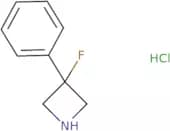
CAS:<p>3-Fluoro-3-phenylazetidine hydrochloride is a versatile building block that can be used in the synthesis of complex compounds. This compound has been shown to have high quality and is a useful reagent for research chemists. 3-Fluoro-3-phenylazetidine hydrochloride is also used as a valuable intermediate for the preparation of many important organic compounds, including pharmaceuticals and agrochemicals. It has been shown to be an effective scaffold for the synthesis of new chemical compounds with high drug potential.</p>Formula:C9H11ClFNPurity:Min. 95%Color and Shape:PowderMolecular weight:187.64 g/molN,O-Bis-acetyl-L-tyrosine
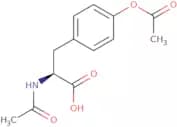
CAS:N,O-Bis-acetyl-L-tyrosine is a bioreversible acetylated amino acid that is synthesized from L-tyrosine. It can be used in the preparation of creatine kinase. N,O-Bis-acetyl-L-tyrosine has been shown to bind to the aromatic residues on creatine kinase and inhibit its activity. The acetylation of lysine residues may be reversible, but this process requires the presence of a hydroxyl group on the tyrosine residue. This reaction is catalyzed by a lysine residue on creatine kinase. Studies have shown that the kinetic properties of N,O-Bis-acetyl-L-tyrosine are similar to those of L-tyrosine and therefore it can be used as an alternative substrate for creatine biosynthesis.Formula:C13H15NO5Purity:Min. 98 Area-%Color and Shape:White PowderMolecular weight:265.26 g/molLithium bis(trifluoromethanesulfonimide)
CAS:<p>Lithium bis(trifluoromethanesulfonimide) is a salt that is used in analytical chemistry as a reagent for the preparation of lithium salts. The sample should be dissolved in an organic solution and then reacted with lithium bis(trifluoromethanesulfonimide). Lithium bis(trifluoromethanesulfonimide) has been shown to have good transport properties, but the reaction mechanism is not well-understood. It has an activation energy of approximately 18 kcal/mol and can decompose at high temperatures. Lithium bis(trifluoromethanesulfonimide) can also react with strong acids or bases, so it is necessary to use an electrolyte when preparing the solution.</p>Formula:C2F6LiNO4S2Purity:Min 98%Color and Shape:White Off-White PowderMolecular weight:287.09 g/mol5-Bromo-2-nitrobenzoic acid
CAS:<p>5-Bromo-2-nitrobenzoic acid is a chemical compound that belongs to the group of bromonitrobenzenes. It is an important intermediate in organic chemistry and has been used as a reagent for the synthesis of various heterocyclic compounds. 5-Bromo-2-nitrobenzoic acid can be used as a building block for pharmaceuticals, agrochemicals, dyes, and other chemicals. This versatile chemical has been widely used in research and development as a reaction component for synthesizing pharmaceuticals or speciality chemicals or as a building block to produce useful scaffolds.</p>Formula:C7H4BrNO4Purity:Min. 95%Color and Shape:Slightly Yellow PowderMolecular weight:246.02 g/molLys(Boc)-OtBu,HCl
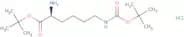
CAS:<p>Lys(Boc)-OtBu,HCl is a versatile building block and research chemical that can be used for the synthesis of complex compounds. This compound is a useful intermediate and reaction component in organic chemistry. It is also a reagent that can be used to synthesize high-quality chemical products.</p>Formula:C15H30N2O4·HClPurity:Min. 95%Color and Shape:White PowderMolecular weight:338.87 g/mol2-[2-(Morpholin-4-yl)ethoxy]ethan-1-amine
CAS:2-[2-(Morpholin-4-yl)ethoxy]ethan-1-amine is a research chemical that is used as a reagent, reaction component, or building block in the synthesis of more complex compounds. It can be used to synthesize fine chemicals such as pharmaceuticals and agrochemicals.Formula:C8H18N2O2Purity:Min. 95%Color and Shape:Clear LiquidMolecular weight:174.24 g/molN-Methyl-beta-alaninenitrile
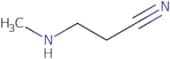
CAS:<p>Formamide is a colorless gas with a pungent, irritating odor. It is used as an antiseptic and an intermediate in the production of other organic compounds. Formamide has been shown to be effective against animal-derived pathogens such as Covid-19 and influenza A/H5N1, and it has been proposed as a potential treatment for pandemic influenza. Formamide reacts with chlorine to produce formate salt (formic acid), which can then be converted into amines or hexamethylphosphoramide. The reaction rate of formamide increases with increasing temperature, but decreases with increasing concentration of hydrogen.<br>Formamide is also used as a solvent in microscopy to dissolve tissue samples for analysis by electron microscopy techniques.</p>Formula:C4H8N2Purity:Min. 98 Area-%Color and Shape:Colorless Clear LiquidMolecular weight:84.12 g/mol2,3-Butanedione monoxime
CAS:<p>2,3-Butanedione monoxime (BDM) is a metabolite of the glycol ether, 2,3-butanedione. It has been shown to have a beneficial effect on metabolic disorders in rats by modulating several enzyme activities. The optimum concentration of BDM is 2 mmol/L. This compound has also been shown to inhibit the oxidation of xanthine oxidase and the formation of hydroxyl radicals in vitro. BDM has also been found to have synchronous fluorescence with papillary muscles from guinea pigs and cytosolic ca2+ levels in rat liver cells. The structure analysis revealed that BDM binds to the active site of the x-ray crystal structures for mitochondrial cytochrome C oxidase and cardiac ATP synthase with an affinity similar to that of CoQ10. The Langmuir adsorption isotherm for BDM was calculated as 0.913 +/- 0.034 cm/g at 20 degrees Celsius,</p>Formula:C4H7O2NPurity:(%) Min. 99%Color and Shape:White PowderMolecular weight:101.1 g/mol2-Iodo-4-phenyl-1,3-oxazole
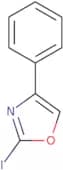
CAS:<p>Versatile small molecule scaffold</p>Formula:C9H6INOPurity:Min. 95%Color and Shape:PowderMolecular weight:271.05 g/mol2-(1-Methyl-4-oxo-1,4-dihydro-5H-pyrazolo[3,4-d]pyrimidin-5-yl)acetohydrazide
CAS:Controlled Product<p>2-(1-Methyl-4-oxo-1,4-dihydro-5H-pyrazolo[3,4-d]pyrimidin-5-yl)acetohydrazide is a fine chemical that is a versatile building block in the synthesis of complex compounds. It is also a useful intermediate for the synthesis of pharmaceuticals and agrochemicals. CAS No. 938018-24-7</p>Formula:C8H10N6O2Purity:Min. 95%Molecular weight:222.2 g/mol






![2-[2-(Morpholin-4-yl)ethoxy]ethan-1-amine](/_next/image/?url=https%3A%2Fstatic.cymitquimica.com%2Fproducts%2F3D%2Fthumb-webp%2FVAA20713.webp&w=3840&q=75)

![2-(1-Methyl-4-oxo-1,4-dihydro-5H-pyrazolo[3,4-d]pyrimidin-5-yl)acetohydrazide](/_next/image/?url=https%3A%2Fstatic.cymitquimica.com%2Fproducts%2F3D%2Fthumb-webp%2FNMB01824.webp&w=3840&q=75)