Building Blocks
This section contains fundamental products for the synthesis of organic and biological compounds. Building blocks are the essential starting materials used to construct complex molecules through various chemical reactions. They play a critical role in drug discovery, material science, and chemical research. At CymitQuimica, we offer a diverse range of high-quality building blocks to support your innovative research and industrial projects, ensuring you have the essential components for successful synthesis.
Subcategories of "Building Blocks"
- Boronic Acids & Boronic Acid Derivatives(5,756 products)
- Chiral Building Blocks(1,242 products)
- Hydrocarbon Building Blocks(6,095 products)
- Organic Building Blocks(61,051 products)
Found 199813 products of "Building Blocks"
Sort by
Purity (%)
0
100
|
0
|
50
|
90
|
95
|
100
5-Phenyl-1H-1,2,3-triazole
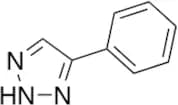
CAS:Controlled Product<p>Applications 5-Phenyl-1H-1,2,3-triazole (cas# 1680-44-0) is a useful research chemical.<br></p>Formula:C8H7N3Color and Shape:NeatMolecular weight:145.161Methyl 1-(2,4-Difluorophenyl)-3-phenyl-1H-pyrazole-5-carboxylate
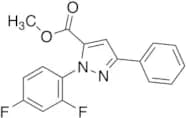
CAS:Controlled Product<p>Applications methyl 1-(2,4-difluorophenyl)-3-phenyl-1H-pyrazole-5-carboxylate (cas# 1202030-37-2) is a useful research chemical.<br></p>Formula:C17H12F2N2O2Color and Shape:Off-WhiteMolecular weight:314.29N-(4-Methyl-2-thiazolyl)-guanidine hydrochloride
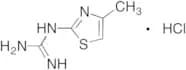
CAS:Controlled Product<p>Applications N-(4-Methyl-2-thiazolyl)-guanidine hydrochloride is the hydrochloride base salt of N-(4-Methyl-2-thiazolyl)-guanidine which is used as a test compound for various studies involving permeability through the blood-brain barrier.<br>References Bolboaca, S.D., et al.: Int. J. Mol. Sci., 12, 4348-64 (2011); Dureja, H., et al.: Acta Pharm. 57, 451-67 (2007); Fu, X., et al.: nt. J. Mol. Sci., 10, 737-50 (2005)<br></p>Formula:C5H8N4S·HClColor and Shape:NeatMolecular weight:156.21 + (36.46)3-Methyl-thiopropanal
CAS:<p>Applications 3-Methyl-thiopropanal is used as an analytical standard for the quanitiative determination of 2-Furfurylthiol.<br> Not a dangerous good if item is equal to or less than 1g/ml and there is less than 100g/ml in the package<br>References Sen, A. and Grosch, W.: Z. lebensm Unters Forsch, 192, 541 (1991)<br></p>Formula:C4H8OSColor and Shape:NeatMolecular weight:104.17Methyl Thiocyanate
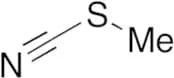
CAS:Controlled Product<p>Applications Methyl thiocyanate is a reagent that is used in the synthesis of WAK 4103 (W498200), which is a metabolite of Imidacloprid (I274990), a neonicotinoid; the active ingredient in certain neuro-active insecticides. Reports show that when exposed to neonicotinid pesticides honeybees have probelms returnign home after foraging and bumblebee colonies grow poorly and produce fewer queens.Nauen, R., et. al.: Pestic. Sci., 55, 265 (1999); Chauzat, M., et al.: Env. Entomol., 38, 514 (2009); Patial, A., et al.: Env. Ecol., 27, 320 (2009); Fernandez-Bayo, J., et al.: J. Agric., Food Chem., 57, 5435 (2009); Tomizawa, M., et al.: J. Med. Chem., 52, 3735 (2009); Chem. and Eng. News 90: 10 (2012)<br> Not a dangerous good if item is equal to or less than 1g/ml and there is less than 100g/ml in the package<br>References Nauen, R., et. al.: Pestic. Sci., 55, 265 (1999); Chauzat, M., et al.: Env. Entomol., 38, 514 (2009); Patial, A., et al.: Env. Ecol., 27, 320 (2009); Fernandez-Bayo, J., et al.: J. Agric., Food Chem., 57, 5435 (2009); Tomizawa, M., et al.: J. Med. Chem., 52, 3735 (2009); Chem. and Eng. News 90: 10 (2012)<br></p>Formula:C2H3NSColor and Shape:NeatMolecular weight:73.124′-Methylpropiophenone
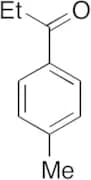
CAS:Controlled Product<p>Applications 4′-Methylpropiophenone is a chemical reagent used in electrocarboxylation reactions.<br>References Zhang, K. et al.: Chin. J. Chem., 28, 509 (2010); Zhao, S. et al.: Tetra. Lett., 52, 2702 (2011);<br></p>Formula:C10H12OColor and Shape:NeatMolecular weight:148.20Methyl 1,2,4-Triazole-3-carboxylate
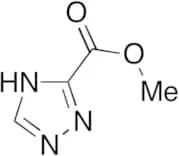
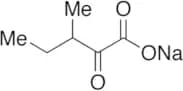
CAS:Controlled ProductFormula:C4H5N3O2Color and Shape:Off-WhiteMolecular weight:127.13-Methyl-2-oxovaleric Acid Sodium Salt
CAS:Controlled Product<p>Applications 3-Methyl-2-oxovaleric Acid is an α-ketomonocarboxylic acid that triggers insulin release by acting upon receptor sites which differ from those occupied by amino acids. 4-Methyl-2-oxovaleric Acid is an analogue of Isoleucine.<br>References Panten, U. et al.: Naun.-Schmied. Arch. Pharmacol., 291, 405 (1975); Funk, M.A. et al.: J. Nutrit., 117, 1550 (1987);<br></p>Formula:C6H9O3·NaColor and Shape:NeatMolecular weight:152.124,4'-Dicyano-2,2'-bipyridine
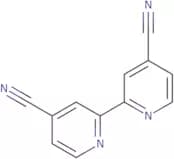
CAS:<p>4,4'-Dicyano-2,2'-bipyridine is a ligand that binds to molybdenum and has been used in the diagnosis of mitochondrial DNA. It has been shown to be an effective treatment for tropical diseases such as malaria. This drug binds to the molybdenum cofactor in the enzyme ribonucleotide reductase, thereby inhibiting the production of ATP. 4,4'-Dicyano-2,2'-bipyridine also reacts with formic acid and ruthenium to produce a redshifted product that can be detected by electron paramagnetic resonance spectroscopy.</p>Formula:C12H6N4Purity:Min. 98 Area-%Color and Shape:PowderMolecular weight:206.2 g/mol2-Hydroxyphenylacetic acid
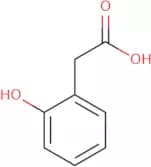
CAS:<p>2-Hydroxyphenylacetic acid is a hydroxylated phenolic acid that is structurally similar to other phenolic acids. It is present in many plants, including tea leaves and coffee beans, where it acts as an antioxidant. 2-Hydroxyphenylacetic acid has been found in the urine of humans and animals following ingestion of excessive amounts of these plants. It is also found in urine samples from patients with certain types of kidney disease. The synthesis of 2-hydroxyphenylacetic acid can be achieved by reacting ethylene diamine with sodium hydroxide solution or hydrochloric acid.</p>Formula:C8H8O3Purity:Min. 95%Color and Shape:Off-White Slightly Brown PowderMolecular weight:152.15 g/mol2,4-Diiodo-6-{[methyl(1-methylpiperidin-4-yl)amino]methyl}phenol oxalate
CAS:<p>2,4-Diiodo-6-[(methyl(1-methylpiperidin-4-yl)amino]methyl}phenol oxalate is a high quality chemical reagent. It is a useful intermediate for the preparation of complex compounds and has been used as a fine chemical. 2,4-Diiodo-6-[(methyl(1-methylpiperidin-4-yl)amino]methyl}phenol oxalate can be used as a building block for the synthesis of speciality chemicals. This compound can also be used as a reaction component in the synthesis of versatile chemicals.</p>Formula:C14H20I2N2O•C2H2O4Purity:Min. 95%Color and Shape:PowderMolecular weight:574.16 g/mol4-Hydroxyphenylacetic acid
CAS:4-Hydroxyphenylacetic acid is a sesquiterpene lactone that is found in the essential oils of plants such as valerian, lemon balm and rosemary. It has been shown to have high antioxidant activity and can inhibit carcinoid syndrome. This compound has also been shown to have properties similar to p-hydroxybenzoic acid, which is an inhibitor of polyphenol oxidase. 4-Hydroxyphenylacetic acid inhibits some enzyme activities, such as polymerase chain reaction (PCR) and DNA synthesis. It also binds to dinucleotide phosphate and can be used for the treatment of diseases related to energy metabolism.Formula:C8H8O3Purity:(%) Min. 98.5%Color and Shape:White PowderMolecular weight:152.15 g/mol3-(4-Hydroxyphenyl)propionic acid
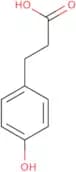
CAS:<p>Potential antioxidant; pharmaceutical intermediate</p>Formula:C9H10O3Purity:Min. 99 Area-%Color and Shape:PowderMolecular weight:166.17 g/mol5-Methanesulfinylpentanenitrile
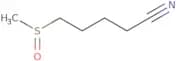
CAS:<p>5-Methanesulfinylpentanenitrile is a compound that is found in plants such as broccoli, cabbage, and cauliflower. It has been shown to have anticarcinogenic properties in cell culture studies. The activity of sulforaphane can be increased by the presence of glucosinolates. Sulforaphane inhibits the synthesis of fatty acids and is metabolized by detoxification enzymes. Amides are formed from sulforaphane, which can be detected using preparative high performance liquid chromatography (prep-HPLC). The water solubility of sulforaphane can be increased by heating it to a temperature above its boiling point so that it becomes supercritical (above its critical temperature). This allows for the preparation of dry weight samples for analysis.</p>Formula:C6H11NOSPurity:Min. 95%Molecular weight:145.23 g/mol5-Fluoroindole-2-carboxylic acid
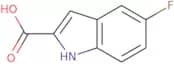
CAS:<p>5-Fluoroindole-2-carboxylic acid is a new substance that has been found to be an inhibitor of the influenza virus. It prevents the virus from replicating by inhibiting the synthesis of viral proteins and nucleic acids. 5-Fluoroindole-2-carboxylic acid can be prepared by dispersive solid phase extraction of a mixture of fluoroindole, fumaric acid, and potassium hydroxide in water. The compound has also been shown to potentiate the effects of carbamazepine on caspases and enhance mass spectrometric analysis for gaseous hydrochloric acid. 5-Fluoroindole-2-carboxylic acid produces antinociceptive effects in animals.</p>Formula:C9H6FNO2Color and Shape:PowderMolecular weight:179.15 g/mol2-(4-Benzyloxyphenyl)ethanol
CAS:2-(4-Benzyloxyphenyl)ethanol is an organic compound that has a particle size of less than 10 μm and is soluble in water. It is used as a reaction system for the production of tannins, which are polyphenolic compounds that have antioxidant properties. 2-(4-Benzyloxyphenyl)ethanol also inhibits maltase activity and metal ion-induced allylic oxidation. This compound can be used to inhibit fatty acid synthesis, which is important for the prevention of atherosclerosis and other cardiovascular diseases.Formula:C15H16O2Purity:Min. 95%Color and Shape:PowderMolecular weight:228.29 g/mol3-Mercapto-1,2-propanediol
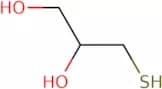
CAS:<p>3-Mercapto-1,2-propanediol is a sulfhydryl compound that has anti-tumor properties. It has been shown to induce apoptosis in leukemia cells and to inhibit the growth of myeloma cells. 3-Mercapto-1,2-propanediol has also been shown to induce redox potentials in cancer cells and prevent the formation of disulfide bonds in the cytoskeleton. The molecular pathogenesis of cancer is thought to be related to oxidative stress, which may be prevented by 3-mercapto-1,2-propanediol. This drug has also been shown to block transfection experiments with pemetrexed in a model system and human serum.</p>Formula:C3H8O2SPurity:Min. 95%Color and Shape:Clear LiquidMolecular weight:108.16 g/mol6-Bromo-2-oxindole
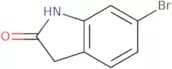
CAS:<p>6-Bromo-2-oxindole is a crystalline compound with a molecular formula of C10H6BrO. It has been shown to have a high efficiency in the production of butyric acid and other organic acids. 6-Bromo-2-oxindole is also used in electron microscopy studies as an electron acceptor, and can be used for producing polymers with crystalline structures and dihedral angles. The compound has been shown to inhibit the growth of breast cancer cells by preventing the synthesis of mda-mb-231 breast cancer cells. It also has been shown to inhibit the production of isoindigo and morphology.</p>Formula:C8H6BrNOPurity:Min. 98 Area-%Color and Shape:PowderMolecular weight:212.04 g/mol1-Butene-3,4-diol
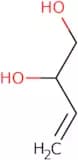
CAS:<p>1-Butene-3,4-diol is a reactive compound that is used in analytical methods. It can be synthesized by an asymmetric synthesis from 1,2-butanediol. This product has been shown to inhibit aminotransferase activity in rat liver microsomes and to be metabolized through the cytochrome P450 system. 1-Butene-3,4-diol also inhibits polymerase chain reactions and is reactive with hydrochloric acid. It may cause fatty acid metabolism and hydroxyl group formation.</p>Formula:C4H8O2Purity:Min. 95%Color and Shape:Colorless Clear LiquidMolecular weight:88.11 g/mol




![2,4-Diiodo-6-{[methyl(1-methylpiperidin-4-yl)amino]methyl}phenol oxalate](/_next/image/?url=https%3A%2Fstatic.cymitquimica.com%2Fproducts%2F3D%2Fthumb-webp%2FFD181210.webp&w=3840&q=75)