Building Blocks
This section contains fundamental products for the synthesis of organic and biological compounds. Building blocks are the essential starting materials used to construct complex molecules through various chemical reactions. They play a critical role in drug discovery, material science, and chemical research. At CymitQuimica, we offer a diverse range of high-quality building blocks to support your innovative research and industrial projects, ensuring you have the essential components for successful synthesis.
Subcategories of "Building Blocks"
- Boronic Acids & Boronic Acid Derivatives(5,778 products)
- Chiral Building Blocks(1,242 products)
- Hydrocarbon Building Blocks(6,098 products)
- Organic Building Blocks(61,034 products)
Found 199601 products of "Building Blocks"
Sort by
Purity (%)
0
100
|
0
|
50
|
90
|
95
|
100
Pyrazine-2-carbaldehyde
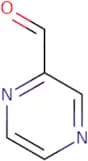
CAS:Pyrazine-2-carbaldehyde is a synthetic compound that has been shown to have reactive properties. It is used as a model system in x-ray crystallography and structural studies of heart disease. Pyrazine-2-carbaldehyde can be prepared from an ethylbenzimidazole derivative substituted with substituents such as C1-6 alkyl, N, or NH groups. The nitrogen atoms in this molecule form hydrogen bonds with the carbonyl group and the C=O bond in its structure. This compound also has metabolic disorders including neurosis and benzimidazole derivatives. It reacts with alkynyl groups with the loss of HCl to form dihydropyridine derivatives.Formula:C5H4N2OPurity:Min. 95%Color and Shape:PowderMolecular weight:108.1 g/molMethyl-3-Formylindole-5-carboxylate
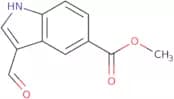
CAS:<p>Please enquire for more information about Methyl-3-Formylindole-5-carboxylate including the price, delivery time and more detailed product information at the technical inquiry form on this page</p>Formula:C11H9NO3Purity:Min. 95%Molecular weight:203.19 g/mol5-Nitrothiophene-2-carboxylic acid
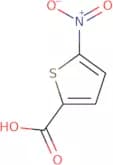
CAS:<p>Used for preparation of pentathiophene amide</p>Formula:C5H3NO4SPurity:Min. 95%Color and Shape:White PowderMolecular weight:173.15 g/mol2-Azaspiro[3.5]nonane hydrochloride
CAS:<p>2-Azaspiro[3.5]nonane hydrochloride is a high quality reagent that is used as an intermediate for the synthesis of complex organic compounds, such as fine chemicals and speciality chemicals. It has been shown to be useful in the synthesis of a variety of chemical compounds, including research chemicals and versatile building blocks. This compound has the CAS number 1303968-07-1.</p>Formula:C8H15N·HClPurity:Min. 95%Molecular weight:161.67 g/molMethyl 3,4-diaminobenzoate
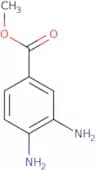
CAS:<p>Methyl 3,4-diaminobenzoate is a molecule that has been shown to inhibit nitrite reductase. It also binds to the receptor binding domain of the growth factor and to quinoxalines, which are antimicrobial peptides. In vitro assays have revealed that methyl 3,4-diaminobenzoate has antimicrobial properties against bacteria such as Enterococcus faecalis, Pseudomonas aeruginosa, Staphylococcus aureus, and Bacillus cereus. The mechanism of action for these activities is not well understood. Methyl 3,4-diaminobenzoate has been shown to be an inhibitor of tryptophan fluorescence in vitro and may act as a competitive inhibitor of the enzyme tryptophan fluorescence decarboxylase.</p>Formula:C8H10N2O2Purity:Min. 95%Color and Shape:White PowderMolecular weight:166.18 g/mol1,1-Dimethylethyl (2S)-2-[[[5-(tributylstannyl)-3-pyridinyl]oxy]methyl]-1-azetidinecarboxylate
CAS:Controlled Product<p>Please enquire for more information about 1,1-Dimethylethyl (2S)-2-[[[5-(tributylstannyl)-3-pyridinyl]oxy]methyl]-1-azetidinecarboxylate including the price, delivery time and more detailed product information at the technical inquiry form on this page</p>Formula:C26H46N2O3SnPurity:Min. 95%Color and Shape:Clear LiquidMolecular weight:553.37 g/molUracil
CAS:<p>Pyrimidine nucleobase; allosteric regulator and coenzyme for reactions</p>Formula:C4H4N2O2Purity:Min. 98 Area-%Color and Shape:White Off-White PowderMolecular weight:112.09 g/mol2,3,4-Trihydroxybenzaldehyde
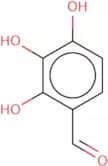
CAS:<p>2,3,4-Trihydroxybenzaldehyde is a chemical compound that has been shown to have anti-cancer properties. It is used in the detection of cancer cells and as an indicator for the presence of palladium complexes. 2,3,4-Trihydroxybenzaldehyde is also a skin allergen and can cause allergic reactions. This chemical reacts with potassium ions in solution to form a precipitate or sludge. 2,3,4-Trihydroxybenzaldehyde has been shown to be effective against colorectal carcinoma cells and Group P2 bacteria.</p>Formula:C7H6O4Purity:Min. 95%Color and Shape:PowderMolecular weight:154.12 g/mol2-(Morpholin-4-yl)-1,3-benzothiazole
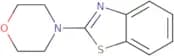
CAS:<p>2-(Morpholin-4-yl)-1,3-benzothiazole is a natural product that is found in the soil. It can be synthesized by reacting benzotriazole with morpholine and an acid catalyst. This compound has been used as a chromatographic stationary phase for the analysis of hydrocarbons and other organic compounds. The experimentally determined profile of this substance consists of peaks at m/z 265, 273, and 289. The technique used to detect these peaks was photometric.</p>Formula:C11H12N2OSPurity:Min. 95%Color and Shape:PowderMolecular weight:220.29 g/mol2-Methyl-1,2,3-propanetriol
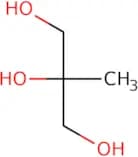
CAS:<p>2-Methyl-1,2,3-propanetriol is a monomer that is used in the production of polymers. It has been shown to be an efficient cross-linking agent for metal surfaces and is used as a polymerization catalyst. 2-Methyl-1,2,3-propanetriol also plays a role in the synthesis of amino acids by acting as a substrate for kinesin and aliphatic hydrocarbon. It can be used as a feedstock for producing plastics with deionized water or aromatic hydrocarbons such as phenol. This chemical has been shown to be pluripotent in mammalian cells and can act as a cationic surfactant.</p>Formula:C4H10O3Purity:Min. 95 Area-%Color and Shape:Clear LiquidMolecular weight:106.12 g/molEthyl 2,4-dihydroxy-6-methylbenzoate
CAS:<p>Ethyl 2,4-dihydroxy-6-methylbenzoate is a phenolic acid that is found in lichens. It has been shown to have anti-cancer and anti-inflammatory properties. The hydrogen bonds of ethyl 2,4-dihydroxy-6-methylbenzoate are the result of an intramolecular hydrogen bonding between the benzoic acid group and the hydroxymethyl group. This compound can also be found in matrix effect health care products as well as wastewater treatment plants. Ethyl 2,4-dihydroxy-6-methylbenzoate has also been shown to inhibit enzymes such as uv absorption and phenolic acids.</p>Formula:C10H12O4Purity:Min. 95%Molecular weight:196.2 g/mol5-Ethylthio-1H-tetrazole - Conductivity >30 uS/cm
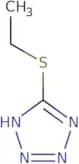
CAS:<p>5-Ethylthio-1H-tetrazole is a chloroformate that is used as an inhibitor of the cell membrane permeability. It can be prepared by the reaction of thiourea and ethyl bromoacetate in chloroform. This compound has been shown to inhibit the acidification of cells, which is caused by hydrogen ions leaking through the cell membrane. 5-Ethylthio-1H-tetrazole is also an inhibitor of RNA synthesis, which may be due to its ability to bind with nucleoside triphosphates and competitively inhibit ATPase activity. This product also has a luminescent property, which may be due to its ability to produce light upon oxidation in air or water.</p>Formula:C3H6N4SColor and Shape:PowderMolecular weight:130.17 g/mol4-Nitrobenzophenone
CAS:<p>4-Nitrobenzophenone is an aromatic organic compound that is synthesized by the nitration of benzophenone. The coordination complex formed with p. aeruginosa was found to be acidic and readily hydrolyzed in water. This compound has been used in the synthesis of cinnamic acid derivatives, which are intermediates for azo dyes and pharmaceuticals. 4-Nitrobenzophenone can also undergo acylation reactions to form esters or amides with alcohols or carboxylic acids. It is also a precursor to the drug metronidazole, which is used to treat bacterial infections. Acute toxicity studies have shown that this compound has low acute toxicities and causes no irritation on skin contact. 4-Nitrobenzophenone reacts with hydrogen fluoride to form hydrogen chloride and x-ray crystal structures have shown that it forms tetrahedral complexes with chlorine, fluorine, and bromine at low temperatures (0</p>Formula:C13H9NO3Purity:Min. 95%Color and Shape:PowderMolecular weight:227.22 g/mol1,2,4-Triazole-3-carboxamide
CAS:<p>1,2,4-Triazole-3-carboxamide is a pharmacologic agent that inhibits the synthesis of polypeptides by interfering with neurotransmission. It is used to inhibit the replication of influenza virus and other viruses in tissue culture. The compound has been shown to have an inhibitory effect on viruses by binding to the viral polypeptide chain at the active site and preventing its polymerization into a functional protein. 1,2,4-Triazole-3-carboxamide also inhibits the activity of influenza virus neuraminidase (NA) by binding reversibly to the active site of NA and blocking its catalytic activity. The inhibition of NA leads to a decrease in release of virus particles from infected cells and thus prevents infection.</p>Formula:C3H4N4OPurity:Min. 95%Color and Shape:White PowderMolecular weight:112.09 g/mol4-Toluic acid
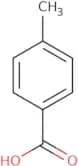
CAS:<p>4-Toluic acid is a chemical compound with the molecular formula CH3C6H2O2. It is a white solid that is soluble in water and alcohol. 4-Toluic acid can be produced by oxidation of benzoate, which is a reaction catalyzed by light or by using a catalyst such as trifluoroacetic acid. The reaction mechanism begins with the formation of the intramolecular hydrogen and subsequent oxidation to form an organic radical. This organic radical then reacts with oxygen to produce 4-toluic acid. 4-Toluic acid has been shown to have biochemical properties such as enzyme inhibition, DNA cleavage, and protein denaturation. The coordination geometry for this molecule is octahedral, and its redox potentials are -0.27 V (in acidic solution) and -1.06 V (in alkaline solution).</p>Formula:C8H8O2Purity:Min. 98 Area-%Color and Shape:White PowderMolecular weight:136.15 g/molL-Tryptophan β-naphthylamide
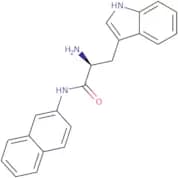
CAS:<p>L-Tryptophan beta-naphthylamide is a fine chemical that is useful for research purposes. It can be used as a versatile building block in the synthesis of other chemicals and can also be used as a reaction component. L-Tryptophan beta-naphthylamide has been used to synthesize complex compounds such as 5,6-dihydroindolizine, which has been shown to have anti-inflammatory properties. This compound can also be used as a reagent in organic synthesis.</p>Formula:C21H19N3OPurity:Min. 95%Color and Shape:PowderMolecular weight:329.4 g/mol2-Methyl-6-nitrobenzoic acid
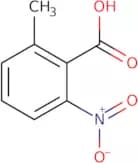
CAS:<p>2-Methyl-6-nitrobenzoic acid is a yellow needle solid that is soluble in organic solvents. It is used as a reagent to prepare other chemicals and has been shown to react with sodium hydrogen sulfate, chloride, and sulfuric acid to form 2-methyl-6-nitrobenzenesulfonic acid. The mixture of 2-methyl-6-nitrobenzoic acid and sodium hydrogen sulfate reacts violently with chlorine gas or argon. This reaction solution can be evaporated by heating at atmospheric pressure or under vacuum, leaving 2-methyl-6-nitrobenzenesulfonic acid behind. 2MBA can also be purified by filtration or recrystallization from a suitable solvent such as chloroform or ether.</p>Formula:C8H7NO4Purity:Min. 95%Color and Shape:Slightly Yellow PowderMolecular weight:181.15 g/mol4-Morpholinoaniline
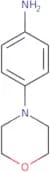
CAS:<p>4-Morpholinoaniline is a synthetic substrate that reacts with hydrochloric acid and sodium nitrite to form the reactive intermediate 4-morpholinonitrosobenzene. The reaction mechanism is proposed to proceed through an initial electron transfer from the substrate to the nitrosobenzene intermediate, followed by protonation of the nitrosobenzene nitrogen atom. The resulting 4-nitrophenyl radical abstracts hydrogen from the substrate to give 4-hydroxyphenyl radical. This radical undergoes a nucleophilic attack on the aromatic ring of the substrate molecule, and cleavage of the disulfide bond in the aromatic ring leads to formation of a cyanohydrin product. Studies have been conducted on rat liver microsomes and hepatitis C virus (HCV) to investigate this reaction mechanism.</p>Formula:C10H14N2OPurity:Min. 98.5 Area-%Color and Shape:Red PowderMolecular weight:178.23 g/mol1-(3-Azetidinyl)-pyrrolidine dihydrochloride
CAS:1-(3-Azetidinyl)-pyrrolidine dihydrochloride is a high quality, versatile building block that can be used as a reagent in the synthesis of complex compounds and as an intermediate in the synthesis of fine chemicals. 1-(3-Azetidinyl)-pyrrolidine dihydrochloride is an excellent starting material for the synthesis of a wide range of compounds. It can also act as a speciality chemical or research chemical. 1-(3-Azetidinyl)-pyrrolidine dihydrochloride has CAS No. 1024589-68-1 and can be found on our website at www.chemistryworldstore.comFormula:C7H14N2•(HCl)2Purity:Min. 95%Color and Shape:PowderMolecular weight:199.12 g/moltrans-4-Nitrocinnamic acid
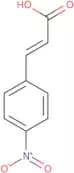
CAS:<p>Trans-4-nitrocinnamic acid is an organic compound that is synthesized from 4-hydroxycinnamic acid by nitration with aqueous or alcoholic nitric acid. Trans-4-Nitrocinnamic acid has been shown to inhibit tyrosinase activity in the presence of metal hydroxides, such as copper, zinc, and iron. The reaction mechanism is unclear but may involve an initial protonation of the phenolic group followed by an electron transfer to the nitro group. This reaction results in an irreversible inhibition of tyrosinase activity. Trans-4-Nitrocinnamic acid also reacts with hydrochloric acid to produce a carboxylate salt that can be used for sample preparation.</p>Formula:C9H7NO4Purity:Min. 95%Color and Shape:PowderMolecular weight:193.16 g/mol

![2-Azaspiro[3.5]nonane hydrochloride](/_next/image/?url=https%3A%2Fstatic.cymitquimica.com%2Fproducts%2F3D%2Fthumb-webp%2FDCC96807.webp&w=3840&q=75)
![1,1-Dimethylethyl (2S)-2-[[[5-(tributylstannyl)-3-pyridinyl]oxy]methyl]-1-azetidinecarboxylate](/_next/image/?url=https%3A%2Fstatic.cymitquimica.com%2Fproducts%2F3D%2Fthumb-webp%2FFD183344.webp&w=3840&q=75)