Building Blocks
This section contains fundamental products for the synthesis of organic and biological compounds. Building blocks are the essential starting materials used to construct complex molecules through various chemical reactions. They play a critical role in drug discovery, material science, and chemical research. At CymitQuimica, we offer a diverse range of high-quality building blocks to support your innovative research and industrial projects, ensuring you have the essential components for successful synthesis.
Subcategories of "Building Blocks"
- Boronic Acids & Boronic Acid Derivatives(5,756 products)
- Chiral Building Blocks(1,242 products)
- Hydrocarbon Building Blocks(6,095 products)
- Organic Building Blocks(61,051 products)
Found 199813 products of "Building Blocks"
Sort by
Purity (%)
0
100
|
0
|
50
|
90
|
95
|
100
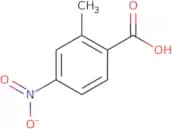
2-Methyl-4-nitrobenzoic acid
CAS:<p>2-Methyl-4-nitrobenzoic acid is a synthetic drug substance. The crystalline structure of 2-methyl-4-nitrobenzoic acid is polymorphic and it can be obtained in two different forms: anhydrous form and monohydrate form. The reaction yield for this compound is low, which may be due to the presence of additives or deionized water. This drug substance has a high solubility in hydroxide solutions and methylbenzene. It reacts slowly with hydrochloric acid and sodium hydroxide solution to produce 2-methyl-4-nitrobenzoic acid hydrochloride and sodium benzoate, respectively. 2-Methyl-4-nitrobenzoic acid has low bioavailability due to its poor absorption from the gastrointestinal tract into the bloodstream.</p>Formula:C8H7NO4Purity:Min. 95%Color and Shape:PowderMolecular weight:181.15 g/mol(2S,3S)-3-Aminobutan-2-ol hydrochloride
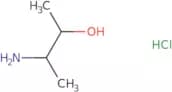
CAS:<p>(2S,3S)-3-Aminobutan-2-ol hydrochloride is a high quality chemical that is used as a reagent, intermediate in the production of fine chemicals, and building block for synthesis of other compounds. It is also an important building block in the preparation of speciality chemicals. This compound can be used as an intermediate for the synthesis of various pharmaceuticals, pesticides, dyes, and flavors. (2S,3S)-3-Aminobutan-2-ol hydrochloride can be used in research to prepare new compounds with different properties. It is also a versatile building block that can be used to synthesize many different types of products.</p>Formula:C4H12ClNOPurity:Min. 95%Color and Shape:Clear LiquidMolecular weight:125.6 g/mol(1-Bromo-2,2-difluoroethyl)benzene
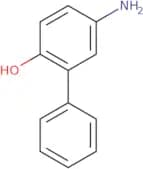
CAS:<p>(1-Bromo-2,2-difluoroethyl)benzene is a chemical compound that is used as a reaction component in the synthesis of other compounds. It can be used to synthesize high-quality research chemicals and speciality chemicals. It is also a versatile building block for the synthesis of complex compounds. This product has been assigned CAS No. 74492-20-9 and is considered a fine chemical.</p>Formula:C8H7BrF2Purity:Min. 95%Color and Shape:Clear LiquidMolecular weight:221.04 g/mol4-Amino-2-phenylphenol
CAS:<p>Versatile small molecule scaffold</p>Formula:C12H11NOPurity:Min. 95%Color and Shape:PowderMolecular weight:185.22 g/mol4-Acetoxystyrene Stabilized with TB
CAS:Stabilised with TBFormula:C10H10O2Molecular weight:162.19 g/molPivalonitrile
CAS:<p>Please enquire for more information about Pivalonitrile including the price, delivery time and more detailed product information at the technical inquiry form on this page</p>Formula:C5H9NMolecular weight:83.13 g/mol[2-(Cyclopropylmethoxy)ethyl](methyl)amine
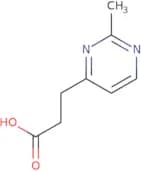
CAS:<p>Versatile small molecule scaffold</p>Formula:C7H15NOPurity:Min. 80%Color and Shape:Clear LiquidMolecular weight:129.2 g/mol3-(2-Methylpyrimidin-4-yl)propanoic acid
CAS:<p>Versatile small molecule scaffold</p>Formula:C8H10N2O2Purity:Min. 95%Color and Shape:PowderMolecular weight:166.18 g/mol2,4-Dihydroxy-3-methylbenzoic acid
CAS:<p>2,4-Dihydroxy-3-methylbenzoic acid (2,4-DMB) is a potent compound that has been shown to have chemotherapeutic properties. It is a DNA repair agent that also inhibits the activity of topoisomerase II and DNA polymerase III. 2,4-DMB can be used in the treatment of radiation and ionizing radiation induced cancers. The pharmacophore of 2,4-DMB has been identified as being composed of three hydrophobic regions and one hydrophilic region. This pharmacophore has been used to design other potent compounds with similar activity against cancer cells.</p>Formula:C8H8O4Purity:Min. 95%Color and Shape:PowderMolecular weight:168.15 g/mol5-methyl-octahydro-1H-pyrrolo[3,4-c]pyridine Dihydrochloride
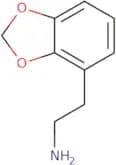
CAS:<p>Versatile small molecule scaffold</p>Formula:C8H16N2·2HClPurity:Min. 95%Color and Shape:PowderMolecular weight:213.14 g/mol2-(1,3-Dioxaindan-4-yl)ethan-1-amine
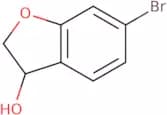
CAS:Controlled Product<p>Versatile small molecule scaffold</p>Formula:C9H11NO2Purity:Min. 95%Color and Shape:Clear LiquidMolecular weight:165.19 g/mol6-bromo-2,3-dihydro-1-benzofuran-3-ol
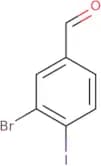
CAS:<p>Versatile small molecule scaffold</p>Formula:C8H7BrO2Purity:Min. 95%Color and Shape:PowderMolecular weight:215.05 g/mol3-Bromo-4-iodobenzaldehyde
CAS:<p>Versatile small molecule scaffold</p>Formula:C7H4BrIOPurity:Min. 95%Color and Shape:PowderMolecular weight:310.91 g/mol2,5-Difluoro-3-methylbenzoic acid methyl ester
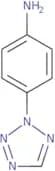
CAS:<p>2,5-Difluoro-3-methylbenzoic acid methyl ester is a high quality, complex compound that can be used as a versatile building block in synthesis. It acts as a reagent and can be used as a research chemical. 2,5-Difluoro-3-methylbenzoic acid methyl ester is an intermediate in the production of other chemicals and can also be used as a reaction component or useful scaffold.</p>Formula:C9H8F2O2Purity:Min. 95%Color and Shape:PowderMolecular weight:186.16 g/mol4-(2H-1,2,3,4-Tetrazol-2-yl)aniline
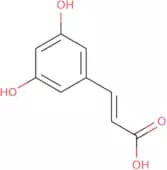
CAS:<p>Versatile small molecule scaffold</p>Formula:C7H7N5Purity:Min. 95%Color and Shape:PowderMolecular weight:161.16 g/mol3,5-Dihydroxycinnamic acid
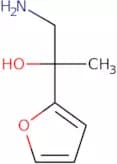
CAS:<p>3,5-Dihydroxycinnamic acid is a metabolite of the amino acid tyrosine and an intermediate in the biosynthesis of phenylalanine. It has been shown to have anti-inflammatory properties that may be due to its ability to inhibit prostaglandin synthesis. 3,5-Dihydroxycinnamic acid has also been identified as a carcinogen and is associated with an increased risk of cancer in women. 3,5-Dihydroxycinnamic acid is found in urine samples at concentrations between 2 and 10 µmol/L.</p>Formula:C9H8O4Purity:Min. 98 Area-%Color and Shape:PowderMolecular weight:180.16 g/mol1-Amino-2-(furan-2-yl)propan-2-ol
CAS:<p>1-Amino-2-(furan-2-yl)propan-2-ol is a useful building block for the synthesis of heterocycles. It is also used as a reagent for the protection of amines, hydrazones, and carbonyl groups. This compound is soluble in water and is stable under acidic conditions. 1-Amino-2-(furan-2-yl)propan-2-ol has been found to be an important intermediate in the synthesis of pharmaceuticals, pesticides, dyes, perfumes, and solar cells.</p>Formula:C7H11NO2Purity:Min. 95%Color and Shape:Clear LiquidMolecular weight:141.17 g/mol3-N-Maleimidobenzoic acid
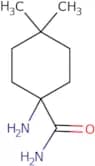
CAS:<p>3-N-Maleimidobenzoic acid is a chemical crosslinking agent that reacts with proteins through the formation of an amide bond. It has been shown to react with both actin subunits and human immunoglobulin. This molecule also reacts with spermatozoa, which are composed primarily of actin filaments, and is used in the preparation of polyclonal antibodies. 3-N-Maleimidobenzoic acid can be used to fix antigen onto a solid support for immunological purposes. It is also a cross-linking agent that can be used in cytochalasin B experiments to inhibit plastid activity in chloroplasts. 3-N-Maleimidobenzoic acid reacts with monoclonal antibodies by forming an amide bond, which can be used as a reaction product.</p>Formula:C11H7NO4Purity:Min. 95%Color and Shape:PowderMolecular weight:217.18 g/mol1-Amino-4,4-dimethylcyclohexane-1-carboxamide
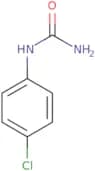
CAS:<p>Versatile small molecule scaffold</p>Formula:C9H18N2OPurity:Min. 95%Color and Shape:PowderMolecular weight:170.25 g/mol4-Chlorophenylurea
CAS:<p>4-Chlorophenylurea is an urea derivative that has been shown to inhibit the activity of a number of enzymes. It has been used as a chemical intermediate and in the synthesis of other compounds. 4-Chlorophenylurea is stable in dry environments and does not react with air. The enzyme hydrolysis can be inhibited by adding piperonyl butoxide, which prevents the cleavage of the urea ring. The enzyme's activity can also be suppressed by adding acidic compounds such as hydrochloric acid, which increases its activation energy. The chemical structure of 4-Chlorophenylurea contains a carbonyl group and two chloro groups that are responsible for its inhibitory effect on tumour cells. This compound can also be analysed using liquid chromatography methods, which provide structural data about the product being tested.</p>Formula:C7H7ClN2OPurity:Min. 95%Color and Shape:PowderMolecular weight:170.6 g/mol



amine](/_next/image/?url=https%3A%2Fstatic.cymitquimica.com%2Fproducts%2F3D%2Fthumb-webp%2FIKB52698.webp&w=3840&q=75)

![5-methyl-octahydro-1H-pyrrolo[3,4-c]pyridine Dihydrochloride](/_next/image/?url=https%3A%2Fstatic.cymitquimica.com%2Fproducts%2F3D%2Fthumb-webp%2FDXC59804.webp&w=3840&q=75)