


Building Blocks
This section contains fundamental products for the synthesis of organic and biological compounds. Building blocks are the essential starting materials used to construct complex molecules through various chemical reactions. They play a critical role in drug discovery, material science, and chemical research. At CymitQuimica, we offer a diverse range of high-quality building blocks to support your innovative research and industrial projects, ensuring you have the essential components for successful synthesis.
Subcategories of "Building Blocks"
- Boronic Acids & Boronic Acid Derivatives(5,756 products)
- Chiral Building Blocks(1,242 products)
- Hydrocarbon Building Blocks(6,095 products)
- Organic Building Blocks(61,051 products)
Found 199813 products of "Building Blocks"
Sort by
Purity (%)
0
100
|
0
|
50
|
90
|
95
|
100
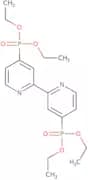
Tetraethyl 2,2'-bipyridine-4,4'-diylbisphosphonate
CAS:<p>Tetraethyl 2,2'-bipyridine-4,4'-diylbisphosphonate is a chemical that is used as an intermediate in the synthesis of other fine chemicals. Tetraethyl 2,2'-bipyridine-4,4'-diylbisphosphonate can be used as a building block for synthesis of more complex compounds with high chemical and biological activity. Tetraethyl 2,2'-bipyridine-4,4'-diylbisphosphonate can also be used to synthesize speciality chemicals or research chemicals. This compound has many versatile uses due to its ability to react with different substances to form new chemical compounds.</p>Formula:C18H26N2O6P2Purity:Min. 95%Color and Shape:PowderMolecular weight:428.36 g/mol[(1H-Indol-6-yl)methyl](methyl)amine
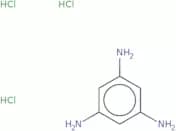
CAS:<p>Versatile small molecule scaffold</p>Formula:C10H12N2Purity:Min. 95%Molecular weight:160.22 g/mol1,3,5-Triaminobenzene trihydrochloride
CAS:<p>1,3,5-Triaminobenzene trihydrochloride (TAT) is a low detection fluorescent probe that can be used as an introducing agent to introduce a triazine skeleton into a variety of heterocyclic amines. TAT has been shown to have the ability to bind with many different functional groups, such as amines and hydroxyls. The fluorescence of TAT is proportional to the amount of hydrogen bonding interactions between the probe and other molecules. TAT can be detected by means of energy-dispersive x-ray spectroscopy.</p>Formula:C6H12Cl3N3Purity:Min. 95%Color and Shape:White PowderMolecular weight:232.54 g/mol2,4,5-Triamino-6-hydroxypyrimidine sulfate
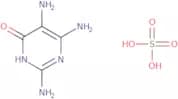
CAS:<p>2,4,5-Triamino-6-hydroxypyrimidine sulfate is a chemical compound that is a metabolite of the amino acid lysine. It is produced when lysine undergoes hydrolysis by enzymes and is converted to 2,4,5-triamino-6-hydroxypyrimidine sulfate by the addition of sulfate ions. This metabolite has been shown to have reactive properties and may play a role in mitochondrial dysfunction. 2,4,5-Triamino-6-hydroxypyrimidine sulfate has been used in binding experiments to measure the strength of protein interactions with other proteins or molecules. For example, it was used in experiments with dimethylformamide (DMF) to study the binding affinity of DMF with proteins such as cytochrome c oxidase. In these experiments, 2,4,5-triamino-6-hydroxypyrimidine sulfate was found to</p>Formula:C4H7N5O•H2SO4Purity:Min. 95%Color and Shape:PowderMolecular weight:239.21 g/mol1,2,4,5-Tetrabromobenzene
CAS:<p>1,2,4,5-Tetrabromobenzene is a brominated organic compound that forms a palladium complex. It has been studied by chemical ionization with an atmospheric pressure photoionization detector (APPI) and molecular modeling. The debromination reaction of 1,2,4,5-tetrabromobenzene was observed to take place in the liquid phase at room temperature. The detection limit for this reaction was found to be between 0.1 and 5 ppm. The most common form of 1,2,4,5-tetrabromobenzene is the monoclinic polymorph; however it can also exist as a trigonal system or as a hexagonal system when heated above its phase transition temperature. This compound is soluble in water and mercury chloride solutions but insoluble in ethers or chloroform.</p>Formula:C6H2Br4Purity:Min. 95%Color and Shape:White PowderMolecular weight:393.7 g/mol2-Amino-4-oxopentanoic acid hydrochloride
CAS:<p>Versatile small molecule scaffold</p>Formula:C5H9NO3•HClPurity:Min. 95%Color and Shape:PowderMolecular weight:167.59 g/mol1-[4-(Trifluoromethyl)pyridin-3-yl]ethan-1-one
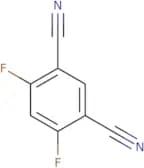
CAS:<p>1-[4-(Trifluoromethyl)pyridin-3-yl]ethan-1-one is a high quality reagent that can be used as a useful intermediate or speciality chemical. It is a complex compound with CAS No. 955997-27-0 and is an excellent building block for the synthesis of fine chemicals, research chemicals, and other versatile compounds. 1-[4-(Trifluoromethyl)pyridin-3-yl]ethan-1-one has been shown to be useful in reactions involving nucleophilic substitution, electrophilic addition, nucleophilic aromatic substitution, and coupling reactions.</p>Formula:C8H6F3NOPurity:Min. 95%Color and Shape:PowderMolecular weight:189.13 g/mol4,6-Difluorobenzene-1,3-dicarbonitrile
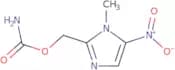
CAS:<p>Symmetrical functionalised aromatic</p>Formula:C8H2F2N2Purity:Min. 95%Color and Shape:PowderMolecular weight:164.11 g/mol1-Methyl-5-nitro-1H-imidazole-2-methanol 2-carbamate
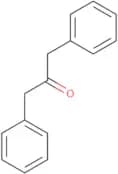
CAS:<p>1-Methyl-5-nitro-1H-imidazole-2-methanol 2-carbamate is an antimicrobial agent that has been shown to be active against a number of bacteria, including Gram negative and Gram positive bacteria. It was shown to have a matrix effect in vivo and its kinetic energy was found to be reactive. The 1NIMC has been shown to inhibit the growth of bacteria by interfering with DNA replication and RNA synthesis. This drug has also been shown to have an analytical method that is linear in calibrations curves, which makes it suitable for quantitative analysis. It also has chemical stability, as it decomposes slowly at room temperature.</p>Formula:C6H8N4O4Purity:Min. 98.5%Color and Shape:White PowderMolecular weight:200.15 g/mol1,3-Diphenylacetone, 97.0%+
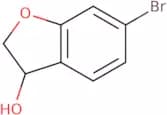
CAS:<p>1,3-Diphenylacetone is a high quality chemical that is used as a reagent and intermediate in the production of specialty chemicals. It can be used to synthesize other compounds such as pharmaceuticals, pesticides, and lubricants. 1,3-Diphenylacetone has been shown to be an effective building block for a variety of chemical reactions. This compound is also versatile because it can be used as a research chemical or scaffold for synthesis of other compounds. 1,3-Diphenylacetone has CAS number 102-04-5 and can be found in the speciality chemical category.</p>Formula:C15H14OPurity:Min. 97.0 Area-%Molecular weight:210.28 g/mol6-bromo-2,3-dihydro-1-benzofuran-3-ol
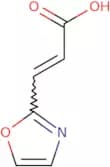
CAS:<p>Versatile small molecule scaffold</p>Formula:C8H7BrO2Purity:Min. 95%Color and Shape:PowderMolecular weight:215.05 g/mol(2E)-3-(1,3-Oxazol-2-yl)prop-2-enoic acid
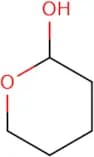
CAS:<p>1,3-Oxazole is an organic compound that belongs to the class of 1,3-diketones. It is a versatile building block that can be used in many different reactions. 1,3-Oxazole has been shown to be a reagent for use in research and as a speciality chemical. It has also been shown to be a useful intermediate for the synthesis of complex compounds. The compound is also a useful scaffold for developing high quality drug candidates with potential applications in medicine or other fields.</p>Formula:C6H5NO3Purity:Min. 95%Molecular weight:139.11 g/molTetrahydro-2H-pyran-2-ol
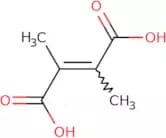
CAS:<p>Tetrahydro-2H-pyran-2-ol is a chemical compound that belongs to the class of organic compounds called alcohols. It has been shown to have a taste and smell similar to ethyl alcohol, but can be distinguished by its higher boiling point. Tetrahydro-2H-pyran-2-ol is also used as a biological sample in assays for metabolic disorders and as a reactant in cell lysis reactions. This alcohol binds with proteins, which may be due to hydrogen bonding interactions between the hydroxyl group on the alcohol and the amide group on the proteins. The conformational properties of tetrahydro-2H-pyran-2-ol are dependent on its intramolecular hydrogen bonds, which can be broken by x-ray diffraction data.</p>Formula:C20H21N3O2Purity:Min. 95%Molecular weight:335.4 g/mol(2E)-Dimethylbut-2-enedioic acid
CAS:<p>Dimethylbutanedioic acid is a fatty acid that is found in the human body. Dimethylbutanedioic acid has been shown to have immunomodulatory effects, which are mediated by its ability to inhibit the synthesis of proinflammatory cytokines, such as tumor necrosis factor-α and interleukin-6. Dimethylbutanedioic acid is a potent inhibitor of the proliferation of various types of cells, including hyperproliferative cells. It has been shown to inhibit the diameter of these cells and reduce their number. This agent also inhibits allergic reactions and inorganic particles from reaching the lungs.</p>Formula:C6H8O4Purity:Min. 95%Molecular weight:144.12 g/molCyclohexylmethanethiol
CAS:<p>Cyclohexylmethanethiol is a reactive chemical that is a colorless liquid with a strong odor. It is an organic compound belonging to the group of polybasic, hydroxamic acids and has been found to be an antimicrobial agent. Cyclohexylmethanethiol reacts with the hydroxyl groups on the surface of bacteria and damages the cell wall by disrupting the cross-linking of peptidoglycan. This reaction product inhibits bacterial growth by binding to proteins in the cell membrane, which prevents essential molecules from entering or exiting the cell. Cyclohexylmethanethiol also reacts with alkylthio groups on proteins in bacterial cells, which alters their function and leads to protein denaturation.</p>Formula:C7H14SPurity:Min. 95%Molecular weight:130.25 g/mol5-methyl-octahydro-1H-pyrrolo[3,4-c]pyridine Dihydrochloride
CAS:<p>Versatile small molecule scaffold</p>Formula:C8H16N2·2HClPurity:Min. 95%Color and Shape:PowderMolecular weight:213.14 g/mol3-Hydroxy-3,4-dihydro-2H-1-benzopyran-4-one
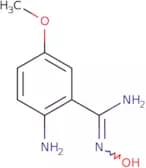
CAS:<p>Versatile small molecule scaffold</p>Formula:C9H8O3Purity:Min. 95%Color and Shape:PowderMolecular weight:164.16 g/mol2-Amino-N'-hydroxy-5-methoxybenzene-1-carboximidamide
CAS:<p>2-Amino-N'-hydroxy-5-methoxybenzene-1-carboximidamide (2HMB) is a high quality, versatile building block that can be used as a reagent, building block or scaffold. 2HMB is also a useful intermediate in the synthesis of pharmaceuticals, agrochemicals and fine chemicals. This compound has been shown to have antiviral and anti-inflammatory properties.</p>Formula:C8H11N3O2Purity:Min. 95%Color and Shape:PowderMolecular weight:181.19 g/mol3,3,3-Trifluoropropane-1,2-diamine dihydrochloride
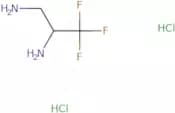
CAS:3,3,3-Trifluoropropane-1,2-diamine dihydrochloride is a high quality chemical that belongs to the group of useful building blocks. It is a versatile and complex compound that can be used in research or as a reagent. 3,3,3-Trifluoropropane-1,2-diamine dihydrochloride is also a reaction component for the synthesis of other compounds. This compound has been used as an intermediate for the production of pharmaceuticals and pesticides. It has been studied for its ability to inhibit protein kinase C (PKC) and calcium ion channels.Formula:C3H7F3N2•(HCl)2Purity:Min. 95%Molecular weight:201.02 g/moltert-butyl N-{2-azabicyclo[2.1.1]hexan-1-ylmethyl}carbamate
CAS:<p>Versatile small molecule scaffold</p>Formula:C11H20N2O2Purity:Min. 95%Molecular weight:212.3 g/mol

amine](/_next/image/?url=https%3A%2Fstatic.cymitquimica.com%2Fproducts%2F3D%2Fthumb-webp%2FDAA46821.webp&w=3840&q=75)


![1-[4-(Trifluoromethyl)pyridin-3-yl]ethan-1-one](/_next/image/?url=https%3A%2Fstatic.cymitquimica.com%2Fproducts%2F3D%2Fthumb-webp%2FFNB99727.webp&w=3840&q=75)

![5-methyl-octahydro-1H-pyrrolo[3,4-c]pyridine Dihydrochloride](/_next/image/?url=https%3A%2Fstatic.cymitquimica.com%2Fproducts%2F3D%2Fthumb-webp%2FDXC59804.webp&w=3840&q=75)
![tert-butyl N-{2-azabicyclo[2.1.1]hexan-1-ylmethyl}carbamate](/_next/image/?url=https%3A%2Fstatic.cymitquimica.com%2Fproducts%2F3D%2Fthumb-webp%2FAAC99746.webp&w=3840&q=75)