Building Blocks
This section contains fundamental products for the synthesis of organic and biological compounds. Building blocks are the essential starting materials used to construct complex molecules through various chemical reactions. They play a critical role in drug discovery, material science, and chemical research. At CymitQuimica, we offer a diverse range of high-quality building blocks to support your innovative research and industrial projects, ensuring you have the essential components for successful synthesis.
Subcategories of "Building Blocks"
- Boronic Acids & Boronic Acid Derivatives(5,778 products)
- Chiral Building Blocks(1,242 products)
- Hydrocarbon Building Blocks(6,098 products)
- Organic Building Blocks(61,098 products)
Found 199594 products of "Building Blocks"
Sort by
Purity (%)
0
100
|
0
|
50
|
90
|
95
|
100
2,3-Pyrazinedicarboxylic acid
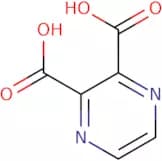
CAS:2,3-Pyrazinedicarboxylic acid is a molecule that can be found in bacteria and is the product of an intramolecular hydrogen reaction. It has been shown to have antibacterial activity against a strain of Bacillus subtilis. 2,3-Pyrazinedicarboxylic acid has been shown to react with hydrochloric acid to form an acid complex. The intramolecular hydrogen bond of 2,3-pyrazinedicarboxylic acid makes it hydrophilic and therefore it is soluble in water. This molecule also has the ability to form hydrogen bonding interactions with other molecules. 2,3-Pyrazinedicarboxylic acid has been shown to have anti-inflammatory properties because it inhibits prostaglandin synthesis by inhibiting cyclooxygenase and lipoxygenase enzymes.Formula:C6H4N2O4Purity:Min. 95%Color and Shape:White PowderMolecular weight:168.11 g/molPentachlorocyclopropane
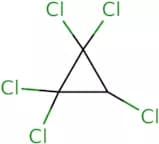
CAS:<p>Pentachlorocyclopropane is a chemical compound that belongs to the class of cyclic chlorinated hydrocarbons. It is a colorless liquid with a strong odor and a boiling point of 176 °C. Pentachlorocyclopropane has been used as an intermediate for the production of other chemicals, such as alkyl chlorides, amines, and polymers. Pentachlorocyclopropane can be synthesized from hydrogen chloride and 1-chloro-2-propanone in the presence of aluminum chloride or zinc chloride. The Friedel-Crafts reaction can also be used to produce pentachlorocyclopropane from benzene and chlorine gas. The chemical stability of pentachlorocyclopropane is due to its intramolecular hydrogen bonds. This allows it to be stored at room temperature without undergoing any reactions or decomposing. Pentachlorocyclopropane is not</p>Formula:C3HCl5Purity:Min. 95%Color and Shape:Colorless Clear LiquidMolecular weight:214.3 g/molPropionamide
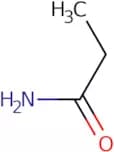
CAS:<p>Propionamide is an amide that inhibits bacterial growth by binding to the DNA-dependent RNA polymerase and preventing transcription. It is used in treatment trials for bacterial infections. Propionamide has been shown to inhibit the growth of bacteria in vitro and in vivo, as well as to have an inhibitory effect on experimental solubility data. The chemical properties of propionamide are consistent with a potential use as a drug for treating metabolic disorders, such as diabetes mellitus and obesity.</p>Formula:C3H7NOPurity:Min. 95%Color and Shape:White PowderMolecular weight:73.09 g/molDipropyl ether
CAS:<p>Dipropyl ether is a reagent that is used in organic synthesis as a reaction component or building block for the preparation of complex compounds. It is also known to be an intermediate in the production of propylene oxide, which is used in the production of polyurethane. Dipropyl ether has been shown to be useful as a research chemical and speciality chemical. This compound has CAS number 111-43-3 and can be prepared by reacting diethyl ether with propene, acetone, or chloroform.</p>Formula:C4H9NO2SMolecular weight:135.19 g/mol2-Azaspiro[3.5]nonane hydrochloride
CAS:<p>2-Azaspiro[3.5]nonane hydrochloride is a high quality reagent that is used as an intermediate for the synthesis of complex organic compounds, such as fine chemicals and speciality chemicals. It has been shown to be useful in the synthesis of a variety of chemical compounds, including research chemicals and versatile building blocks. This compound has the CAS number 1303968-07-1.</p>Formula:C8H15N·HClPurity:Min. 95%Molecular weight:161.67 g/mol1,2-Diiodoethane
CAS:<p>1,2-Diiodoethane is a useful building block that can be used as a reaction component in organic synthesis. It is also used as a reagent and can be used to produce high quality research chemicals. This chemical has many uses, including as a versatile building block or as an intermediate. 1,2-Diiodoethane is not found naturally in the environment and has been assigned CAS number 624-73-7.</p>Formula:C2H4I2Purity:Min. 98.5 Area-%Molecular weight:281.86 g/molPropiolic acid
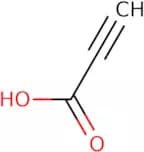
CAS:<p>Propiolic acid is a glucuronide conjugate that has been shown to inhibit the JAK1 protein. It is an organic compound with a hydroxyl group at the C-3 position and a trifluoroacetate ester at the C-4 position. Propiolic acid has been shown to be effective in treating autoimmune diseases in CD-1 mice. It is also used as an environmental agent for wastewater treatment, which can remove nitrogen from water by converting it into nitrate. The intramolecular hydrogen bond between carbonyl oxygen and hydroxyl oxygen has been shown to be responsible for its high solubility properties. This property is utilized in detergent compositions, where propiolic acid is added to break down fatty acids into their constituent parts of glycerol and fatty acids.</p>Formula:C3H2O2Purity:Min. 95%Color and Shape:Colorless Clear LiquidMolecular weight:70.05 g/mol4'-Hydroxy-3'-methylacetophenone
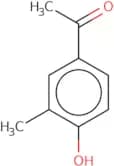
CAS:<p>4'-Hydroxy-3'-methylacetophenone is a chemical that has been shown to have antimycobacterial activity. This substance is an aldehyde with two hydroxyl groups and one methyl group. It has been shown to inhibit the growth of Mycobacterium tuberculosis in vitro by binding to κ-opioid receptors, which are proteins found on the outside of cells. 4'-Hydroxy-3'-methylacetophenone also inhibits mycobacteria through hydroxide solutions, chemical ionization, and vibrational spectroscopy.</p>Formula:C9H10O2Purity:Min. 95%Color and Shape:White PowderMolecular weight:150.17 g/mol4-Ethoxy-3-hydroxybenzaldehyde
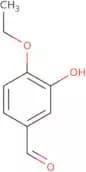
CAS:<p>4-Ethoxy-3-hydroxybenzaldehyde (4EHB) is a thioacetal that has been shown to be an effective precursor for the synthesis of many other molecules, such as combretastatin a-4. It is prepared by reaction of ethylmagnesium bromide and acetone. 4EHB has been shown to have antifungal properties in vitro, and can be used in the treatment of cancer cells. This compound is volatile and can be easily detected with headspace techniques. The functional group of this molecule is an alcohol group, which is found on the ring structure. Spectroscopic analysis shows that it has a carbonyl group with an OH group attached to it.</p>Formula:C9H10O3Purity:Min. 95%Color and Shape:Colorless PowderMolecular weight:166.17 g/mol4-(Trimethylsilyl)benzaldehyde
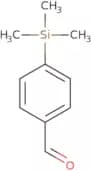
CAS:<p>4-(Trimethylsilyl)benzaldehyde is an undescribed monomer that has been synthesized in the laboratory. It is a centrosymmetric molecule with three phenyl groups and a silicon atom, which are connected by sulfonation. 4-(Trimethylsilyl)benzaldehyde can be used as a precursor to produce amines and covid-19 pandemic. The synthesis of 4-(trimethylsilyl)benzaldehyde can be regiospecifically achieved through chlorination, although this method is not efficient. The carbonyl group in this molecule can be used as part of a catalytic process for the synthesis of carbazones.</p>Formula:C10H14OSiPurity:90%Color and Shape:Clear LiquidMolecular weight:178.3 g/molPiperazin-2-one
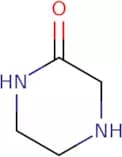
CAS:<p>Building block in medicinal chemistry</p>Formula:C4H8N2OPurity:Min. 95%Color and Shape:White PowderMolecular weight:100.12 g/molL-Tryptophan
CAS:<p>Tryptophan is a non-essential amino acid that has been shown to have an effect on mood, appetite, and sleep. L-Tryptophan is an essential amino acid. It is involved in the synthesis of serotonin and melatonin. The body breaks down tryptophan into 5-hydroxytryptophan (5HTP) and then into serotonin. Serotonin can be converted into melatonin by the pineal gland. Tryptophan levels are often low in people with depression and anxiety disorders. Tryptophan also has an effect on human gastrointestinal function, as it can stimulate gut motility and secretion of gastric acid and pepsinogen from the stomach lining. Tryptophan may also play a role in the discovery process, as it was found to increase the number of spontaneous oxidations in rat urine samples, which may be indicative of a new chemical reaction or drug discovery process.</p>Formula:C11H12N2O2Purity:Min. 98 Area-%Color and Shape:White PowderMolecular weight:204.23 g/mol2-Methoxyethanesulfonamide
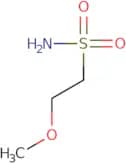
CAS:<p>Versatile small molecule scaffold</p>Formula:C3H9NO3SPurity:Min. 95%Color and Shape:Clear LiquidMolecular weight:139.17 g/molMetoprolol
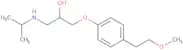
CAS:Controlled Product<p>Metoprolol is a drug that belongs to the group of beta-adrenergic blockers. It is used in the treatment of hypertension, angina pectoris, and heart attack. Metoprolol has been shown to be effective in treating congestive heart failure, high blood pressure and angina pectoris. Metoprolol slows down the heart rate by blocking beta-adrenergic receptors and also decreases the force with which the heart contracts. Metoprolol is not recommended for use in people with liver impairment or severe renal impairment because it can result in hypotension. This drug should not be taken by people who have asthma or suffer from chronic obstructive pulmonary disease (COPD) or who are allergic to metoprolol succinate.</p>Formula:C15H25NO3Purity:Min. 95%Molecular weight:267.36 g/mol4-Hydroxybenzamide
CAS:<p>4-Hydroxybenzamide is a fatty acid with the hydroxyl group at the 4 position. It has been shown to inhibit the activity of human protein by interfering with hydrogen bonding and amide formation. The chemical structures of 4-hydroxybenzamide have been studied by electrochemical impedance spectroscopy (EIS) and found to be a competitive inhibitor of 1-hydroxy-2-naphthoic acid, an adenosine receptor antagonist, and p-hydroxybenzoic acid. This compound has also been shown to be acutely toxic in rats at high doses.</p>Formula:C7H7NO2Purity:90%Color and Shape:PowderMolecular weight:137.14 g/mol4-Ethoxybenzaldehyde
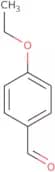
CAS:<p>4-Ethoxybenzaldehyde is a chemical compound with antioxidant properties. It has been found to inhibit the proliferation of cervical cancer cells and melanoma cells, as well as to protect against radiation-induced oxidative damage in human skin. 4-Ethoxybenzaldehyde also inhibits the influenza virus by interfering with its ability to replicate. This compound is used in many different products, including cosmetics and pharmaceuticals. The most common use of 4-ethoxybenzaldehyde is as an excipient in tablet formulations. In this application, it can be used to maintain drug stability and improve disintegration time. In addition, it may have some anti-inflammatory effects that are related to its ability to inhibit the production of prostaglandins and leukotrienes. 4-Ethoxybenzaldehyde has been shown to have antioxidant properties for diabetics as well as for patients with autoimmune diseases such as multiple sclerosis and systemic lupus erythematosus (SLE). The</p>Formula:C9H10O2Purity:Min. 98.5 Area-%Color and Shape:Colorless Clear LiquidMolecular weight:150.17 g/mol3-Hydroxybenzaldehyde
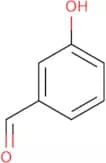
CAS:<p>3-Hydroxybenzaldehyde (3HBA) is an organic molecule that belongs to the group of substituted benzaldehydes. It has been shown to induce muscle cell proliferation in vitro and in vivo, as well as increased levels of activated caspase-3 in vitro. 3HBA also has a high resistance to hydrochloric acid, hydrogen bond, and chemical structures. It also shows properties of intramolecular hydrogen bonding and aldehyde groups. 3HBA has been shown to be active against malonic acid-induced pulmonary edema in rats, which may be due to its ability to inhibit the release of erythrocytes from the bone marrow into the circulation.</p>Formula:C7H6O2Purity:Min. 96 Area-%Color and Shape:Off-White PowderMolecular weight:122.12 g/mol3,4,5-Tribromobenzoic acid
CAS:<p>3,4,5-Tribromobenzoic acid is a metabolite of 3-indoleacetic acid. It is excreted in the urine and has a phaseolus-like physiological activity. This compound has been found to reduce the number of internodes in plants and increase the number of subjacent nodes. In addition, it has been shown to inhibit abscission (the separation of plant parts) by inhibiting the release of auxin from the upper node. The structural properties of 3,4,5-tribromobenzoic acid are similar to those of benzoic acid and it can be found naturally in some plants. Diversity in this chemical has been found among different species: for example, 2,3,5-triiodobenzoic acid is only present in citrus fruits such as oranges and lemons.</p>Formula:C7H3Br3O2Purity:Min. 95%Color and Shape:PowderMolecular weight:358.81 g/mol4-(4-Chlorophenyl)-1,2,3,6-tetrahydropyridine hydrochloride
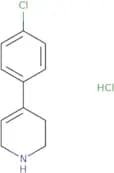
CAS:4-(4-Chlorophenyl)-1,2,3,6-tetrahydropyridine hydrochloride is a new chemical that belongs to the group of fine chemicals. It is a versatile building block and an intermediate for research chemicals. 4-(4-Chlorophenyl)-1,2,3,6-tetrahydropyridine hydrochloride has been shown to have a high quality level and can be used as a reagent in the synthesis of complex compounds.Formula:C11H13Cl2NPurity:Min. 95%Color and Shape:PowderMolecular weight:230.13 g/molN-Methyl-β-alaninenitrile
CAS:<p>N-Methyl-beta-alaninenitrile is a fine chemical that is used as a versatile building block in the synthesis of complex compounds. It can be used as a reagent to synthesize other chemicals, or as an intermediate in the production of pharmaceuticals. N-Methyl-beta-alaninenitrile is also useful in the synthesis of high quality and useful scaffolds.</p>Formula:C4H8N2Purity:Min. 98.0 Area-%Molecular weight:84.12 g/mol


![2-Azaspiro[3.5]nonane hydrochloride](/_next/image/?url=https%3A%2Fstatic.cymitquimica.com%2Fproducts%2F3D%2Fthumb-webp%2FDCC96807.webp&w=3840&q=75)