Building Blocks
This section contains fundamental products for the synthesis of organic and biological compounds. Building blocks are the essential starting materials used to construct complex molecules through various chemical reactions. They play a critical role in drug discovery, material science, and chemical research. At CymitQuimica, we offer a diverse range of high-quality building blocks to support your innovative research and industrial projects, ensuring you have the essential components for successful synthesis.
Subcategories of "Building Blocks"
- Boronic Acids & Boronic Acid Derivatives(5,778 products)
- Chiral Building Blocks(1,242 products)
- Hydrocarbon Building Blocks(6,098 products)
- Organic Building Blocks(61,034 products)
Found 199601 products of "Building Blocks"
Sort by
Purity (%)
0
100
|
0
|
50
|
90
|
95
|
100
2,5-Thiophenedicarboxaldehyde
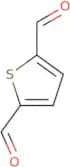
CAS:<p>2,5-Thiophenedicarboxaldehyde (2,5-TDA) is a macrocyclic nitrogen heterocycle that activates the protein kinase cAMP-dependent protein kinase A. This activation leads to increased transcription of genes controlled by this pathway and may be involved in tumor treatment. 2,5-TDA has been shown to be toxic to amines and can be used as an analytical chemistry reagent. It is also used as a starting material for the synthesis of other compounds. 2,5-TDA is prepared by oxidation of thiophene with hydrochloric acid or trifluoroacetic acid. The reaction results in an irreversible oxidation that proceeds via a radical mechanism. The isolated yield is low because 2,5-TDA is thermodynamically unstable and decomposes at higher temperatures.</p>Formula:C6H4O2SPurity:Min. 95%Color and Shape:PowderMolecular weight:140.16 g/mol5-Azetidin-3-yl-3-methyl-[1,2,4]oxadiazole hydrochloride
CAS:<p>5-Azetidin-3-yl-3-methyl-[1,2,4]oxadiazole hydrochloride is a solid that is used as a reagent in the preparation of other chemicals. This chemical has been shown to be useful in the synthesis of complex compounds, such as pharmaceuticals and pesticides.</p>Formula:C6H9N3O•HClPurity:Min. 95%Color and Shape:PowderMolecular weight:175.62 g/mol(1S)-3-(Methylsulfanyl)-1-(2H-1,2,3,4-tetrazol-5-yl)propan-1-amine
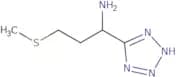
CAS:Versatile small molecule scaffoldFormula:C5H11N5SPurity:Min. 95%Color and Shape:PowderMolecular weight:173.24 g/mol8-(tert-Butoxycarbonyl)-1-oxa-8-azaspiro[4.5]decane-2-carboxylic acid
CAS:<p>8-(tert-Butoxycarbonyl)-1-oxa-8-azaspiro[4.5]decane-2-carboxylic acid is a useful scaffold for the preparation of new compounds. This compound is an intermediate in the synthesis of other compounds, and can be used as a building block in the synthesis of complex compounds. It has been used as a reagent for organic reactions and has shown high quality. 8-(tert-Butoxycarbonyl)-1-oxa-8-azaspiro[4.5]decane-2-carboxylic acid is also known by CAS No. 1160246-88-7 and has a variety of speciality uses, such as research chemicals or fine chemicals.</p>Formula:C14H23NO5Purity:Min. 95%Molecular weight:285.34 g/mol4-Amino-3-chloro-N-[2-(diethylamino)ethyl]benzamide
CAS:4-Amino-3-chloro-N-[2-(diethylamino)ethyl]benzamide (4ACB) is a benzoquinone analog that has been shown to inhibit the proliferation of muscle cells. It has also been found to be reactive with reactive functional groups, such as the fatty acids found in the liver and bowel. 4ACB suppresses mitochondrial functions, which may contribute to its anti-inflammatory effects. This drug is also a pharmacological agent that inhibits bowel disease by reducing the secretion of inflammatory substances from cells in the bowel.Formula:C13H20ClN3OPurity:Min. 95%Color and Shape:PowderMolecular weight:269.77 g/mol1-Phenyl-1,3-diazinane-2,4-dione
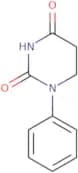
CAS:<p>1-Phenyl-1,3-diazinane-2,4-dione is a synthetic molecule that has been found to be active against influenza virus. It inhibits the replication of influenza A and B viruses by inhibiting the enzyme dihydropyrimidinase. This compound also has an effect on parasitic worms and animal health. 1-Phenyl-1,3-diazinane-2,4-dione is used in research for the development of new drugs. The chemical properties of this drug are similar to β-amino acids that are known to inhibit the synthesis of proteins such as rna polymerase and transporter proteins.</p>Formula:C10H10N2O2Purity:Min. 95%Color and Shape:PowderMolecular weight:190.2 g/molNudifloramide
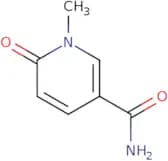
CAS:<p>Nudifloramide is an adenine nucleotide that functions in the synthesis of DNA and RNA. It has been shown to inhibit the activities of enzymes such as glutamine synthetase, glutamate dehydrogenase, and cytochrome P450. Nudifloramide is a component of cervical cancer cells and has been shown to have clinical relevance in the diagnosis of this disease. This molecule has also been found to be present in high-sensitivity C-reactive protein samples, which are used for diagnosing chronic inflammation.</p>Formula:C7H8N2O2Purity:Min. 95%Color and Shape:PowderMolecular weight:152.15 g/mol5-(Hydroxymethyl)-2-methylpyrimidin-4(1H)-one
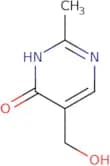
CAS:5-(Hydroxymethyl)-2-methylpyrimidin-4(1H)-one is a pyrimidine compound that is used as an intermediate in the synthesis of other compounds. 5-(Hydroxymethyl)-2-methylpyrimidin-4(1H)-one is converted to 2,5-dihydro-5-[(hydroxymethyl)amino]pyrimidine-4,6-dione by the enzyme glutamic decarboxylase and may be metabolized to form 2,5-dihydro-5-[(hydroxymethyl)amino]-4,6,-dimethylpyrimidine by microorganisms. It can also be converted to 5-(hydroxymethyl)amino-2,6-dimethylpyrimidine by the enzyme carboxypeptidase B. This compound is used in biochemical analyses and has shown to damage the cellular structure of microorganisms. ItFormula:C6H8N2O2Purity:Min. 95%Color and Shape:PowderMolecular weight:140.14 g/mol2-Chloro-4-cyclopropyl-1,3-thiazole
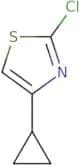
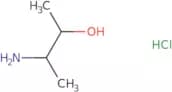
CAS:<p>Versatile small molecule scaffold</p>Formula:C6H6ClNSPurity:Min. 90%Color and Shape:Clear LiquidMolecular weight:159.64 g/mol(2S,3S)-3-Aminobutan-2-ol hydrochloride
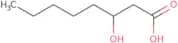
CAS:(2S,3S)-3-Aminobutan-2-ol hydrochloride is a high quality chemical that is used as a reagent, intermediate in the production of fine chemicals, and building block for synthesis of other compounds. It is also an important building block in the preparation of speciality chemicals. This compound can be used as an intermediate for the synthesis of various pharmaceuticals, pesticides, dyes, and flavors. (2S,3S)-3-Aminobutan-2-ol hydrochloride can be used in research to prepare new compounds with different properties. It is also a versatile building block that can be used to synthesize many different types of products.Formula:C4H12ClNOPurity:Min. 95%Color and Shape:Clear LiquidMolecular weight:125.6 g/mol(3R)-3-Hydroxyoctanoic acid
CAS:<p>(3R)-3-Hydroxyoctanoic acid is a fatty acid that is produced in the cytoplasm from acetyl-CoA. This chemical can be synthesized by immobilizing acyl-CoA synthase on a surface, which has been shown to increase its activity and extend the duration of its action. This immobilization technique has been used for the production of monomers, which are then polymerized to form polyesters with high molecular weight. (3R)-3-Hydroxyoctanoic acid is also involved in the biosynthesis of phospholipids, glycerophospholipids, and sphingolipids. The biochemical properties of this molecule have been studied using in vitro assays.</p>Formula:C8H16O3Purity:Min. 95%Color and Shape:PowderMolecular weight:160.21 g/molTricyclo[2.2.1.0,2,6]heptane-1-carboxylic acid
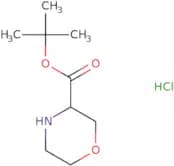
CAS:<p>Versatile small molecule scaffold</p>Formula:C8H10O2Purity:Min. 95%Molecular weight:138.16 g/moltert-Butyl morpholine-3-carboxylate hydrochloride
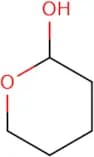
CAS:<p>tert-Butyl morpholine-3-carboxylate hydrochloride is a high quality reagent that is a useful intermediate, fine chemical, and speciality chemical. It is also a versatile building block with a wide range of applications and can be used as a reaction component in the synthesis of complex compounds. This compound has been shown to have high reactivity in organic synthesis with good solubility and thermal stability.</p>Formula:C9H18ClNO3Purity:Min. 95%Color and Shape:PowderMolecular weight:223.7 g/molTetrahydro-2H-pyran-2-ol
CAS:<p>Tetrahydro-2H-pyran-2-ol is a chemical compound that belongs to the class of organic compounds called alcohols. It has been shown to have a taste and smell similar to ethyl alcohol, but can be distinguished by its higher boiling point. Tetrahydro-2H-pyran-2-ol is also used as a biological sample in assays for metabolic disorders and as a reactant in cell lysis reactions. This alcohol binds with proteins, which may be due to hydrogen bonding interactions between the hydroxyl group on the alcohol and the amide group on the proteins. The conformational properties of tetrahydro-2H-pyran-2-ol are dependent on its intramolecular hydrogen bonds, which can be broken by x-ray diffraction data.</p>Formula:C20H21N3O2Purity:Min. 95%Molecular weight:335.4 g/mol1-(3-Aminopropyl)-N,N-dimethylpiperidin-4-amine
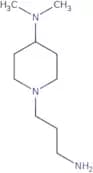
CAS:<p>Versatile small molecule scaffold</p>Formula:C10H23N3Purity:Min. 95%Color and Shape:PowderMolecular weight:185.31 g/mol5-(2-Bromoethyl)-4-methyl-1,3-thiazole
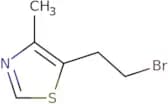
CAS:<p>Versatile small molecule scaffold</p>Formula:C6H8BrNSPurity:Min. 95%Molecular weight:206.11 g/mol1-Phenyl-3-(propan-2-yl)urea
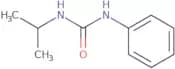
CAS:<p>1-Phenyl-3-(propan-2-yl)urea is a chemical compound that is used in the synthesis of organic compounds. It has been shown to be useful as a building block and also has applications in the preparation of complex compounds. 1-Phenyl-3-(propan-2-yl)urea can be used as a reagent for reactions involving esterification, hydrolysis, cyclization, and nitration. The compound is also useful for research purposes and can be used as an intermediate for other chemicals.</p>Formula:C10H14N2OPurity:Min. 95%Color and Shape:PowderMolecular weight:178.23 g/mol4-[(1E)-2-(3-Hydroxyphenyl)ethenyl]phenol
CAS:<p>4-[(1E)-2-(3-Hydroxyphenyl)ethenyl]phenol is a metabolite of estrone sulfate. It is a potent estrogen that can be used in the treatment of prostate cancer, to inhibit the growth of cancer cells. 4-[(1E)-2-(3-Hydroxyphenyl)ethenyl]phenol has been shown to have antiestrogenic activity in breast cancer cell lines and to inhibit the formation of estrogen analogs in vitro. 4-[(1E)-2-(3-Hydroxyphenyl)ethenyl]phenol has been used as an estrogen receptor ligand in transfection experiments with human breast cancer cells, resulting in inhibition of target gene expression. The molecule also inhibits DNA polymerase activity and is believed to form carcinogenic nitrosamines and diazonium ions when subjected to nitrite and hydrogen peroxide. This molecule also exhibits weak antioxidant activity, which may be</p>Formula:C14H12O2Purity:Min. 95%Color and Shape:PowderMolecular weight:212.24 g/mol(R)-1-(Thiazol-2-yl)ethanamine dihydrochloride
CAS:<p>Versatile small molecule scaffold</p>Formula:C5H8N2S•(HCl)2Purity:Min. 95%Color and Shape:PowderMolecular weight:200.66 g/mol2-Methyl-3-phenylpyrazine
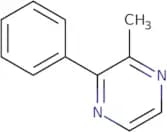
CAS:<p>2-Methyl-3-phenylpyrazine is an organic compound that is a yellow crystalline solid. Its electronic structures are determined by the molecular orbitals, which determine the probability of finding electrons in different regions of space. Excitons are pairs of photons that have been emitted due to the interaction between two molecules, and can be measured with devices such as spectroscopes or photomultipliers. 2-Methyl-3-phenylpyrazine has been used to synthesize carbenes, which are ligands for organometallic compounds. It has also been used in singlet catalysis, where it coordinates with a metal atom to activate another molecule and form a new chemical bond.</p>Formula:C11H10N2Purity:Min. 95%Color and Shape:PowderMolecular weight:170.21 g/mol

![5-Azetidin-3-yl-3-methyl-[1,2,4]oxadiazole hydrochloride](/_next/image/?url=https%3A%2Fstatic.cymitquimica.com%2Fproducts%2F3D%2Fthumb-webp%2FKXB30398.webp&w=3840&q=75)
![8-(tert-Butoxycarbonyl)-1-oxa-8-azaspiro[4.5]decane-2-carboxylic acid](/_next/image/?url=https%3A%2Fstatic.cymitquimica.com%2Fproducts%2F3D%2Fthumb-webp%2FKWB24688.webp&w=3840&q=75)
![4-Amino-3-chloro-N-[2-(diethylamino)ethyl]benzamide](/_next/image/?url=https%3A%2Fstatic.cymitquimica.com%2Fproducts%2F3D%2Fthumb-webp%2FAAA89160.webp&w=3840&q=75)
![Tricyclo[2.2.1.0,2,6]heptane-1-carboxylic acid](/_next/image/?url=https%3A%2Fstatic.cymitquimica.com%2Fproducts%2F3D%2Fthumb-webp%2FAAA69725.webp&w=3840&q=75)
![4-[(1E)-2-(3-Hydroxyphenyl)ethenyl]phenol](/_next/image/?url=https%3A%2Fstatic.cymitquimica.com%2Fproducts%2F3D%2Fthumb-webp%2FNCA87776.webp&w=3840&q=75)