Building Blocks
This section contains fundamental products for the synthesis of organic and biological compounds. Building blocks are the essential starting materials used to construct complex molecules through various chemical reactions. They play a critical role in drug discovery, material science, and chemical research. At CymitQuimica, we offer a diverse range of high-quality building blocks to support your innovative research and industrial projects, ensuring you have the essential components for successful synthesis.
Subcategories of "Building Blocks"
- Boronic Acids & Boronic Acid Derivatives(5,756 products)
- Chiral Building Blocks(1,242 products)
- Hydrocarbon Building Blocks(6,095 products)
- Organic Building Blocks(61,051 products)
Found 199813 products of "Building Blocks"
Sort by
Purity (%)
0
100
|
0
|
50
|
90
|
95
|
100
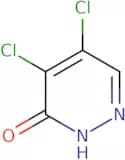
4,5-Dichloro-3-hydroxypyridazine
CAS:<p>4,5-Dichloro-3-hydroxypyridazine is an organic compound that is used as a precursor to other compounds. It has been shown to be genotoxic and mutagenic in a number of assays with mammalian cells. 4,5-Dichloro-3-hydroxypyridazine reacts with phenols in the presence of Friedel-Crafts catalysts to form pyridine derivatives. It has also been shown to regulate transcriptional activity by binding to the prostacyclin receptor and α2-adrenergic receptor. This compound has been studied for its potential diagnostic value in the diagnosis of triticum aestivum (wheat) sensitivity.</p>Formula:C4H2Cl2N2OPurity:Min. 95%Color and Shape:PowderMolecular weight:164.98 g/mol2,4,6-Tribromo-3-hydroxybenzaldehyde
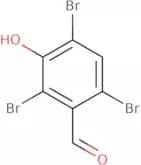
CAS:<p>2,4,6-Tribromo-3-hydroxybenzaldehyde (2,4,6-TBHB) is an aldehyde that is synthesized from the reaction of 2,4,6-trichlorobenzaldehyde and bromine. It has been shown to be cytotoxic in tumour cell lines in vitro. This compound binds to DNA by covalent binding and inhibits the synthesis of proteins. 2,4,6-TBHB also inhibits cellular uptake of halides such as chloride and bromide ions. This aldehyde has been shown to induce cell death in human lung cancer cells in a concentration dependent manner.</p>Formula:C7H3Br3O2Purity:Min. 95%Color and Shape:PowderMolecular weight:358.81 g/mol2-(Morpholin-4-yl)-1,3-benzothiazole
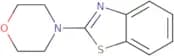
CAS:<p>2-(Morpholin-4-yl)-1,3-benzothiazole is a natural product that is found in the soil. It can be synthesized by reacting benzotriazole with morpholine and an acid catalyst. This compound has been used as a chromatographic stationary phase for the analysis of hydrocarbons and other organic compounds. The experimentally determined profile of this substance consists of peaks at m/z 265, 273, and 289. The technique used to detect these peaks was photometric.</p>Formula:C11H12N2OSPurity:Min. 95%Color and Shape:PowderMolecular weight:220.29 g/mol3-{2,8,9-Trioxa-5-aza-1-silabicyclo[3.3.3]undecan-1-yl}propan-1-amine
CAS:<p>3-{2,8,9-Trioxa-5-aza-1-silabicyclo[3.3.3]undecan-1-yl}propan-1-amine (TPAP) is a reactive molecule. It has been immobilized on silicon and titanium surfaces and has shown photocatalytic activity in the presence of oxygen. TPAP is highly resistant to acidic environments and can be used as an immobilization agent for other molecules. TPAP is also labile to hydrolysis and will react with water, releasing ammonia gas, which can be a problem in some applications. TPAP is not active against bacteria or fungi but does have growth rate inhibiting effects on yeast cells.</p>Formula:C9H20N2O3SiPurity:Min. 95%Color and Shape:PowderMolecular weight:232.35 g/mol1,4-Dibromo-2,5-difluorobenzene
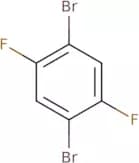
CAS:<p>1,4-Dibromo-2,5-difluorobenzene is a synthetic compound that is used as a building block for the synthesis of polymers. It is also a natural product that can be isolated from plant material and has been shown to have antimicrobial properties. 1,4-Dibromo-2,5-difluorobenzene has been shown to have an acceptor group and it polymerizes in the presence of free radicals. This compound has been studied using gel permeation chromatography, x-ray structures, and microscopy studies. It is a nonpolar solvent at room temperature and its fluoro group makes it reactive with other polar solvents such as water.</p>Formula:C6H2Br2F2Purity:Min. 95%Color and Shape:PowderMolecular weight:271.88 g/mol2-(4-Chlorophenoxy)-3-methylbutanoic acid
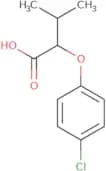
CAS:<p>Versatile small molecule scaffold</p>Formula:C11H13ClO3Purity:Min. 95%Color and Shape:PowderMolecular weight:228.67 g/molEthyl 6-Bromoindole-2-carboxylate
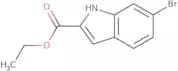
CAS:Please enquire for more information about Ethyl 6-Bromoindole-2-carboxylate including the price, delivery time and more detailed product information at the technical inquiry form on this pageFormula:C11H10BrNO2Purity:Min. 95%Molecular weight:268.11 g/molEthyl 5-methylindole-2-carboxylate
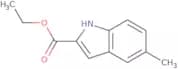
CAS:<p>Ethyl 5-methylindole-2-carboxylate is an antioxidant that is used as a reagent in the synthesis of other compounds. It has been shown to inhibit cancer cell growth in vitro via its ability to inhibit the metabolic activity of human hepatoma cells. Ethyl 5-methylindole-2-carboxylate has also been shown to have cytotoxic activity against human hepatoma cells in vitro, and may be a potential anticancer drug candidate.</p>Formula:C12H13NO2Purity:Min. 95%Color and Shape:PowderMolecular weight:203.24 g/mol2-(Aminomethyl)-1,3-thiazole-4-carboxamide
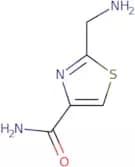
CAS:2-(Aminomethyl)-1,3-thiazole-4-carboxamide is a chemical compound that can be used as a chemical reagent and as a reaction component. It is a versatile building block with many possible uses. 2-(Aminomethyl)-1,3-thiazole-4-carboxamide has been shown to be useful in the synthesis of complex compounds and fine chemicals. It is also an intermediate for the production of pharmaceuticals and other research chemicals.Formula:C5H7N3OSPurity:Min. 95%Color and Shape:PowderMolecular weight:157.2 g/mol3,4,5-Trihydroxybenzaldehyde monohydrate
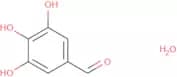
CAS:<p>3,4,5-Trihydroxybenzaldehyde monohydrate is a chemical compound that belongs to the class of aromatic hydrocarbons. It has been shown to have a neurotoxic effect on the mouse brain and is used in the diagnosis of neurological diseases. 3,4,5-Trihydroxybenzaldehyde monohydrate is also used as an intermediate in the synthesis of other chemicals. The molecular formula for this substance is C9H7O3 and it contains three nitrogen atoms. The molecular weight is 179.06 g/mol and its sequence length is 707 amino acids long. This substance has been found to be present in humans with chronic kidney disease and insulin resistance.</p>Formula:C7H6O4·H2OPurity:(%) Min. 95%Color and Shape:PowderMolecular weight:172.14 g/mol6-Methoxy-2-methyl-1,2,3,4-tetrahydroquinoline
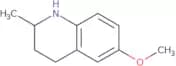
CAS:<p>Versatile small molecule scaffold</p>Formula:C11H15NOPurity:Min. 95%Color and Shape:PowderMolecular weight:177.24 g/mol(2S,5R)-5-Methyl-2-prop-1-en-2-ylcyclohexan-1-one
CAS:<p>(2S,5R)-5-Methyl-2-prop-1-en-2-ylcyclohexan-1-one is a natural product that is structurally similar to the antibiotic piperitone. It has significant antifungal activity and was found to have minimal inhibitory concentration values against bacterial enzymes. The compound has been shown to bind to dinucleotide phosphate and inhibit bacterial enzyme catalysis. This inhibition leads to an accumulation of substrates for the enzyme and a decrease in the production of ATP. (2S,5R)-5-Methyl-2-prop-1-en-2-ylcyclohexanone inhibits the growth of Candida albicans and Cryptococcus neoformans strains but not Trichophyton mentagrophytes. This may be due to its ability to bind with high affinity to rat liver microsomes, but not human microsomes. (2S,5R)-5</p>Formula:C10H16OPurity:Min. 95%Color and Shape:Clear LiquidMolecular weight:152.23 g/mol(Aminomethyl)dimethylphenylsilane
CAS:<p>Aminomethyl)dimethylphenylsilane is a polarizer that has shown growth inhibitory activity against pancreatic carcinoma cells. It has also been found to have pharmacological properties, including anti-cancer and anti-inflammatory effects. Aminomethyl)dimethylphenylsilane is non-selective and non-steroidal, meaning it can inhibit the synthesis of prostaglandins and other eicosanoids. This drug has been shown to be toxic in humans, with side effects such as cardiovascular disorders, alzheimer 's disease, and cancer cell growth.</p>Formula:C9H15NSiPurity:Min. 95%Molecular weight:165.31 g/mol2,2,2-Trifluoroethanol
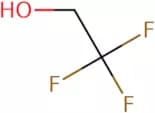
CAS:<p>2,2,2-Trifluoroethanol is a trifluoroacetic acid analogue that has been shown to be an effective antimicrobial agent. It binds to the active site of the enzyme enoyl reductase, inhibiting the synthesis of fatty acids and disrupting cell membrane function. 2,2,2-Trifluoroethanol has also been shown to have anti-inflammatory effects. The drug binds to human serum albumin and inhibits hydrogen peroxide release from neutrophils. This complexation with albumin prevents the release of hydroxyl radicals that are generated in response to oxidative stress. Intramolecular hydrogen bonding between 2,2,2-trifluoroethanol molecules may also contribute to its activity as a natural drug.</p>Formula:C2H3F3OPurity:Min. 95%Color and Shape:Clear LiquidMolecular weight:100.04 g/mol1,1'-(4,6-Dihydroxy-5-methyl-1,3-phenylene)diethanone
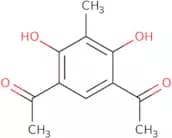
CAS:<p>1,1'-(4,6-Dihydroxy-5-methyl-1,3-phenylene)diethanone is a versatile building block that can be used in the synthesis of complex compounds. This compound is a useful intermediate for research chemicals and reagents. It has been shown to be an effective catalyst for the production of high quality products.</p>Formula:C11H12O4Purity:Min. 95%Color and Shape:Yellow To Brown SolidMolecular weight:208.21 g/mol4,5-Dimethoxy-2-nitrobenzoic acid - Technical
CAS:<p>4,5-Dimethoxy-2-nitrobenzoic acid is a versatile building block and reagent that can be used in research and development as well as for the production of fine chemicals. This compound has been shown to react with amines using the nitration reaction to produce a variety of useful compounds. The synthesis of this compound is not difficult, but requires care and some speciality chemicals. 4,5-Dimethoxy-2-nitrobenzoic acid is also a useful scaffold for complex compounds. It reacts readily with other building blocks to form nitrogen heterocycles and is used in the production of pharmaceuticals and pesticides.</p>Formula:C9H9NO6Purity:Min. 95%Molecular weight:227.17 g/mol3-(Difluoromethyl)-1-methyl-1H-pyrazole-4-carboxamide
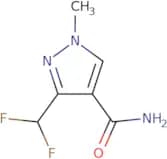
CAS:<p>This drug is a pyrazole analog and is used as an insecticide. 3-(Difluoromethyl)-1-methyl-1H-pyrazole-4-carboxamide inhibits the growth of insects by interfering with their ability to synthesize fatty acids. The effective dose for this compound has been determined in rat hepatocytes. Target pest includes bromodomain proteins, which are proteins that regulate DNA transcription and replication. Control agents include n-oxide, fatty acid, and carbonyl group. Risk group includes prioritizing monoclonal antibodies, sequences, and heart disease</p>Formula:C6H7F2N3OPurity:Min. 95%Molecular weight:175.14 g/mol4-(2,5-Dimethyl-1H-pyrrol-1-yl)-N-(2,5-dioxopyrrolidin-1-yl)benzamide
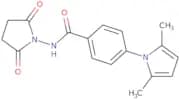
CAS:4-(2,5-Dimethyl-1H-pyrrol-1-yl)-N-(2,5-dioxopyrrolidin-1-yl)benzamide is a useful scaffold that can be used to synthesize high quality and versatile building blocks. This compound is also a useful intermediate in the synthesis of complex compounds. This chemical is not an approved pharmaceutical, but it has shown promising activity as an antihistamine.Formula:C17H17N3O3Purity:Min. 95%Molecular weight:311.33 g/molN,N'-Thiocarbonyldiimidazole
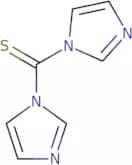
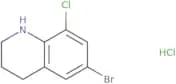
CAS:<p>N,N'-Thiocarbonyldiimidazole is a potent inhibitor of the enzyme acetylcholinesterase. It is used in research as an inhibitor molecule for receptor activity and to study the mechanism of action of other drugs. N,N'-Thiocarbonyldiimidazole inhibits the production of ester hydrochloride by rat liver microsomes and muscle cell proliferation. In addition, this compound has been shown to be a protonophore that can transport protons across membranes without energy input. This can be done through Langmuir adsorption isotherm and electrochemical impedance spectroscopy.</p>Formula:C7H6N4SPurity:Min. 95%Color and Shape:Yellow PowderMolecular weight:178.22 g/mol6-Bromo-8-chloro-1,2,3,4-tetrahydroquinoline hydrochloride
CAS:<p>Versatile small molecule scaffold</p>Formula:C9H10BrCl2NPurity:Min. 95%Color and Shape:PowderMolecular weight:282.99 g/mol

![3-{2,8,9-Trioxa-5-aza-1-silabicyclo[3.3.3]undecan-1-yl}propan-1-amine](/_next/image/?url=https%3A%2Fstatic.cymitquimica.com%2Fproducts%2F3D%2Fthumb-webp%2FSAA86927.webp&w=3840&q=75)