


Building Blocks
This section contains fundamental products for the synthesis of organic and biological compounds. Building blocks are the essential starting materials used to construct complex molecules through various chemical reactions. They play a critical role in drug discovery, material science, and chemical research. At CymitQuimica, we offer a diverse range of high-quality building blocks to support your innovative research and industrial projects, ensuring you have the essential components for successful synthesis.
Subcategories of "Building Blocks"
- Boronic Acids & Boronic Acid Derivatives(5,778 products)
- Chiral Building Blocks(1,242 products)
- Hydrocarbon Building Blocks(6,098 products)
- Organic Building Blocks(61,098 products)
Found 199594 products of "Building Blocks"
Sort by
Purity (%)
0
100
|
0
|
50
|
90
|
95
|
100
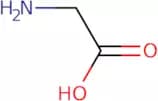
Glycine
CAS:<p>Glycine is the simplest amino acid and is used as a reagent for the synthesis of proteins. It is also a component of buffer solutions to maintain a stable pH in lab applications like electrophoresis and enzyme assays.</p>Formula:NH2CH2COOHColor and Shape:White Off-White PowderMolecular weight:75.07 g/molGlyceryl-4-aminobenzoate monomer
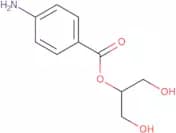
CAS:<p>Glyceryl-4-aminobenzoate monomer is a fine chemical that is an important building block in the synthesis of a variety of complex compounds. It has been used as a reagent and intermediate in research and development of pharmaceuticals and agrochemicals. Glyceryl-4-aminobenzoate monomer is a versatile building block, which can be used to form polymers, coatings, adhesives, elastomers, polyurethanes, and more. The compound also has been shown to have anticancer activity against human breast cancer cells.</p>Formula:C10H13NO4Purity:Min. 75 Area-%Color and Shape:Off-white to beige solid.Molecular weight:211.21 g/molGallaldehyde hemihydrate
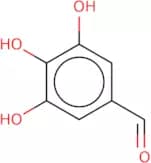
CAS:<p>Gallaldehyde hemihydrate is a bioactive phenolic compound that inhibits the tyrosine kinase domain of the epidermal growth factor receptor (EGFR). It has been shown to inhibit tumor cell growth and induce apoptosis in cancer tissues. Gallaldehyde hemihydrate has also been found in lentils, which might be used as a potential biomarker for this compound. The optimum pH for gallaldehyde hemihydrate is between 2.0-4.0, and it can bind to cation channels and act as a potential biomarker for skin cancer cells.</p>Formula:C7H6O4Purity:Min. 95%Color and Shape:PowderMolecular weight:154.12 g/mol7-Fluoro-2-methyl-1H-indole
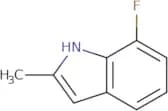
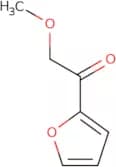
CAS:<p>7-Fluoro-2-methyl-1H-indole is a chemical compound that can be used as a building block to synthesize other organic compounds. The compound is also useful as a reagent in reactions such as the conversion of nitrobenzene to aniline. 7-Fluoro-2-methyl-1H-indole is soluble in acetone, chloroform, and ether. It has CAS number 432025-24-6, which identifies it as a fine chemical with many uses.</p>Formula:C9H8FNPurity:Min. 95%Color and Shape:White PowderMolecular weight:149.16 g/mol1-(Furan-2-yl)-2-methoxyethan-1-one
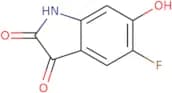
CAS:<p>Versatile small molecule scaffold</p>Formula:C7H8O3Purity:Min. 95%Color and Shape:Clear LiquidMolecular weight:140.14 g/mol5-Fluoro-6-hydroxy-2,3-dihydro-1H-indole-2,3-dione
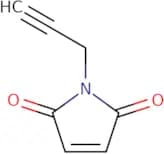
CAS:<p>5-Fluoro-6-hydroxy-2,3-dihydro-1H-indole-2,3-dione is a reagent and useful scaffold for the synthesis of complex compounds. It is a versatile building block that can be used as a precursor in the synthesis of a range of heterocyclic compounds. 5FHDI has been shown to be an excellent reaction component and useful intermediate in organic chemistry. This compound can be used to synthesize various speciality chemicals, such as pesticides and herbicides. 5FHDI is also used as a building block for the synthesis of drugs and pharmaceuticals.</p>Formula:C8H4FNO3Purity:Min. 95%Molecular weight:181.12 g/mol1-(Prop-2-yn-1-yl)-2,5-dihydro-1H-pyrrole-2,5-dione
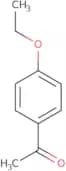
CAS:1,2-Dihydropyrrolo[3,4-b]pyrrole-2,5-dione is a fine chemical that is used as a research chemical and in the synthesis of complex organic compounds. It is also an intermediate for the production of other chemicals. This compound can be used as a building block for the synthesis of many other chemicals with pharmaceutical and industrial applications. 1,2-Dihydropyrrolo[3,4-b]pyrrole-2,5-dione has been shown to be a useful reagent that can react with various functional groups to form new compounds and has found use in many industries.Formula:C7H5NO2Purity:Min. 95%Color and Shape:PowderMolecular weight:135.12 g/mol4'-Ethoxyacetophenone
CAS:<p>Anti-bacterial agent; reagent for polymerization</p>Formula:C10H12O2Purity:Min. 98 Area-%Color and Shape:Slightly Yellow PowderMolecular weight:164.2 g/mol2-Ethoxybenzamide
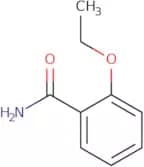
CAS:<p>2-Ethoxybenzamide is a nonsteroidal anti-inflammatory drug that has been shown to inhibit the production of inflammatory prostaglandins. It is structurally similar to ethenzamide, an older drug in this class. 2-Ethoxybenzamide is used for the treatment of pain and inflammation, as well as for other conditions such as gout and rheumatoid arthritis. The molecular formula for 2-ethoxybenzamide is C6H11NO2 and its molecular weight is 169.21 grams per mole. It has a melting point of 75 degrees Celsius and a boiling point of 220 degrees Celsius at atmospheric pressure. This compound can be found in crystalline cellulose, analytical method, water vapor, experimental solubility data, wastewater treatment, ethylmalonic acid, human serum, structural analysis.</p>Formula:C9H11NO2Purity:Min. 95%Color and Shape:White PowderMolecular weight:165.19 g/molEthyl 2-amino-4-methylthiophene-3-carboxylate
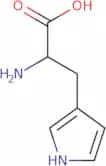
CAS:<p>Ethyl 2-amino-4-methylthiophene-3-carboxylate (EMTC) is a cytotoxic agent. It inhibits the HIV virus by interfering with the synthesis of viral proteins. EMTC has been shown to be effective against cancer cells, but not against healthy cells. The cytotoxic effect of EMTC is related to its ability to inhibit DNA synthesis and RNA transcription in both normal and cancer cells, which leads to cell death.</p>Formula:C8H11NO2SPurity:Min. 95%Color and Shape:PowderMolecular weight:185.24 g/mol2-Amino-3-(1H-pyrrol-3-yl)propanoic acid
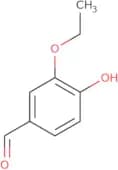
CAS:<p>Versatile small molecule scaffold</p>Formula:C7H10N2O2Purity:Min. 95%Color and Shape:PowderMolecular weight:154.17 g/mol3-Ethoxy-4-hydroxybenzaldehyde
CAS:<p>3-Ethoxy-4-hydroxybenzaldehyde is an active analogue of p-hydroxybenzoic acid that can be used in the synthesis of vanillin. 3-Ethoxy-4-hydroxybenzaldehyde is extracted from a reaction solution using solid phase microextraction, and can then be analyzed by gas chromatography/mass spectrometry to determine the concentration of vanillin. This compound has been shown to have a solubility in water, but not in organic solvents. 3-Ethoxy-4-hydroxybenzaldehyde has been found to inhibit cytochrome P450 activity and polyvinyl chloride production. This chemical compound has also been found to be toxic when inhaled or ingested, with no known toxicity studies for skin contact or eye contact.</p>Formula:C9H10O3Purity:Min. 95%Color and Shape:White PowderMolecular weight:166.17 g/molEthyl 3-aminobenzoate
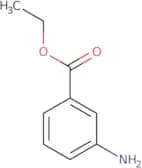
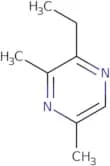
CAS:<p>Ethyl 3-aminobenzoate is a chemical that is used as an anesthetic. It is administered intravenously and has been shown to have effects on the cardiovascular system, such as lowering blood pressure, decreasing heart rate and increasing the time it takes for the heart to recover after a contraction. Ethyl 3-aminobenzoate also affects the central nervous system by causing anesthesia and changes in brain function. Its effects are reversible with administration of naloxone or flumazenil.</p>Formula:C9H11NO2Purity:Min. 95%Color and Shape:PowderMolecular weight:165.19 g/mol2-Ethyl-3,5-dimethylpyrazine
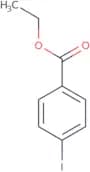
CAS:<p>2-Ethyl-3,5-dimethylpyrazine (2E-DMP) is a fatty acid that is produced by the reaction of unsaturated ketones and fatty acids. 2E-DMP has been shown to have an inhibitory effect on the activity of kidney bean lipoxygenase. It also inhibits the growth of mammalian cells in culture. 2E-DMP has a molecular weight of 152.24, a melting point of -50 degrees Celsius, and a boiling point at 230 degrees Celsius. The compound has not been tested for carcinogenic or mutagenic effects in mammals or humans.</p>Formula:C8H12N2Purity:Min. 95%Color and Shape:Clear LiquidMolecular weight:136.19 g/molEthyl 4-iodobenzoate
CAS:<p>Ethyl 4-iodobenzoate is an amide that reacts with a variety of substances, including retinoic acid and pemetrexed. It is a reactive substance that can be used in the synthesis of other substances such as iron oxides and transfer mechanism. Ethyl 4-iodobenzoate is also used for the preparation of picolinic acid and crystalline structure. Radical coupling reactions are most common and involve halides, phenyl groups, and aryl halides. The reaction temperature ranges from room temperature to 100 ˚C, while the reaction mechanism varies depending on the type of coupling reaction.</p>Formula:C9H9IO2Purity:Min. 95%Color and Shape:PowderMolecular weight:276.07 g/mol2-(4-Bromophenyl)-1,3-thiazole
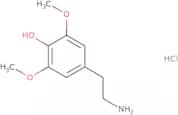
CAS:<p>Versatile small molecule scaffold</p>Formula:C9H6BrNSPurity:Min. 95%Color and Shape:PowderMolecular weight:240.12 g/mol3,5-Dimethoxy-4-hydroxyphenethylamine hydrochloride
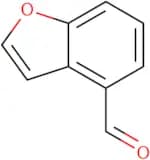
CAS:Controlled Product3,5-Dimethoxy-4-hydroxyphenethylamine hydrochloride is a fine chemical that is used as a building block for other compounds and as a reagent in research. It has been shown to be an effective intermediate in the synthesis of many complex compounds, such as 3,4-methylenedioxyamphetamine (MDA) and 3,4-methylenedioxymethamphetamine (MDMA), which are both psychoactive drugs. This building block can also be used to synthesize speciality chemicals such as psychotropic drugs or pharmaceuticals.Formula:C10H16ClNO3Purity:Min. 95%Color and Shape:PowderMolecular weight:233.69 g/molBenzofuran-4-carbaldehyde
CAS:<p>Benzofuran-4-carbaldehyde is a reactive, low molecular weight compound. It is an oxidative and thermally labile compound that can be used for the preparation of other compounds. Benzofuran-4-carbaldehyde is a colorless liquid with a boiling point of 124°C and a melting point of -27°C. It has a molecular weight of 92.07 g/mol and has a density of 0.91 g/mL at 20°C, which means it will have an octanol:water partition coefficient of 1.2. The molecule has two chiral centers, meaning there are four possible stereoisomers that can be made from it. This compound is primarily broken down into furan, formic acid, and methanol by oxidation mechanisms or by thermal decomposition pathways such as pyrolysis or condensation reactions to produce additional compounds.br>br>Benzofuran-4-carbaldehyde can be oxidized to produce reactive oxygen species</p>Formula:C9H6O2Purity:Min. 95%Molecular weight:146.14 g/mol4-{5H,6H,7H,8H-Pyrido[4,3-c]pyridazin-3-yl}-1,4-oxazepane
CAS:Versatile small molecule scaffoldFormula:C12H18N4OPurity:Min. 95%Color and Shape:PowderMolecular weight:234.3 g/mol2-[2-(Morpholin-4-yl)ethoxy]ethan-1-amine
CAS:2-[2-(Morpholin-4-yl)ethoxy]ethan-1-amine is a research chemical that is used as a reagent, reaction component, or building block in the synthesis of more complex compounds. It can be used to synthesize fine chemicals such as pharmaceuticals and agrochemicals.Formula:C8H18N2O2Purity:Min. 95%Color and Shape:Clear LiquidMolecular weight:174.24 g/mol



![4-{5H,6H,7H,8H-Pyrido[4,3-c]pyridazin-3-yl}-1,4-oxazepane](/_next/image/?url=https%3A%2Fstatic.cymitquimica.com%2Fproducts%2F3D%2Fthumb-webp%2FJHD95611.webp&w=3840&q=75)
![2-[2-(Morpholin-4-yl)ethoxy]ethan-1-amine](/_next/image/?url=https%3A%2Fstatic.cymitquimica.com%2Fproducts%2F3D%2Fthumb-webp%2FVAA20713.webp&w=3840&q=75)