Building Blocks
This section contains fundamental products for the synthesis of organic and biological compounds. Building blocks are the essential starting materials used to construct complex molecules through various chemical reactions. They play a critical role in drug discovery, material science, and chemical research. At CymitQuimica, we offer a diverse range of high-quality building blocks to support your innovative research and industrial projects, ensuring you have the essential components for successful synthesis.
Subcategories of "Building Blocks"
- Boronic Acids & Boronic Acid Derivatives(5,756 products)
- Chiral Building Blocks(1,242 products)
- Hydrocarbon Building Blocks(6,095 products)
- Organic Building Blocks(61,051 products)
Found 199813 products of "Building Blocks"
Sort by
Purity (%)
0
100
|
0
|
50
|
90
|
95
|
100
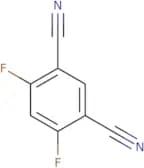
4,6-Difluorobenzene-1,3-dicarbonitrile
CAS:<p>Symmetrical functionalised aromatic</p>Formula:C8H2F2N2Purity:Min. 95%Color and Shape:PowderMolecular weight:164.11 g/mol3-Hydroxyheptanoic acid
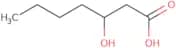
CAS:<p>3-Hydroxyheptanoic acid is a synthetic fatty acid that has been shown to have anti-cancer activity in vitro and in vivo. 3-Hydroxyheptanoic acid binds to the hydrophobic amino acids found in the membrane of cancer cells, preventing them from functioning as a transporter for nutrients and oxygen. This leads to cell death by depriving cells of vital nutrients. 3-Hydroxyheptanoic acid also inhibits the growth of mutant cells that have lost their ability to repair DNA damage, which may be due to its inhibition of protein synthesis. The hydrophobic nature of this molecule may also inhibit cancer cell invasion by inhibiting fatty acid synthase and other enzymes involved in lipid production.</p>Formula:C7H14O3Purity:Min. 95%Color and Shape:PowderMolecular weight:146.18 g/mol2,3-Dihydro-1,4-benzodioxine-5-sulfonyl chloride
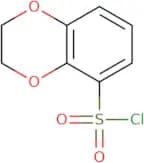
CAS:<p>Versatile small molecule scaffold</p>Formula:C8H7ClO4SPurity:Min. 95%Color and Shape:PowderMolecular weight:234.65 g/mol2-tert-Butylcyclobutan-1-one
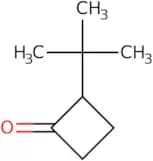
CAS:<p>2-tert-Butylcyclobutan-1-one is a research chemical that is used to study the regioselectivity and carbonyl reactivity of nucleophilic substitution reactions. This compound is synthesized by the reaction of benzannulation with cyclobutanone and stabilizes reactive carbonyl groups, which can be used for mechanistic studies. The mechanism of this reaction has been studied and it has been found that the stabilization of the carbonyl group is due to an intramolecular hydrogen bond between the carbonyl oxygen and the hydroxyl group on C2. 2-tert-Butylcyclobutan-1-one can be used as a biomolecular building block in synthetic organic chemistry.</p>Formula:C8H14OPurity:Min. 95%Color and Shape:Clear LiquidMolecular weight:126.2 g/mol2-[4-(Methylamino)oxan-4-yl]ethan-1-ol
CAS:<p>Versatile small molecule scaffold</p>Formula:C8H17NO2Purity:Min. 90%Color and Shape:Clear LiquidMolecular weight:159.23 g/molMethyl 6-hydroxyhexanoate
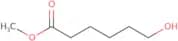
CAS:<p>Methyl 6-hydroxyhexanoate is a reaction intermediate in the synthesis of glycol ethers and polycarboxylic acids. It is also used as a precursor for monoclonal antibodies for cancer therapy. Methyl 6-hydroxyhexanoate reacts with metal ions to form hydrogen bonds, which are important in the stabilization of the covalent bond between the two compounds. This reaction is catalyzed by an enzyme called lipase. The rate of this reaction is increased by adding glycosidation, which increases the number of hydrogen bonding sites on the compound. Methyl 6-hydoxyhexanoate can also be produced from methyl hydroxy and glycol ethers through a reaction that involves metal ion, glycosidation, and a lipase. The antigenicity of methyl 6-hydroxyhexanoate can be altered by changing its carboxyl group to a benzyl group.</p>Formula:C7H14O3Purity:Min. 95%Molecular weight:146.18 g/mol4-Cyclopentylbenzaldehyde
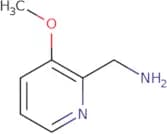
CAS:<p>4-Cyclopentylbenzaldehyde is a homologous compound that is used in the synthesis of other compounds. It is an organic compound with a monoxide group and a cyclohexenyl group. 4-Cyclopentylbenzaldehyde can be prepared by the oxidation of benzene or by the formylation of cyclohexene. This compound can be used in acylation reactions. The yields of this chemical are high, which makes it useful for laboratory purposes. 4-Cyclopentylbenzaldehyde has been shown to undergo carbonylation reactions and catalysis at higher temperatures and pressures. It also reacts with mesitylene, although not toluene, under these conditions.</p>Formula:C12H14OPurity:Min. 95%Color and Shape:PowderMolecular weight:174.24 g/mol(3-Methoxypyridin-2-yl)methanamine
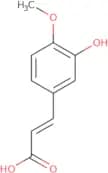
CAS:<p>Versatile small molecule scaffold</p>Formula:C7H10N2OPurity:Min. 95%Color and Shape:Clear LiquidMolecular weight:138.17 g/moltrans-Isoferulic acid
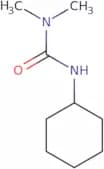
CAS:<p>Trans-iso-ferulic acid is a bioactive phenolic compound that has been shown to have antioxidant and anti-inflammatory properties. It is produced by the metabolism of ferulic acid in the body and can be found in plant cell walls. Trans-iso-ferulic acid has been shown to act as an antimicrobial agent against bacterial strains such as Escherichia coli, Bacillus cereus, Staphylococcus aureus, Klebsiella pneumoniae, Pseudomonas aeruginosa, and Candida albicans. It also has locomotor activity and has been shown to reduce the severity of cardiac disorders. Trans-iso-ferulic acid works by blocking the synthesis of fatty acids which are necessary for energy storage and making regulatory proteins that control metabolism. Trans-iso-ferulic acid also binds to anion radicals which may scavenge free radicals that are formed during oxidative stress. This process prevents lipid peroxidation from occurring which reduces inflammation caused</p>Formula:C10H10O4Purity:Min. 95%Molecular weight:194.18 g/mol3-Cyclohexyl-1,1-dimethylurea
CAS:<p>3-Cyclohexyl-1,1-dimethylurea is a chemical compound that can be used in industrial processes. It is stable and controllable, but must be handled with care as it reacts with water. The compound does not react with cariprazine or any other drugs at room temperature. 3-Cyclohexyl-1,1-dimethylurea has been shown to be an effective reagent for the synthesis of amides from carboxylic acids.</p>Formula:C9H18N2OPurity:Min. 95%Color and Shape:PowderMolecular weight:170.25 g/mol1-[3-(Piperidine-1-carbonyl)phenyl]methanamine
CAS:<p>Versatile small molecule scaffold</p>Formula:C13H18N2OPurity:Min. 95%Color and Shape:Clear LiquidMolecular weight:218.29 g/mol[1-(Aminomethyl)cyclohexyl]methanamine
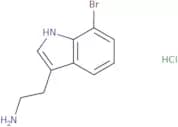
CAS:<p>Cyclohexane-1,1-dicarboxylic acid is a cyclic dicarboxylic acid that is used in the production of polyols. It can be obtained by the hydrogenation of terephthalic acid or by the isomerization of adipic acid. Cyclohexane-1,1-dicarboxylic acid has been shown to have anti-leukemic activity against leukemia cells in mice. The mechanism is not well understood, but it may be due to its ability to produce hydrogen peroxide and tellurate ions. In addition, cyclohexane-1,1-dicarboxylic acid can also react with polyols to form imines and axial alcohols.</p>Formula:C8H18N2Purity:Min. 95%Color and Shape:Colorless Clear LiquidMolecular weight:142.24 g/mol2-(7-Bromo-1H-indol-3-yl)ethanamine hydrochloride
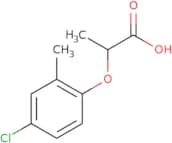
CAS:Controlled Product<p>2-(7-Bromo-1H-indol-3-yl)ethanamine hydrochloride is an organic chemical compound that belongs to the group of versatile building blocks. It is a colorless solid and has a melting point of 160°C. 2-(7-Bromo-1H-indol-3-yl)ethanamine hydrochloride can be used as a research chemical, reagent, or specialty chemical. This compound is a useful building block for the synthesis of complex compounds and can be used as a reaction component in the synthesis of useful scaffolds.</p>Formula:C10H12BrClN2Purity:Min. 95%Color and Shape:PowderMolecular weight:275.57 g/mol(2S)-2-(4-Chloro-2-methylphenoxy)propanoic acid
CAS:<p>(2S)-2-(4-Chloro-2-methylphenoxy)propanoic acid (MCPP) is a phenoxy herbicide that is used in the control of annual and perennial broadleaf weeds. It is often found in wastewater treatment plants because it binds to iron ions and can be removed by coagulation, adsorption, or chemical precipitation. MCPP has been shown to produce genotoxic effects in model systems and high values for enzyme activities. The long-term efficacy of MCPP was studied using a bacterial strain with high levels of resistance to this compound. Structural analysis showed that MCPP contains a chlorophenoxy radical, which may contribute to its carcinogenic potential.</p>Formula:C10H11ClO3Purity:Min. 95%Color and Shape:PowderMolecular weight:214.64 g/mol2-(4-Bromo-1H-imidazol-1-yl)acetic acid
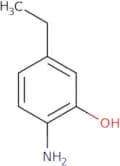
CAS:<p>2-(4-Bromo-1H-imidazol-1-yl)acetic acid is a fine chemical that can be used as a versatile building block, a reaction component and as a speciality chemical. It is an intermediate in the synthesis of other compounds, such as 2-(4-bromophenylimino)-N-(2-chlorophenyl)acetamide. It has been shown to be useful in the synthesis of complex compounds with high quality, such as 2-[4-(2,6-Dichlorobenzoyloxy)phenylimino]-N-(2,4-dimethoxyphenyl)acetamide.</p>Formula:C5H5BrN2O2Purity:Min. 95%Color and Shape:PowderMolecular weight:205.01 g/mol2-Amino-5-ethyl-phenol
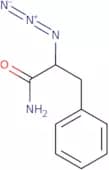
CAS:<p>2-Amino-5-ethylphenol is a phenolic compound that functions as an intermediate in the synthesis of other aminophenols. It is synthesized by reacting 2-aminoethanol with hydrochloric acid and sodium nitrite. 2-Amino-5-ethylphenol has been shown to be a proton donor, which means it can react with water to form hydrogen ions. It also has been found to interact with amines, which are organic compounds containing nitrogen. This interaction was found to depend on the concentration of the amine, pH, and temperature. The thermodynamic parameters for this reaction were determined using modelling and michaelis–menten kinetics.</p>Formula:C8H11NOPurity:Min. 95%Color and Shape:PowderMolecular weight:137.18 g/mol2-Azido-3-phenylpropanamide
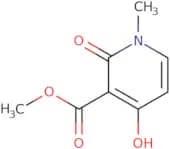
CAS:<p>Versatile small molecule scaffold</p>Formula:C9H10N4OPurity:Min. 95%Color and Shape:PowderMolecular weight:190.2 g/molMethyl 4-hydroxy-1-methyl-2-oxo-1,2-dihydropyridine-3-carboxylate
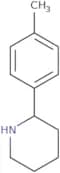
CAS:<p>Methyl 4-hydroxy-1-methyl-2-oxo-1,2-dihydropyridine-3-carboxylate is a versatile building block that is used in the synthesis of complex compounds. It is also a reagent and speciality chemical that can be used as a reaction component or scaffold in chemical research. Methyl 4-hydroxy-1-methyl-2-oxo-1,2 -dihydropyridine 3 carboxylate is an intermediate in the synthesis of various pharmaceuticals, agrochemicals, and fine chemicals. This compound has been shown to be useful for the synthesis of natural products such as pseudodipeptides.</p>Formula:C8H9NO4Purity:Min. 95%Color and Shape:PowderMolecular weight:183.16 g/mol2-(4-Methylphenyl)piperidine
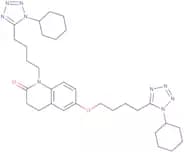
CAS:<p>Versatile small molecule scaffold</p>Formula:C12H17NPurity:Min. 95%Color and Shape:Clear LiquidMolecular weight:175.27 g/molCilostazol Related Compound C
CAS:<p>Cilostazol is a drug that is used to treat the symptoms of intermittent claudication. It is a quinone-type inorganic base, obtained by the hydration of cilostazol. Cilostazol is an inhibitor of phosphodiesterase type 3 (PDE3) and has been shown to inhibit platelet aggregation, which may be due to its ability to inhibit PDE3 and prevent the breakdown of cyclic guanosine monophosphate (cGMP).</p>Formula:C31H45N9O2Purity:Min. 95%Color and Shape:PowderMolecular weight:575.75 g/mol

![2-[4-(Methylamino)oxan-4-yl]ethan-1-ol](/_next/image/?url=https%3A%2Fstatic.cymitquimica.com%2Fproducts%2F3D%2Fthumb-webp%2FHHC67998.webp&w=3840&q=75)

![1-[3-(Piperidine-1-carbonyl)phenyl]methanamine](/_next/image/?url=https%3A%2Fstatic.cymitquimica.com%2Fproducts%2F3D%2Fthumb-webp%2FRQB68866.webp&w=3840&q=75)
![[1-(Aminomethyl)cyclohexyl]methanamine](/_next/image/?url=https%3A%2Fstatic.cymitquimica.com%2Fproducts%2F3D%2Fthumb-webp%2FEAA44155.webp&w=3840&q=75)