Building Blocks
This section contains fundamental products for the synthesis of organic and biological compounds. Building blocks are the essential starting materials used to construct complex molecules through various chemical reactions. They play a critical role in drug discovery, material science, and chemical research. At CymitQuimica, we offer a diverse range of high-quality building blocks to support your innovative research and industrial projects, ensuring you have the essential components for successful synthesis.
Subcategories of "Building Blocks"
- Boronic Acids & Boronic Acid Derivatives(5,778 products)
- Chiral Building Blocks(1,242 products)
- Hydrocarbon Building Blocks(6,098 products)
- Organic Building Blocks(61,034 products)
Found 199601 products of "Building Blocks"
Sort by
Purity (%)
0
100
|
0
|
50
|
90
|
95
|
100
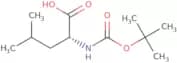
Boc-D-Leu-OH
CAS:<p>Boc-D-Leu-OH is a cyclic peptide that has been shown to have antibacterial activity. It is a monomer with a hydroxy group and a cavity. Boc-D-Leu-OH was found to be able to transport hydrophobic compounds across membranes, which may be due to its hydrophobic nature. Boc-D-Leu-OH also induces apoptosis in cells, which can lead to cancer. This compound has been optimized by structural modifications and residue substitutions, which have led to improved properties such as enhanced stability and increased antimicrobial activity.</p>Formula:C11H21NO4Purity:Min. 95%Color and Shape:PowderMolecular weight:231.29 g/mol(2-Bromoethyl)benzene
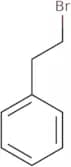
CAS:<p>2-Bromoethylbenzene is a nucleophilic substitutive agent that can be used in organic synthesis. It reacts with an electron-rich compound to form a covalent bond and release bromine. 2-Bromoethylbenzene has been shown to have therapeutic effects on autoimmune diseases such as arthritis and lupus erythematosus. It also has the ability to inhibit protease activity, which may be due to its hydroxy derivative. The reaction mechanism of 2-bromoethylbenzene is not fully understood, but it is known that halides can increase the rate of the substitution reaction. This chemical also has pharmaceutical applications, including as a precursor in amphetamine synthesis and as a reagent in kinetic studies of enzymes.</p>Formula:C8H9BrPurity:Min. 95%Color and Shape:Colorless Clear LiquidMolecular weight:185.06 g/mol7-Methylindole technical grade
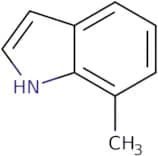
CAS:7-Methylidole is a heterocyclic chemical compound that is used as a precursor in the synthesis of many pharmaceuticals. It has been shown to have an inhibitory effect on the growth of cancer cells in tissue cultures and can be used as a marker for cancer cells. 7-Methylidole is also a virulence factor, which can be seen through assays on bacterial strains. This compound has been proven to be reactive with Polygonum cuspidatum. The reaction produces indirubin, which is a red pigment that is found in some species of Polygonum and other plants.Formula:C9H9NPurity:Min. 95%Color and Shape:PowderMolecular weight:131.17 g/mol8-Hydroxypenillic acid
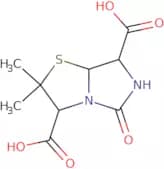
CAS:<p>8-Hydroxypenillic acid is an intermediate in the synthesis of penicillin. It is produced by the enzyme 8-hydroxylase, which converts L-lysine to L-3,4-dihydroxyphenylalanine. This reaction requires a number of cofactors, including magnesium ions and oxygen. The product is then converted to 8-hydroxypenillic acid by the enzyme hydroxypenicillinase. Inhibition of this enzyme leads to accumulation of 8-hydroxypenillic acid, which can be used as a biomarker for production of penicillin.</p>Formula:C9H12N2O5SPurity:Min. 95%Color and Shape:PowderMolecular weight:260.27 g/mol2-Hydroxy-5-methylbenzaldehyde
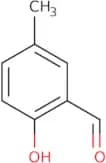
CAS:<p>2-Hydroxy-5-methylbenzaldehyde (2HMBA) is a biologically active molecule that has been shown to bind to human serum albumin. The binding constants for the two molecules are relatively low, with a Kd of approximately 2.6 x 10 M. The nitrogen atoms in the molecule form hydrogen bonds with the hydroxyl group on the ethylene diamine, which stabilizes it and prevents it from dissolving in water. This compound also has a cyclohexane ring and can be found in natural products such as erythronolide B, an antibiotic produced by Streptomyces erythreus. 2HMBA is stable when complexed with hydrochloric acid or potassium dichromate and can be used in structural analysis of other molecules.</p>Formula:C8H8O2Purity:Min. 95%Color and Shape:Off-White PowderMolecular weight:136.15 g/mol4-Benzyloxybenzoic acid
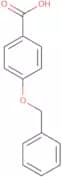
CAS:<p>4-Benzyloxybenzoic acid is a carboxylic acid that is structurally related to adenosine. It has been shown to bind to the group P2 adenosine receptor, which may be involved in the regulation of locomotor activity and photophysical properties. This compound also inhibits fatty acid biosynthesis and has inhibitory effects on nerve injury, amide formation, and benzoate degradation. It has been reported that 4-Benzyloxybenzoic acid binds to metal ions such as cobalt and manganese, which may be important for its antimycobacterial activity.</p>Formula:C14H12O3Purity:Min. 95%Color and Shape:PowderMolecular weight:228.24 g/mol2,6-Dimethylbenzoic acid
CAS:<p>2,6-Dimethylbenzoic acid is a colorless solid that has a molecular weight of 162.2 g/mol and an empirical formula of C7H8O2. It has a melting point of about 82 degrees Celsius and a boiling point of about 315 degrees Celsius. 2,6-Dimethylbenzoic acid is soluble in water at 100 degrees Celsius. It has been shown to act as a potent antagonist for the muscarinic acetylcholine receptors. This compound also has basic properties due to its hydrogen bonding interactions with proteins and other molecules. 2,6-Dimethylbenzoic acid has been shown to be efficient in supramolecular chemistry because it is electron deficient and contains thermodynamic functional groups such as carboxylic acids and alcohols.</p>Formula:C9H10O2Purity:Min. 95%Color and Shape:PowderMolecular weight:150.17 g/molMethyl-3-Formylindole-5-carboxylate
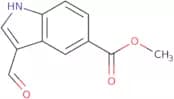
CAS:<p>Please enquire for more information about Methyl-3-Formylindole-5-carboxylate including the price, delivery time and more detailed product information at the technical inquiry form on this page</p>Formula:C11H9NO3Purity:Min. 95%Molecular weight:203.19 g/molFmoc-Trp(Boc)-OH
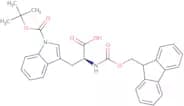
CAS:<p>Fmoc-Trp(Boc)-OH is an amide that has been shown to have the ability to bind to human serum proteins, making it useful in clinical diagnostics. This compound has also been found to be effective against a variety of bacterial strains and fungi. The Fmoc-Trp(Boc)-OH peptide can be synthesized using solid-phase synthesis techniques, which involve attaching amino acid residues to a polymer support. This process is cell specific and allows for the production of peptides with specific sequences. The presence of histidine residues on the side chain of this molecule makes it a good candidate for use in antimicrobial peptides.</p>Formula:C31H30N2O6Purity:Min. 98 Area-%Color and Shape:White Off-White PowderMolecular weight:526.58 g/mol1H-Pyrrolo[2,3-c]pyridin-7-amine
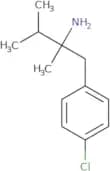
CAS:<p>Versatile small molecule scaffold</p>Formula:C7H7N3Purity:Min. 95%Color and Shape:PowderMolecular weight:133.15 g/mol1-(4-Chlorophenyl)-2,3-dimethylbutan-2-amine
CAS:<p>4-Chloro-1-(4-chlorophenyl)butan-2-amine (PCPA) is a versatile building block in organic synthesis. It is used as a precursor to other chemicals, such as pharmaceuticals and pesticides. PCPA can be used to synthesize many complex compounds, such as 1-(4-chlorophenyl)-2,3-dimethylbutan-2-amine. PCPA is useful for the production of research chemicals and speciality chemical intermediates. This compound has a high quality and can be used as a reagent for further reactions.</p>Formula:C12H18ClNPurity:Min. 95%Color and Shape:Clear LiquidMolecular weight:211.73 g/mol4-Chlorothiophene-3-carboxylic acid
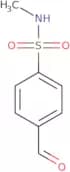
CAS:<p>4-Chlorothiophene-3-carboxylic acid is a chemical compound that can be used as a building block for other compounds. It has been used in the preparation of many complex compounds, including pharmaceuticals and fine chemicals. CAS No. 59337-81-4</p>Formula:C5H3ClO2SPurity:Min. 95%Color and Shape:PowderMolecular weight:162.59 g/mol4-Formyl-N-methylbenzenesulfonamide
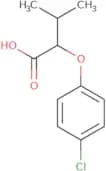
CAS:<p>4-Formyl-N-methylbenzenesulfonamide is a fine chemical that is used as a versatile building block in the synthesis of complex compounds, research chemicals, and reagents. It is highly useful as a reagent or speciality chemical in laboratory experiments involving many different reactions. 4-Formyl-N-methylbenzenesulfonamide has been shown to be an excellent intermediate for the synthesis of high quality products. This product can also be used as a scaffold in complex organic syntheses.</p>Formula:C8H9NO3SPurity:Min. 95%Color and Shape:PowderMolecular weight:199.23 g/mol2-(4-Chlorophenoxy)-3-methylbutanoic acid
CAS:<p>Versatile small molecule scaffold</p>Formula:C11H13ClO3Purity:Min. 95%Color and Shape:PowderMolecular weight:228.67 g/mol4D-Hydroxysphinganine
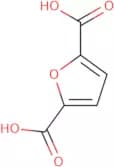
CAS:<p>Sphingolipid; cell membrane component; anti-inflammatory agent</p>Formula:C18H39NO3Purity:Min. 97 Area-%Color and Shape:White PowderMolecular weight:317.51 g/mol2,5-Furandicarboxylic acid
CAS:<p>Interest in renewable based polymers has led to 2,5-furandicarboxylic acid being proposed as a green, sustainable alternative to the widely used petroleum-based terephthalic acid in the synthesis of polyesters. 2,5-Furandicarboxylic acid is produced from oxidation of 5-hydroxymethylfurfural (HMF) which is obtained from the dehydration of bio-based sugars such as fructose.</p>Formula:C6H4O5Purity:Min. 98 Area-%Color and Shape:White Clear LiquidMolecular weight:156.09 g/molFmoc-Thr(tBu)-Ser-OH
<p>Fmoc-Thr(tBu)-Ser-OH is a building block that is often used in organic synthesis as a reagent or scaffold. It can be used in the synthesis of complex compounds, such as peptides and proteins. Fmoc-Thr(tBu)-Ser-OH has been shown to be useful in the preparation of high quality reagents and research chemicals. This chemical can also be used as an intermediate for the synthesis of other compounds, such as pharmaceuticals and pesticides. Fmoc-Thr(tBu)-Ser-OH is soluble in organic solvents, which makes it versatile for use in a wide variety of reactions. Fmoc-Thr(tBu)-Ser-OH has a CAS number that can be found by searching on the Chemical Abstract Services website (CAS).</p>Formula:C26H32N2O7Purity:Min. 95%Color and Shape:PowderMolecular weight:484.54 g/molFmoc-D-Asp(OtBu)-L-Ser(Psi(Me,Me)pro)-OH
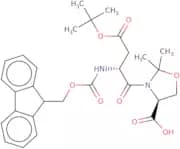
<p>Fmoc-D-Asp(OtBu)-L-Ser(Psi(Me,Me)pro)-OH is a high quality reagent that can be used as an intermediate in the synthesis of complex compounds. It is a useful building block for the synthesis of speciality chemicals and research chemicals. Fmoc-D-Asp(OtBu)-L-Ser(Psi(Me,Me)pro)-OH is also a versatile building block that can be used to synthesize different types of compounds.</p>Formula:C29H34N2O8Purity:Min. 95%Color and Shape:PowderMolecular weight:538.59 g/mol6-Methyluracil
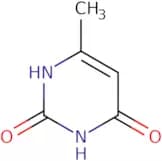
CAS:<p>6-Methyluracil is an antimetabolite that inhibits protein synthesis and is therefore used in the treatment of infectious diseases. 6-Methyluracil has two hydroxyl groups, which are located in adjacent positions on the ring. The optimum concentration for this drug is 3-10 μM, which can be achieved with a malonic acid buffer solution at pH 7.4. 6-Methyluracil reacts with sodium succinate to form an acid complex, which may have antiinflammatory activity. 6-Methyluracil has been shown to inhibit prostaglandin synthesis and exhibits a reaction with radiation to produce photoproducts that can be detected by analytical chemistry.</p>Formula:C5H6N2O2Purity:Min. 95%Color and Shape:PowderMolecular weight:126.12 g/mol6-Methoxyindole
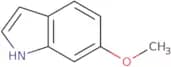
CAS:<p>6-Methoxyindole is an acetate extract of the plant 5-methoxyindole. It has been shown to be a 5-HT1A receptor agonist in animals, and has been shown to have cardiac effects in rats. 6-Methoxyindole is also used as a precursor for the synthesis of diphenylacetylindoles. 6-Methoxyindole is one of the molecules that can be recombined to form a batcho-leimgruber indole (BLI).</p>Formula:C9H9NOPurity:Min. 99 Area-%Color and Shape:PowderMolecular weight:147.17 g/mol


![1H-Pyrrolo[2,3-c]pyridin-7-amine](/_next/image/?url=https%3A%2Fstatic.cymitquimica.com%2Fproducts%2F3D%2Fthumb-webp%2FQGA66936.webp&w=3840&q=75)