Building Blocks
This section contains fundamental products for the synthesis of organic and biological compounds. Building blocks are the essential starting materials used to construct complex molecules through various chemical reactions. They play a critical role in drug discovery, material science, and chemical research. At CymitQuimica, we offer a diverse range of high-quality building blocks to support your innovative research and industrial projects, ensuring you have the essential components for successful synthesis.
Subcategories of "Building Blocks"
- Boronic Acids & Boronic Acid Derivatives(5,778 products)
- Chiral Building Blocks(1,242 products)
- Hydrocarbon Building Blocks(6,098 products)
- Organic Building Blocks(61,034 products)
Found 199601 products of "Building Blocks"
Sort by
Purity (%)
0
100
|
0
|
50
|
90
|
95
|
100
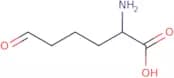
6-Oxo DL-norleucine, formate salt
CAS:<p>6-Oxo DL-norleucine, formate salt is an anti-inflammatory agent that has been shown to reduce the symptoms of inflammatory bowel disease. It is a prodrug that is converted in vivo to 6-oxo DL-norleucine, its active form. This drug inhibits the activity of enzymes involved in metabolic pathways including ester hydrolysis and dinucleotide phosphate metabolism. 6-Oxo DL-norleucine has also been shown to inhibit the production of inflammatory mediators such as prostaglandin E2 (PGE2), leukotriene B4 (LTB4), and reactive oxygen species (ROS) in human serum. The mechanism by which this drug exerts its effects is not yet fully understood but may be due to inhibition of p. pastoris, a fungus that can cause opportunistic fungal infections.</p>Formula:C7H13NO5Purity:Min. 95%Color and Shape:PowderMolecular weight:191.18 g/molPhenyl sulfamate
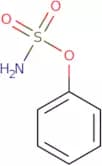
CAS:Phenyl sulfamate is a monosodium salt that has been shown to inhibit the growth of cancer cells in vitro. It has been used as an antimicrobial agent to treat chronic arthritis and atherosclerotic lesions. Phenyl sulfamate inhibits the activity of enzymes that are involved in the synthesis of proteins, such as collagenase, elastase, and proteases. The irreversible inhibition by phenyl sulfamate is due to its ability to react with sulfamoyl chloride (SOC). This reaction leads to the formation of a covalent bond between the enzyme and phenyl sulfamate, which cannot be reversed by any known chemical or enzymatic process.Formula:C6H7NO3SPurity:Min. 95%Color and Shape:PowderMolecular weight:173.19 g/mol6-Bromoindole
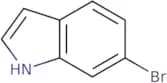
CAS:<p>6-Bromoindole is a synthetic compound that has been shown to have significant anticancer activity in animals. 6-Bromoindole shows cytotoxicity against cervical cancer cells and has been shown to be active against leukemia cells, with the potential for use as a therapeutic agent for both solid tumor cancers and hematological malignancies. The synthesis of 6-bromoindole is based on an asymmetric Friedel-Crafts reaction, which uses hydrochloric acid as a catalyst. This product also shows significant antibacterial activity and has been found to be effective against LPS-stimulated RAW264.7 cells.</p>Formula:C8H6BrNPurity:Min. 95%Color and Shape:PowderMolecular weight:196.04 g/mol2,3-Dimethoxybenzeneethanamine
CAS:Controlled Product<p>2,3-Dimethoxybenzeneethanamine is a drug substance that belongs to the class of amines. It has been shown to have proarrhythmic effects in animal studies, and has also shown hypotensive properties. 2,3-Dimethoxybenzeneethanamine inhibits the binding of phenylephrine to adrenoceptors in rat heart tissue. This compound can be used as a chromatographic standard for dimethoxyphenethylamines and isomers due to its spectrometric properties.</p>Formula:C10H15NO2Purity:Min. 98%Color and Shape:Clear LiquidMolecular weight:181.23 g/mol(R)-(-)-1,3-Butanediol
CAS:<p>(R)-(-)-1,3-Butanediol is a chiral compound that belongs to the group of organic compounds called diols. It is used in the fermentation of Candida parapsilosis and other yeast species to produce enantiomerically pure (S)-(-)-1,3-butanediol. The racemate can be converted into the two enantiomers by chemical means or by enzymatic resolution. The process for large-scale production is similar to that for ethanol fermentation, but with 2-propanol as substrate instead of glucose. The fermentor has been shown to be effective at producing large quantities of 1,3-butanediol in a short time period.</p>Formula:C4H10O2Purity:Min. 98%Color and Shape:Colorless Clear LiquidMolecular weight:90.12 g/mol4-Amino-1-(2-deoxy-2-fluoro-β-D-arabinofuranosyl)-2(1H)-pyrimidinone
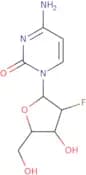
CAS:<p>Please enquire for more information about 4-Amino-1-(2-deoxy-2-fluoro-β-D-arabinofuranosyl)-2(1H)-pyrimidinone including the price, delivery time and more detailed product information at the technical inquiry form on this page</p>Formula:C9H12FN3O4Purity:Min. 95%Molecular weight:245.21 g/mol2-Methyl-1-benzofuran-3-carboxylic acid
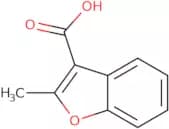
CAS:<p>2-Methyl-1-benzofuran-3-carboxylic acid is a type of carboxylic acid that is cytotoxic to cancer cells. It is a major metabolite of the anticancer drug 2,4,5-trimethoxybenzaldehyde and has been shown to be effective against human breast cancer cells. The ester hydrochloride salt form of this compound has been shown to be an effective inhibitor of esterase activity in vitro. This inhibition leads to increased accumulation of 2-methyl-1-benzofuran-3-carboxylic acid in tumor tissue, which may be due to its ability to inhibit the synthesis of proteins required for the transport and metabolism of other drugs. The x-ray structure analysis revealed that this compound binds to the active site of beta lactamases in an orientation that overlaps with substrate binding sites. This binding prevents the formation of a covalent bond between penicillin G</p>Formula:C10H8O3Purity:Min. 95%Color and Shape:PowderMolecular weight:176.17 g/mol5-Hydroxyindole-3-acetic acid
CAS:<p>5-Hydroxyindole-3-acetic acid is a versatile building block that is useful as a reagent, speciality chemical, and reaction component. It has been used in the synthesis of complex compounds with various applications. The compound can be distilled to produce high-purity 5-hydroxyindole-3-acetic acid for research purposes.</p>Formula:C10H9NO3Purity:Min. 98.0 Area-%Molecular weight:191.19 g/mol3-Hydroxyindole
CAS:<p>3-Hydroxyindole is a fine chemical that can be used as a versatile building block, useful intermediate, and research chemical. It is a complex compound that can be used to make compounds with a wide variety of properties. 3-Indole has been used in the synthesis of high quality reagents and as a reaction component. 3-Indole is soluble in water and other solvents such as ethanol and acetone. Its CAS number is 480-93-3.</p>Formula:C8H7NOMolecular weight:133.15 g/mol2,2'-Biquinoline-4,4'-dicarboxylic acid disodium salt
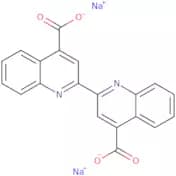
CAS:2,2'-Biquinoline-4,4'-dicarboxylic acid disodium salt is a model system for studying the sequence and hydrogen bonding interactions of polymers. It is a biocompatible polymer that has been shown to have inhibitory properties in response to atherosclerotic lesions. 2,2'-Biquinoline-4,4'-dicarboxylic acid disodium salt has shown optical properties that can be used as a signal in recording sequences. This polymerase chain reaction (PCR) substrate is able to bind with DNA and protein molecules when they are present in an appropriate buffer. The sequence of 2,2'-biquinoline-4,4'-dicarboxylic acid disodium salt is controlled by the coordination geometry of the metal ions involved in its formation.Formula:C20H10N2Na2O4Purity:Min. 95%Color and Shape:PowderMolecular weight:388.28 g/molLinalool glucoside
CAS:<p>Please enquire for more information about Linalool glucoside including the price, delivery time and more detailed product information at the technical inquiry form on this page</p>Formula:C16H28O6Purity:Min. 95%Color and Shape:Clear LiquidMolecular weight:316.39 g/molLauroyl coenzyme A lithium
CAS:<p>Please enquire for more information about Lauroyl coenzyme A lithium including the price, delivery time and more detailed product information at the technical inquiry form on this page</p>Formula:C33H58N7O17P3S•LixPurity:90%Color and Shape:PowderLinoleic acid - 60%min
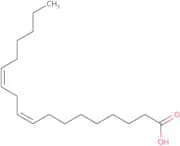
CAS:<p>Linoleic acid is a polyunsaturated fatty acid that is an important component of the human diet. It has been shown to have inhibitory properties on liver cells, and may be related to body mass index. Linoleic acid is a precursor for gamma-aminobutyric acid (GABA), which functions as a neurotransmitter in the central nervous system. Linoleyl alcohol is a metabolite of linoleic acid and has been shown to inhibit the production of antimicrobial peptides, such as cathelicidin and beta-defensin. The inhibition of this peptide may be responsible for the observed reduction in inflammatory responses and infections.</p>Formula:C18H32O2Purity:Min. 95%Color and Shape:Yellow Clear LiquidMolecular weight:280.45 g/molH-Lys(Boc)-AMC
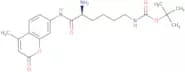
CAS:<p>H-Lys(Boc)-AMC is a useful building block for the synthesis of peptides, nucleic acids, and other complex molecules. It is a fine chemical that can be used as a reagent or speciality chemical in research laboratories. H-Lys(Boc)-AMC is also a versatile building block that can be used to synthesize complex compounds and scaffolds. This compound has been assigned CAS number 222037-62-9.</p>Formula:C21H29N3O5Purity:Min. 95%Color and Shape:PowderMolecular weight:403.47 g/molL-Allylglycine
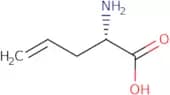
CAS:<p>L-Allylglycine is an antimicrobial agent that inhibits the growth of bacteria by binding to the glutamate receptor. L-Allylglycine has been shown to inhibit the locomotor activity in rats, which may be due to its ability to bind with the serotonergic system and dopamine receptors. L-Allylglycine also binds to Toll-like receptor 4, a protein found on macrophages and microglia in the brain, which may contribute to its neuroprotective effects. It has been shown that L-allylglycine can inhibit a glutamate receptor in mitochondria, which is responsible for the production of ATP. This inhibition prevents DNA replication and cell division, leading to cell death. The asymmetric synthesis of this molecule allows it to have a greater affinity for bacterial cells than mammalian cells.</p>Formula:C5H9NO2Purity:Min. 95%Color and Shape:White PowderMolecular weight:115.13 g/molLuteolin-4'-O-glucoside
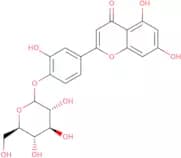
CAS:<p>Luteolin-4'-O-glucoside is a flavonol glycoside that is found in plants such as licorice, celery, and parsley. Luteolin-4'-O-glucoside has been shown to inhibit the growth of Coccidioides neoformans by binding to the cell membrane surface and blocking the synthesis of phospholipids. It also inhibits cancer cells in culture by reducing their viability. The structural analysis of luteolin-4'-O-glucoside revealed an hydroxyl group on its aromatic ring, which may be responsible for its anti-inflammatory effects. Luteolin-4'-O-glucoside has been shown to be effective against inflammatory diseases, such as rheumatoid arthritis and asthma, and may also have a protective effect against certain types of cancer, such as cervical cancer. Luteolin-4'-O-glucoside has also been shown to</p>Formula:C21H20O11Purity:Min. 95%Color and Shape:PowderMolecular weight:448.38 g/molL-Leucine, USP
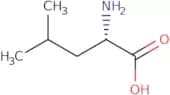
CAS:<p>Amino acid</p>Formula:C6H13NO2Purity:98.5 To 101.5%Color and Shape:White PowderMolecular weight:131.17 g/molLinoleic acid - liquid
CAS:<p>Linoleic acid is a type of essential fatty acid that is found in vegetable oils. It is the most predominant polyunsaturated fatty acid and can be classified as either a cis- or trans-isomer. Linoleic acid has been shown to have inhibitory properties against bowel disease, polymerase chain reaction (PCR) analysis, and disease activity. Linoleic acid may also be used as an analytical method for determining levels of linoleate, linoleic acid, or p-hydroxybenzoic acid in body proteins. The inhibition of cancer cell proliferation by linoleic acid may be due to its ability to inhibit the production of signal peptide or 3t3-l1 preadipocytes.</p>Formula:C18H32O2Purity:94 To 96%Color and Shape:Colorless Clear LiquidMolecular weight:280.45 g/molLevoglucosenone
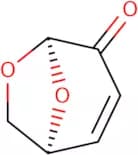
CAS:<p>Levoglucosenone is a molecule that inhibits the reaction mechanism of glycosidic bond formation. It is used in biochemical research to study reactions that involve surface methodology, such as hydroxyl group formation and zirconium oxide deposition. Levoglucosenone can be used to inhibit the acid formation that occurs during the reaction between nitrite ion and a chiral compound. The reactant solution can be activated by adding levoglucosenone to it, which will then inhibit the reaction. Sample preparation for these types of experiments involves dissolving the reactant solution in water and adding ammonium hydroxide to it, followed by adding a small amount of levoglucosenone.</p>Formula:C6H6O3Purity:Min. 95%Color and Shape:Clear LiquidMolecular weight:126.11 g/molL-Alaninamide hydrochloride
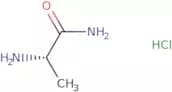
CAS:<p>L-Alaninamide hydrochloride is a hydrogen bond donor that has been shown to have anti-inflammatory properties. L-Alaninamide hydrochloride is able to crosslink hyaluronic acid, which can act as an immunosuppressant and inhibit the production of proinflammatory cytokines. In addition, L-alaninamide hydrochloride has been found to be effective in the treatment of amyloid protein aggregation diseases such as Alzheimer's disease. The drug binds to amyloid proteins by binding to their receptor site and inhibits the formation of amyloid fibrils by preventing cross-linking reactions between polypeptides. L-alaninamide hydrochloride also inhibits the formation of benzimidazole compounds, which are used in the treatment of rheumatoid arthritis.br>br><br>The structure of L-alaninamide hydrochloride is an intramolecular hydrogen bond donor with a carbonyl group. It</p>Formula:C3H8N2O•HClPurity:(Titration) Min 98%Color and Shape:PowderMolecular weight:124.57 g/mol