Building Blocks
This section contains fundamental products for the synthesis of organic and biological compounds. Building blocks are the essential starting materials used to construct complex molecules through various chemical reactions. They play a critical role in drug discovery, material science, and chemical research. At CymitQuimica, we offer a diverse range of high-quality building blocks to support your innovative research and industrial projects, ensuring you have the essential components for successful synthesis.
Subcategories of "Building Blocks"
- Boronic Acids & Boronic Acid Derivatives(5,756 products)
- Chiral Building Blocks(1,242 products)
- Hydrocarbon Building Blocks(6,095 products)
- Organic Building Blocks(61,051 products)
Found 199813 products of "Building Blocks"
Sort by
Purity (%)
0
100
|
0
|
50
|
90
|
95
|
100
Methyl 9-Oxononanoate
CAS:<p>Methyl 9-oxononanoate is a monomer that is used as a biodiesel fuel additive. It is a peroxide decomposition product of α-tocopherol, which is often used as an antioxidant in biodiesel fuels. Methyl 9-oxononanoate can be produced by the reaction of fatty acid and alkoxy radical, or by the thermal decomposition of pentane fatty esters. This compound can also be obtained by cleavage of fatty acids with phosphotungstic acid, producing methyl 9-oxohexadecanoate and methyl 9-oxodecanoate. The two compounds are isomers that have different physical properties and boiling points. The methyl 9-oxohexadecanoate has a higher boiling point than the methyl 9-oxodecanoate.</p>Formula:C10H18O3Purity:Min. 95%Color and Shape:Clear LiquidMolecular weight:186.25 g/mol3-Iodobenzaldehyde
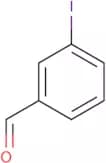
CAS:<p>3-Iodobenzaldehyde is an atypical, isomeric, low energy, functional group. It has a fluorine atom in the 3-position and three different types of functional groups: alcohol, aldehyde and carboxylic acid. This compound has been studied for its ability to bind to receptors. 3-Iodobenzaldehyde can be synthesized by reacting benzalchohde with iodine and hydrochloric acid. The technique used to produce this compound is called Grignard reaction. 3-Iodobenzaldehyde can also be prepared by heating the corresponding nitrobenzene with sodium iodide in dry ether or under refluxing conditions. This compound has a low boiling point and melts at about 170 degrees Celsius. The frequency of this molecule ranges from 98 to 102 megahertz</p>Formula:C7H5IOPurity:Min. 95%Color and Shape:PowderMolecular weight:232.02 g/molQuestiomycin A
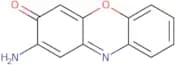
CAS:<p>Questiomycin A is a sesquiterpene lactone that is an antimicrobial agent. It has been shown to modulate the immune system by inhibiting the production of cytokines and altering the expression of genes related to autoimmune diseases. Questiomycin A also inhibits cell growth in myeloma cells, which is due to its ability to inhibit dinucleotide phosphate (NADPH) reductase, an enzyme required for mitochondrial membrane potential maintenance and other cellular functions. In addition, questiomycin A has been shown to induce apoptosis in liver cells as well as carcinoma cell lines. This drug can also be used for body formation, as it stimulates bone growth and inhibits osteoclast activity.</p>Formula:C12H8N2O2Purity:Min. 95 Area-%Color and Shape:PowderMolecular weight:212.2 g/mol5-Amino-piperidin-2-one hydrochloride
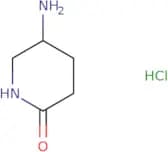
CAS:<p>5-Amino-piperidin-2-one hydrochloride is an enantiomerically pure chiral molecule. It is a white solid with a molecular weight of 138.12 that has been shown to exhibit anti-inflammatory properties in experiments conducted on mice. This drug also has the ability to inhibit the enzyme cyclooxygenase, which plays an important role in the production of prostaglandins. 5-Amino-piperidin-2-one hydrochloride binds to the active site of cyclooxygenase and prevents its conversion of arachadonic acid into prostaglandins. 5-Amino-piperidin-2-one hydrochloride has been shown to be effective against many bacteria, including methicillin resistant Staphylococcus aureus (MRSA) and Mycobacterium tuberculosis, but not against Mycobacterium avium complex.</p>Formula:C5H11ClN2OPurity:Min. 95%Molecular weight:150.61 g/mol2-Iodo-5-nitrobenzoic acid
CAS:<p>2-Iodo-5-nitrobenzoic acid is a reactive molecule that reacts with terminal alkynes to form a fluorescent compound. It was immobilized on an electrode and used as a probe in voltammetry studies. 2-Iodo-5-nitrobenzoic acid is also used as a reagent in the synthesis of amides, which are important in many biochemical reactions. The use of this compound may be limited by the toxicity to cells, which can be increased through the presence of cisplatin or 3-aminobenzoic acid. The microenvironment around cancer cells may also alter the reactivity of 2-iodo-5-nitrobenzoic acid.</p>Formula:C7H4INO4Purity:Min. 95%Color and Shape:Beige PowderMolecular weight:293.02 g/mol(4-Chlorophenyl)[3-(trifluoromethyl)phenyl]methanone
CAS:<p>4-Chlorophenyl[3-(trifluoromethyl)phenyl]methanone is a chemical compound that can be used as a reaction component or a reagent. It is often used as a building block in organic synthesis, due to its high quality and versatility. 4-Chlorophenyl[3-(trifluoromethyl)phenyl]methanone is soluble in organic solvents and has been shown to have no significant toxicity. This chemical is also useful for the production of complex compounds with various applications, such as pharmaceuticals, agrochemicals, and dyes.</p>Formula:C14H8ClF3OPurity:Min. 95%Molecular weight:284.66 g/molγ-Glutamyl-4-methoxy-β-naphthylamide
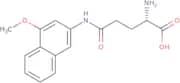
CAS:<p>Gamma-Glutamyl-4-methoxy-beta-naphthylamide is a versatile building block that can be used in the synthesis of a variety of complex compounds. It is a high quality chemical that is useful as an intermediate in organic syntheses and as a reagent in research. Gamma-Glutamyl-4-methoxy-beta-naphthylamide has been shown to be an effective scaffold for the preparation of other chemical substances.</p>Formula:C16H18N2O4Purity:Min. 95%Molecular weight:302.33 g/mol2-(3-Methyl-3H-diazirin-3-yl)ethane-1-sulfonyl chloride
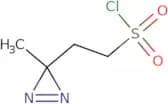
CAS:<p>Versatile small molecule scaffold</p>Formula:C4H7ClN2O2SPurity:Min. 95%Molecular weight:182.63 g/mol3-Methylhexan-2-amine hydrochloride
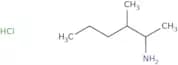
CAS:Controlled Product<p>Versatile small molecule scaffold</p>Formula:C7H18ClNPurity:Min. 95%Color and Shape:PowderMolecular weight:151.7 g/mol3,4,5,6,7,8-Hexahydro-2,9-benzodioxacyclododecin-1,10-dione
CAS:<p>3,4,5,6,7,8-Hexahydro-2,9-benzodioxacyclododecin-1,10-dione is a research chemical that is an important intermediate for the synthesis of many useful compounds. It can be used as a building block for the synthesis of more complex and valuable compounds in the pharmaceutical industry. 3,4,5,6,7,8-Hexahydro-2,9-benzodioxacyclododecin-1,10-dione is also an important reagent for organic chemistry reactions. It has been shown to behave as a good scaffold for the synthesis of other molecules with high purity. This compound has been shown to be useful in many different reactions such as condensations and cyclizations.</p>Formula:C14H16O4Purity:Min. 95%Color and Shape:PowderMolecular weight:248.27 g/molN-Methyl-β-alaninenitrile
CAS:<p>N-Methyl-beta-alaninenitrile is a fine chemical that is used as a versatile building block in the synthesis of complex compounds. It can be used as a reagent to synthesize other chemicals, or as an intermediate in the production of pharmaceuticals. N-Methyl-beta-alaninenitrile is also useful in the synthesis of high quality and useful scaffolds.</p>Formula:C4H8N2Purity:Min. 98.0 Area-%Molecular weight:84.12 g/mol1,2-Diiodoethane
CAS:<p>1,2-Diiodoethane is a useful building block that can be used as a reaction component in organic synthesis. It is also used as a reagent and can be used to produce high quality research chemicals. This chemical has many uses, including as a versatile building block or as an intermediate. 1,2-Diiodoethane is not found naturally in the environment and has been assigned CAS number 624-73-7.</p>Formula:C2H4I2Purity:Min. 98.5 Area-%Molecular weight:281.86 g/molDipropyl ether
CAS:<p>Dipropyl ether is a reagent that is used in organic synthesis as a reaction component or building block for the preparation of complex compounds. It is also known to be an intermediate in the production of propylene oxide, which is used in the production of polyurethane. Dipropyl ether has been shown to be useful as a research chemical and speciality chemical. This compound has CAS number 111-43-3 and can be prepared by reacting diethyl ether with propene, acetone, or chloroform.</p>Formula:C4H9NO2SMolecular weight:135.19 g/mol4-Bromo-1-butene
CAS:<p>4-Bromo-1-butene is a useful building block, reaction component, and useful scaffold that can be used in the synthesis of various chemical compounds. This compound is a high quality, complex compound with versatile building blocks that can be used as a reagent in research or as a speciality chemical. 4-Bromo-1-butene has been found to have many uses in the production of other chemicals such as pharmaceuticals, pesticides, and cosmetics.</p>Formula:C3H8INMolecular weight:185.01 g/mol4-Methoxybenzenediazonium tetrafluoroborate
CAS:<p>4-Methoxybenzenediazonium tetrafluoroborate is a reactive chemical that is used as a component of a number of reagents, including those used in organic chemistry. This compound has been used as an intermediate for the synthesis of other chemicals, such as 4-methoxybenzenediazonium chloride and 4-methoxybenzenediazonium bromide. 4-Methoxybenzenediazonium tetrafluoroborate is also an excellent building block for complex compounds and fine chemicals. The CAS No. for this chemical is 459-64-3.</p>Formula:C6H16N2Molecular weight:116.2 g/molN,N-Diethylpyrrolidine-2-carboxamide
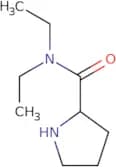
CAS:<p>Versatile small molecule scaffold</p>Formula:C9H18N2OPurity:Min. 90%Color and Shape:PowderMolecular weight:170.25 g/mol2,6-Diaminopurine
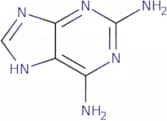
CAS:<p>2,6-Diaminopurine is a nucleotide analogue that is synthesized from guanosine. It inhibits the enzyme ribonucleotide reductase and blocks the synthesis of DNA precursors, which are necessary for viral replication. 2,6-Diaminopurine has been shown to inhibit hiv infection in tissue culture and animal models by decreasing the levels of nucleotides in cells. This drug can be used as an anti-viral agent against HIV and other retroviruses. 2,6-Diaminopurine has also been shown to be effective against murine sarcoma virus. The compound binds to the enzyme ribonucleotide reductase, which is important for DNA synthesis, and prevents its activity by mimicking adenosine triphosphate (ATP). The binding of 2,6-diaminopurine to ATP results in a coordination geometry that causes a long hydrogen bond with one oxygen</p>Formula:C5H6N6Purity:Min. 95%Color and Shape:PowderMolecular weight:150.14 g/mol4-Cyanobenzophenone
CAS:<p>4-Cyanobenzophenone is an organic compound that is used as a reactant in the synthesis of other compounds. 4-Cyanobenzophenone has a number of applications, including use as a reagent in organic synthesis and as a building block for the synthesis of more complex compounds. It can also be used to synthesize antimalarial drugs, antibiotics, and other pharmaceuticals.</p>Formula:C14H9NOPurity:Min. 98 Area-%Molecular weight:207.23 g/mol4,4'-Dimethoxy-2,2'-bipyridine
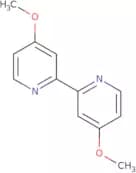
CAS:4,4'-Dimethoxy-2,2'-bipyridine (DMBP) is a reactive compound that can undergo nucleophilic attack on protonated molecules. DMBP has a high value for protonation and is able to react with water vapor in the air to form hydroxide. It has been used as a model protein to study the redox potential of biomolecules and the biological properties of halides. The crystal structure of DMBP has been studied by X-ray crystallography and is found to be related to technetium.Formula:C12H12N2O2Purity:Min. 95%Color and Shape:PowderMolecular weight:216.24 g/mol4,4'-Dicyano-2,2'-bipyridine
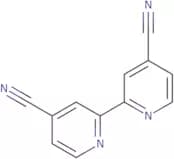
CAS:<p>4,4'-Dicyano-2,2'-bipyridine is a ligand that binds to molybdenum and has been used in the diagnosis of mitochondrial DNA. It has been shown to be an effective treatment for tropical diseases such as malaria. This drug binds to the molybdenum cofactor in the enzyme ribonucleotide reductase, thereby inhibiting the production of ATP. 4,4'-Dicyano-2,2'-bipyridine also reacts with formic acid and ruthenium to produce a redshifted product that can be detected by electron paramagnetic resonance spectroscopy.</p>Formula:C12H6N4Purity:Min. 98 Area-%Color and Shape:PowderMolecular weight:206.2 g/mol



![(4-Chlorophenyl)[3-(trifluoromethyl)phenyl]methanone](/_next/image/?url=https%3A%2Fstatic.cymitquimica.com%2Fproducts%2F3D%2Fthumb-webp%2FRDA50365.webp&w=3840&q=75)