Building Blocks
This section contains fundamental products for the synthesis of organic and biological compounds. Building blocks are the essential starting materials used to construct complex molecules through various chemical reactions. They play a critical role in drug discovery, material science, and chemical research. At CymitQuimica, we offer a diverse range of high-quality building blocks to support your innovative research and industrial projects, ensuring you have the essential components for successful synthesis.
Subcategories of "Building Blocks"
- Boronic Acids & Boronic Acid Derivatives(5,778 products)
- Chiral Building Blocks(1,242 products)
- Hydrocarbon Building Blocks(6,098 products)
- Organic Building Blocks(61,034 products)
Found 199601 products of "Building Blocks"
Sort by
Purity (%)
0
100
|
0
|
50
|
90
|
95
|
100
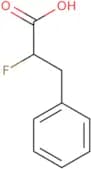
2-Fluoro-3-phenylpropanoic acid
CAS:<p>Versatile small molecule scaffold</p>Formula:C9H9FO2Purity:Min. 95%Color and Shape:PowderMolecular weight:168.16 g/mol4-Ethenyl-1,2-dimethylbenzene
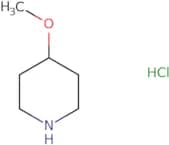
CAS:<p>4-Ethenyl-1,2-dimethylbenzene is a volatile oil that has been found in plants and is a metabolite of styrene. It is classified as a vinyl group, which are compounds with the general formula CH=CH2. 4-Ethenyl-1,2-dimethylbenzene is also a volatile substance, meaning that it evaporates easily from surfaces or materials. This compound may be used as an intermediate for other organic chemicals.</p>Formula:C10H12Purity:Min. 95%Color and Shape:Clear LiquidMolecular weight:132.2 g/mol4-Methoxypiperidine hydrochloride
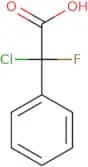
CAS:<p>4-Methoxypiperidine hydrochloride is an organic compound that belongs to the chemical class of aminomethylpiperidines. It is a cycloaddition reaction product of 5-hydroxyisoquinoline and an aldehyde, and it has been used to synthesize aminomethylene derivatives. 4-Methoxypiperidine hydrochloride is also reductively aminated with ammonia or ammonium salts to form alkylamine derivatives. The ring system in 4-methoxypiperidine hydrochloride can be modified by substituting the methyl group with other groups, such as ethyl or phenyl.</p>Formula:C6H13NO•HClPurity:Min. 95%Molecular weight:151.63 g/mol2-Chloro-2-fluoro-2-phenylacetic acid
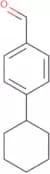
CAS:<p>Versatile small molecule scaffold</p>Formula:C8H6ClFO2Purity:90%MinColor and Shape:PowderMolecular weight:188.58 g/mol4-Cyclohexylbenzaldehyde
CAS:<p>4-Cyclohexylbenzaldehyde is a molecule that has been disrupted and formylated. It binds to the signal transducer, which activates the transcription of genes. 4-Cyclohexylbenzaldehyde has also been shown to bind to DNA and inhibit the synthesis of RNA in bacteria cells. In addition, this molecule can bind with formylating agents such as hydrogen fluoride or trifluoride, which are used in agrochemicals. This compound is an isomerizing agent that can isomerize cyclohexenyl compounds into cyclohexyltrifluoride. 4-Cyclohexylbenzaldehyde has cytosolic activity and can bind to binder molecules in the cytosol.</p>Formula:C13H16OPurity:Min. 95%Color and Shape:PowderMolecular weight:188.27 g/mol1-[3-(2,2,2-Trifluoroethoxy)propyl]piperazine
CAS:<p>Versatile small molecule scaffold</p>Formula:C9H17F3N2OPurity:Min. 90%Color and Shape:Clear LiquidMolecular weight:226.24 g/mol5-Amino-2-nitrobenzoic acid
CAS:<p>5-Amino-2-nitrobenzoic acid is a versatile compound that can be used as a reagent, a reaction component, or as a useful scaffold in research. It reacts with alcohols to produce esters and amides. The high quality of this chemical makes it suitable for use in many different reactions. CAS No. 13280-60-9</p>Formula:C7H6N2O4Molecular weight:182.14 g/molRef: 3D-A-6803
1kgTo inquire100gTo inquire250gTo inquire500gTo inquire2500gTo inquire-Unit-ggTo inquire5-Amino-2-nitrobenzoic acid
CAS:<p>5-Amino-2-nitrobenzoic acid is an organic compound that belongs to the class of versatile building block. It is a white solid that has been used as a research chemical, reagent, and specialty chemical for the synthesis of complex compounds and pharmaceuticals. 5-Amino-2-nitrobenzoic acid is also known as 2-amino-5-chlorobenzoic acid (ACBA). It is soluble in water, but insoluble in ethanol. The CAS number for this chemical is 13280-60-9.</p>Formula:C7H6N2O4Molecular weight:182.14 g/molRef: 3D-A-6802
1kgTo inquire100gTo inquire250gTo inquire500gTo inquire2500gTo inquire-Unit-ggTo inquire5-Amino-2-nitrobenzoic acid
CAS:<p>5-Amino-2-nitrobenzoic acid is a useful chemical building block that is used in the synthesis of complex compounds and useful scaffolds.</p>Formula:C7H6N2O4Molecular weight:182.13 g/molRef: 3D-A-6800
25gTo inquire50gTo inquire100gTo inquire250gTo inquire500gTo inquire-Unit-ggTo inquire2-Amino-5-iodobenzoic acid
CAS:<p>Please enquire for more information about 2-Amino-5-iodobenzoic acid including the price, delivery time and more detailed product information at the technical inquiry form on this page</p>Formula:C7H6INO2Molecular weight:263.04 g/mol5-Aminoindole
CAS:<p>5-Aminoindole is a versatile chemical intermediate that can be used in the synthesis of many different types of compounds. It has been used as a building block for the synthesis of complex molecules, such as antibiotics and other pharmaceuticals. 5-Aminoindole is also useful in research because it is a reagent that can be used to study the reaction between proteins and nucleic acids. This chemical reacts with calf thymus DNA to produce 5-aminoindole phosphate, which can then react with an activated phosphate group on a protein or nucleic acid. 5-Aminoindole is a high quality reagent that will provide you with excellent results in your experiments.</p>Formula:C8H8N2Molecular weight:132.17 g/mol2-Amino-6-chlorobenzoic acid
CAS:<p>2-Amino-6-chlorobenzoic acid is a fine chemical that is used as a reagent or speciality chemical.</p>Formula:C7H6ClNO2Molecular weight:171.58 g/mol2-{[1-(2,4-Difluorophenyl)ethyl]amino}-N-ethylacetamide
CAS:<p>Versatile small molecule scaffold</p>Formula:C12H16F2N2OPurity:Min. 95%Color and Shape:PowderMolecular weight:242.26 g/mol2-Ethyl-2-oxazoline
CAS:<p>Please enquire for more information about 2-Ethyl-2-oxazoline including the price, delivery time and more detailed product information at the technical inquiry form on this page</p>Formula:C6H14ClNO5Molecular weight:215.63 g/mol10-Undecen-1-ol
CAS:<p>10-Undecen-1-ol is a fatty acid with a hydroxyl group at the 10th position. It has strong intermolecular hydrogen bonding and reacts to form esters and ethers. 10-Undecen-1-ol is used as a multi-walled carbon for wastewater treatment, which removes organic contaminants. This compound also has a high degree of chemical stability, which makes it suitable for use in anhydrous sodium synthesis methods.</p>Formula:C11H22OPurity:Min. 98%Color and Shape:Colorless Clear LiquidMolecular weight:170.29 g/mol2,4,6-Trimethoxybenzaldehyde
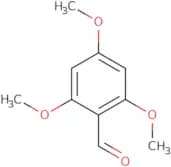
CAS:<p>2,4,6-Trimethoxybenzaldehyde is a chemical compound that is used as an intermediate in organic chemistry. It has been shown to have antiviral effects on influenza A virus by inhibiting the enzyme neuraminidase. This inhibition prevents the release of viruses from infected cells and thus prevents viral replication. 2,4,6-Trimethoxybenzaldehyde also inhibits the growth of cancer cells in vitro and has minimal toxicity to normal cells. This chemical has been shown to inhibit the reaction mechanism of proton pumps in mammalian cells, which may be due to its ability to inhibit p2y receptors or nitrogen atoms. 2,4,6-Trimethoxybenzaldehyde can also be used as a solvent for pharmaceutical preparations and as a reagent in x-ray diffraction data analysis.</p>Formula:C10H12O4Purity:Min. 95%Color and Shape:PowderMolecular weight:196.2 g/moltrans-1,4-Dihydroxy-2-butene
CAS:<p>Extender in polyurethane synthesis</p>Formula:C4H8O2Purity:Min. 95%Color and Shape:Colorless PowderMolecular weight:88.11 g/mol3-Thiopheneacetic acid
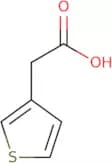
CAS:<p>3-Thiopheneacetic acid (3-TAA) is an insoluble polymer that can be used in analytical chemistry to measure the concentration of sodium carbonate. This polymer is prepared by reacting 3-thiophenecarboxylic acid with sodium carbonate. 3-TAA is a white powder and soluble in water, but insoluble in organic solvents. The transfer reactions of 3-TAA have been studied using electrochemical impedance spectroscopy and thermal expansion measurements. Due to its redox potential, it has been shown to be a potent inhibitor of human serum albumin transport and also inhibits the activity of enzymes such as glyceraldehyde phosphate dehydrogenase, phosphofructokinase, and pyruvate kinase.</p>Formula:C6H6O2SPurity:Min. 97.5 Area-%Color and Shape:White PowderMolecular weight:142.18 g/molTrimethylolpropane tris(2-mercaptoacetate)
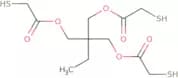
CAS:Trimethylolpropane tris(2-mercaptoacetate) (TMPTMA) is a functional group that is used as an actuator in organic solvent-based inkjet printing. It has been shown to be a cross-linking agent and a treatment effect modifier. TMPTMA has been shown to be a hydroxyl group donor and has the ability to form vinyl groups. In addition, it can act as an organic acid by donating protons and carboxyl groups. TMPTMA can also function as a heat energy absorber and has low molecular weight, making it highly reactive with other substances. The alicyclic structure of TMPTMA makes it susceptible to ring opening reactions with strong acids or bases.Formula:C12H20O6S3Purity:Min. 95%Color and Shape:PowderMolecular weight:356.48 g/mol1,3,5-Tribromobenzene
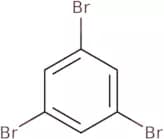
CAS:<p>1,3,5-Tribromobenzene is a chemical compound that belongs to the class of aromatic hydrocarbons. It is used as a solvent in the synthesis of pharmaceuticals and as a precursor for other organic compounds. 1,3,5-Tribromobenzene has been shown to bind to specific receptors on the surface of cells and affect their function. It also binds to hydrochloric acid and forms a matrix with it that can be used for analytical purposes. 1,3,5-Tribromobenzene has been found to have uv absorption properties, making it useful for analytical purposes. The molecule is stable in nonpolar solvents such as n-dimethyl formamide (DMF) and methyl tert-butyl ether (MTBE). 1,3,5-Tribromobenzene can be synthesized by coupling three molecules of benzene with one molecule of bromine using the Suzuki reaction.</p>Formula:C6H3Br3Purity:Min. 97.5%Color and Shape:White PowderMolecular weight:314.8 g/mol


![1-[3-(2,2,2-Trifluoroethoxy)propyl]piperazine](/_next/image/?url=https%3A%2Fstatic.cymitquimica.com%2Fproducts%2F3D%2Fthumb-webp%2FIYB42034.webp&w=3840&q=75)


![2-{[1-(2,4-Difluorophenyl)ethyl]amino}-N-ethylacetamide](/_next/image/?url=https%3A%2Fstatic.cymitquimica.com%2Fproducts%2F3D%2Fthumb-webp%2FFWB46460.webp&w=3840&q=75)