Building Blocks
This section contains fundamental products for the synthesis of organic and biological compounds. Building blocks are the essential starting materials used to construct complex molecules through various chemical reactions. They play a critical role in drug discovery, material science, and chemical research. At CymitQuimica, we offer a diverse range of high-quality building blocks to support your innovative research and industrial projects, ensuring you have the essential components for successful synthesis.
Subcategories of "Building Blocks"
- Boronic Acids & Boronic Acid Derivatives(5,778 products)
- Chiral Building Blocks(1,242 products)
- Hydrocarbon Building Blocks(6,098 products)
- Organic Building Blocks(61,034 products)
Found 199601 products of "Building Blocks"
Sort by
Purity (%)
0
100
|
0
|
50
|
90
|
95
|
100
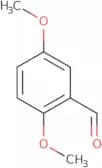
2,5-Dimethoxybenzaldehyde
CAS:<p>Intermediate in organic synthesis</p>Formula:C9H10O3Purity:Min. 98 Area-%Color and Shape:Off-White PowderMolecular weight:166.17 g/molEthyl 2-amino-4-methylthiophene-3-carboxylate
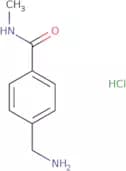
CAS:<p>Ethyl 2-amino-4-methylthiophene-3-carboxylate (EMTC) is a cytotoxic agent. It inhibits the HIV virus by interfering with the synthesis of viral proteins. EMTC has been shown to be effective against cancer cells, but not against healthy cells. The cytotoxic effect of EMTC is related to its ability to inhibit DNA synthesis and RNA transcription in both normal and cancer cells, which leads to cell death.</p>Formula:C8H11NO2SPurity:Min. 95%Color and Shape:PowderMolecular weight:185.24 g/mol4-(Aminomethyl)-N-methylbenzamide hydrochloride
CAS:<p>4-(Aminomethyl)-N-methylbenzamide hydrochloride is a reaction component, reagent, and fine chemical that is useful in the synthesis of high-quality research chemicals, speciality chemicals, and versatile building blocks. This compound has been shown to be useful as a building block or intermediate in the synthesis of complex compounds. 4-(Aminomethyl)-N-methylbenzamide hydrochloride is also used as a reaction component in the production of pharmaceuticals and other organic chemicals. It is soluble in water and has a boiling point of 210°C.</p>Formula:C9H13ClN2OPurity:Min. 95%Color and Shape:PowderMolecular weight:200.66 g/mol3,4,5-Tribromoacetophenone
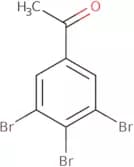
CAS:<p>3,4,5-Tribromoacetophenone is a high quality and versatile chemical with many special applications. It is an important intermediate for the production of various chemicals, such as plastics and pharmaceuticals. This compound can be used as a starting material for the synthesis of more complex compounds by reacting with other chemicals. 3,4,5-Tribromoacetophenone also has a number of useful properties that make it ideal for research purposes.</p>Formula:C8H5Br3OPurity:Min. 95%Color and Shape:PowderMolecular weight:356.84 g/mol3,5-Dichloro-2-methoxybenzoic acid
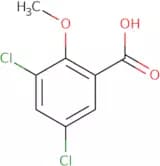
CAS:<p>3,5-Dichloro-2-methoxybenzoic acid (3,5-DMB) is a diphenyl ether with a pharmacokinetic half-life of about 3 hours. It has two isomers: the cis and trans forms. The cis isomer is more active than the trans form. The cis isomer has been shown to be effective in treatments for amine oxidase inhibitors and short-chain fatty acids. It also has growth regulator properties that are used in treatments for psoriasis and acne. 3,5-DMB inhibits bacterial growth by binding to the enzyme dioxygenase, which catalyzes the conversion of 4-hydroxybenzoic acid into 4-hydroxyphenylpyruvic acid; this prevents the production of catecholamines and subsequent cell proliferation. This drug binds to apical membranes in the intestine by attaching to sulfhydryl groups on proteins involved in transport processes, preventing uptake</p>Formula:C8H6Cl2O3Purity:Min. 95%Color and Shape:White PowderMolecular weight:221.04 g/mol2,3-Dibromopropene - stabilized with copper chip
CAS:2,3-Dibromopropene - stabilized with copper chip (2,3-DBPC) is a novel bromination reagent that can be used for the synthesis of polypeptides. This compound has been shown to react with acyl halides in an asymmetric synthesis. The reaction mechanism is thought to be via the addition of 2,3-DBPC to the carbonyl group of an acyl halide and subsequent elimination of bromoethane. 2,3-DBPC also reacts with ethanolamine in the presence of carbon disulphide and x-ray diffraction data have shown that this reaction proceeds through a 1,4 addition mechanism.Formula:C3H4Br2Purity:Min. 90 Area-%Color and Shape:Brown Colorless Yellow Clear LiquidMolecular weight:199.87 g/mol3,4-Dimethoxybenzylamine
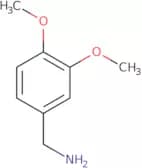
CAS:<p>3,4-Dimethoxybenzylamine is an amine that is used in the synthesis of pharmaceuticals. It can be polymerized by heating with aqueous formaldehyde and hydrochloric acid to form a resin. 3,4-Dimethoxybenzylamine inhibits serotonin receptors, exhibiting inhibitory properties at concentrations of 10-5 M. 3,4-Dimethoxybenzylamine also has pharmacokinetic properties that are similar to vitamin B1. This compound has been shown to inhibit homogeneous catalysts and is used for coatings for ganglion cells.</p>Formula:C9H13NO2Purity:Min. 95%Color and Shape:Clear LiquidMolecular weight:167.21 g/mol3',5'-Dimethoxyacetophenone
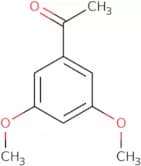
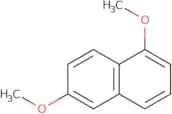
CAS:<p>3',5'-Dimethoxyacetophenone is a compound that is used as an analytical reagent, corrosion inhibitor, and a catalyst. It has been categorized as a hazardous substance by the U.S. Environmental Protection Agency (EPA) and is on the list of substances of very high concern in Europe. 3',5'-Dimethoxyacetophenone is used to prevent corrosion in metals because it reacts with chloride ions to form a protective layer of hydrochloric acid and fatty acid esters. This product has medicinal values because it can be used to synthesize flavonoids or fatty acids.</p>Formula:C10H12O3Purity:Min. 95%Color and Shape:PowderMolecular weight:180.2 g/mol1,6-Dimethoxynaphthalene
CAS:<p>1,6-Dimethoxynaphthalene is a chiral molecule that can be used as a chemical intermediate in the synthesis of pharmaceuticals. 1,6-Dimethoxynaphthalene has been shown to react with dopamine to form β-unsaturated ketones. This reaction is catalyzed by thionyl chloride. The product of this reaction can be reacted with a chloride, naphthalene or sulfinyl chloride to form five-membered diprotonated products. 1,6-Dimethoxynaphthalene also reacts with hydrosulfite to form sulfinyl functional groups, which can then be used as additives in other chemical reactions.</p>Formula:C12H12O2Purity:Min. 98 Area-%Color and Shape:Orange PowderMolecular weight:188.22 g/mol2,6-Dimethylbenzoic acid
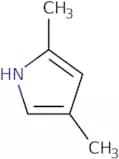
CAS:<p>2,6-Dimethylbenzoic acid is a colorless solid that has a molecular weight of 162.2 g/mol and an empirical formula of C7H8O2. It has a melting point of about 82 degrees Celsius and a boiling point of about 315 degrees Celsius. 2,6-Dimethylbenzoic acid is soluble in water at 100 degrees Celsius. It has been shown to act as a potent antagonist for the muscarinic acetylcholine receptors. This compound also has basic properties due to its hydrogen bonding interactions with proteins and other molecules. 2,6-Dimethylbenzoic acid has been shown to be efficient in supramolecular chemistry because it is electron deficient and contains thermodynamic functional groups such as carboxylic acids and alcohols.</p>Formula:C9H10O2Purity:Min. 95%Color and Shape:PowderMolecular weight:150.17 g/mol2,4-Dimethylpyrrole
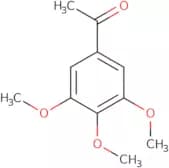
CAS:2,4-dimethylpyrrole (DMP) is a N-heterocycle with two methyl groups. It is used as a dopant in jet fuels to promote oxidative degradation and is converted into a reactive fuel (Kabana, 2011). To a lesser extent, 2,4-dimethylpyrrole has shown antifungal properties and has been used as an active agent against pathogens causing head blight and root rot in some cereals (Sefer, 2017).Formula:C6H9NPurity:Min. 96%Color and Shape:Brown Colorless Clear LiquidMolecular weight:95.14 g/mol3,4,5-Trimethoxyacetophenone
CAS:<p>3,4,5-Trimethoxyacetophenone is a natural product that has been shown to be an antimycotic. It has significant cytotoxicity against A549 cells and also inhibits the growth of cancer cells in culture. 3,4,5-Trimethoxyacetophenone has a low bioavailability due to its chemical properties and inhibitory effects on CYP3A4. This compound is metabolized by the liver into metabolites with inhibitory properties. 3,4,5-Trimethoxyacetophenone also binds to methoxy groups on proteins.</p>Formula:C11H14O4Purity:Min. 99 Area-%Color and Shape:White PowderMolecular weight:210.23 g/mol(1S,3S,5S)-2-Azabicyclo[3.1.0]hexane-3-carboxylic Acid
CAS:(1S,3S,5S)-2-Azabicyclo[3.1.0]hexane-3-carboxylic Acid is a crystalline compound in the form of a white solid with a melting point of 210°C and a molecular weight of 164.09 g/mol. It has been used to stabilize the helical conformation of l-proline and proline, which are amino acids that have been shown to inhibit the conformational changes in proteins that may lead to protein misfolding and aggregation. (1S,3S,5S)-2-Azabicyclo[3.1.0]hexane-3-carboxylic Acid also has structural properties that make it suitable for x-ray crystallography experiments as well as structural studies with dichroism or tetrameric techniques.Formula:C6H9NO2Purity:Min. 95%Molecular weight:127.14 g/mol2-Methyl-3-morpholin-4-yl-propionic acid hydrochloride
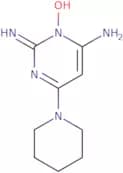
CAS:<p>2-Methyl-3-morpholin-4-yl-propionic acid hydrochloride is a reagent that can be used in the synthesis of various compounds. It is also a building block for the preparation of complex compounds and fine chemicals. The CAS number for this chemical is 1052522-32-3.</p>Formula:C8H16ClNO3Purity:Min. 95%Color and Shape:PowderMolecular weight:209.67 g/molMinoxidil
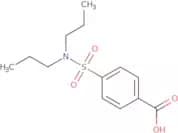
CAS:<p>Anti-androgen; anti-hypertensive; alopecia treatment</p>Formula:C9H15N5OPurity:Min. 95%Color and Shape:White Off-White PowderMolecular weight:209.25 g/molProbenecid
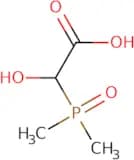
CAS:Controlled Product<p>Organic anion transporter inhibitor; pannexin 1 channel inhibitor</p>Formula:C13H19NO4SPurity:Min. 97.5 Area-%Color and Shape:White PowderMolecular weight:285.36 g/mol2-(Dimethylphosphoryl)-2-hydroxyacetic acid
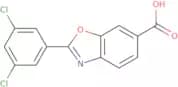
CAS:<p>2-(Dimethylphosphoryl)-2-hydroxyacetic acid (DMPPA) is a herbicide that inhibits acetaldehyde dehydrogenase, an enzyme in the biochemical pathway of acetaldehyde biosynthesis. DMPPA does not have any effect on glutamate and l-threonine metabolism or on the formation of diketones. The target enzyme is activated by the addition of glyphosate to the leaves. DMPPA is used for diagnosis of velvetleaf (Abutilon theophrasti), which is a weed found in corn fields in North America. The chemical can be applied as a foliar spray or as a soil application, with many different formulations available. The chemical has been shown to be effective against graminaceous weeds such as barnyardgrass (Echinochloa crusgalli) and crabgrass (Digitaria spp.).</p>Formula:C4H9O4PPurity:Min. 95%Molecular weight:152.09 g/mol2-(3,5-Dichlorophenyl)-6-benzoxazole carboxylic acid
CAS:<p>2-(3,5-Dichlorophenyl)-6-benzoxazole carboxylic acid (XZP) is a diagnostic agent used in the diagnosis of certain diseases. XZP binds to the matrix metalloproteinases and inhibits their activity, which has been shown to reduce the effects of these enzymes on collagen fibers. This inhibition can be demonstrated using a titration calorimetry technique. The drug is also a potential therapeutic agent for congestive heart failure, as it can stimulate cardiac natriuretic peptide levels and reduce transthyretin levels. XZP has also been shown to be an effective adjunct therapy in vancomycin therapy for treatment of tubulointerstitial injury in rats.</p>Formula:C14H7Cl2NO3Purity:Min. 98 Area-%Color and Shape:PowderMolecular weight:308.12 g/mol4,5-Dichloro-3-hydroxypyridine
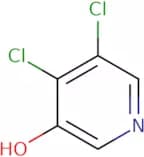
CAS:<p>4,5-Dichloro-3-hydroxypyridine is a reactive chemical that is a building block in organic synthesis. It is used as a reactant in the preparation of other compounds and as a reagent for various reactions, such as those involving amines, alcohols, and thiols. 4,5-Dichloro-3-hydroxypyridine has been found to be useful in the synthesis of heterocyclic compounds with an aromatic ring. It can also be used as an intermediate in the synthesis of pharmaceuticals. This chemical is classified by CAS number 1261269-63-9 and has an MW of 138.2 g/mol.</p>Formula:C5H3Cl2NOPurity:Min. 95%Color and Shape:White PowderMolecular weight:163.99 g/mol2,4-Dimethylbenzaldehyde
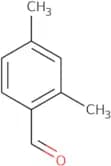
CAS:<p>2,4-Dimethylbenzaldehyde is used in the diagnosis of cancer. It reacts with acetaldehyde to form a compound that binds to hemoglobin and is excreted in the urine, leading to a diagnostic test for cancer. 2,4-Dimethylbenzaldehyde has been shown to be genotoxic in both in vitro and in vivo studies. This aromatic hydrocarbon has been shown to cause DNA strand breaks in the target cells through a reaction mechanism involving radical formation from acetaldehyde. In addition, 2,4-Dimethylbenzaldehyde has been shown to have genotoxic effects on mice exposed by inhalation or injection.</p>Formula:C9H10OPurity:Min. 90 Area-%Color and Shape:Colorless Clear LiquidMolecular weight:134.18 g/mol




![(1S,3S,5S)-2-Azabicyclo[3.1.0]hexane-3-carboxylic Acid](/_next/image/?url=https%3A%2Fstatic.cymitquimica.com%2Fproducts%2F3D%2Fthumb-webp%2FPIA19313.webp&w=3840&q=75)